


#1, Forgotten Castle: The Awakening
Developer: Twin Dolphin
Planned release date: October/November, 1993.
Coverage:
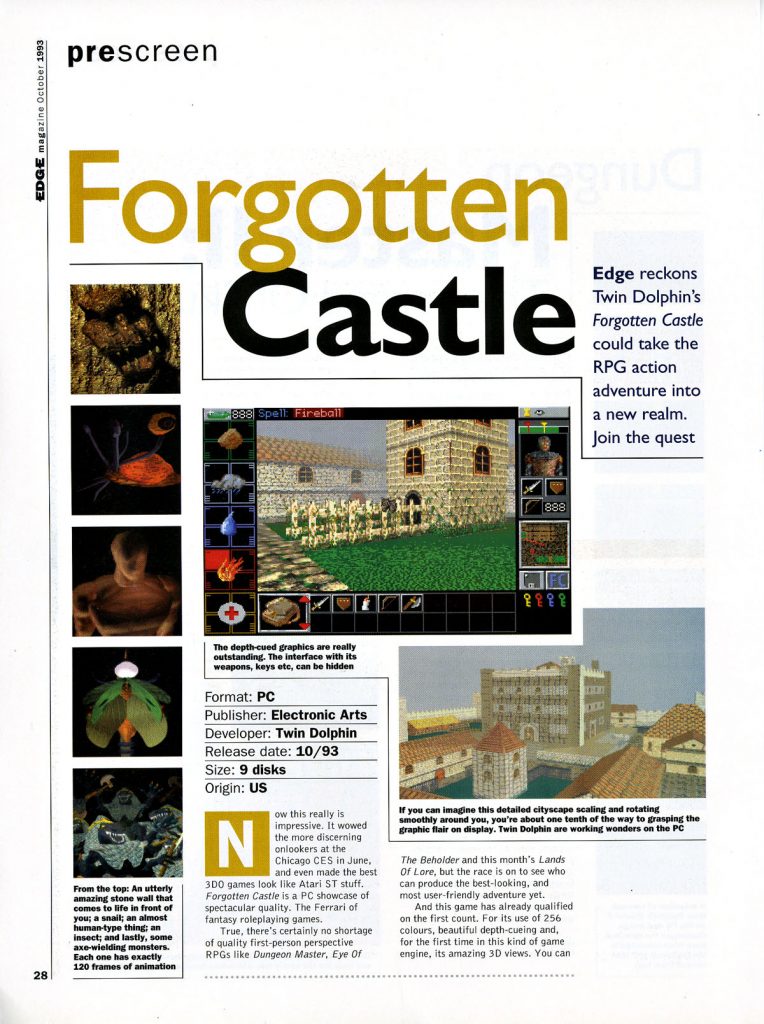
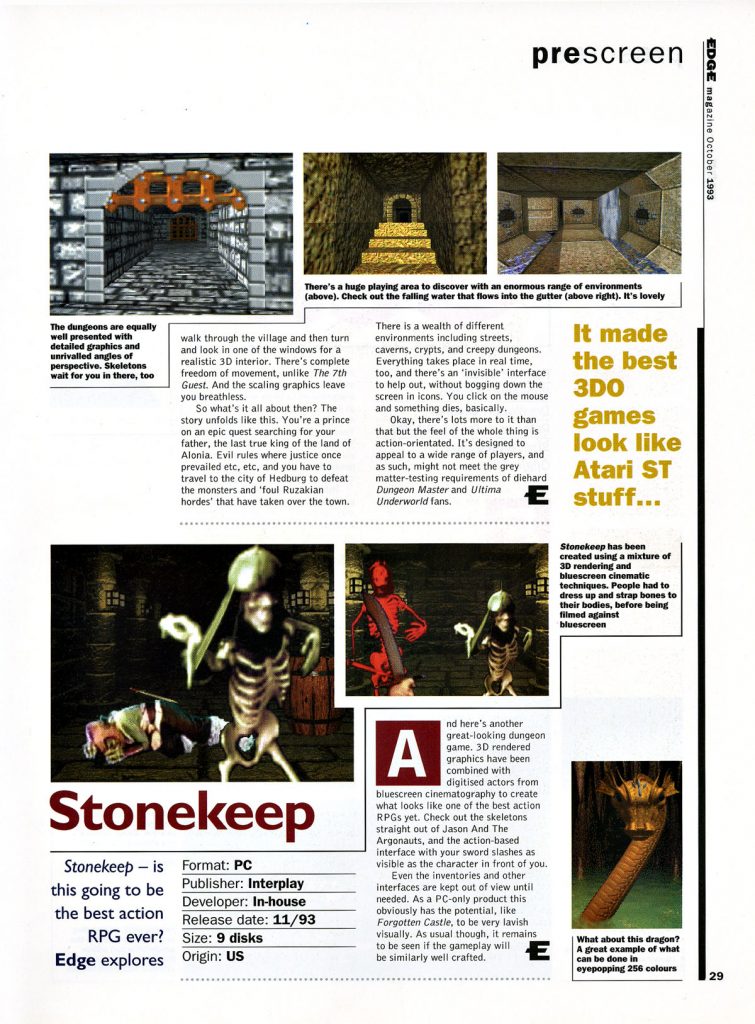
Edge, Issue #1
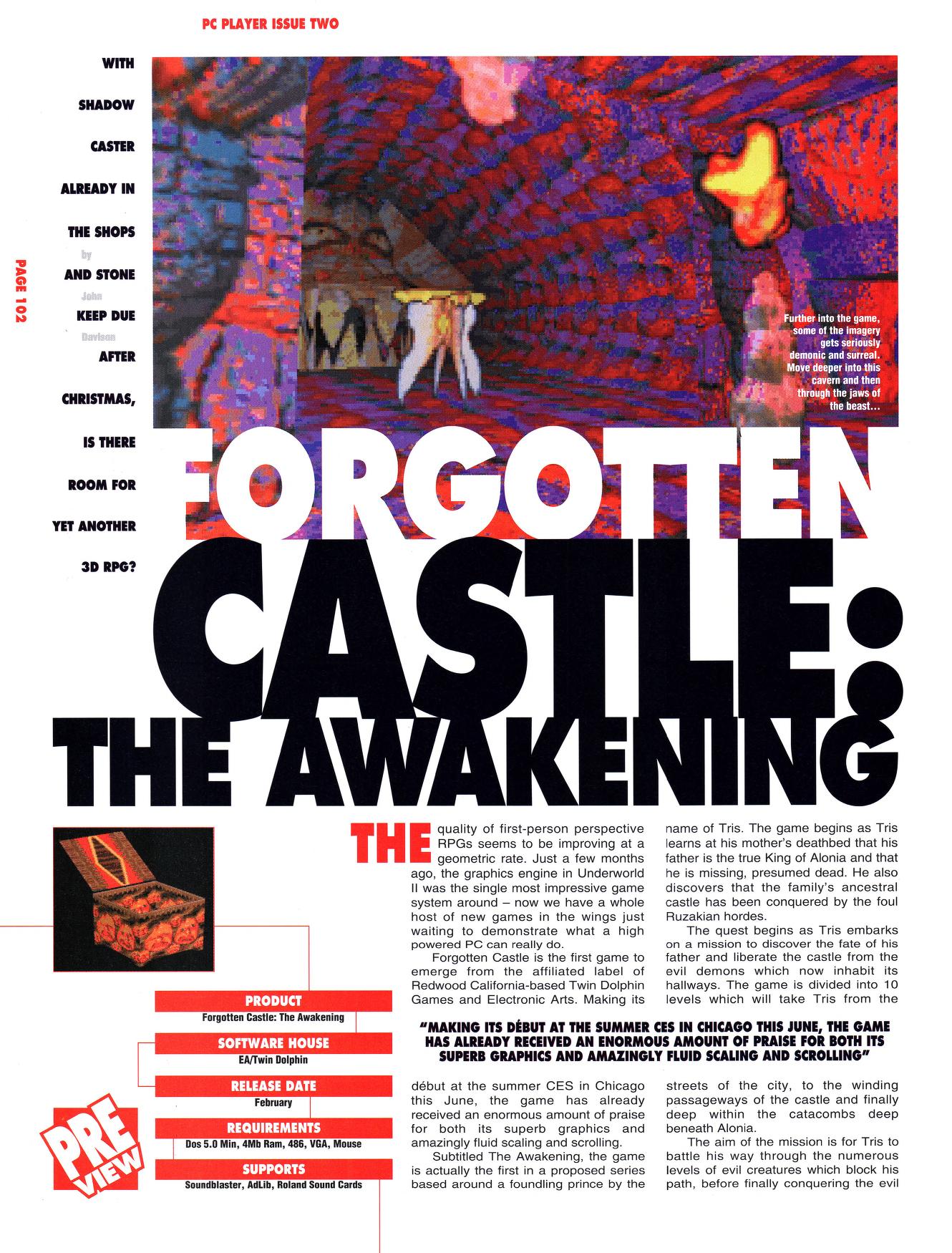
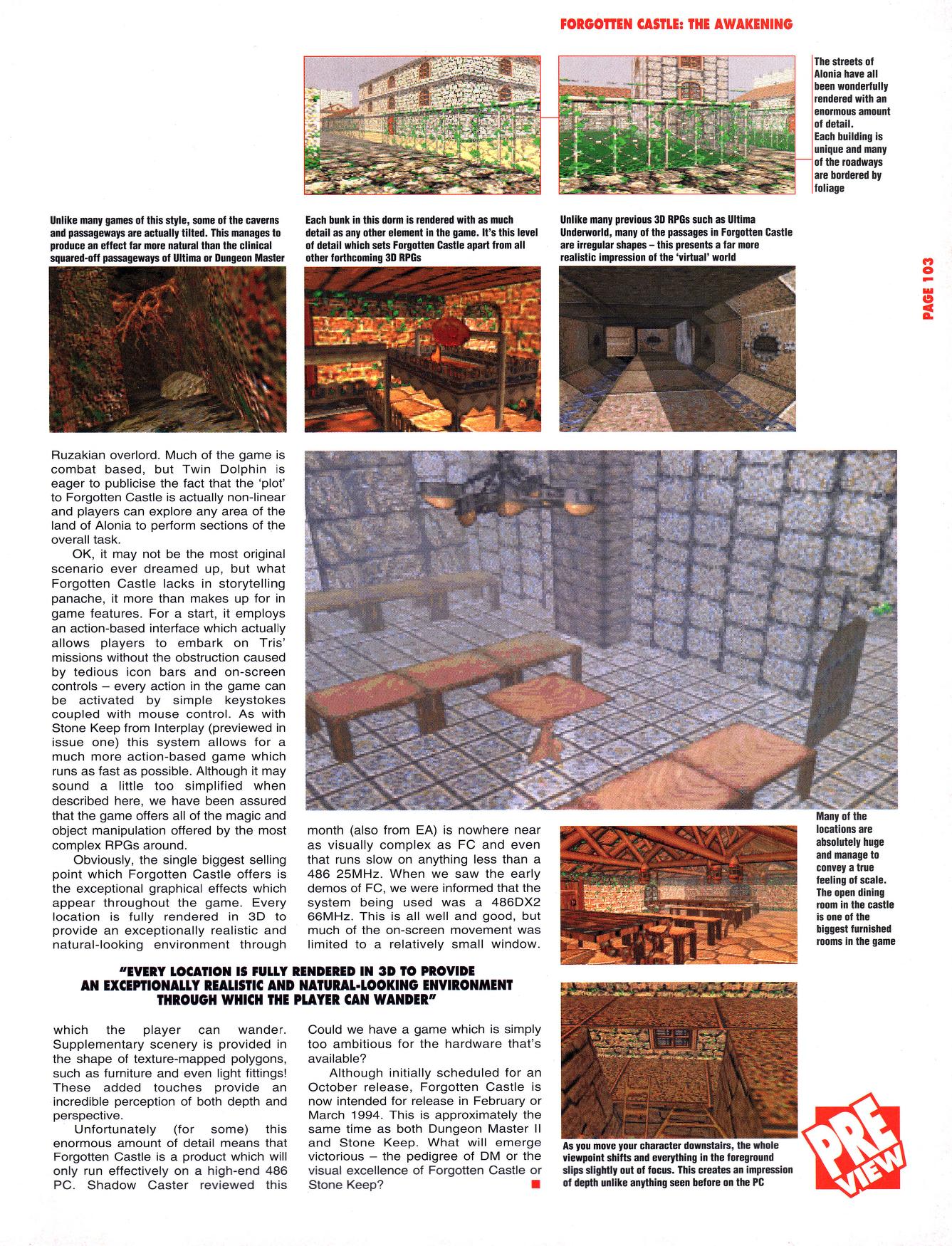
PC Player Issue #2
PC Magazin Issue #12
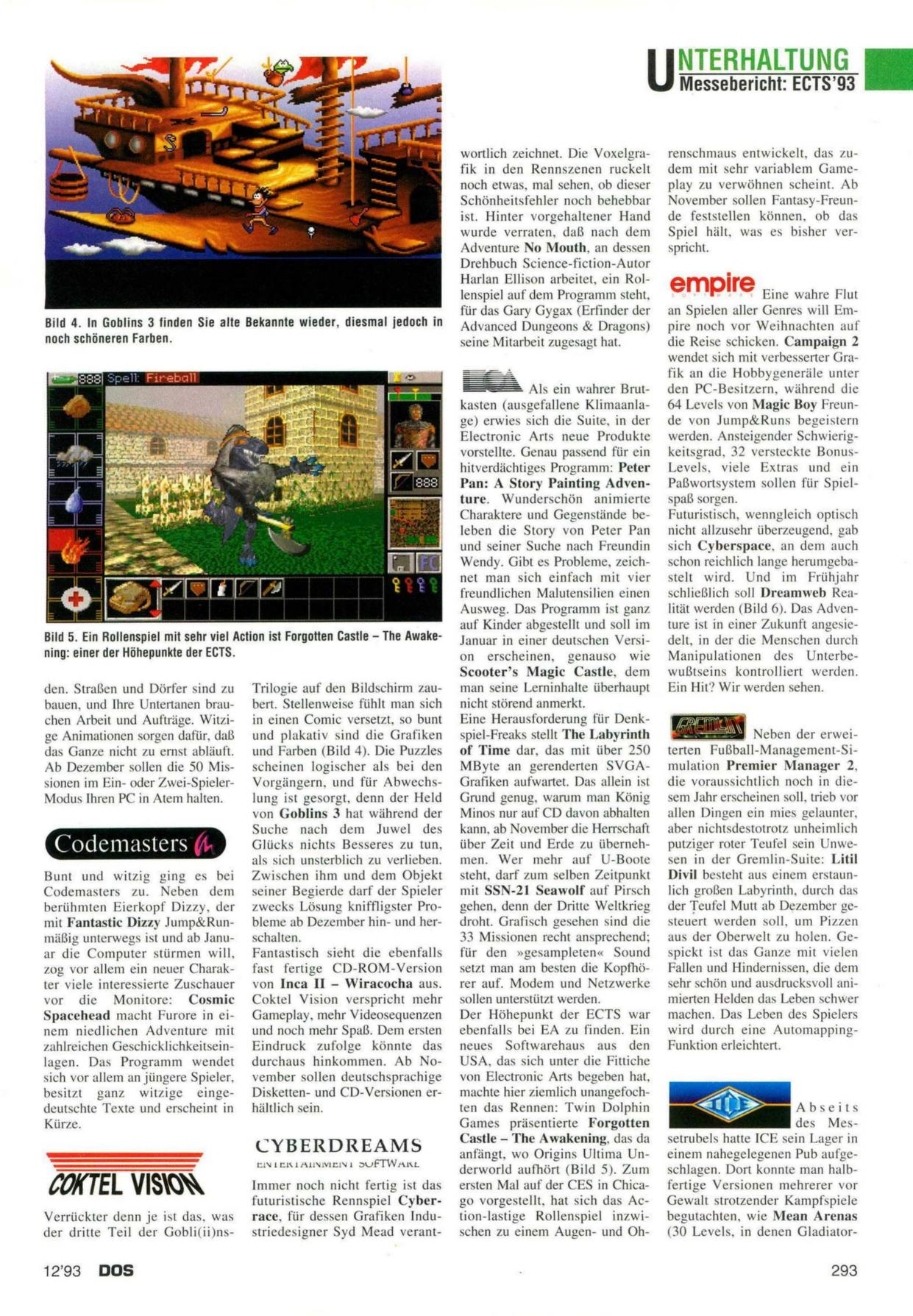
Joystick, Issue #40The highlight of ECTS was also to be found at EA. A new software house from the USA, now under the wing of Electronic Arts, pretty much stole the show: Twin Dolphin Games presented Forgotten Castle – The Awakening, which begins where Origin’s Ultima Underworld leaves off (Figure 5). First shown at CES in Chicago, the action-heavy role-playing game has since developed into a feast for the eyes and ears, and also seems likely to offer very varied gameplay. From November, fantasy fans should be able to find out whether the game lives up to everything it has promised so far.
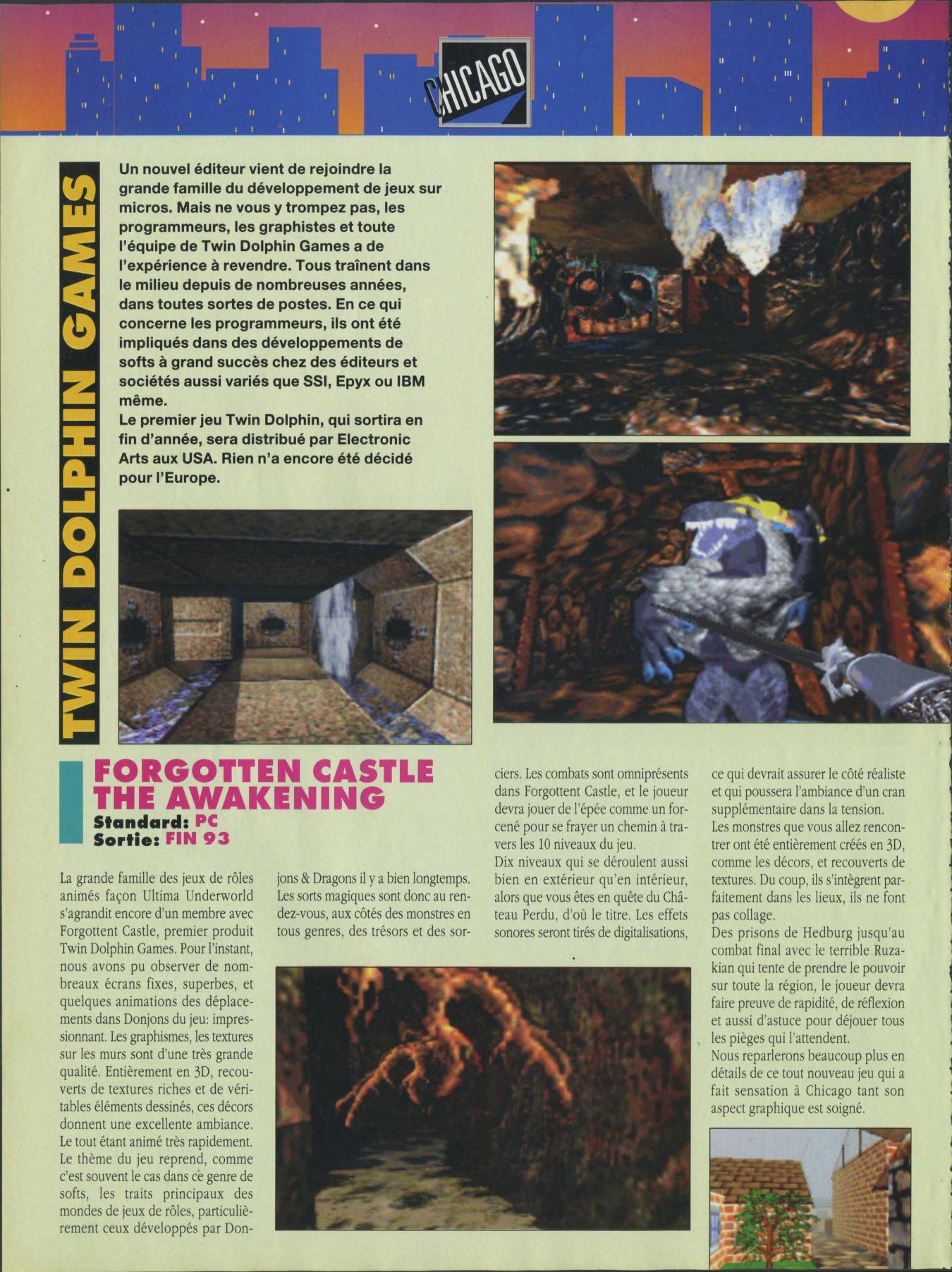
Pelit, 1992CHICAGO
TWIN DOLPHIN GAMES
A new publisher has just joined the big family of game development on microcomputers. But don’t be mistaken: the programmers, graphic artists, and the whole Twin Dolphin Games team have plenty of experience to offer. They have all been in the industry for many years, in all kinds of positions. As for the programmers, they have been involved in the development of highly successful software for publishers and companies as varied as SSI, Epyx, and even IBM.
Twin Dolphin’s first game, due out at the end of the year, will be distributed by Electronic Arts in the USA. Nothing has yet been decided for Europe.
FORGOTTEN CASTLE
THE AWAKENING
Platform: PC
Release: END OF ’93
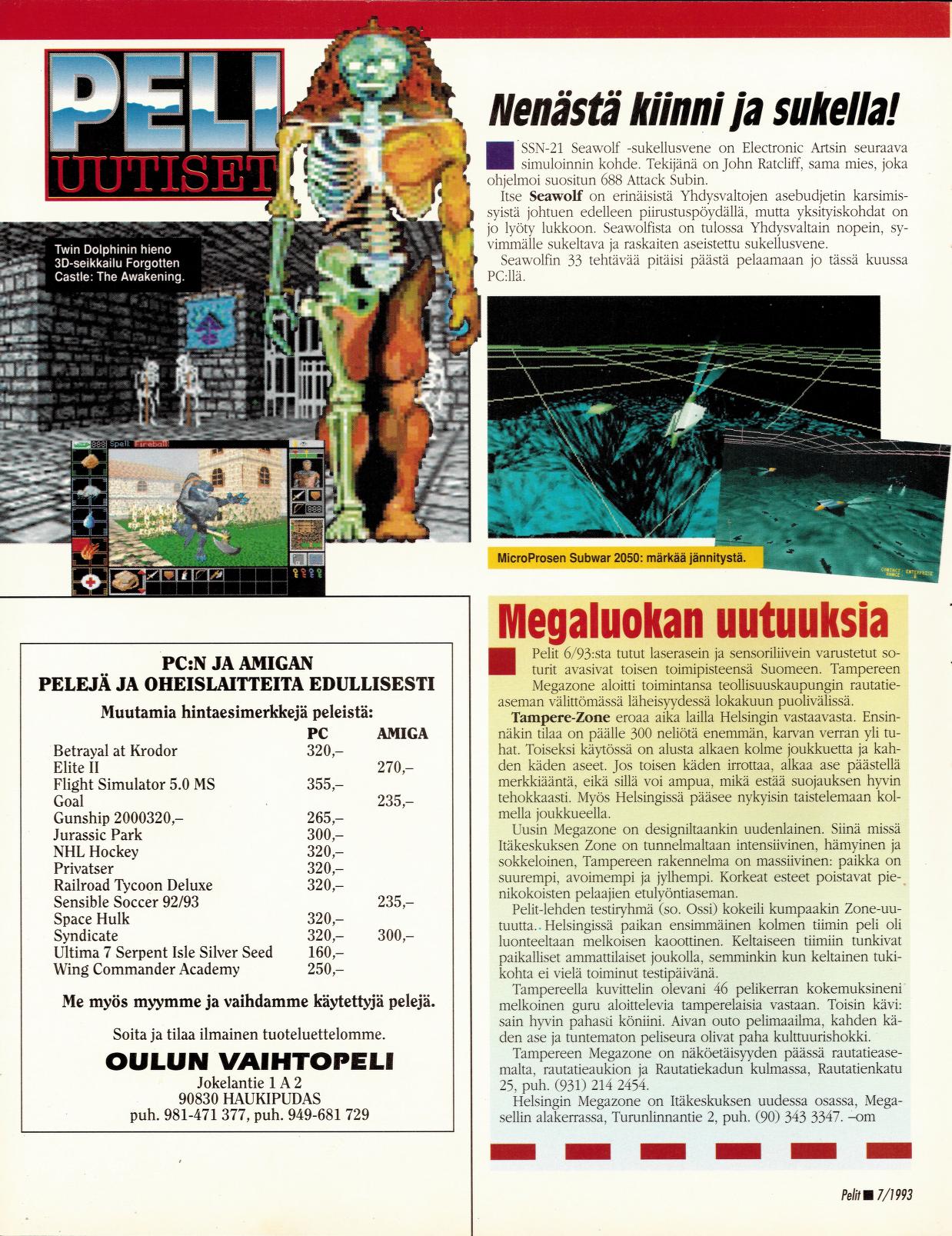
The large family of animated role-playing games in the style of Ultima Underworld is growing once again with Forgotten Castle, Twin Dolphin Games’ first product. For the moment, we have been able to see many fixed screens, superb ones, and a few animations of movement through the game’s dungeons: impressive. The graphics and wall textures are of very high quality. Entirely in 3D, covered with rich textures and genuine drawn elements, these settings create an excellent atmosphere. Everything is animated very quickly.
The game’s theme follows, as is often the case in this kind of software, the main traits of role-playing game worlds, especially those developed long ago by Dungeons & Dragons. Magic spells are therefore present, alongside monsters of every kind, treasures, and sorcerers.
Combat is omnipresent in Forgotten Castle, and the player will have to wield the sword like a madman to carve a path through the game’s 10 levels.
These ten levels take place both outdoors and indoors, while you are searching for the Lost Castle, hence the title. The sound effects will be taken from digitized recordings, which should ensure realism and heighten the atmosphere by adding another level of tension.
The monsters you will encounter have been created entirely in 3D, just like the settings, and covered with textures. As a result, they fit perfectly into the environments; they do not look pasted on.
From the prisons of Hedburg to the final battle with the terrible Ruzakian, who is trying to seize power over the whole region, the player will have to show speed, thought, and also cunning to overcome all the traps awaiting them.
We will talk much more in detail about this brand-new game, which caused a sensation in Chicago thanks to its polished graphics.
Micromania - Epoca 2
Aktueller Software Markt , Ausgabe 1993/12**TWIN DOLPHIN GAMES**
**THE BIG REVELATION**
One of the biggest “revelations” of this videogame “season” has been Twin Dolphin Games, a name that from now on is going to give people plenty to talk about. To prove it, this company came to CES with a batch of good PC products. **“Nanotank”** is an intelligence/puzzle game in which you have to repair your spaceship using integrated circuits and other electrical components.
If you like pulling the trigger, take good note of **“Smoking Guns,”** a “blazing” game set in a shooting gallery, with six unusual scenarios, some of them infested with snipers and other troublemakers. Completely different, but no less interesting, is **“Horkie’s Mission,”** an educational program for children between 3 and 5 years old. Horkie, a well-meaning alien, has arrived on Earth and needs help exploring the city. Children will have to match sounds, solve riddles, and create scenes in six different places.
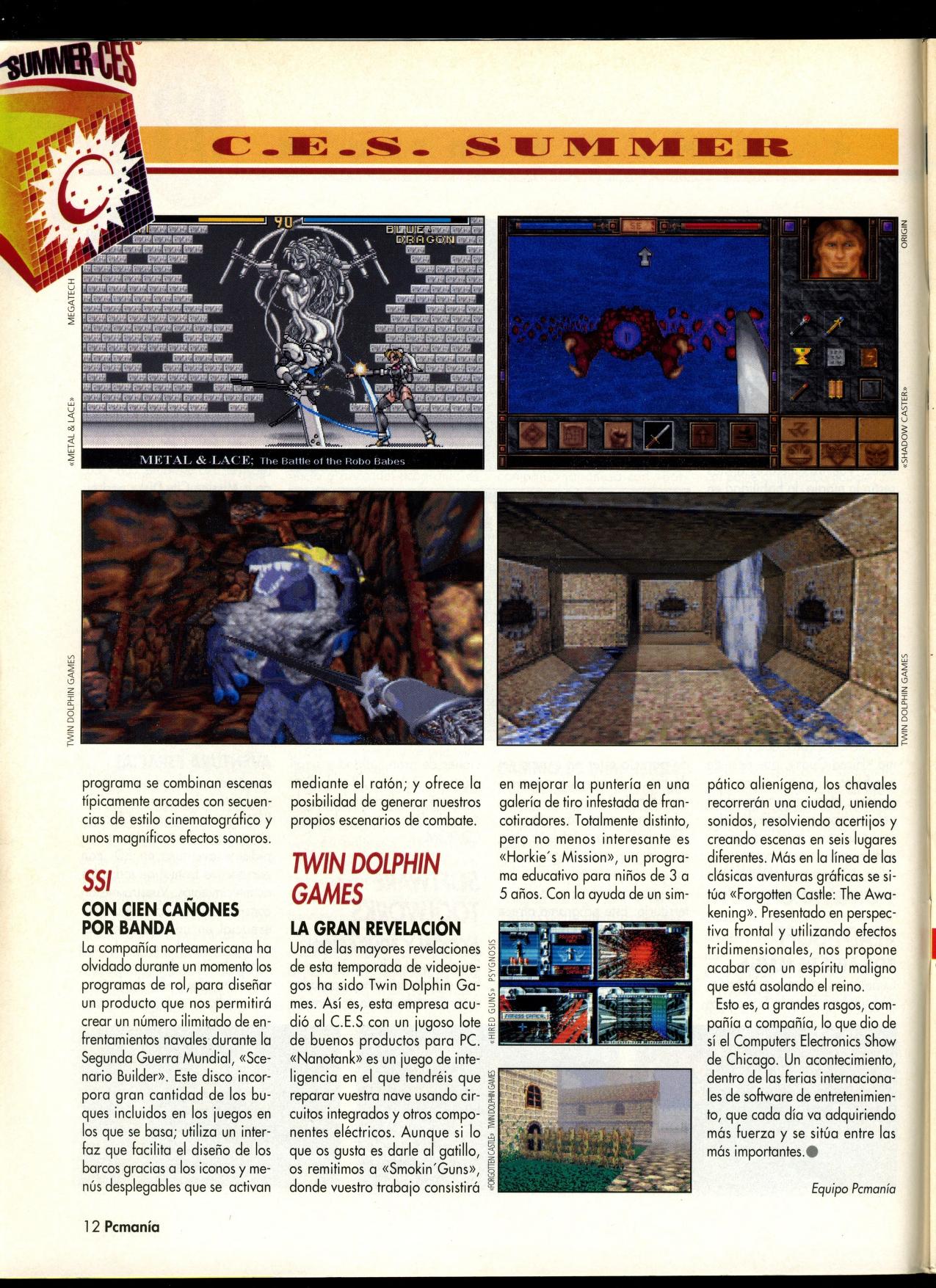
More in the style of classic adventures is **“Forgotten Castle: The Awakening,”** a front-view program in which you must help your kingdom discover the truth hidden behind the misdeeds of the evil spirit that is ravaging the city. As in any good graphic adventure worth its salt, in **“Forgotten Castle: The Awakening”** you will have to solve puzzles, move around the city, and explore all the game’s settings using your magical powers. There will also be fighting scenes throughout the game’s ten levels, and you will not miss the three-dimensional effects that make the adventure even more visually striking. Oh! And keep a very close eye on those monsters…
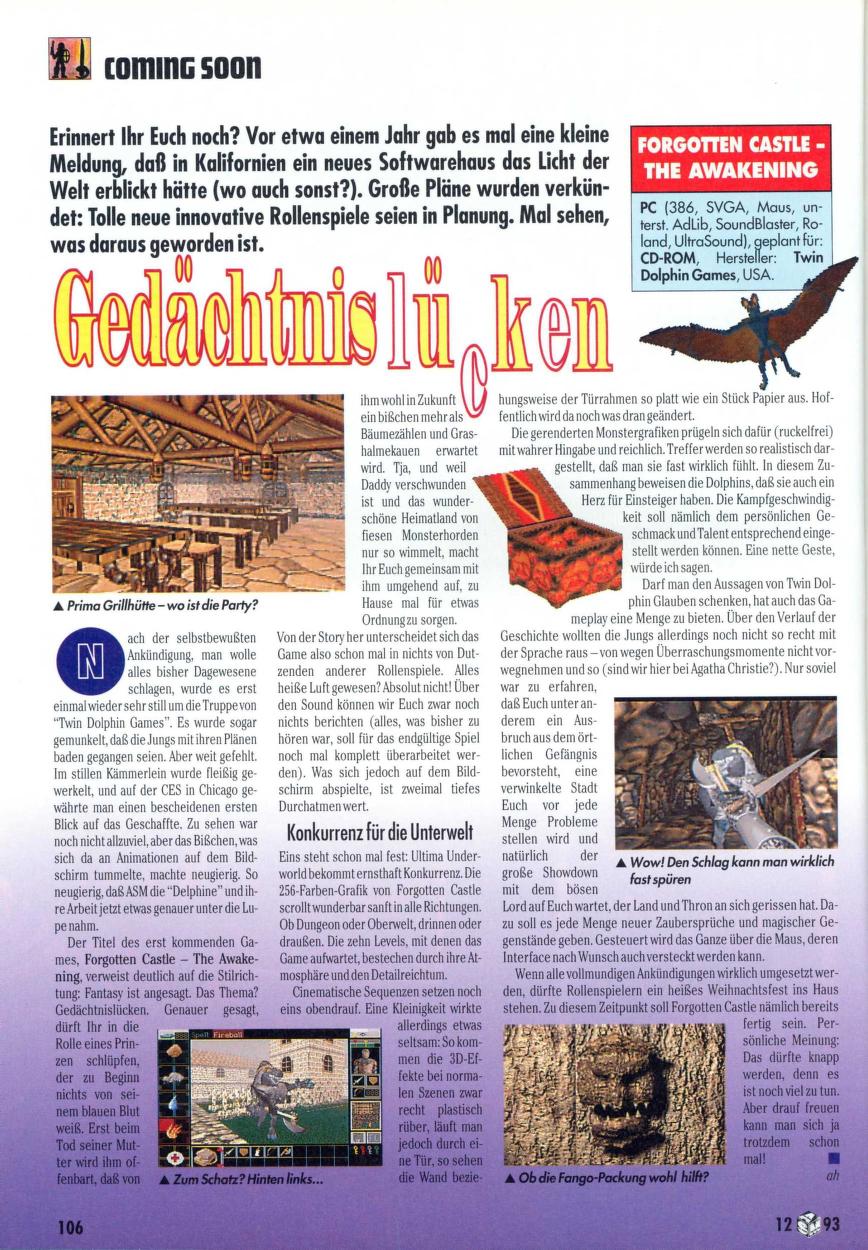
Advertisements:Do you still remember? About a year ago there was a brief report that a new software house in California had seen the light of day — where else? Big plans were announced: great new, innovative role-playing games were supposedly in development. Let’s see what became of it.
FORGOTTEN CASTLE –
THE AWAKENING
PC: 386, SVGA, mouse, supports AdLib, Sound Blaster, Roland, UltraSound; planned for CD-ROM. Developer: Twin Dolphin Games, USA.
Memory Gaps
▲ Great barbecue hut — where’s the party?
After the confident announcement that they intended to outdo everything that had come before, things went very quiet again around the team at “Twin Dolphin Games.” There were even rumors that the guys had gone under with their plans. But far from it. Behind closed doors they were hard at work, and at the CES in Chicago they offered a modest first look at what they had created. There still wasn’t a great deal to see, but the little bit of animation moving around on the screen made us curious. So curious, in fact, that ASM decided to take a closer look at the “Dolphins” and their work.
The title of the upcoming game, Forgotten Castle – The Awakening, clearly points to its genre: fantasy. The theme? Memory gaps. More precisely, you get to slip into the role of a prince who, at the beginning, knows nothing of his blue blood. Only when his mother dies is it revealed to him that a little more will be expected of him in the future than counting trees and chewing blades of grass. Well, and since Daddy has disappeared and his beautiful homeland is swarming with nasty hordes of monsters, you promptly set out to restore some order back home.
▲ To the treasure? Back left...
In terms of story, then, the game is no different from dozens of other role-playing games. Was it all hot air? Absolutely not! We can’t tell you anything about the sound yet — everything heard so far is apparently going to be completely reworked for the final game. But what appeared on the screen was worth taking two deep breaths over.
Competition for the Underworld
One thing is already clear: Ultima Underworld is getting serious competition. The 256-color graphics in Forgotten Castle scroll wonderfully smoothly in every direction. Dungeon or overworld, indoors or outdoors. The ten levels the game offers stand out through their atmosphere and richness of detail.
Cinematic sequences add even more on top. One small thing did seem a bit odd, though: the 3D effects in normal scenes come across quite vividly, but when you walk through a door, the wall or door frame looks as flat as a piece of paper. Hopefully that will still be improved.
The rendered monster graphics, meanwhile, fight with real dedication — and smoothly. Hits are shown so realistically that you can almost feel them. In this respect, the Dolphins also show that they have a heart for beginners: the combat speed is supposed to be adjustable according to personal taste and skill. A nice touch, I’d say.
If Twin Dolphin’s statements are to be believed, the gameplay also has plenty to offer. The guys were not yet willing to reveal too much about the course of the story — something about not wanting to spoil the surprises and so on. Are we at Agatha Christie’s place here? What we did learn is that, among other things, you will have to break out of the local prison, a labyrinthine city will present you with plenty of problems, and of course there will be the big showdown with the evil lord who has seized land and throne for himself. On top of that, there are supposed to be plenty of new spells and magical items. The whole thing is controlled with the mouse, and the interface can be hidden if desired.
▲ Wow! You can almost really feel that blow
If all the bold promises are actually carried out, role-playing fans could be in for a hot Christmas. Forgotten Castle is supposed to be finished by then. Personal opinion: that may be tight, because there is still a lot to do. But you can still look forward to it already!
▲ Wonder whether the mud-pack treatment will help?
ah
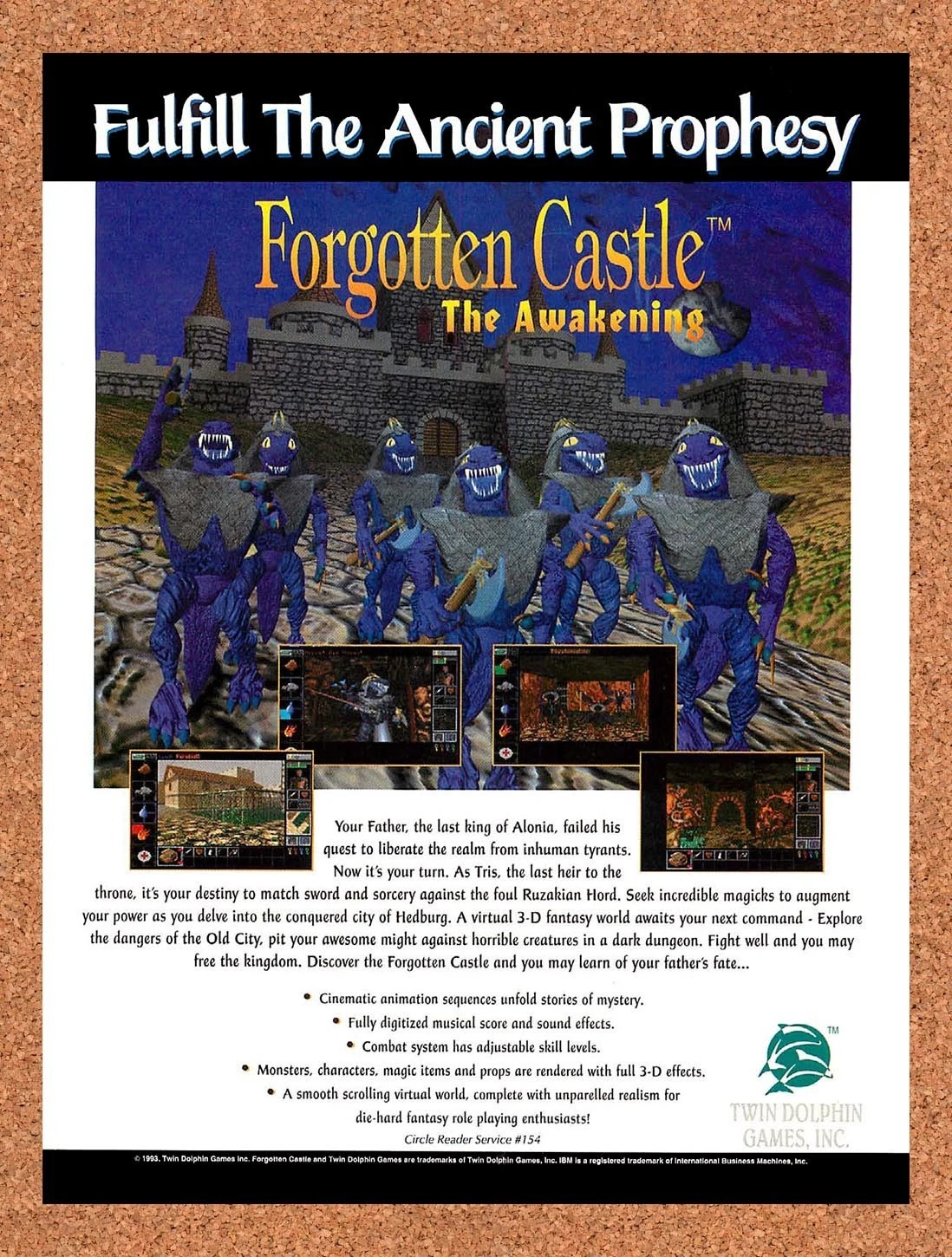
Trailer
TLDR:
Forgotten Castle: The Awakening was a planned first-person fantasy action role-playing game for MS-DOS PCs, developed by Twin Dolphin Games and promoted through Electronic Arts in 1993. It was shown during the period when several publishers were pursuing real-time 3D dungeon crawlers after the success of Ultima Underworld, and press coverage frequently placed it in that lineage.
The player was to control Tris, a young man raised without knowledge of his royal ancestry. After his mother's death, he learns that he is the heir to Alonia and that his father, the king, has disappeared. The kingdom has since come under the power of Ruzakian forces. Tris's quest would have taken him through Hedburg, the Old City, prisons, castle interiors, catacombs, and outdoor areas before a final battle with the Ruzakian ruler.
The game was described as a ten-level action RPG with sword fighting, spells, traps, puzzles, treasures, and magical items. Several previews stressed combat, but they also mentioned exploration and some non-linear progression through the kingdom. The controls were designed around the mouse, with a hideable interface and adjustable combat speed or difficulty.
Much of the contemporary interest in Forgotten Castle came from its technology. The game was advertised with smooth-scrolling 3D environments, textured walls, rendered monsters, animated cinematic scenes, digitized sound, and detailed interiors and outdoor spaces. Previewers singled out the irregular architecture and the integration of the monsters into the 3D world, both of which were meant to distinguish it from flatter dungeon crawlers.
Release dates in the press ranged from late 1993 to early 1994. The reported hardware requirements also varied, from a 386-class system with SVGA support to a 486 with 4 MB of RAM. Although previews were generally positive about its graphics and atmosphere, they also suggested that the game might have been unusually demanding for home PCs of the period.