


Already looks so much better and didn't even hate it, it was pretty average.Acrux wrote: ↑ August 7th, 2024, 04:02https://mod.io/g/weirdwest/m/first-person-mode11998 wrote: ↑ August 7th, 2024, 03:57Glad to see that he realized the 3rd person approach from Weird West wasn't the way.
We have a Steam curator now. You should be following it. https://store.steampowered.com/curator/44994899-RPGHQ/
General Immersive Sim Thread
-
1998

- Posts: 2949
- Joined: Jun 23, '23
- Location: Beregost
-
Geolocation
Adventurer's Guild
My Reviews
Somnus [Not Recommended]
New Arc Line [Early Access] [Informational]
Passageway of the Ancients [Not Recommended]
Beyond Galaxyland [Recommended]
Old School RPG [Informational]
SKALD: The Black Priory [Recommended]
My Steam
38123774
Somnus [Not Recommended]
New Arc Line [Early Access] [Informational]
Passageway of the Ancients [Not Recommended]
Beyond Galaxyland [Recommended]
Old School RPG [Informational]
SKALD: The Black Priory [Recommended]
My Steam
38123774
Tags:
-
rusty_shackleford

- Site Admin
- Posts: 45461
- Joined: Feb 2, '23
- Gender: Watermelon
-
Geolocation
Adventurer's Guild

I might have played weird west if it was just one story instead of six ones loosely stitched together.
Thank you for your attention to this matter!
Steam friend code: 40552640 https://steamcommunity.com/friends/add | email: [email protected]
Having trouble running an old Windows game?
Rusty's Stuff Collection
Steam friend code: 40552640 https://steamcommunity.com/friends/add | email: [email protected]
Having trouble running an old Windows game?
Rusty's Stuff Collection
-
1998
- Posts: 2949
- Joined: Jun 23, '23
- Location: Beregost
-
Geolocation
Adventurer's Guild
That was the only thing keeping me engaged, the gameplay itself was way too repetitive. Sure, even the different characters didn't play all too differently, but the stories were short, so easy to go through them once.rusty_shackleford wrote: ↑ August 7th, 2024, 04:20I might have played weird west if it was just one story instead of six ones loosely stitched together.
My Reviews
Somnus [Not Recommended]
New Arc Line [Early Access] [Informational]
Passageway of the Ancients [Not Recommended]
Beyond Galaxyland [Recommended]
Old School RPG [Informational]
SKALD: The Black Priory [Recommended]
My Steam
38123774
Somnus [Not Recommended]
New Arc Line [Early Access] [Informational]
Passageway of the Ancients [Not Recommended]
Beyond Galaxyland [Recommended]
Old School RPG [Informational]
SKALD: The Black Priory [Recommended]
My Steam
38123774
-
Roguey

- Turtle

- Posts: 3081
- Joined: Feb 4, '23
-
Geolocation
Adventurer's Guild
And yet you played Hard West which also told a story through multiple protagonists, curious.rusty_shackleford wrote: ↑ August 7th, 2024, 04:20I might have played weird west if it was just one story instead of six ones loosely stitched together.
-
rusty_shackleford
- Site Admin
- Posts: 45461
- Joined: Feb 2, '23
- Gender: Watermelon
-
Geolocation
Adventurer's Guild
iirc, It's one continuous story between two protagonists.Roguey wrote: ↑ August 7th, 2024, 10:58And yet you played Hard West which also told a story through multiple protagonists, curious.rusty_shackleford wrote: ↑ August 7th, 2024, 04:20I might have played weird west if it was just one story instead of six ones loosely stitched together.
Thank you for your attention to this matter!
Steam friend code: 40552640 https://steamcommunity.com/friends/add | email: [email protected]
Having trouble running an old Windows game?
Rusty's Stuff Collection
Steam friend code: 40552640 https://steamcommunity.com/friends/add | email: [email protected]
Having trouble running an old Windows game?
Rusty's Stuff Collection
-
Roguey
- Turtle
- Posts: 3081
- Joined: Feb 4, '23
-
Geolocation
Adventurer's Guild
The central conflict is between two people who used to know each other and then there are four side-stories involving four other characters who also end up involved in the main one.rusty_shackleford wrote: ↑ August 7th, 2024, 17:48iirc, It's one continuous story between two protagonists.

Additionally, in Woke West, you are ultimately playing one person who possesses five different people so it's also all one story.
-
rusty_shackleford
- Site Admin
- Posts: 45461
- Joined: Feb 2, '23
- Gender: Watermelon
-
Geolocation
Adventurer's Guild
Yeah but that game was fun because I didn't have to play as a woman at the start.Roguey wrote: ↑ August 7th, 2024, 17:57The central conflict is between two people who used to know each other and then there are four side-stories involving four other characters who also end up involved in the main one.rusty_shackleford wrote: ↑ August 7th, 2024, 17:48iirc, It's one continuous story between two protagonists.
Additionally, in Woke West, you are ultimately playing one person who possesses five different people so it's also all one story.
Thank you for your attention to this matter!
Steam friend code: 40552640 https://steamcommunity.com/friends/add | email: [email protected]
Having trouble running an old Windows game?
Rusty's Stuff Collection
Steam friend code: 40552640 https://steamcommunity.com/friends/add | email: [email protected]
Having trouble running an old Windows game?
Rusty's Stuff Collection
-
Acrux

- Turtle
- Posts: 6559
- Joined: Feb 8, '23
-
Geolocation
Adventurer's Guild
I hadn't seen this before, but it's an interesting post by RoSoDude a few years ago.
https://rosodudemods.wordpress.com/2020 ... t-a-genre/
“Immersive Sim” is a Design Philosophy, not a Genre
Posted on December 14, 2020 by rosodude
https://rosodudemods.wordpress.com/2020 ... t-a-genre/
“Immersive Sim” is a Design Philosophy, not a Genre
Posted on December 14, 2020 by rosodude
There seems to be a growing ambiguity about the “Immersive Sim”. It’s a term that gets thrown around a lot in discussions about games without a very clear notion of what it signifies, and it frequently causes confusion among the majority of participants who aren’t already versed in its jargon. The increased use of the term is matched by skepticism about its value, partly on the basis that the name itself is misleading, and partly on the basis that the classification it refers to is ultimately meaningless. As someone who spends altogether too much time thinking about “Immersive Sim” (or “ImSim”) games and their design, I thought it worthwhile to put forward my sense of the term and what it means in the hope of adding clarity to the discourse. Unfortunately, what follows is pedantic to a fault, and is unlikely to convince anyone on the other side of this debate. So at present, it will have to suffice as an articulation of my own ImSim cult ideology, which may at least provide a bit of perspective. So let’s get started.
Some history is warranted. “Immersive Sim” is a term that was originally coined by Doug Church [1] and popularized by Warren Spector [2] to refer to a canon of games by Looking Glass Studios and a few developers inspired by them in the 1990s and early 2000s. These comprise Ultima Underworld (1992) and its sequel (1993), System Shock (1994), and Thief: The Dark Project (1998) and its sequel (2000) by Looking Glass Studios, as well as System Shock 2 (1999) by Irrational Games in collaboration with LGS, Deus Ex (2000) by Ion Storm, and Arx Fatalis (2002) by Arkane Studios. This style of games more or less died out in the mid-2000s, with Deus Ex: Invisible War (2003) and Thief: Deadly Shadows (2004) from Ion Storm disappointing fans and failing to meet financial targets respectively. A slew of ImSim-adjacent titles like Vampire: The Masquerade — Bloodlines (2004), Pathologic (2005), Dark Messiah of Might and Magic (2006), and the S.T.A.L.K.E.R. series (2007-2009) borrowed some of the simulation elements of the prior titles, but with a lesser emphasis compared to other design priorities. Irrational Games’ spiritual follow-up to System Shock 2 in Bioshock (2007) was a resounding critical and commercial success, though it remains divisive among some diehard fans of early ImSims, many of whom reject its streamlined design (a category I would place myself under). Concurrently with the prior developments, Bethesda Softworks was inspired by Ultima Underworld to create their own real-time first-person RPG in The Elder Scrolls: Arena (1994), which featured similar design sensibilities but favored breadth over depth in terms of interactivity as well as the size and detail of game world, a trend which continued in TES: Daggerfall (1996), whose continent of Tamriel matched the size of Great Britain. This was reigned back in TES: Morrowind (2002), which features a hand-crafted world much smaller in scope, more comparable in scale to Bethesda’s subsequent TES: Oblivion (2006), Fallout 3 (2008), TES: Skyrim (2011), and Fallout 4 (2015) as well as Obsidian Entertainment’s Fallout: New Vegas (2010). While most agree Bethesda’s open world RPGs are not Immersive Sims, they nonetheless retain some Looking Glass design influences, and the company would help pave the way for the resurgence of the Immersive Sim in the following decade (notably, Bethesda lead designer Emil Pagliarulo is a Looking Glass alum who acted as a writer for Thief II).
Ultima Underworld (1992) set the standard for Immersive Sims and inspired games like The Elder Scrolls
After a relative absence from the industry outside of some titles that branched out into other areas, Immersive Sims re-entered public consciousness with Deus Ex: Human Revolution (2011) by a newly formed Eidos: Montreal and Dishonored (2012) by Arkane Studios, who had emerged from several canceled projects with a partnership with Bethesda Softworks. Both games were positively received and resurfaced interest in the Deus Ex and Thief games that inspired them. Follow-ups Deus Ex: Mankind Divided (2016) by Eidos: Montreal and Dishonored 2 (2016) and Prey (2017) by Arkane, the latter of which was a close spiritual successor to System Shock 2, were less financially successful than their predecessors, spawning concerns of a “second death of the Immersive Sim” [3][4]. At the same time, games like Metal Gear Solid V (2015), HITMAN (2016) and its sequel (2018), and Zelda: Breath of the Wild (2017) have incorporated elements of Immersive Sims into their designs beyond a superficial level, creating experiences that don’t really resemble Looking Glass games in terms of genre tropes and expectations, but do manage capture a similar spirit of open-ended problem solving with expressive toolsets and deep simulated interactivity (NOTE: I have not personally played the last four games, so take the preceding statement with a grain of salt). Additionally, there are a number of indie ImSim projects currently in development, seemingly on the coattails of the retro FPS revival occurring in the indie space, including the likes of Gloomwood by New Blood Interactive, Monomyth by Rat Tower, and Peripeteia by Ninth Exodus, which are similarly inspired by the pioneering titles in the ImSim design lineage.
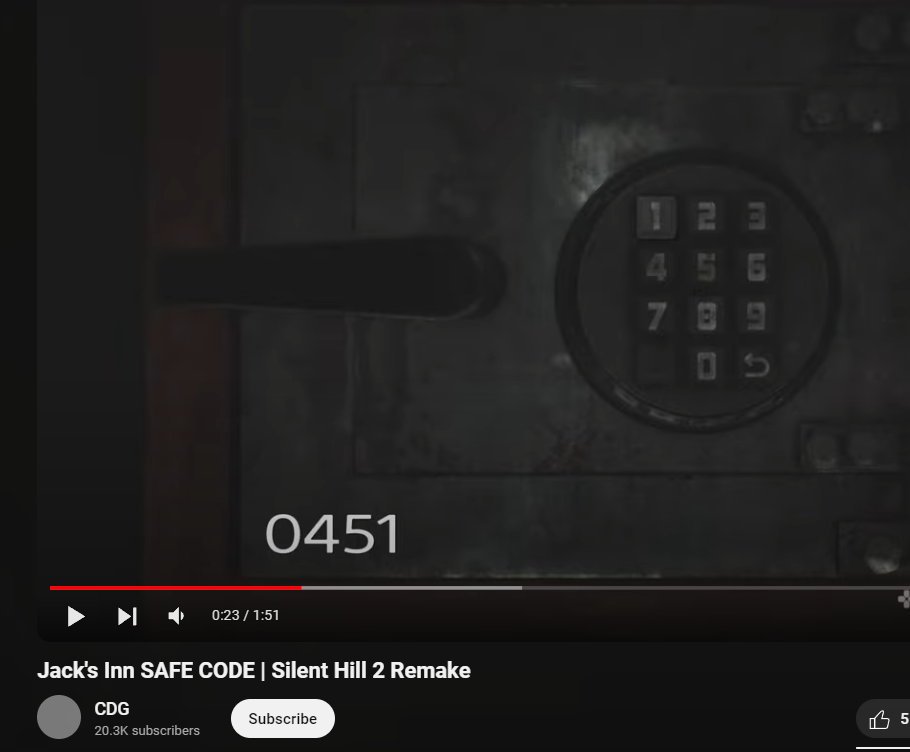
As a result of the contrast between the Immersive Sim’s wide appreciation among fellow game developers despite niche appeal among players in the early days, as well as the influence it maintained both during its absence and its sudden explosion in popularity in the last decade, Immersive Sims are in the peculiar position of being simultaneously more popular and more poorly understood than ever. Much of this can perhaps be chalked up to the fact that the ImSim renaissance via the rebooted Deus Ex franchise and Arkane’s recent efforts has largely been concerned with remixing ideas from Looking Glass et al, staying largely within the confines of hybrid FPS/RPG genre trappings. The latter-day Deus Ex games, the Dishonored series, and Prey can all be located as direct or spiritual successors to classic ImSims, and all feature common tropes such as playstyle options for stealth and combat, character upgrade trees that unlock new abilities, level design featuring “locks” that can be opened by “keys” in the form of these chosen abilities, inventory and resource management, narrative choice and consequence, optional reading material for world-building, easter egg references like “0451”, and so on. These peripheral tropes have become synonymous with Immersive Sims in popular discourse to the point that classic ImSims that don’t possess them (e.g. System Shock, Thief) may be unrecognizable to players familiar only with modern titles. I will attempt to address this paradox by providing a coherent definition for the Immersive Sim that admits all the seminal titles, the modern entries that have followed directly in their footsteps, and even games which are not traditionally seen as Immersive Sims, but which nonetheless meet all of the same qualifications. In this framework, I’ll argue that the Immersive Sim is not actually a genre of games so much as it is a philosophy concerned with certain design principles. I said it was going to be pedantic, so let’s start with what a “game” is, and what a “game genre” ought to be.
In brief, I’d argue that a game consists of mechanics (actions the player can take), systems (rules governing interactions), and some form of challenge brought on by a goal. Typically, game genres are thus classified according to their mechanics, systems, and/or structure of challenges. First person shooters are defined by shooting mechanics; role-playing games by character development systems; roguelike/lite games by procedurally generated challenges with permadeath, etc. It is worth noting, then, that the canonical Immersive Sims share relatively few of these basic elements between them. Ultima Underworld (along with Arx Fatalis) is a dungeon crawler RPG set in a single interconnected game world. System Shock is a dungeon crawler FPS hybrid with the same world structure as Ultima Underworld but none of the NPC interaction and no RPG elements. Thief TDP and TMA are mission-based stealth action games with no RPG elements, minimal shooting, and linear progression of levels. System Shock 2 is an FPS/RPG similar to its predecessor but more focused on combat and character building than nonlinear exploration. Deus Ex is a stealth action/FPS/RPG where each mission can span multiple levels which cannot be returned to once the mission is complete. There are barely any shared genre trappings between every one of these games other than being real-time and playing from the first-person perspective – rather, they tend to hybridize elements from various game genres. However, most would agree that there is a design through line that intersects them all, owing to the collective sensibilities of their creators. Thus, the Immersive Sim describes a design philosophy rather than a genuine game genre in its own right. Given the small number of concrete commonalities between classic ImSims, any classification should ideally be constructed from the minimal set of characteristics shared between them all. The qualities that I believe characterize the Immersive Sim design philosophy are as follows:
Real-time gameplay from the (usually first-person) perspective of a single player character
Influence from role-playing games, particularly in promoting player agency
Systems-driven gameplay with a focus on simulation
As I understand it, “Immersive” comes mostly from #1 since the player is directly behind the eyes of the player character in real time (this is debatable as immersion is a higher-order result of various factors which are highly subjective), and “Sim” mostly comes from #3, as the rules (systems) that define gameplay are largely derived from simulating interactions with the game world in a believable manner. The biggest thing that the name misses is #2, which is a subtler element to pin down since it’s both a comment of history (i.e. the ethos of Ultima Underworld was to make an immersive dungeon crawler RPG that replaced dicerolls with computer simulation wherever possible) and also of structure (the player should have open-ended goals that allow them to apply the various tools at their disposal in a logical manner). It’s #2 that seems to draw most players to ImSims as a sort of secret sauce that holds the experience together. Moreover, it’s more of a design goal than a descriptive quality, and thus has a subjective component that makes it rather difficult to concretely pin down. However, we can look for examples in classic ImSims.
While games like System Shock and Thief don’t contain any character development systems typical of role-playing games, they still offer meaningful agency in how the player tackles obstacles which resembles the improvisatory gameplay afforded by the open-ended rulesets of pen and paper RPGs. For example, in System Shock, the Beta quadrant of the Research level is bathed in total darkness, as the power has gone out to that sector. In many other games, the power breaker would have to be reset in another quadrant before the player can proceed in the area. This is an option in System Shock; however, light and dark are dynamically simulated and can also be affected by the player’s weapons. During my first playthrough, I decided to explore the Beta quadrant before I found the power breaker by lighting my way with my Sparq beam blaster, taking aim at the cyborg drones who ambushed me during the brief strobe of brightness following each shot. This is just one example of how ImSims can present problems using generic systems which afford emergent solutions, encouraging creative application of real-world logic to tangible problems. Similarly, in a Thief II mission like The Bank, the player will study the map and scout out the area to strategize how they’ll break in, planning the route to their objectives. As an alternative to the well-guarded main entrance, one player might first slip in through the basement window; another by climbing up to a second floor balcony; a third by a rooftop door to the meeting room rafters that can be rappelled down using **** arrows. Once inside, they’ll encounter various obstacles — human guards and patrolling robots together with noisy marble floors and brightly lit hallways which in turn can be circumvented by the player’s moss and water arrows, but since these are limited, they have to be used strategically. In my playthrough, I found that my most reliable option to reach the vault was to create chaos in the Guard Room from a dark perch and slip past in the confusion (I highly recommend The Playing Field’s breakdown and analysis of this level for more). Every player’s experience with the level will differ in major and minor ways, generating unique player stories in a vein similar to the collaborative storytelling of pen and paper RPGs.
Map of the Bank in Thief II, featuring multiple branching paths to every major objective
Of course, RPG elements can be seen a natural fit for this type of experience, just as they are in pen and paper RPGs. There’s a split among ImSim enthusiasts who prefer the System Shock/Thief approach for its lack of any abstract character building systems vs. those who enjoy their inclusion which bears mention here, but as a person aligned slightly more with the latter I won’t dwell too much on the argument. With the player’s toolset limited by their character build choices, levels can be built with various opportunities such as as a locked door which must be picked open or a path blocked by a heavy object which must be lifted out of the way that is only available to a player with certain abilities unlocked, thus guaranteeing that players will have a unique experience based on their upgrade choices. In the case of Deus Ex, different routes will test multiple (player and character) skills, with branches and loops that afford a multitude of combinations in various character builds. Because character upgrades have a degree of granularity, this is also more nuanced than the binary ability gating seen in the modern Deus Ex games, as opening up paths will require different amounts of resources depending on character upgrades and equipment choices, adding a layer of long-term resource management to pathing decisions. Investing into technical skills doesn’t just open up options for tackling levels, but also can grant access to helpful items such as ammunition/grenades, lockpicks/multitools, medkits/biocells, or even weapon mods and augmentation upgrade canisters, which feeds back into stealth, combat, and exploration. Every player is expected to engage with these core tenets of gameplay, but they are given a large degree of agency in their approach. This is the mold in which post-2011 ImSims with RPG elements generally operate, though this is just one of many potential paradigms. Ultima Underworld, System Shock 2, and Arx Fatalis use their RPG elements to promote player agency via densely simulated object interaction moreso than lock-and-key level design — weapon degradation, light and physics manipulation with spells, damage type vulnerabilities, item crafting and alchemy, bartering systems, and control over AI states all interface with various character stats and skills to produce multiple methods of solving problems with benefits and drawbacks, while level obstacles are presented at chokepoints and force the player to use their tools to deal with them rather than finding an alternate way around as in Deus Ex or Thief.
Deus Ex is well-regarded for its level design affording multiple approaches for different builds and playstyles
Notably, other than playing from the third-person perspective, games like MGSV and Zelda: BotW seem to exhibit all 3 qualities shared by classic ImSims, even if they do not reproduce the genre tropes that have become typically associated with them. A design philosophy based around promoting player agency via real-time simulation is ultimately a rather broad thing, just as problems in the real world can be resolved by any number of possible approaches. However, this by no means makes the design philosophy all-encompassing — plenty of games are not primarily systems-driven (e.g. an action game like Devil May Cry is primarily mechanics-driven), and among those that are, many are built around abstract systems that require explicit tutorialization (e.g. Final Fantasy VII’s materia system is very deep and leads to a lot of agency in character building, but must be understood entirely in the context of its own abstract rules). The essential value of simulating phenomena familiar to the player is that systems can be implicitly communicated — the damage system in the first System Shock is highly complex, factoring in armor penetration, critical chance multipliers, and type vulnerabilities for both the source and target, but the effectiveness of ammo types is intuitively conveyed to the player via real-world expectations; hollow-point magnum rounds have low armor penetration but high chance to critically wound an organic mutant, while slug rounds have a better chance of piercing the thick metal plating of an armored cyborg. In this sense, Immersive Sim gameplay can be viewed as a sort of dialogue between player and game — the player asks “can I do this?”, and frequently the systems respond with “yes!”, encouraging targeted player experimentation in place of a one-way conduit of information from the game to player. This can certainly lead to emergent solutions to problems unforeseen by the designer, but the dirty secret of ImSim design is that much of the time, the designer explicitly planned for your novel approach. However, it’s precisely those moments in which generic systems interact with hand-placed designs in logical but unplanned ways that maintains the illusion of a simulation in which anything is possible. That sense of discovery clearly resonates with players on a primal level, and sets the Immersive Sim apart from other games after the RPG systems, hacking minigames, and conspicuously placed vents are stripped away.
The Immersive Sim is a design philosophy that’s inspired a lot of games across many genres, but for its own part seems increasingly pigeonholed by the genre conventions of the original games that pioneered it. Ultima Underworld, System Shock, Thief, and Deus Ex were wildly creative and notably distinct from each other in the kinds of worlds they simulated and the roles players were given to inhabit. While I’m happy to play new games that offer reverence to these classic games by incrementally refining and expanding on their ideas (there’s still plenty of room for creativity in that space), I’d also like to see some original takes on the Immersive Sim that offer wholly new experiences; player fantasies other than the hero Avatar, cyberpunk hacker, sneaky rogue, or secret agent; novel systems that simulate complex webs of interaction beyond security cameras linked to turrets and alarms. Thankfully, things need not end on such a wistful note. Tune in next time for a deep dive into an underappreciated Immersive Sim from 2019 that does all of these things and much more.
-
Tweed

- Turtle
- Posts: 6837
- Joined: Feb 2, '23
-
Geolocation
Adventurer's Guild


I tried to tell Rusto it's a design philosophy, but he doesn't listen to me.
-
rusty_shackleford
- Site Admin
- Posts: 45461
- Joined: Feb 2, '23
- Gender: Watermelon
-
Geolocation
Adventurer's Guild
explain how ultima vi isn't an "imsim"
the idea that spector popularized it or created it is ridiculous, he just took ultima's existing design and applied it to UU
the idea that spector popularized it or created it is ridiculous, he just took ultima's existing design and applied it to UU
Last edited by rusty_shackleford on September 18th, 2024, 19:40, edited 1 time in total.
Thank you for your attention to this matter!
Steam friend code: 40552640 https://steamcommunity.com/friends/add | email: [email protected]
Having trouble running an old Windows game?
Rusty's Stuff Collection
Steam friend code: 40552640 https://steamcommunity.com/friends/add | email: [email protected]
Having trouble running an old Windows game?
Rusty's Stuff Collection
-
Tweed
- Turtle
- Posts: 6837
- Joined: Feb 2, '23
-
Geolocation
Adventurer's Guild
If you want to split hairs Ultima V has primordial makings of imsim as well. Day and night cycles where people get up, go to work, stop to eat and spend time at the tavern. Some even do a few other things before returning to other tasks. You can pick crops, eat the food off of tables, and play the harpsichord. You can also search various containers, push barrels, fire cannons, take torches off of walls to light your way at night, and free people from the stocks. You can even murder people in their sleep (some Avatar you are). V tried hard to give people freedom despite limitations and VI expanded on that a lot with VII going even farther. Real shame VIII takes all of that away.rusty_shackleford wrote: ↑ September 18th, 2024, 19:39explain how ultima vi isn't an "imsim"
the idea that spector popularized it or created it is ridiculous, he just took ultima's existing design and applied it to UU
-
rusty_shackleford
- Site Admin
- Posts: 45461
- Joined: Feb 2, '23
- Gender: Watermelon
-
Geolocation
Adventurer's Guild
V didn't have the open-ended problem solving tho, it just had the beginnings of the design philosophy.Tweed wrote: ↑ September 18th, 2024, 20:37If you want to split hairs Ultima V has primordial makings of imsim as well. Day and night cycles where people get up, go to work, stop to eat and spend time at the tavern. Some even do a few other things before returning to other tasks. You can pick crops, eat the food off of tables, and play the harpsichord. You can also search various containers, push barrels, fire cannons, take torches off of walls to light your way at night, and free people from the stocks. You can even murder people in their sleep (some Avatar you are). V tried hard to give people freedom despite limitations and VI expanded on that a lot with VII going even farther. Real shame VIII takes all of that away.rusty_shackleford wrote: ↑ September 18th, 2024, 19:39explain how ultima vi isn't an "imsim"
the idea that spector popularized it or created it is ridiculous, he just took ultima's existing design and applied it to UU
Either way, the idea that it started with UU is completely misunderstanding how UU came to be. It was just applying the dominant design philosophy of Origin at that point in time to their first-person dungeon crawler.
Thank you for your attention to this matter!
Steam friend code: 40552640 https://steamcommunity.com/friends/add | email: [email protected]
Having trouble running an old Windows game?
Rusty's Stuff Collection
Steam friend code: 40552640 https://steamcommunity.com/friends/add | email: [email protected]
Having trouble running an old Windows game?
Rusty's Stuff Collection
-
Kalarion

- Turtle
- Posts: 2163
- Joined: Feb 2, '23
-
Geolocation
Adventurer's Guild


VIII gets **** on for good reason, but I nevertheless have some fond memories of playing it. Very few gaming experiences will match the rush of joy I had when I read about Slayer in a random book - and then found it in some cave I stumbled upon (I would later find out it was actually called the Slayer Cave).Tweed wrote: ↑ September 18th, 2024, 20:37If you want to split hairs Ultima V has primordial makings of imsim as well. Day and night cycles where people get up, go to work, stop to eat and spend time at the tavern. Some even do a few other things before returning to other tasks. You can pick crops, eat the food off of tables, and play the harpsichord. You can also search various containers, push barrels, fire cannons, take torches off of walls to light your way at night, and free people from the stocks. You can even murder people in their sleep (some Avatar you are). V tried hard to give people freedom despite limitations and VI expanded on that a lot with VII going even farther. Real shame VIII takes all of that away.rusty_shackleford wrote: ↑ September 18th, 2024, 19:39explain how ultima vi isn't an "imsim"
the idea that spector popularized it or created it is ridiculous, he just took ultima's existing design and applied it to UU
-
rusty_shackleford
- Site Admin
- Posts: 45461
- Joined: Feb 2, '23
- Gender: Watermelon
-
Geolocation
Adventurer's Guild
How 'bout Seven: Days Long Gone
rusty_shackleford wrote: ↑ August 6th, 2023, 20:25I guess it's sorta like an isometric/birds-eye-view doosex/thief, the opening area/tutorial is really subpar and turned me away twice. I've never seen anyone discussing it, released with a big "meh" and then quickly forgotten. It's not an RPG despite advertising itself as such. If you like stealth games, give it a try. Has very good controls, probably some of the best for birds-eye-view style games.
The prologue sucks, btw. If you're going to try it, just keep going until after that at least.
Thank you for your attention to this matter!
Steam friend code: 40552640 https://steamcommunity.com/friends/add | email: [email protected]
Having trouble running an old Windows game?
Rusty's Stuff Collection
Steam friend code: 40552640 https://steamcommunity.com/friends/add | email: [email protected]
Having trouble running an old Windows game?
Rusty's Stuff Collection
-
wndrbr

- Turtle
- Posts: 3578
- Joined: Feb 4, '23
- Location: Siberia
- Gender: Dinosaur
-
Geolocation
Adventurer's Guild
-
Rigwort
- Posts: 196
- Joined: Feb 26, '23
- Gender: Dinosaur
-
Geolocation

One thing I think im-sims do better than any other genre is the UI-world interaction. I've seen this mostly in Ultima Underworld and Arx Fatalis, don't know if any other immersive sim has this. But the fact that all objects can be dragged from your inventory and thrown/placed adds that necessary extra something this pseudo-genre has.
Really, this whole UI/Gameworld interaction is what I find is missing from most 3D crpgs. For a lot of 2D RPGs and roguelikes, this integration is natural (especially for any tile-based games where the UI is part of the screen), and digging around in your inventory doesn't completely break you away from the game. For 3D games, however, I find that my mind is split between the UI "mode" and the gameworld "mode". This means games with more integrated UIs become more "tactile".
I think my favorite example of this is actually for a Morrowind mod (you may all groan), but because it's a mod I find it demonstrates this idea well. In Vanilla Morrowind, when you drag an item from your inventory, you can place it in the world based on the surface closest to your cursor (or drop it at your feet). So this mod (Ashfall) has cooking as a component. Now, most mods would simply implement a UI element for cooking when you activate a campfire and either show a bar that fills as your meal cooks, or just skip that and give you a piece of cooked meat. Not Ashfall. What it did was prepare the fire (via a UI popup) then you would actually take the pan you bought, place it over the fire using the regular inventory dragging, then place the meat on the pan. The meat would then cook and after a while would appear so (just like my beloved Arx).
What I'm getting at here is that this kind of tactility belongs not only in immersive sims, but should honestly be wherever it can be placed. It's not enough to just have a static animation either. I think the real driving philosophy of im-sims is this "tactility" that still hasn't really been used to that great of effect. Imagine taking some time to rest as an adventurer, in a dark forest, listening to your meat cook over the fire, then being ambushed! Not only do you have to defend yourself, you'd also want to make sure you finish it before your meat burns. Or something like that. Imagine the possibilities!
Really, this whole UI/Gameworld interaction is what I find is missing from most 3D crpgs. For a lot of 2D RPGs and roguelikes, this integration is natural (especially for any tile-based games where the UI is part of the screen), and digging around in your inventory doesn't completely break you away from the game. For 3D games, however, I find that my mind is split between the UI "mode" and the gameworld "mode". This means games with more integrated UIs become more "tactile".
I think my favorite example of this is actually for a Morrowind mod (you may all groan), but because it's a mod I find it demonstrates this idea well. In Vanilla Morrowind, when you drag an item from your inventory, you can place it in the world based on the surface closest to your cursor (or drop it at your feet). So this mod (Ashfall) has cooking as a component. Now, most mods would simply implement a UI element for cooking when you activate a campfire and either show a bar that fills as your meal cooks, or just skip that and give you a piece of cooked meat. Not Ashfall. What it did was prepare the fire (via a UI popup) then you would actually take the pan you bought, place it over the fire using the regular inventory dragging, then place the meat on the pan. The meat would then cook and after a while would appear so (just like my beloved Arx).
What I'm getting at here is that this kind of tactility belongs not only in immersive sims, but should honestly be wherever it can be placed. It's not enough to just have a static animation either. I think the real driving philosophy of im-sims is this "tactility" that still hasn't really been used to that great of effect. Imagine taking some time to rest as an adventurer, in a dark forest, listening to your meat cook over the fire, then being ambushed! Not only do you have to defend yourself, you'd also want to make sure you finish it before your meat burns. Or something like that. Imagine the possibilities!
-
1998
- Posts: 2949
- Joined: Jun 23, '23
- Location: Beregost
-
Geolocation
Adventurer's Guild
First person dungeon crawlers often do this, Grimrock etc.Rigwort wrote: ↑ October 31st, 2024, 23:42One thing I think im-sims do better than any other genre is the UI-world interaction. I've seen this mostly in Ultima Underworld and Arx Fatalis, don't know if any other immersive sim has this. But the fact that all objects can be dragged from your inventory and thrown/placed adds that necessary extra something this pseudo-genre has.
Really, this whole UI/Gameworld interaction is what I find is missing from most 3D crpgs.
My Reviews
Somnus [Not Recommended]
New Arc Line [Early Access] [Informational]
Passageway of the Ancients [Not Recommended]
Beyond Galaxyland [Recommended]
Old School RPG [Informational]
SKALD: The Black Priory [Recommended]
My Steam
38123774
Somnus [Not Recommended]
New Arc Line [Early Access] [Informational]
Passageway of the Ancients [Not Recommended]
Beyond Galaxyland [Recommended]
Old School RPG [Informational]
SKALD: The Black Priory [Recommended]
My Steam
38123774
-
Zothique

- Posts: 894
- Joined: Jun 11, '24
-
Geolocation
-
rusty_shackleford
- Site Admin
- Posts: 45461
- Joined: Feb 2, '23
- Gender: Watermelon
-
Geolocation
Adventurer's Guild
Warren Spector considered Thief to be an RPG, which would imply he (correctly!) believed 'immersive sim' to be a type of RPG.
Warren Spector wrote:Recent trends favor smaller, deeply simulated worlds over large, contiguous spaces an inch deep and miles wide, at least in terms of depth of simulation. Further, many RPGs these days - my own Deus Ex, Thief: The Dark Project, Diablo, and others - are adopting a mission orientation. They break the world up into more manageable sections to minimize walking around and maximize fun. Mission structure also goes hand-in-hand with linearity and, together, they allow us to tell the best stories possible.
Thank you for your attention to this matter!
Steam friend code: 40552640 https://steamcommunity.com/friends/add | email: [email protected]
Having trouble running an old Windows game?
Rusty's Stuff Collection
Steam friend code: 40552640 https://steamcommunity.com/friends/add | email: [email protected]
Having trouble running an old Windows game?
Rusty's Stuff Collection
-
maidenhaver

- Posts: 9452
- Joined: Apr 17, '23
- Location: ROLE PLAYING GAME
-
Geolocation
Adventurer's Guild
-
Zothique
- Posts: 894
- Joined: Jun 11, '24
-
Geolocation
Yeah, you play the "role" of a thief. Honestly, the best vision of a thief I think that has ever been explored in a game before. Hasn't been toppled yet (everyone play The Black Parade if you haven't yet... incredible that this **** is a free mod).rusty_shackleford wrote: ↑ November 10th, 2024, 00:24Warren Spector considered Thief to be an RPG, which would imply he (correctly!) believed 'immersive sim' to be a type of RPG.Warren Spector wrote:Recent trends favor smaller, deeply simulated worlds over large, contiguous spaces an inch deep and miles wide, at least in terms of depth of simulation. Further, many RPGs these days - my own Deus Ex, Thief: The Dark Project, Diablo, and others - are adopting a mission orientation. They break the world up into more manageable sections to minimize walking around and maximize fun. Mission structure also goes hand-in-hand with linearity and, together, they allow us to tell the best stories possible.
-
rusty_shackleford
- Site Admin
- Posts: 45461
- Joined: Feb 2, '23
- Gender: Watermelon
-
Geolocation
Adventurer's Guild
More has to do with the definition of RPG being hard to pin down, and "problem solving simulator" is an entirely valid one. Not to be confused with solving puzzles(e.g., many adventure games.) The difference between a puzzle and a problem is trying to untie the gordian knot vs pulling out your sword and cutting it.Zothique wrote: ↑ November 10th, 2024, 04:31Yeah, you play the "role" of a thief. Honestly, the best vision of a thief I think that has ever been explored in a game before. Hasn't been toppled yet (everyone play The Black Parade if you haven't yet... incredible that this **** is a free mod).rusty_shackleford wrote: ↑ November 10th, 2024, 00:24Warren Spector considered Thief to be an RPG, which would imply he (correctly!) believed 'immersive sim' to be a type of RPG.Warren Spector wrote:Recent trends favor smaller, deeply simulated worlds over large, contiguous spaces an inch deep and miles wide, at least in terms of depth of simulation. Further, many RPGs these days - my own Deus Ex, Thief: The Dark Project, Diablo, and others - are adopting a mission orientation. They break the world up into more manageable sections to minimize walking around and maximize fun. Mission structure also goes hand-in-hand with linearity and, together, they allow us to tell the best stories possible.
Thank you for your attention to this matter!
Steam friend code: 40552640 https://steamcommunity.com/friends/add | email: [email protected]
Having trouble running an old Windows game?
Rusty's Stuff Collection
Steam friend code: 40552640 https://steamcommunity.com/friends/add | email: [email protected]
Having trouble running an old Windows game?
Rusty's Stuff Collection
-
Tweed
- Turtle
- Posts: 6837
- Joined: Feb 2, '23
-
Geolocation
Adventurer's Guild
Where's the stats?rusty_shackleford wrote: ↑ November 10th, 2024, 00:24Warren Spector considered Thief to be an RPG, which would imply he (correctly!) believed 'immersive sim' to be a type of RPG.Warren Spector wrote:Recent trends favor smaller, deeply simulated worlds over large, contiguous spaces an inch deep and miles wide, at least in terms of depth of simulation. Further, many RPGs these days - my own Deus Ex, Thief: The Dark Project, Diablo, and others - are adopting a mission orientation. They break the world up into more manageable sections to minimize walking around and maximize fun. Mission structure also goes hand-in-hand with linearity and, together, they allow us to tell the best stories possible.
-
rusty_shackleford
- Site Admin
- Posts: 45461
- Joined: Feb 2, '23
- Gender: Watermelon
-
Geolocation
Adventurer's Guild
Ability/item unlocks.Tweed wrote: ↑ November 10th, 2024, 04:39Where's the stats?rusty_shackleford wrote: ↑ November 10th, 2024, 00:24Warren Spector considered Thief to be an RPG, which would imply he (correctly!) believed 'immersive sim' to be a type of RPG.Warren Spector wrote:Recent trends favor smaller, deeply simulated worlds over large, contiguous spaces an inch deep and miles wide, at least in terms of depth of simulation. Further, many RPGs these days - my own Deus Ex, Thief: The Dark Project, Diablo, and others - are adopting a mission orientation. They break the world up into more manageable sections to minimize walking around and maximize fun. Mission structure also goes hand-in-hand with linearity and, together, they allow us to tell the best stories possible.
It has been repeatedly noted that Metroidvania is at least RPG-adjacent for a long time.But are all of these statistics really necessary? Of course not. There's another way. In recent years, a small, very vocal and extremely persuasive minority of the design community has begun to argue in favor of statistics-free RPGs or, as some call it, the immersive experience. They feel that hidden die rolls and finely tracked statistics are unnecessary hold-overs from paper gaming. These designers pose a number of interesting questions. Why use a crutch from another medium, one with limited simulation capabilities, in computer gaming, which has far more powerful simulation tools available? Why not let player choices determine character differences? Does anyone think the difference between a 17 and an 18 in strength or between an 89 and a 90 in lock picking should have an impact on game play?
So what do these statistics-foes offer as an alternative in terms of character differentiation and the player's ability to impact a story? The two most important alternative tools available are Inventory and Skills/Special Abilities.
I'd say the main thing holding them back is they're generally far too linear with very little problem solving, they're puzzles.
Last edited by rusty_shackleford on November 10th, 2024, 04:53, edited 1 time in total.
Thank you for your attention to this matter!
Steam friend code: 40552640 https://steamcommunity.com/friends/add | email: [email protected]
Having trouble running an old Windows game?
Rusty's Stuff Collection
Steam friend code: 40552640 https://steamcommunity.com/friends/add | email: [email protected]
Having trouble running an old Windows game?
Rusty's Stuff Collection
-
rusty_shackleford
- Site Admin
- Posts: 45461
- Joined: Feb 2, '23
- Gender: Watermelon
-
Geolocation
Adventurer's Guild
I think it was @wndrbr or @Roguey that complained about this, trying to do something in a Metroid game that seemed logical but you just couldn't.rusty_shackleford wrote: ↑ November 10th, 2024, 04:46It has been repeatedly noted that Metroidvania is at least RPG-adjacent for a long time.
I'd say the main thing holding them back is they're generally far too linear with very little problem solving, they're puzzles.
Thank you for your attention to this matter!
Steam friend code: 40552640 https://steamcommunity.com/friends/add | email: [email protected]
Having trouble running an old Windows game?
Rusty's Stuff Collection
Steam friend code: 40552640 https://steamcommunity.com/friends/add | email: [email protected]
Having trouble running an old Windows game?
Rusty's Stuff Collection
-
wndrbr
- Turtle
- Posts: 3578
- Joined: Feb 4, '23
- Location: Siberia
- Gender: Dinosaur
-
Geolocation
Adventurer's Guild
Metroidvanias were invented by the japs, and japs are very abstraction-minded people. Their game design philosophy is based on arcade machines and oldschool Wizardry, they dislike simulations.
-
Roguey
- Turtle
- Posts: 3081
- Joined: Feb 4, '23
-
Geolocation
Adventurer's Guild
The new Zeldas, that take inspiration from western games, are imsims though. 
-
rusty_shackleford
- Site Admin
- Posts: 45461
- Joined: Feb 2, '23
- Gender: Watermelon
-
Geolocation
Adventurer's Guild
Are Larian games the only turn-based immy simmies other than perhaps Ultima VI?
Last edited by rusty_shackleford on January 27th, 2025, 02:19, edited 2 times in total.
Thank you for your attention to this matter!
Steam friend code: 40552640 https://steamcommunity.com/friends/add | email: [email protected]
Having trouble running an old Windows game?
Rusty's Stuff Collection
Steam friend code: 40552640 https://steamcommunity.com/friends/add | email: [email protected]
Having trouble running an old Windows game?
Rusty's Stuff Collection
-
wndrbr
- Turtle
- Posts: 3578
- Joined: Feb 4, '23
- Location: Siberia
- Gender: Dinosaur
-
Geolocation
Adventurer's Guild
-
wndrbr
- Turtle
- Posts: 3578
- Joined: Feb 4, '23
- Location: Siberia
- Gender: Dinosaur
-
Geolocation
Adventurer's Guild
fallout 1-2 had some of those 'imsim-like' interactive elements, like being able to blow up doors using c4. Very limited, but still.rusty_shackleford wrote: ↑ January 27th, 2025, 02:19Are Larian games the only turn-based immy simmies other than perhaps Ultima VI?