


Note: for related woke content in this game, see this post.
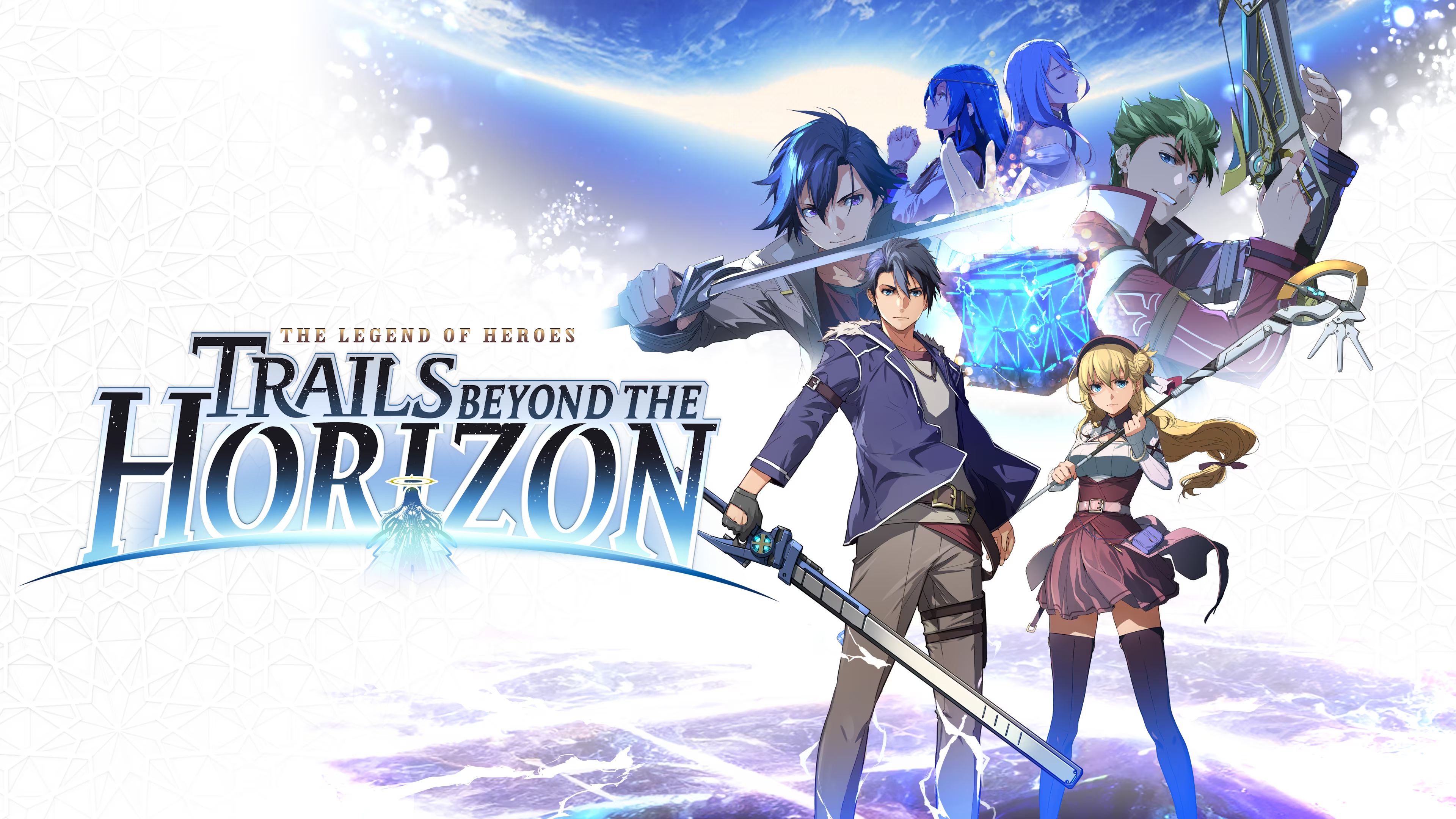
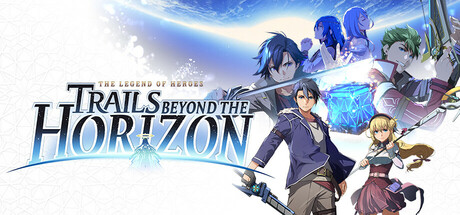
After 101 hours of play, I have finished Trails Beyond the Horizon on nightmare difficulty.
I overall enjoyed the game and will buy the next one on day 1, but there were severe issues with the story that frustrated and disappointed me.
This game is a direct continuation of the last one, so you should at the very least have played the first two Calvard games before playing this one: Trails Through Daybreak 1 (my review here) and Trails Through Daybreak 2 (review here).
This game is split into three routes, featuring two protagonists from earlier games in the series: Rean Schwarzer from the five Trails of Cold Steel games, and Kevin from Trails in the Sky the 3rd. Plot points are also built on Trails of Cold Steel IV and Trails into Reverie, which were a soft ending for the first 9 games in the franchise. So you are incentivized to play this game after having played all other Trails games, though it is not strictly required.
Despite my misgivings with the story, there is still a lot to like about this game, so I will start with that stuff first before diving into the story issues.
Gameplay
The gameplay experience is near identical to the prior game. The only change this time is the addition of ZOC (if this is an abbreviation for something, it is not given). When a character is in boost state, you can consume an additional bar of boost to enter ZOC, meaning that you get an additional turn in a row. This allows you to use an S-craft on the first turn of ZOC and then immediately get another turn after that to do something else, negating the huge delay penalty that typically comes with using an S-craft.
Bosses can now also use ZOC on their turn too, but they will get three turns in a row. When using ZOC, the boss cannot be interrupted by popping your S-crafts. So now you really need to carefully consider your defenses and use of turn manipulation in preparation for a boss using his ZOC.
The game's difficulty curve falls off after the midgame, and does not remain challenging all the way through to the end like Trails into Daybreak 2. I bursted down the final two fights of the game very quickly, which is anticlimactic compared to the second game's final two fights where I had to be on the edge of my seat and really carefully consider what I was going to do since I was one mistake away from a wipe.
Part of this is because in this game, you can equip two Holo Cores (Altera and Pater Mater) which have extremely powerful brave orders. Your inventory is shared amongst all of the parties, and you can just keep shifting these two Holo Cores around from party to party before every boss fight. There are no segments in this game like in Trails into Reverie where you have to arm two or three different parties to survive independently for a while without being able to swap out their gear in between.
The game has the same absence of encounter design as the prior two games. Burst down the adds at the beginning, keep shields and evasion up so you don't die to the boss' burst, etc. Every fight is pretty rote execution. There are no novel boss encounters like in Daybreak 2 where Jorda could capture your party members, and the balance of the enemies fall off in the midgame. There is nothing challenging like Daybreak's 2 final battle where the boss could summon very tanky, very threatening adds.
This game does have a few "corrupted" bosses, which have massive HP inflation. But it does not make them more challenging to fight, it just makes them annoying — by taking a lot longer to kill — in the earlygame when you don't have great equipment yet. Throughout the Van chapters, you will fight a recurring boss who will keep spamming a brave order. It is mildly annoying having to expend boost gauge trying to counter, but again this does not make for very engaging gameplay.
This game does have an overreliance on having untargetable enemy bosses. They are usually non-fighter characters who stand outside of the battlefield, and when it is their turn they will use some sort of buff ability on their fellow bosses in the arena, or a debuff on you, or cast a brave order that you have to overwrite. I actually like it mechanically, but narratively there is suddenly a lot of normies (particularly women) getting involved in confrontations with extremely powerful people that they have no business being in. This overlaps with a story complaint I have about characters making really bad decisions that should not work out for them. It is a little annoying you can't beat these morons.
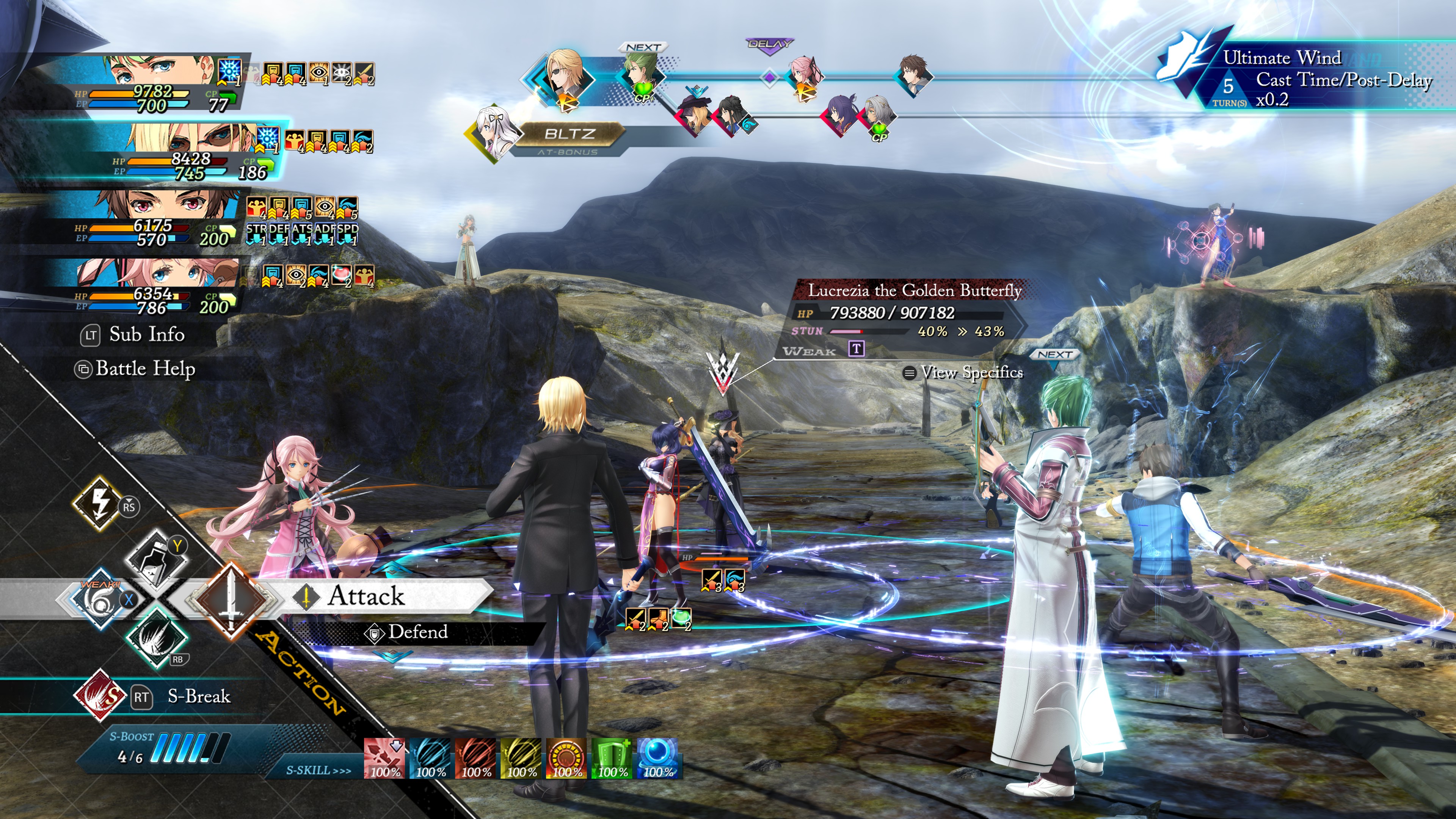
Prior uses of this mechanic was for violent adversaries who took on a support role for their comrades, like the Red Constellation merc Gareth sniping you from up on a bridge in Trails of Cold Steel IV, or CID agent Kilika attacking you from on top of a pillar in Trails Through Daybreak 2. This game does use it well for a weak, cowardly villain who will stand from afar and let his mech do the work.
Horizon does not add new Holo Cores to change up your builds or playstyles. (Altera and Pater Mater were technically in the prior game, but were backloaded towards the very end).
The Marchen Garten returns, now called the Grim Garten. It is a roguelite dungeon in which you can mix and match your favorite characters from a roster of 24 party members and run through different floors. Every other floor has an entertaining encounter with Ouroboros villains. It is quite fun.
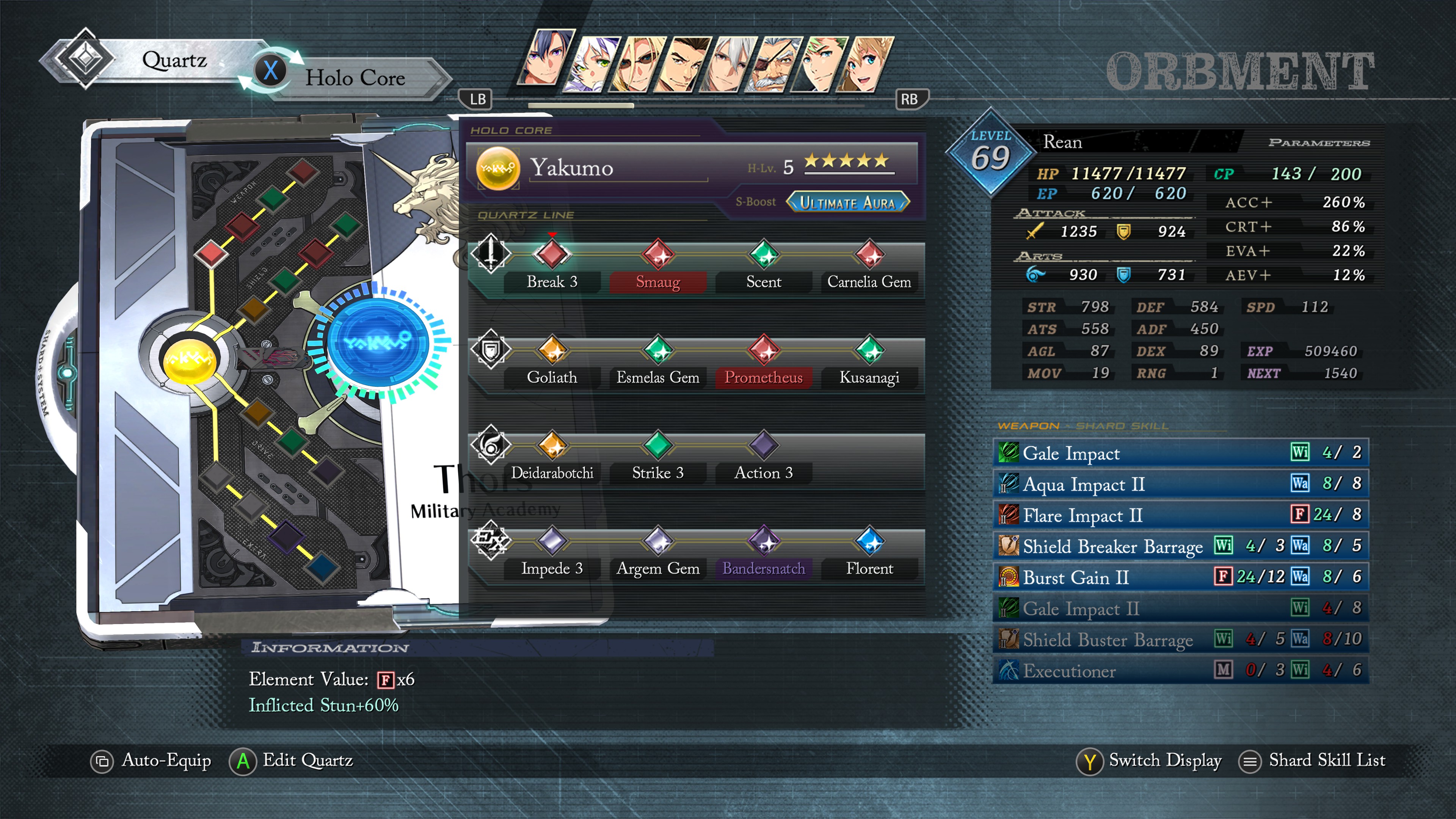
There are some nitpicks I had with the Orbment system that have become more pronounced after 300+ hours of Calvard games. The system is exacerbated by the addition of ZOC and the need for more boost gauge. Namely, the best way to build characters is to achieve the same handful of shard skills in each quartz line: Burst Gain II, Auto Impassion Guard, Ark Feather, and Heavenly Fortune II. This game gives you just enough named quartz with high enough sepith values so that you can deviate from this a bit for your two or three most favorite characters, but for most of the cast their grids will look very similar and have the same shard skills.
Visuals
The game generally looks great and very appealing.
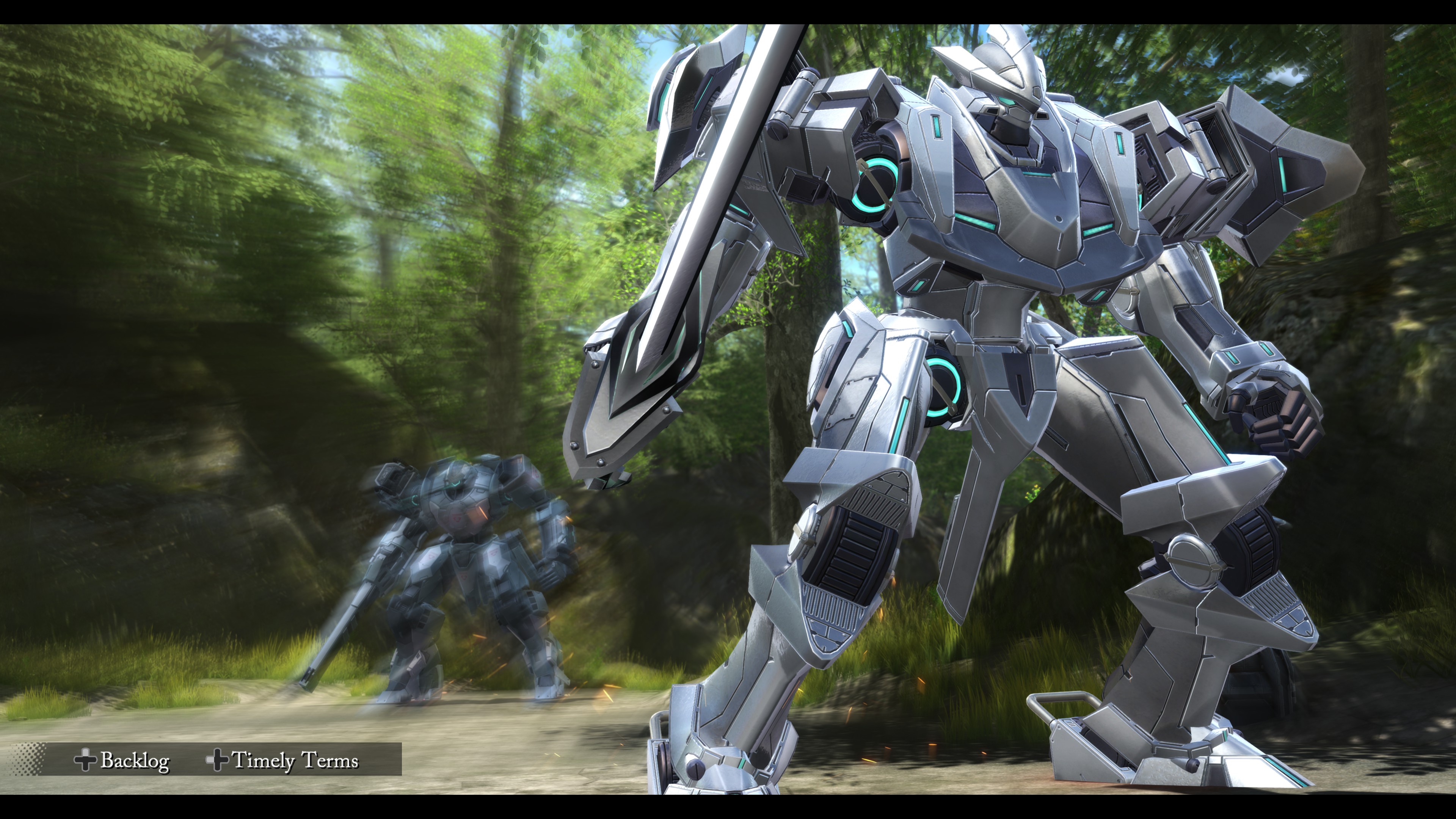
As posted earlier to break up the gameplay section, the combat animations are very beautiful. Easily among the best (if not THE best) ability animations I have seen in a Japanese turn based RPG, and among the very best in turn based RPGs period. I think perhaps only Mihoyo's animations for Honkai Star Rail (review here) look better, but unfortunately those are married to combat design and gameplay loop that disincentivizes you from actually playing the combats. Whereas Trails' combat system is actually engaging to play through.
Character designs are generally great. Their modelling, texturing, and lighting are also generally very good too. There are also several neat looking monster designs, though most of them are reused from prior games.
The UI still looks great. The new Grim Garten menus and animations are also pretty neat too.
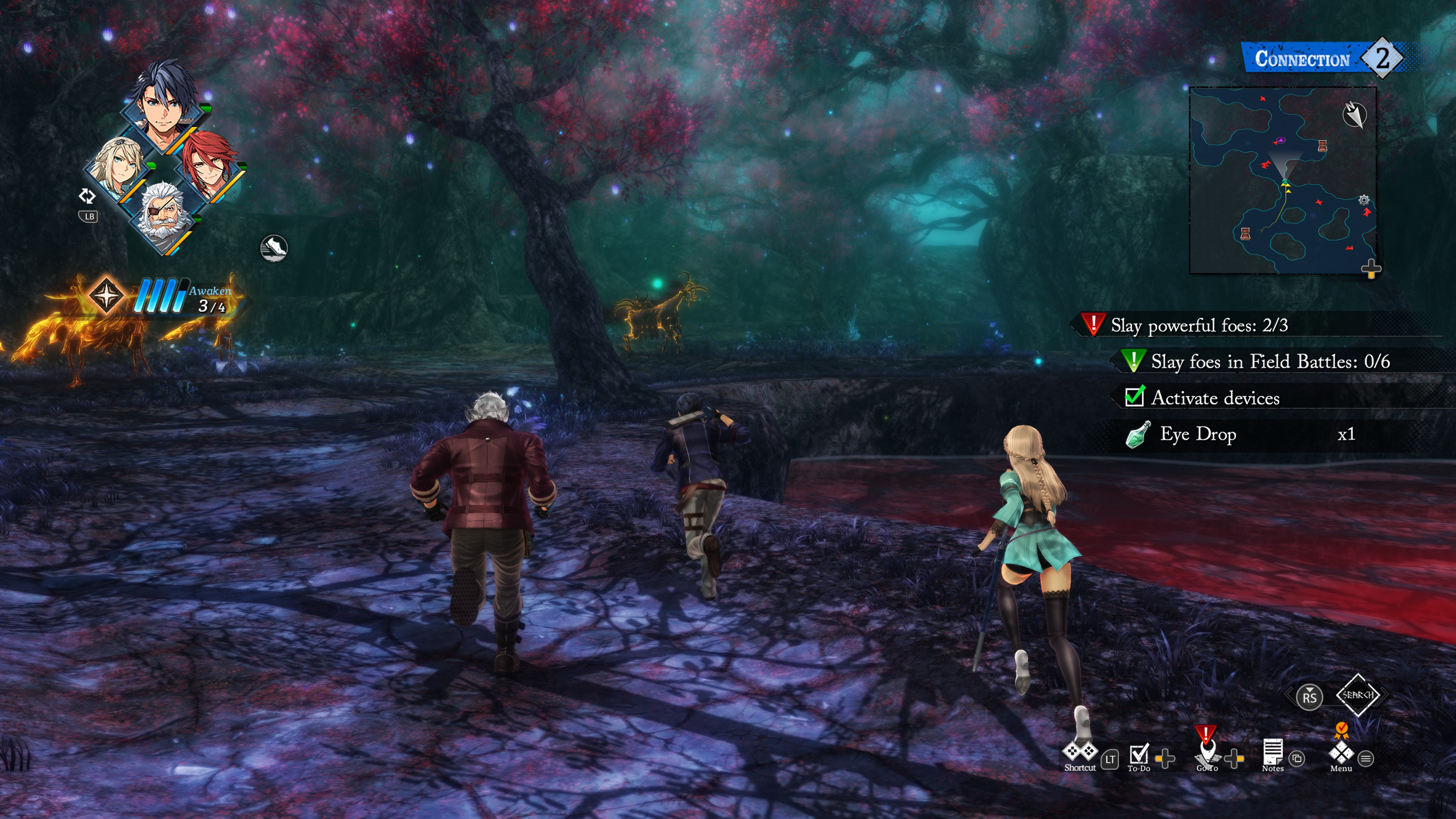
The fantasy environments in the Grim Garten are beautiful. Though some of them are redressed tilesets from the prior game.
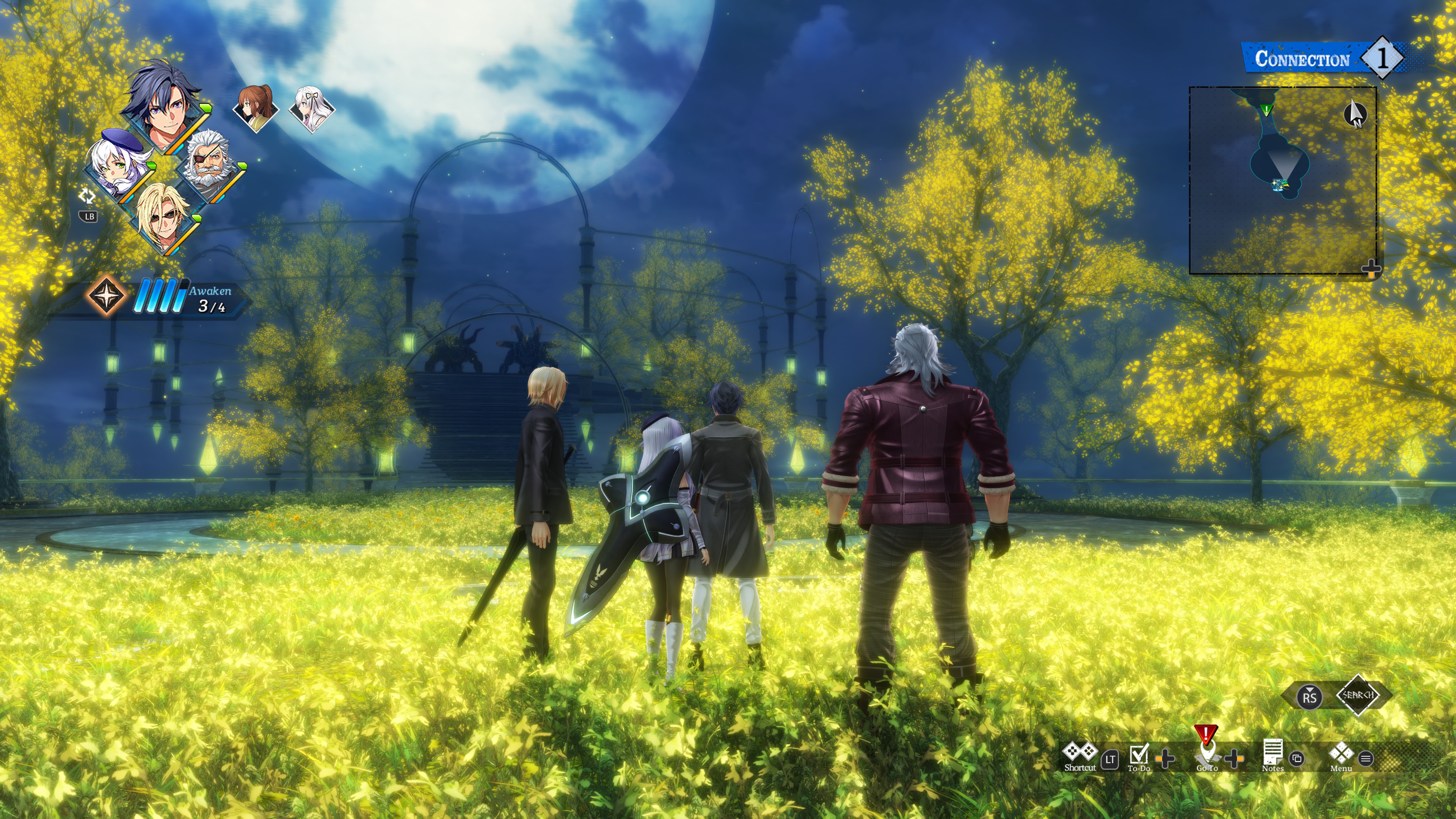
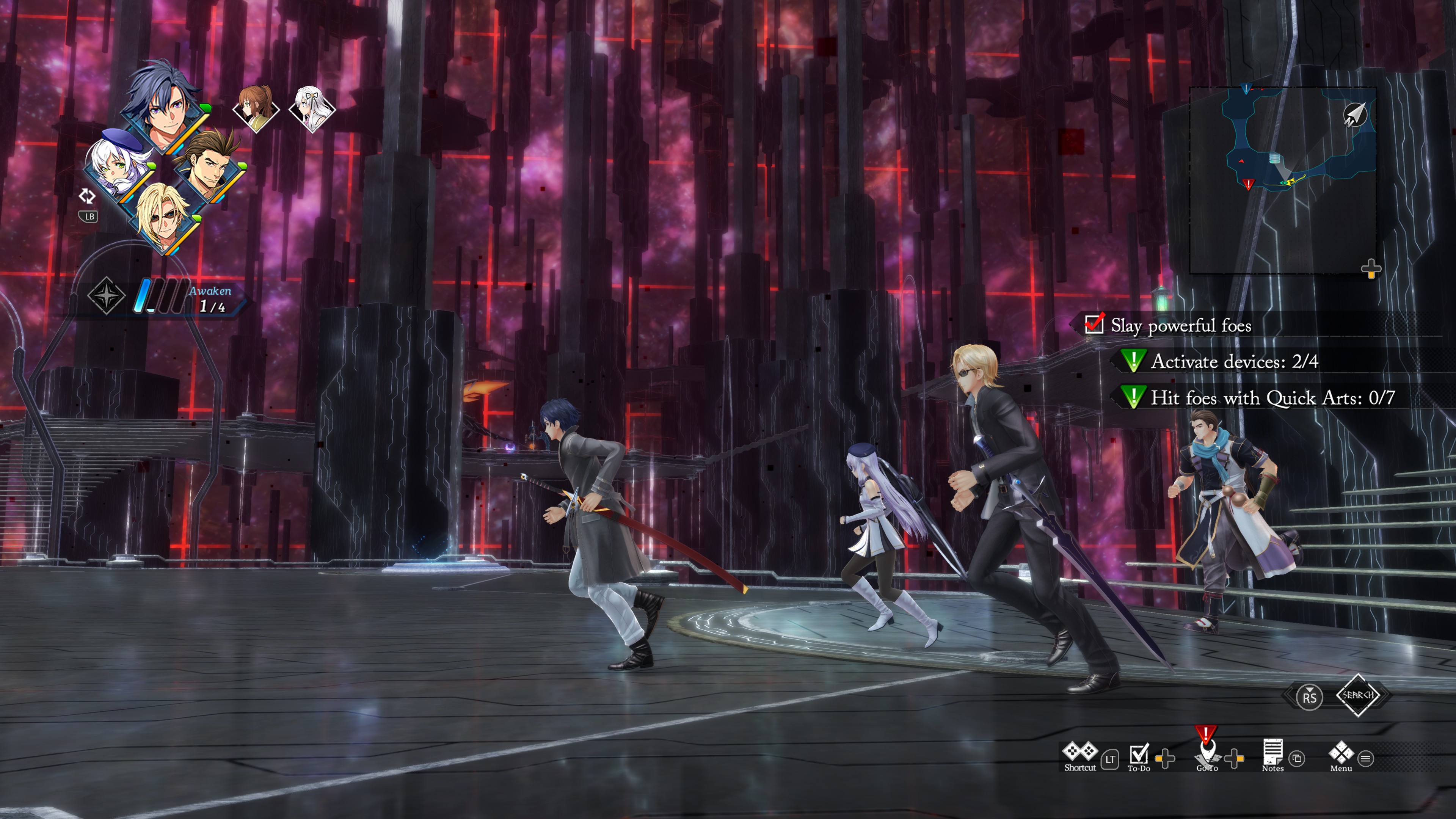
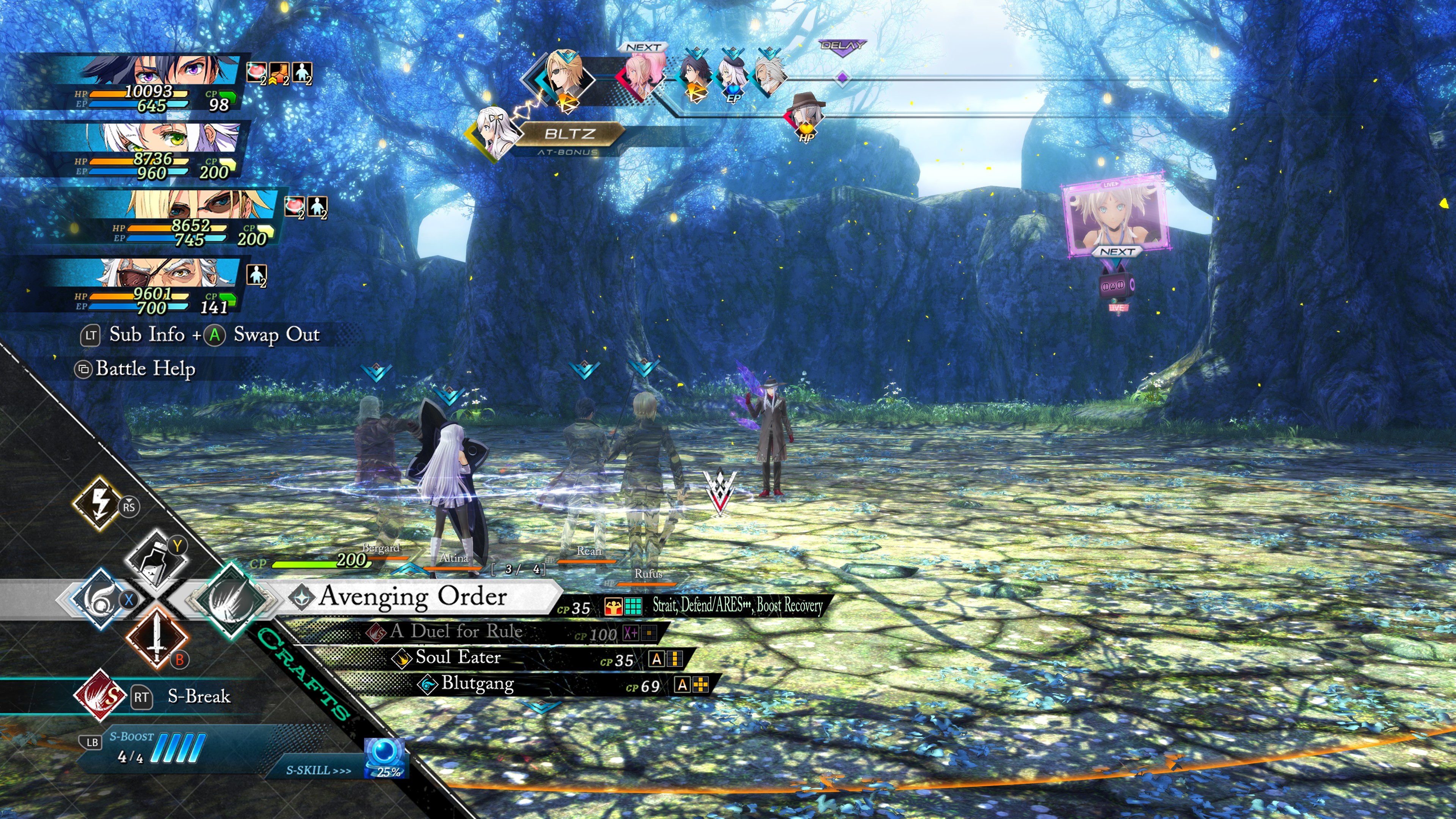
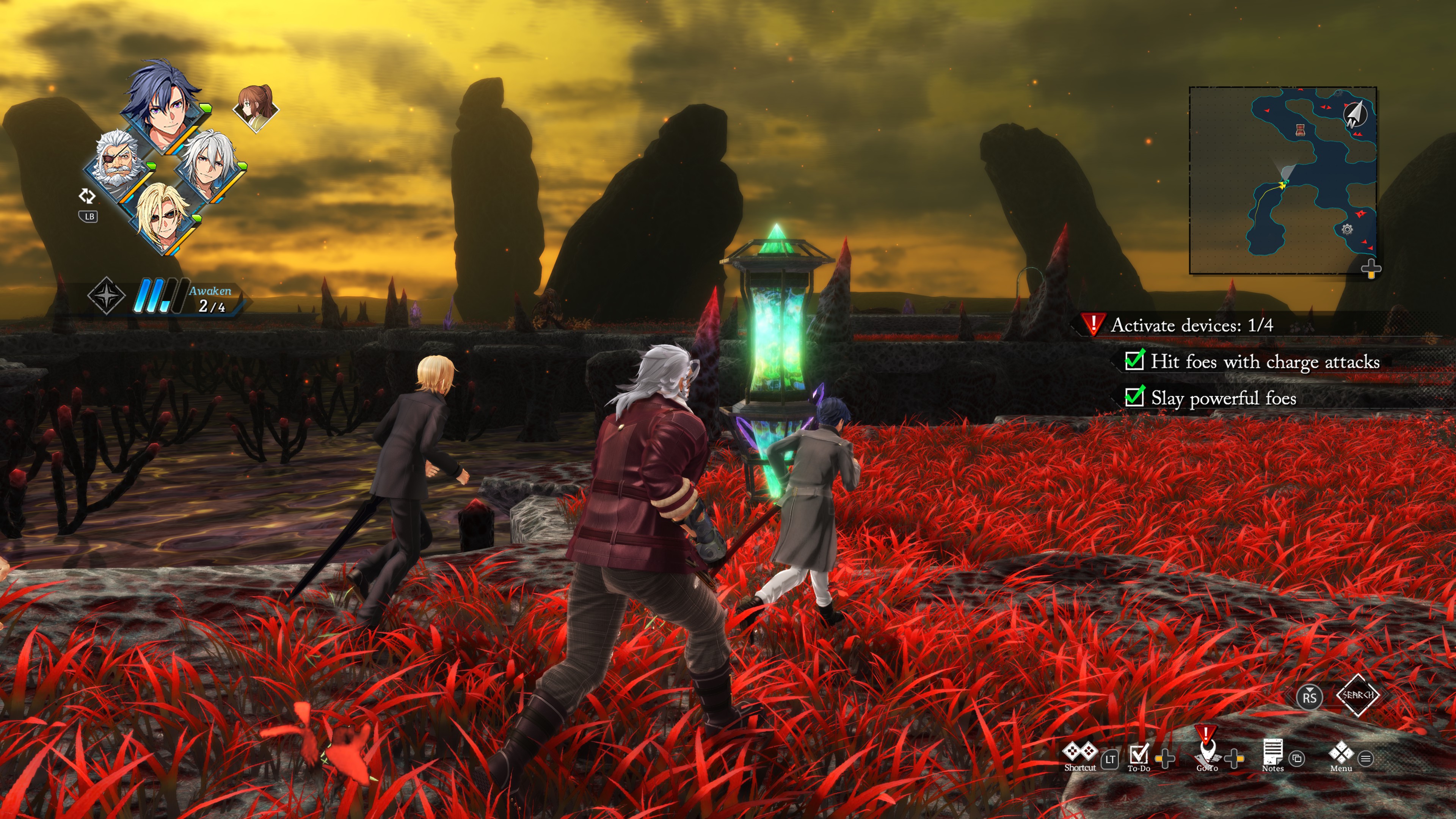
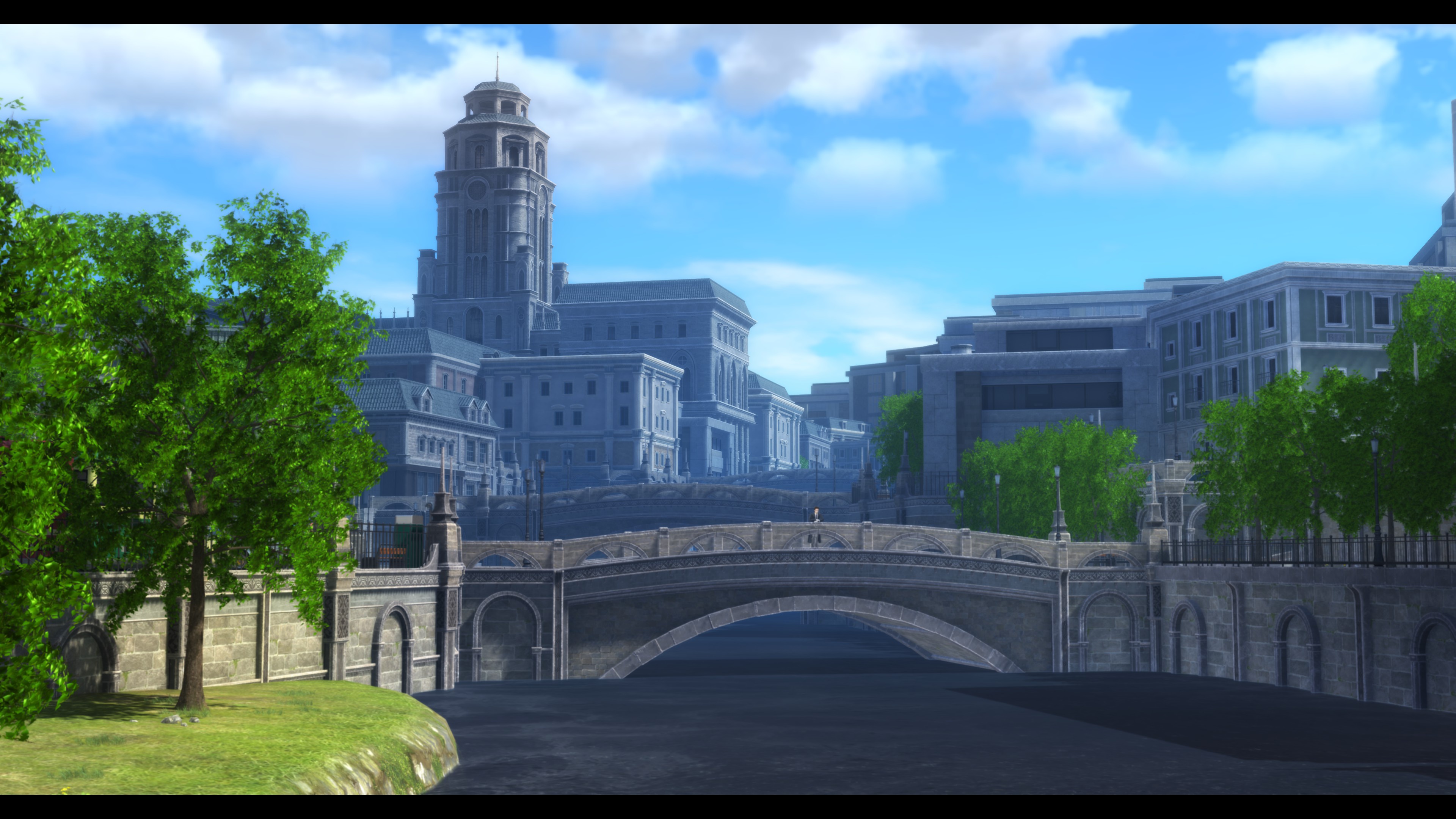
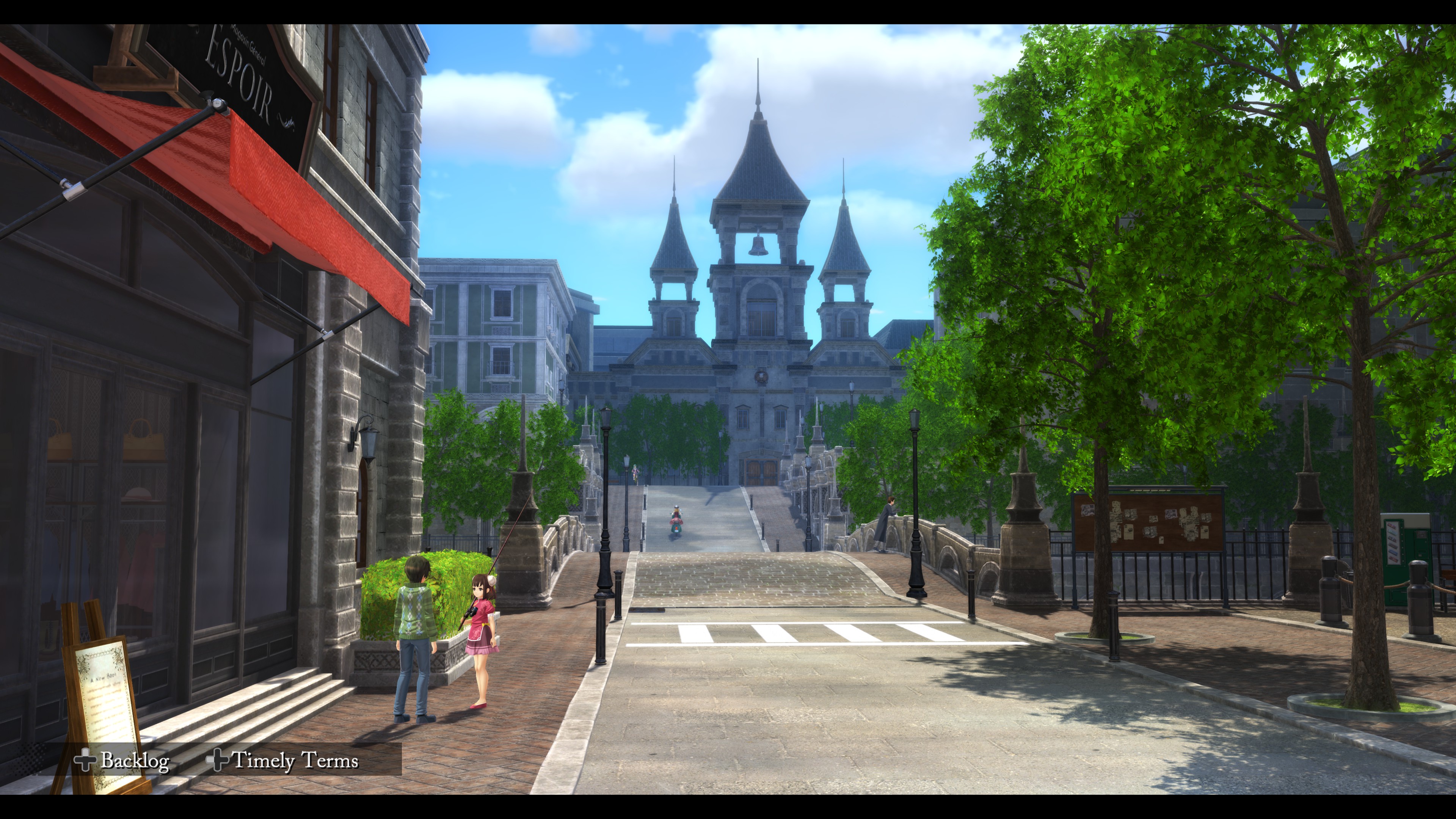
However, outside of the Grim Garten, the game world in these Calvard games leaves a lot to be desired. Most of Calvard's cities are rather unattractive modern urban cities with grey blocky buildings. This game introduces one brand new town, Anchorville. Yup, it's another grey blocky Calvardian city alright. You do actually get to revisit a couple of the slightly nicer looking towns from Trails Through Daybreak 1, Basel and Longlai, but overall you are spending most of your time in the same grey blocky places you have already spent 100 to 200 hours in across the prior two games.
Soundtrack
As expected for a Nihon Falcom game, there is a large soundtrack with an overall high hitrate of tracks for its size. The normal battle themes are unusual in being this somewhat fun, jazzy tune. There is some adrenaline pumping rock for the dramatic showdowns. There is also some nice relaxing music when strolling around towns.
However, I do have a couple complaints. The first is that this is the third Calvard game, so there are now something like 250 to 300 total tracks in this arc so far. A lot of the Edith themes and cutscene themes are starting to blend together or become interchangeable in sound and feel. A lot of those tracks feel like rehashes of each other, and I am afraid that this will only continue to get worse the longer this arc goes on. The prior arcs — namely the Trails of Cold Steel arc set in Erebonia — did a great job having a lot of memorable, distinct event themes across its pentalogy.
My second complaint has to do with the inappropriate use of certain tracks. There are a couple of dramatic boss fights that are supposed to be the climax of a story, but are then killed by the use of very silly sounding music that would have been better used for a sidequest boss. I am thinking of the inappropriately titled "The Height of Majesty" and "Different Path, Same Feelings" (wow, this one sucks), both by Mitsuo Singa (a contractor composer who is popularly disliked amongst the Western Trails fandom). I am not fond of the Singa hatedom, but Falcom, please pull this guy off of making combat tracks, especially the important ones. He is good at doing event themes.
The excellent final dungeon music is very dramatic, but conveys a feeling ("run to save the love of your life!") that is not quite substantiated by what is actually happening in the story. I attribute this more to a failure of the writing to rationally convey why we are supposed to be there (nobody is in any real danger), rather than Jindo's competency. The music works... if you have read the script and know what's going to happen in advance.
Localization, PC port, and voice acting
Durante's/PH3's PC port is exceptional as usual. You get all of the usual stuff like instant resume, turbo mode, scaling to any resolution, whatever draw distance settings you want, etc. I had no issues.
The Japanese voice actors are good. I am not too fond of Ulrika as a character, but her voice actress,
Ikumi Hasegawa, was very good. President Gramheart's voice actor, Rikiya Koyama, also gets to shine.
I only checked out the English dub for a couple scenes and was overall unimpressed. Elaine sounds too old. Rean sounds a little out of it, and so forth. However, DC Douglas as Rufus was great as usual.
The English localization continues to be increasingly laden with swearing and dated zoomer slang. For Ulrika (who is a streamer), it is somewhat excusable, for everyone else it is annoying.
Monetization
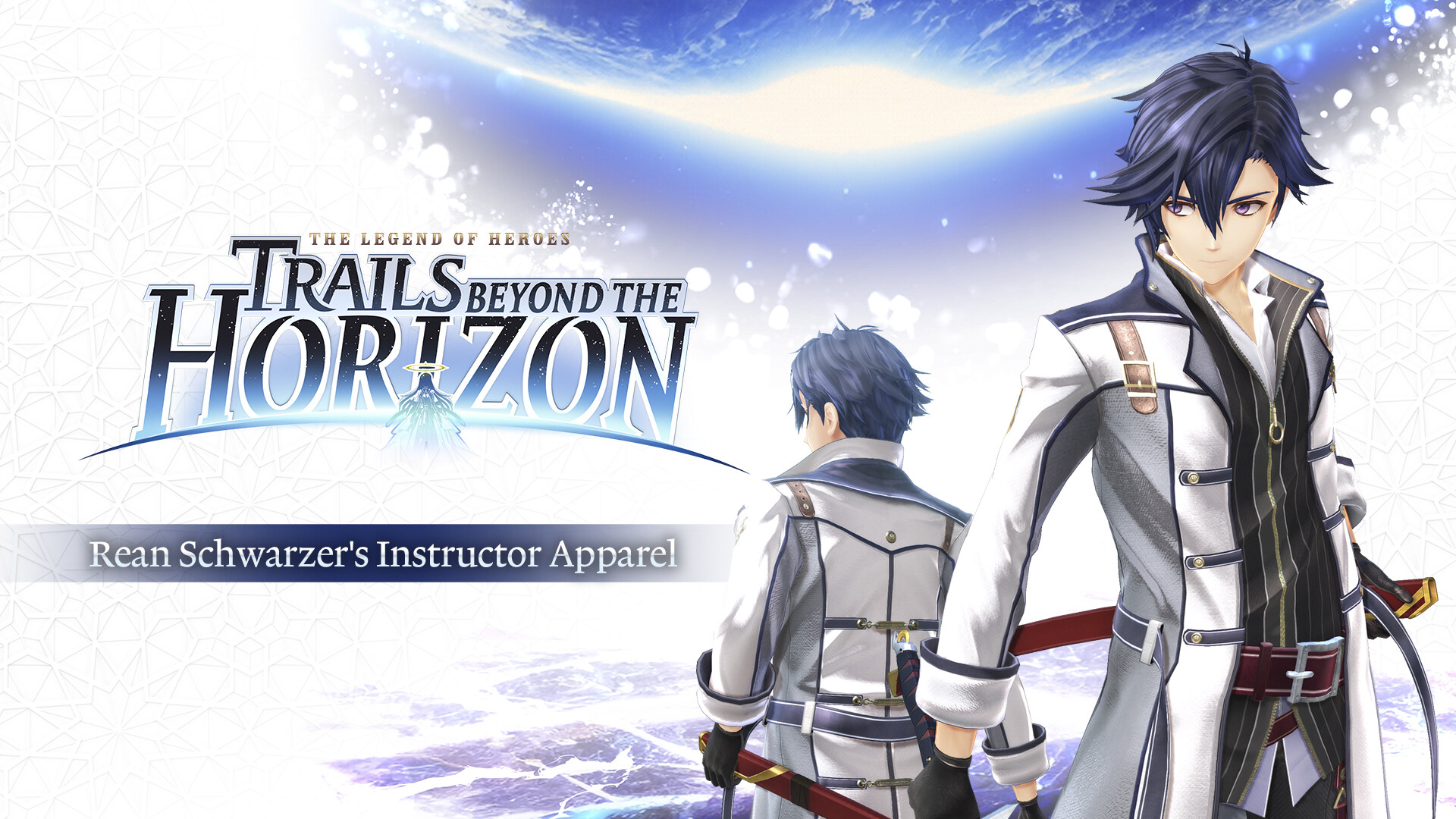
For this game, Falcom put Rean's iconic Ashen Chevalier outfit from Trails of Cold Steel III behind a DLC paywall. At launch, you could only get it by buying the $80 deluxe edition, but it seems that was a limited time price and has increased to $100. This will be very frustrating for Rean fans who weren't there for launch. Though I have warmed up to Rean's new outfit in this game.
Story
The game's main story has a really interesting premise ("We are going to discover the secret of the world"), but then the story is often really dull to experience on a moment to moment basis.
Like Trails into Reverie, the game has you rotate between three different protagonists and their parties doing stuff in different locations. Van is investigating more Oct-Genesis shenagains. Rean receives an unexpected invitation from the adversarial Republic of Calvard. Kevin is tasked with investigating and possibly executing a person of interest.
However, this is a 100 hour game where most of it is 7 Van chapters, which are a long boring slog in which nothing exciting or very memorable happens. The characters in Van's party (Quatre, Risette, Feri, Judith, etc) are still overall pretty disinteresting.
The Rean and Kevin chapters are shorter and much more packed with entertainment and much more endearing characters. The three Rean chapters, and Kevin chapter 2 in particularly are pretty fun. The Kevin story however goes downhill in an awful 3rd chapter, and his storyline winds up overall being disappointing and pointless. It's about being a holy hitman out to kill someone, but you don't get to kill the mark.
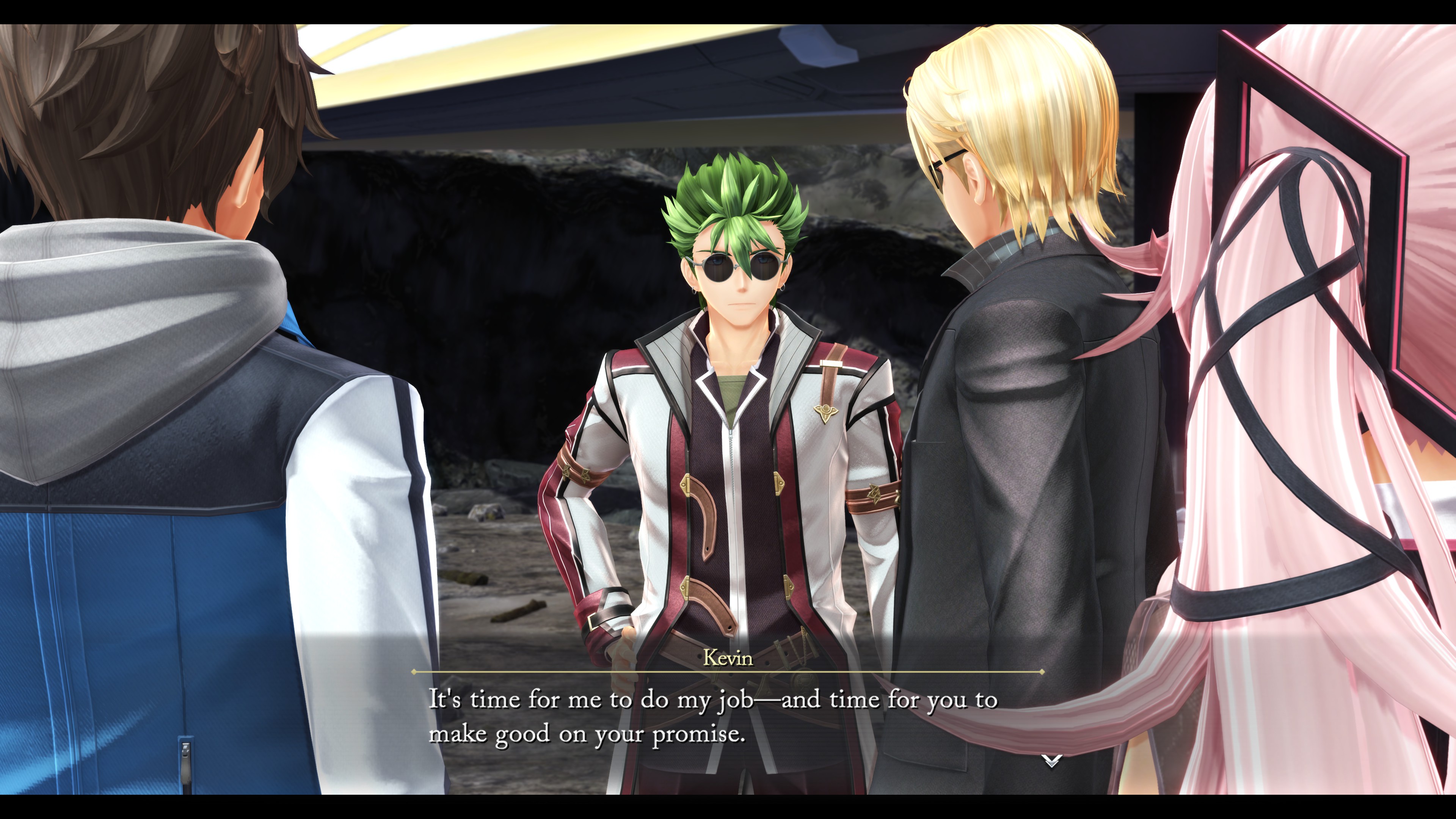
After 300 hours of 3 Calvard games, none of the questions or character arcs set up in the first game have been resolved. We still don't know what Mare is, what Grendel is, Vagrants Zion, the Oct-Genesis, The Black God One Blade school, SiN, why only the Epstein bloodline is special, etc. And this game opens even more plotlines and questions that need to be resolved.
Unlike Trails of Cold Steel 3, which introduced half a dozen new towns and massively expanded the cast of Erebonian characters, Horizon does not massively expand or flesh out Calvard. There is only one new town, and hardly any new characters. Calvard remains the least fleshed out and most unappealing Trails country, which is not an ideal setting to have three 100+ hour long games set in. You need to be injecting novelty to keep things fresh, so that the player discovers new towns or casts and feels wonder and becomes excited to discover new things. At least we finally got ONE named Calvardian general with Harring. We still don't know of any native born Calvardian martial arts schools or masters like Victor/Aurelia/Matteus/etc.
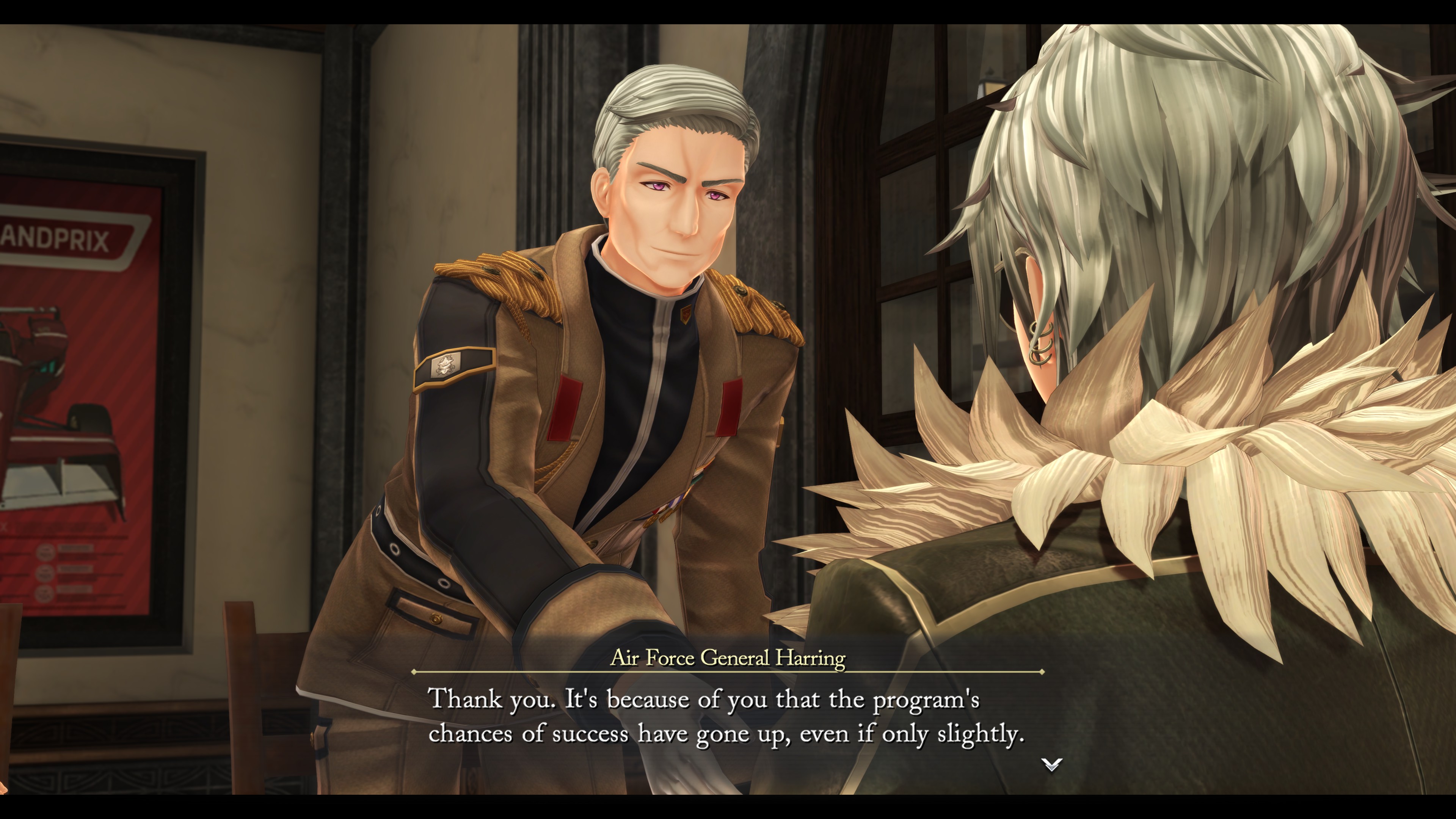
There are a lot of humorous scenes. It seems that present day Falcom cares more about nailing character fluff, rather than executing a serious plot well like they used to.
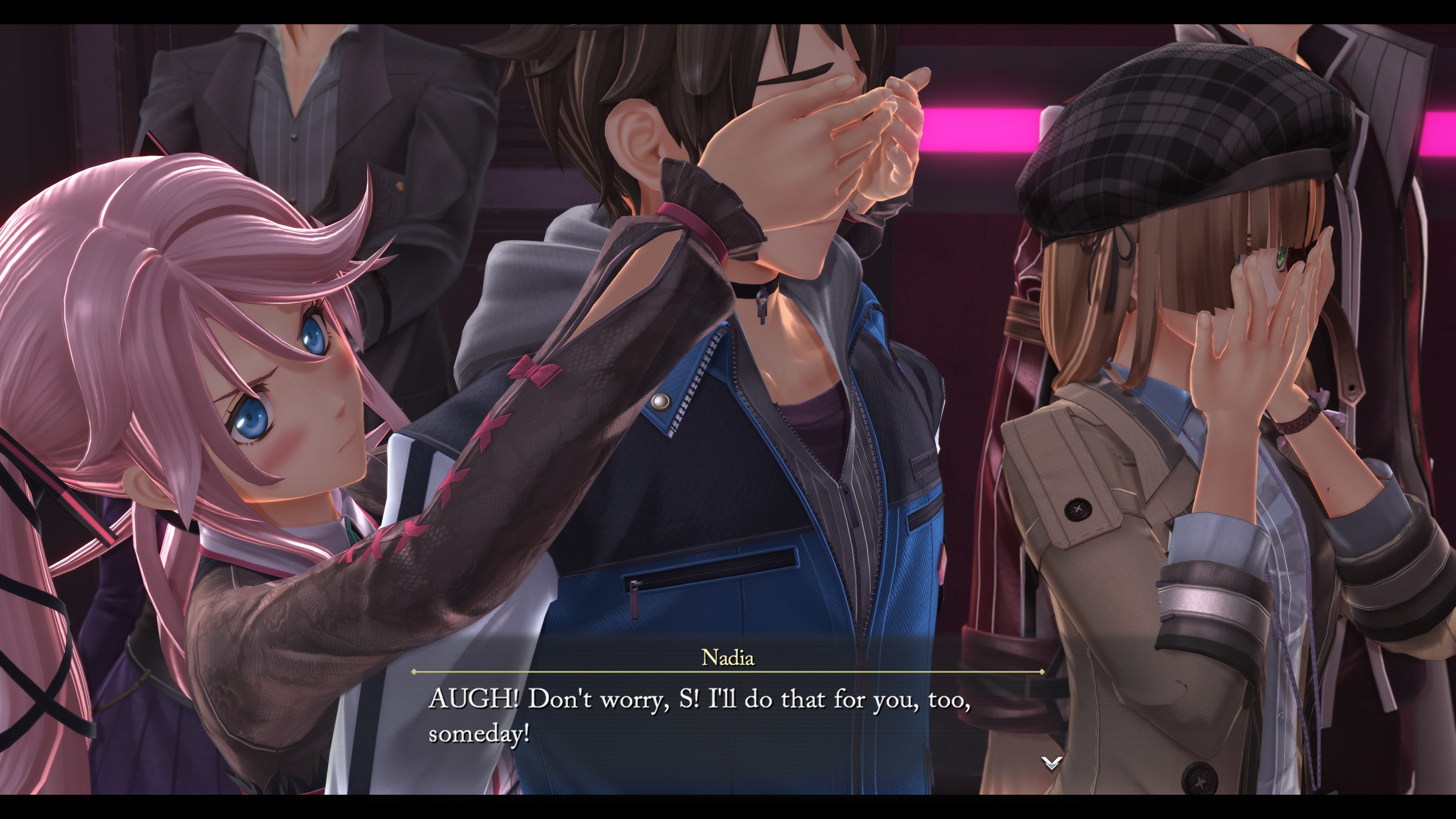
The writing often gets bad. Not just plot writing, but the actual dialogue, and I don't just mean localization stuff. The actual narrative messaging and character behavior/rationale is insane.
The game makes you do the rounds of the districts of Edith FIVE TIMES, which you had already done 10 or 15 times in the first two Kuro games. Most of the NPC storylines have long since resolved, and there are only a small handful of interesting developments.
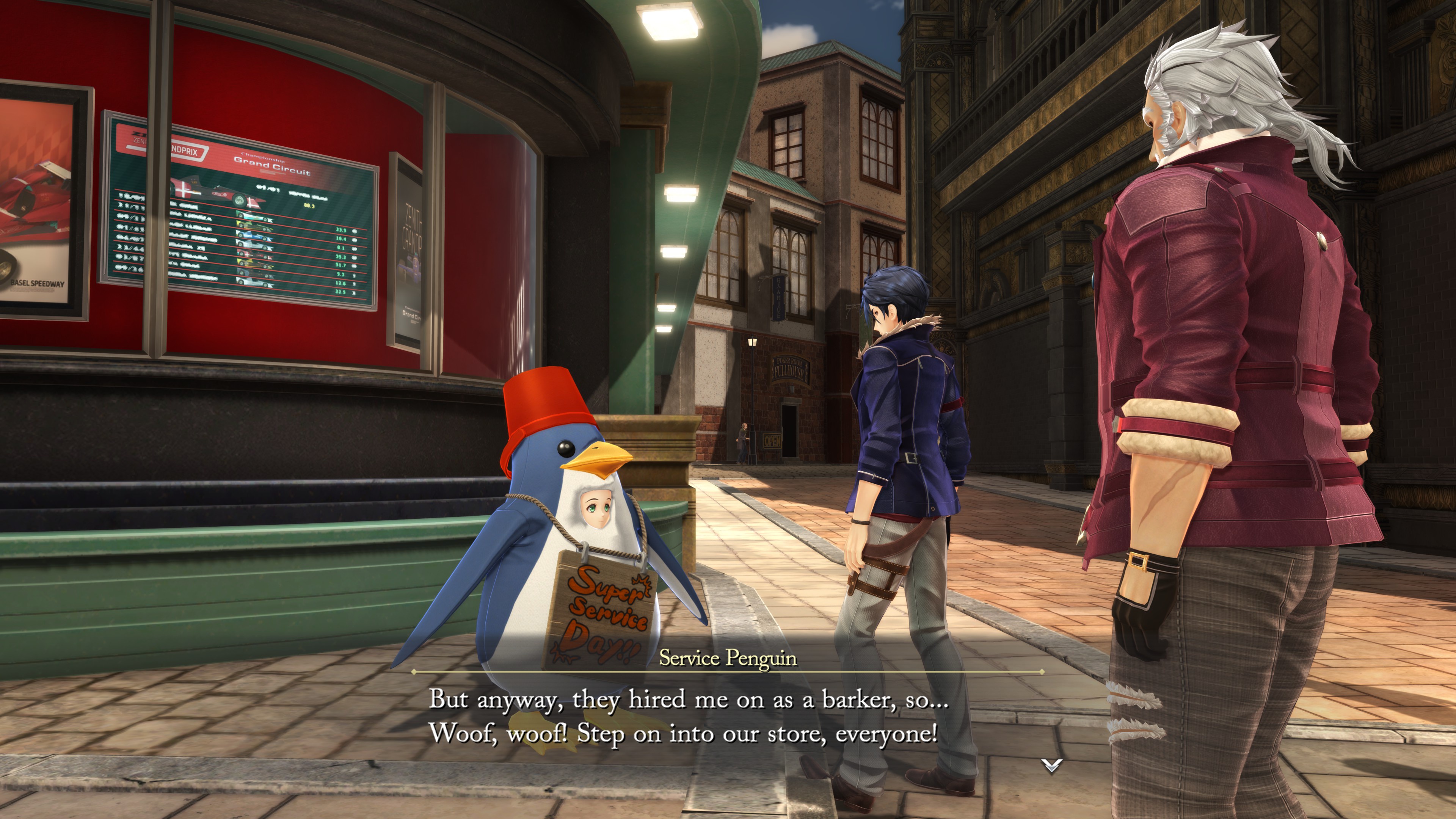

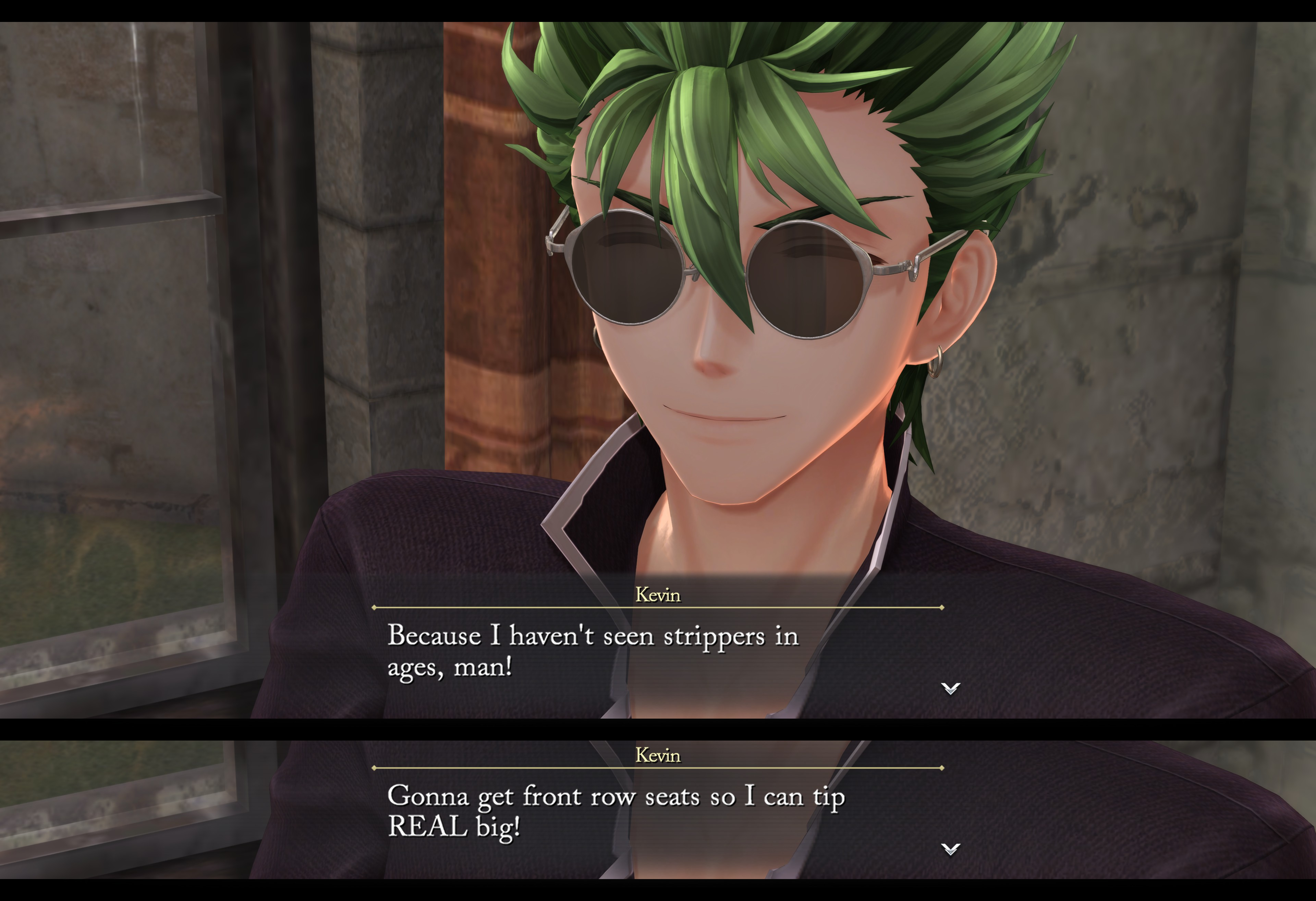
There is bad character writing. A lot of the characters are heavily flanderized. Van is reduced to a joke about being a candy and car nut a lot. Judith is routinely made out to be incompetent and stammers "Grammy!?!?" whenever Dominque shows up. Shizuna turns into a bloodthirsty wide eyed kid whenever a fighter shows up. Crow is becoming a sex freak who hits on 1 or 2 women in every chapter and wants to take Rean to nightclubs. Related to that last one: a lot of other characters get character assassinated, like Kevin and Rufus going to a strip club when they had been steadfast men in all of the prior games.
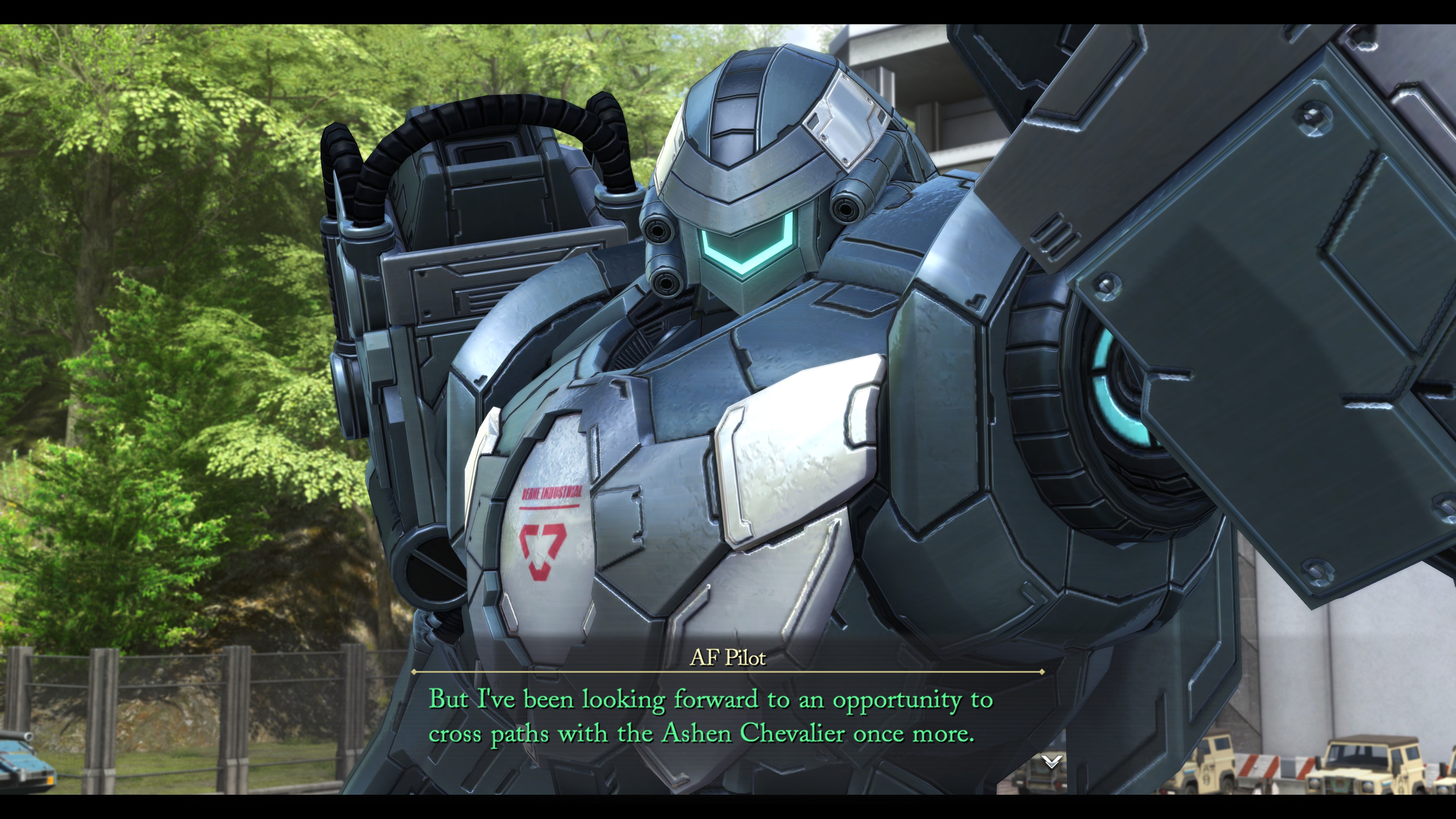
It is also frustrating to see Erebonians and Calvardians being buddy buddy with each other when there should be at least some bad blood or consternation or suspicion. There is an egregious scene in Rean chapter 2 where Rean inexplicably encounters the pilot of a Calvardian airship from Trails of Cold Steel II. Rean sent the airship hurtling down to the earth to an explosion during the annexation of Crossbell. Said pilot bears no grudges towards Rean and is enthusiastic about meeting him.
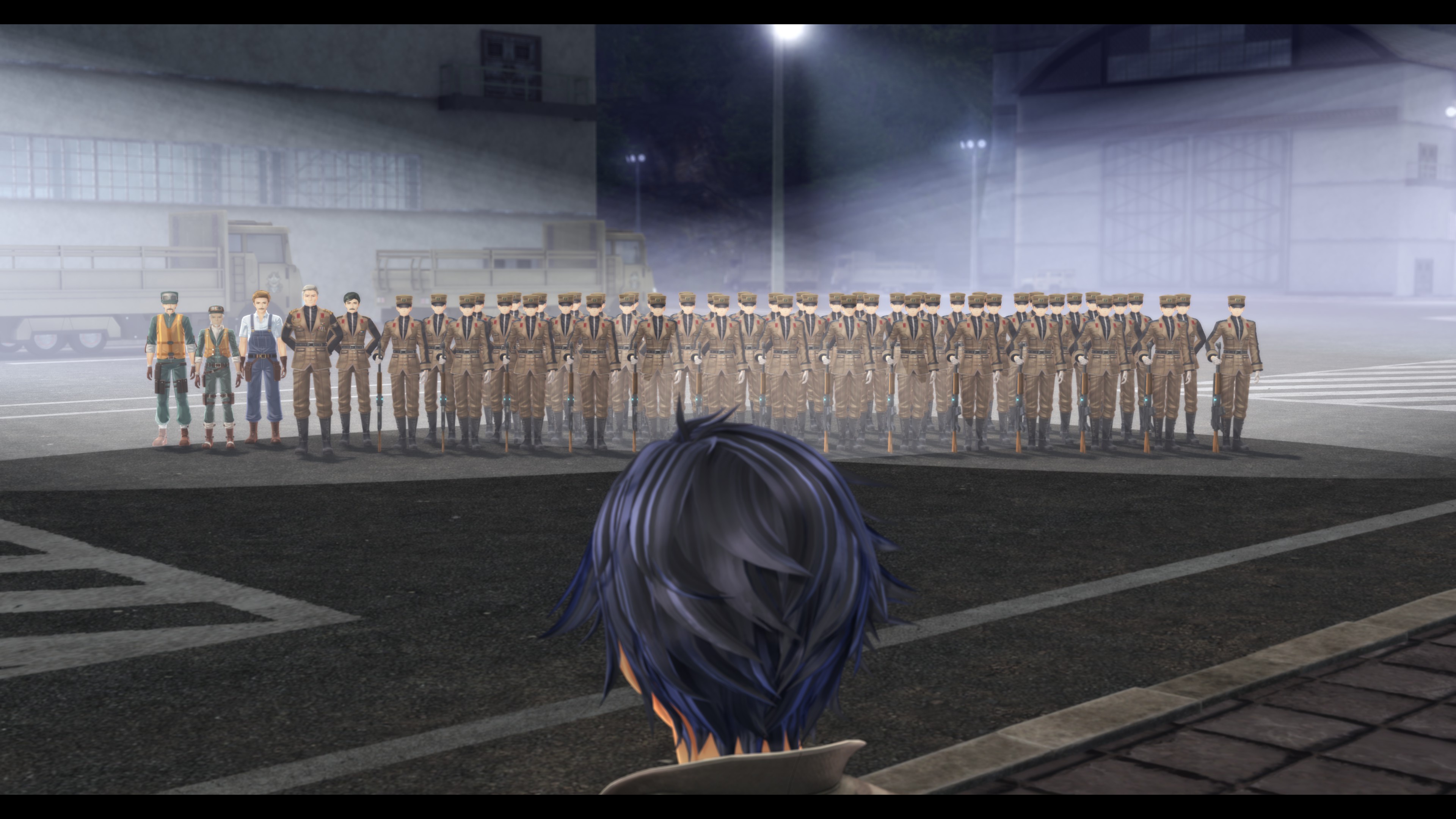
Characters alternate between praying to the goddess Aidios and then defying her commands, even when they have strong material reasons not to do so.
After finishing this game, it has become even more clear how poorly planned this arc was. For example, why retcon Barkhorn (now called Bergard) back from the dead and add a 70 year old experienced former Dominion to the party if he is not going to lend his knowledge of insider information about the Church, Ouroboros, Sept-Terions, etc? All he does is unhelpfully stand around and inner monologue "Ah, as I had suspected" without sharing his suspicions with the rest of the party. His voice actor, Akio Otsuka, was unavailable for the prior game, so Falcom decided not to have him appear in it rather than recast him. But when he finally reappears in this one, he was a pointless character.
Another example of how clumsily this arc was written: a major retcon happens in the last 5 hours of this game, when it is suddenly namedropped that the Bracer Guild has an S-ranked Bracer and "Guildmaster" named Evans. He is made out to be this uber strong martialist who was the mentor to Cassius Bright, has been apparently doing all of this heroing across the continent, etc. We never once heard about him over the prior 1,500 hours of Trails games.
For the past 12 games, it was established that there were only four S-ranked Bracers ever, and of those only Cassius and Arios were being talked about. The implication was that those other two S-ranked Bracers lived before the games began and were gone/retired/irrelevant. Given how much Cassius and his sword instructor Yun Ka-Fai are talked about, Cassius having another major mentor who has never been talked about is incredible. The Bracer guild had never been implied to have a top executive either. Whenever Cassius or Arios or Zin received orders, it came from "HQ in Leman", as if the Guild was run by some sort of committee of backers like the Epstein foundation, donors, etc.
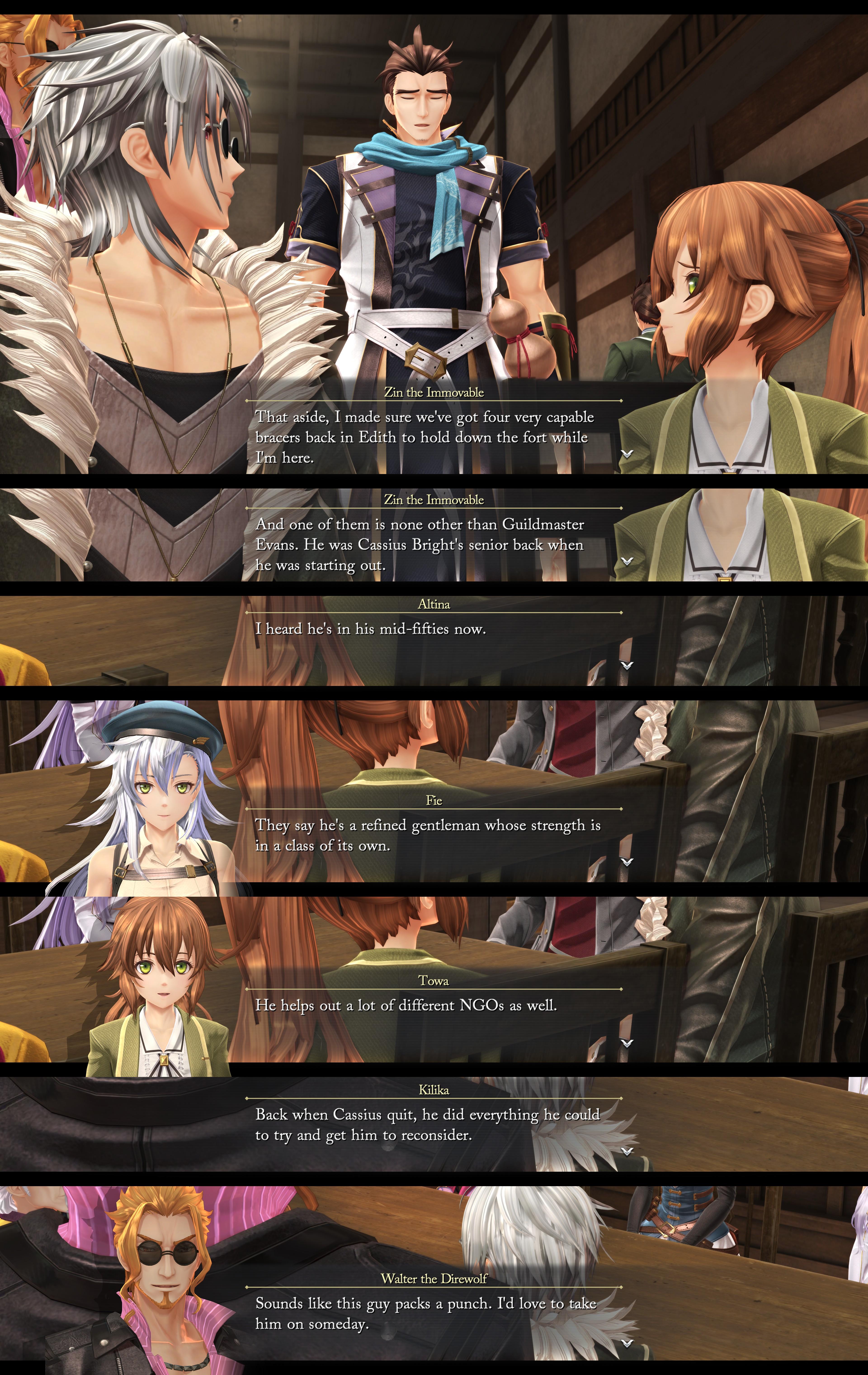
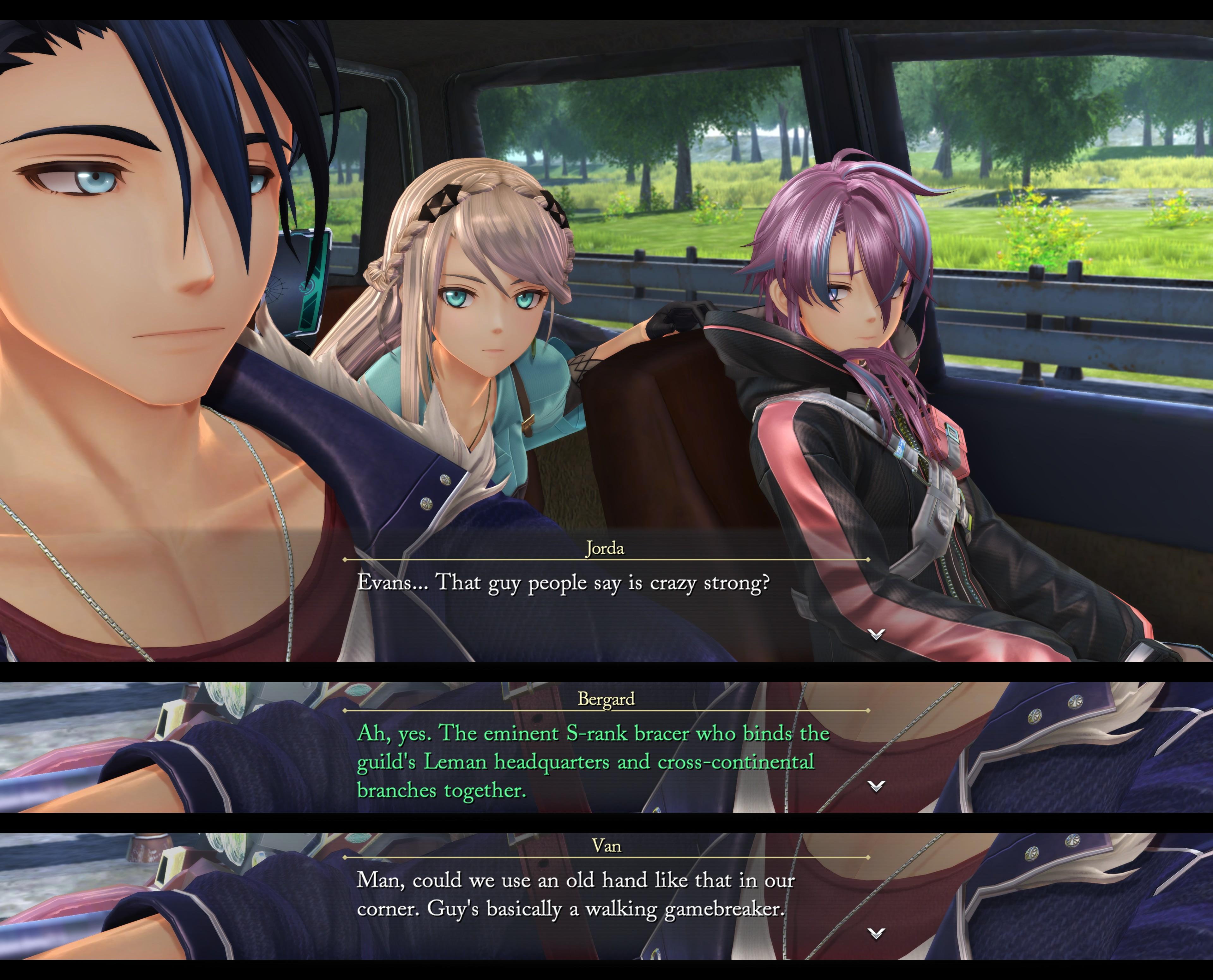
Guildmaster Evans existing as we are led to believe in this game causes the plots of several prior Trails games to collapse. Falcom had 20 years to plan out the Calvard arc. Important figures in the wider world like Yun Ka-Fai or Professor Hamilton were seeded 10 and 8 games before they finally appeared. There is no reason why the same could not have been done for Evans.
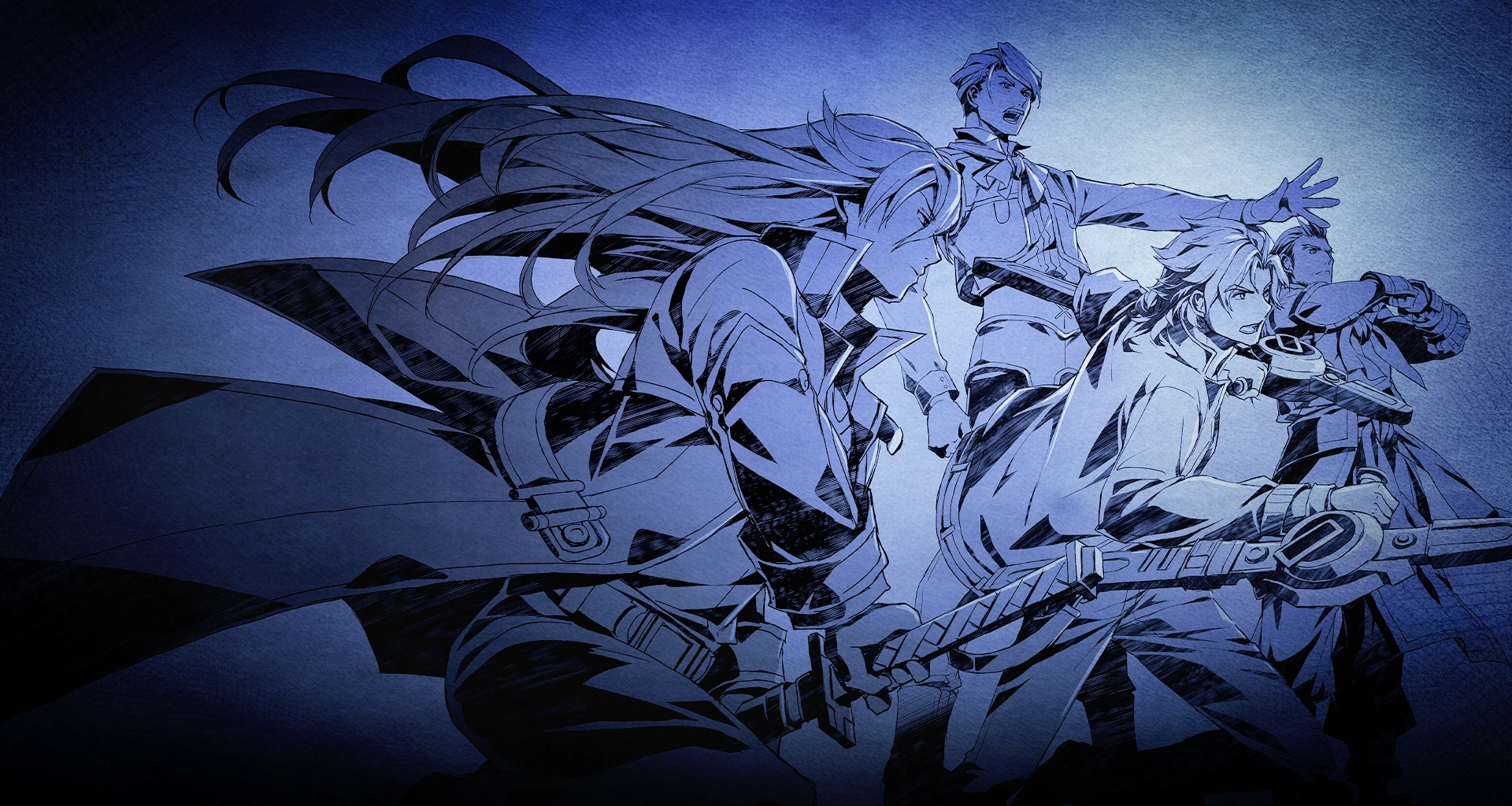
That was two examples. For a quick rundown over other writing issues:
- After 300 hours, most of the new characters introduced in this arc have gone nowhere with their stories.
- Ouroboros has spent three games lounging around in Calvard doing nothing.
- The Anti-Immigration League that was introduced many games ago with the promise that they would be given screentime and a sympathetic POV like with Erebonia's Imperial Liberation Front is swept aside.
- A lot of apocalypse legends and prophecies from the Church, the Ikaruga Clan, the Krugha clan, etc, suddenly come up at the end of this game as if we were supposed to have heard about this before and be nodding our heads along.
- Shards - the particles that the newly introduced XIPHA orbments use - can apparently do anything with no consistency.
- Etc
Falcom had two decades to plan out the Calvard arc before they finally got around to making it, only for the arc to feel like it is spinning its wheels. It's feeling like they aren't as dedicated to this anymore.
False advertising. Again! As with Trails into Reverie, the series' big bad, the Grandmaster is on the cover of the game, and was also teased in prerelease marketing materials. This was also marketed as the 20th anniversary game and that it would be really special. For the first time in this 13 game, $700+, 1,500+ hour long series, a Trails protagonist actually meets the GM. But she only has 2 minutes of screentime and doesn't do anything. None of the obvious exciting/dramatic/intriguing situations you would imagine from such a protagonist-series villain encounter occurs. She just teleports in, says hi, and teleports out. The scene is forgettable.
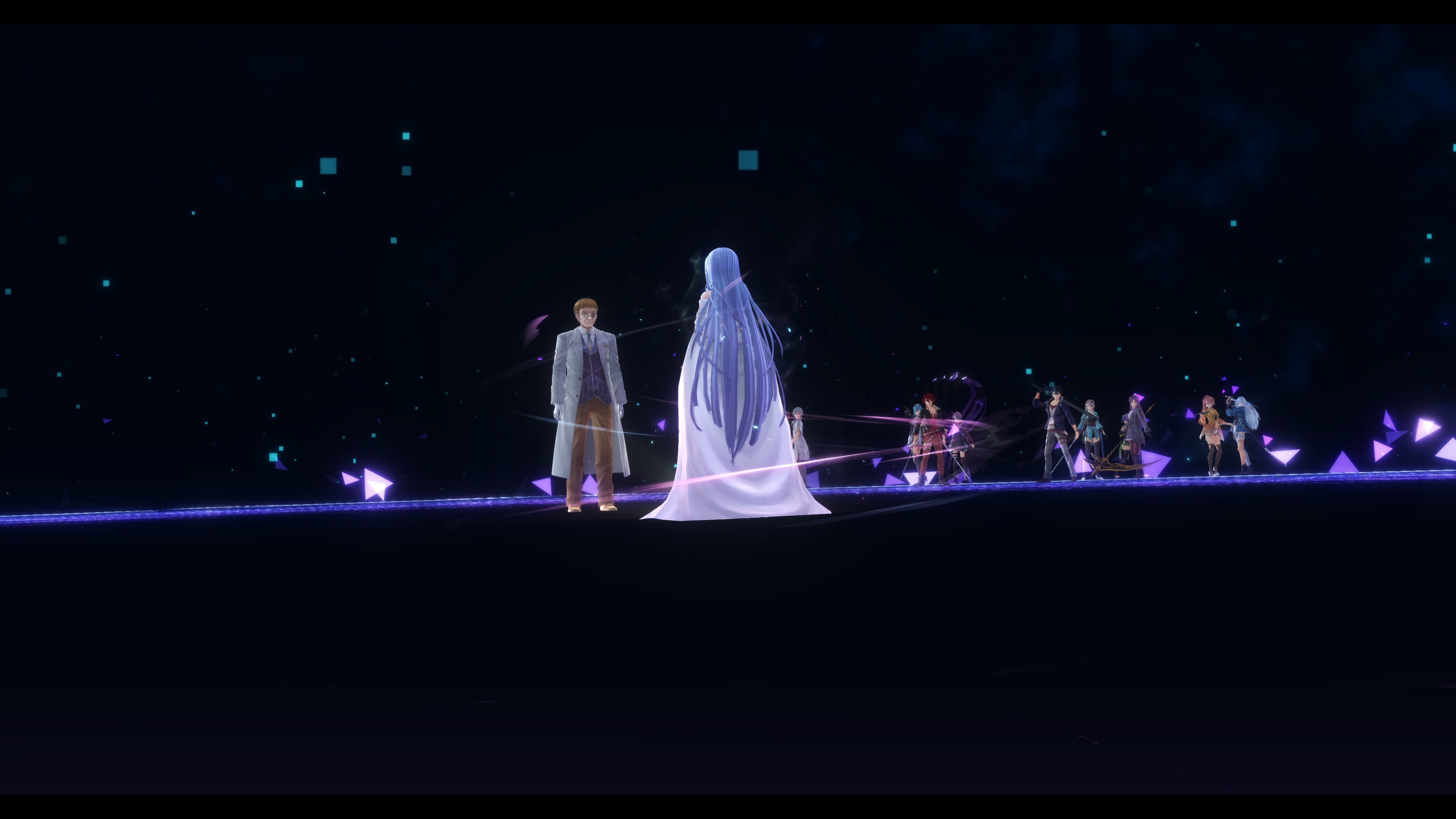
Why is she recruiting and arming all of these psychos and mass murderers to wipe out cities and cause world wars and apocalypses? Is she the goddess Aidios? Is she Altina from the future? Is she an alien? Nobody knows. Find out in game #14 coming next year for $60!  (+ another $20 for Estelle's outfit from Trails in the Sky, and another $20 if you didn't buy on launch week). I cannot believe Kondo had the gall to pull this stunt twice.
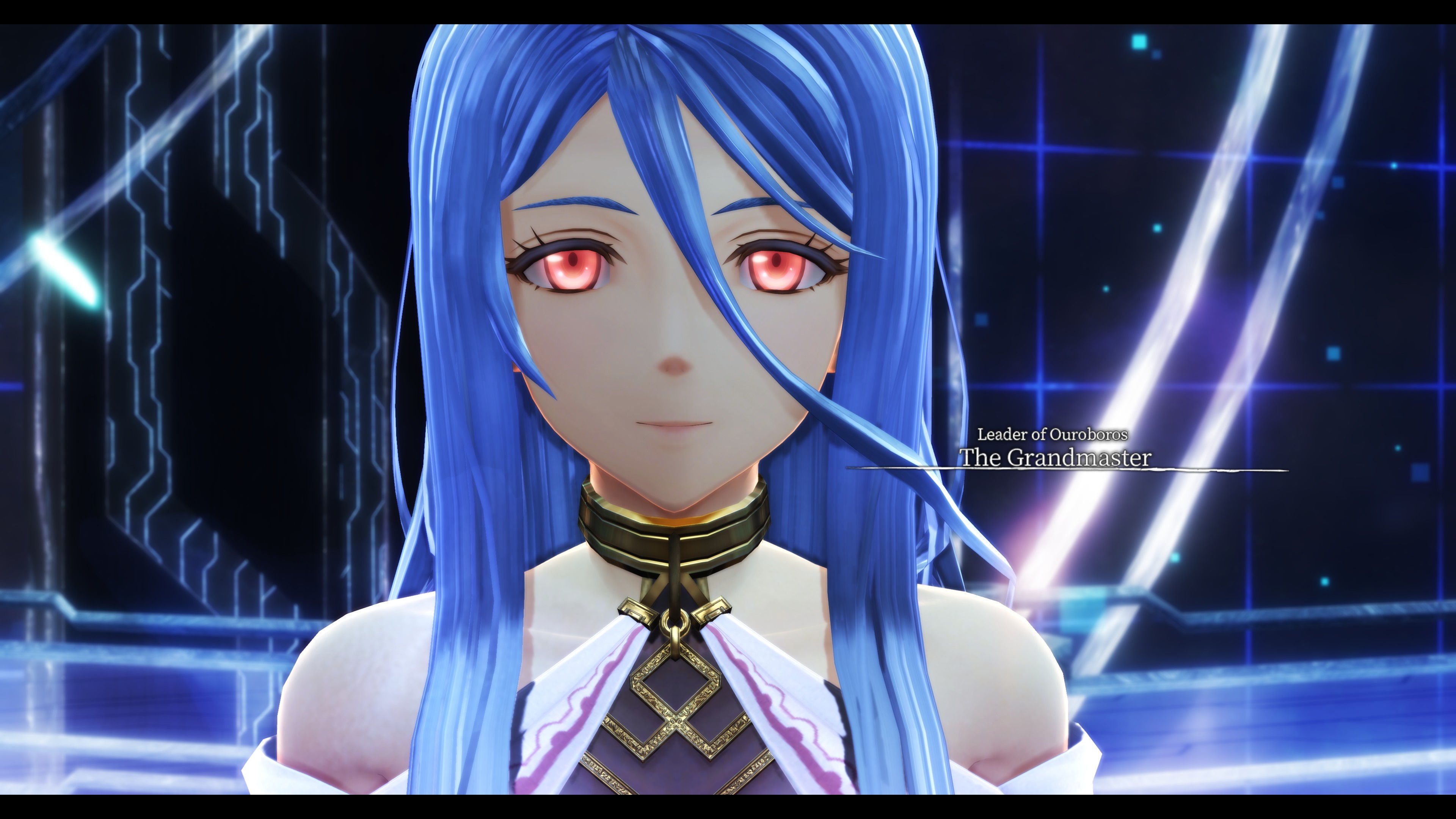
On a related note, Nina also falls victim to this, being advertised on the cover next to the GM — the big bad — as if she is going to be Zemuria's messiah or something, but only has 3 minutes of screentime and does nothing.
Summary
An overall very good game. The visuals are good, music is good, voice acting is good, battles are exciting and entertaining enough, and the game runs excellently. A lot of likeable characters. Plot is good at times. The Rean and Kevin routes are overall fun. The main weakness is that Calvard is not very exciting, and the Van route (which dwarfs the other two in length) is boring and is often a slog.
Recommended if you enjoy the Trails series holistically.