Acrux wrote: ↑
August 1st, 2025, 17:12
Japanese RPG Sword World will have an English version soon. Looks like it's based on 2d6 rolls. @WhiteShark are you familiar with this system?
A little. I've read some of the rules, but I've never played it. From what I remember, multiclassing is the default because classes only go up to level 10, so PCs are expected to pick up some levels in another class or two. It has three different systems for combat of increasing complexity; the basic one has a rearguard zone, a melee zone, and an enemy rearguard zone; the intermediate one adds distance measurements but remains linear; and the advanced one uses a grid. EXP comes from showing up, completing the session objective, and defeating monsters. The game assumes that that each session will consist of a fixed scenario provided by the GM that the players will follow obediently:
Core Rulebook I wrote:
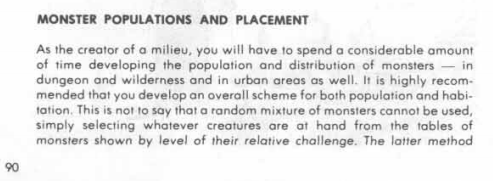
In this situation, players will be free to speak and act as they will, with the GM listening carefully and providing ways to advance the scenario.
However, if a player blatantly goes against the spirit of the scenario, the GM should politely but firmly guide and advise the player to follow the scene. Even though each player has some independence as to how their character acts, they shouldn't actively bring the level of excitement down for everyone else.
Conversely, the GM may secretly change the content of the scenario if they determine that an unexpected turn of events would make it more interesting.
In either case, if the GM confidently leads the scenario, players will tend to act more dignifiedly.
Loot is tied directly to monsters, each having its own little loot table. Sometimes the loot is a body part from that monster, which, as a Monster Hunter player, I appreciate. Sometimes they drop Sword Shards, which are tied into the lore in some way that I don't remember; these can be sold for gold or traded to the Adventurers' Guild for reputation. Reputation, in turn, is spent on magic items or increased rank in the Guild; higher rank allows acquiring magic items of a given reputation cost without paying any reputation.
There are no social skills, so persuasion and the like are accomplished by GM fiat. I also don't recall there being much in the way of exploration procedure. The sample scenario has some bespoke tables for determining what the party runs into in various scenes, but there doesn't seem to be anything standardized in that regard.
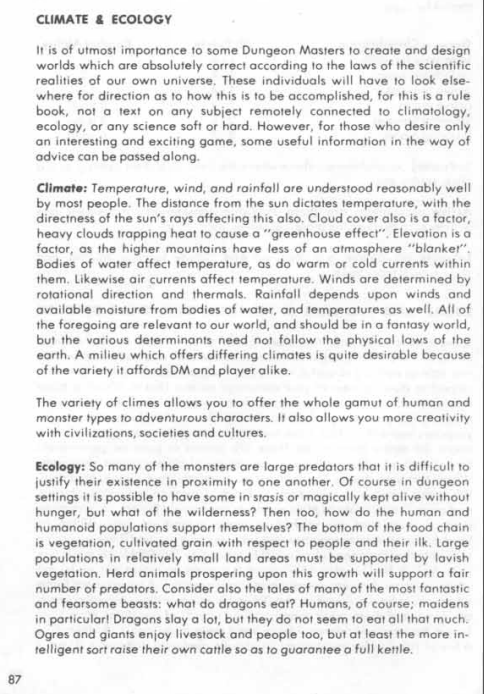
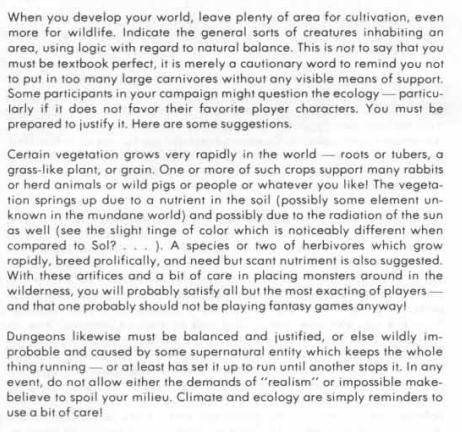
This rpg.net post talks about some of the more complex published scenarios that include gridded regional maps with various fixed and random encounters keyed to each space. I didn't find any procedures for creating dungeons; this was the only advice I found on it in the core book:
Core Rulebook I wrote:
When the GM presents Shallow Abyss <note: the most common sort of dungeon> in the scenario, they may prepare outdoor hindrances desired and may place monsters and treasures as desired, with no particular concern for rationality.
It's possible that there are procedures for such in the supplementary books, which I have not examined.
I'm pulling the quotes from the
fan translation project, which has been around for a while.