


Game key provided for free by the developer.
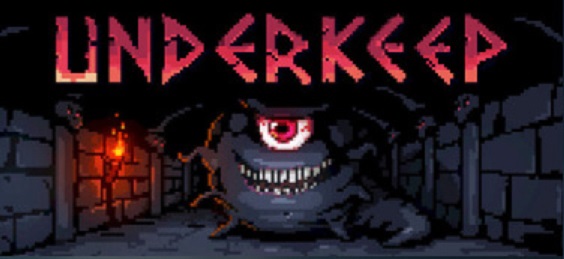
Underkeep is the newest turn-based, first-person dungeon-crawling RPG by Rake in Grass, with an aesthetic following the style of classic titles like Lands of Lore and Eye of the Beholder. The game features classic exploration with a four-member party traversing a dreary village and the surrounding countryside, along with numerous dungeons. Anyone interested in traditional dungeon-crawling games from the bygone era will be interested in trying this.
Why Does This Keep Happening?
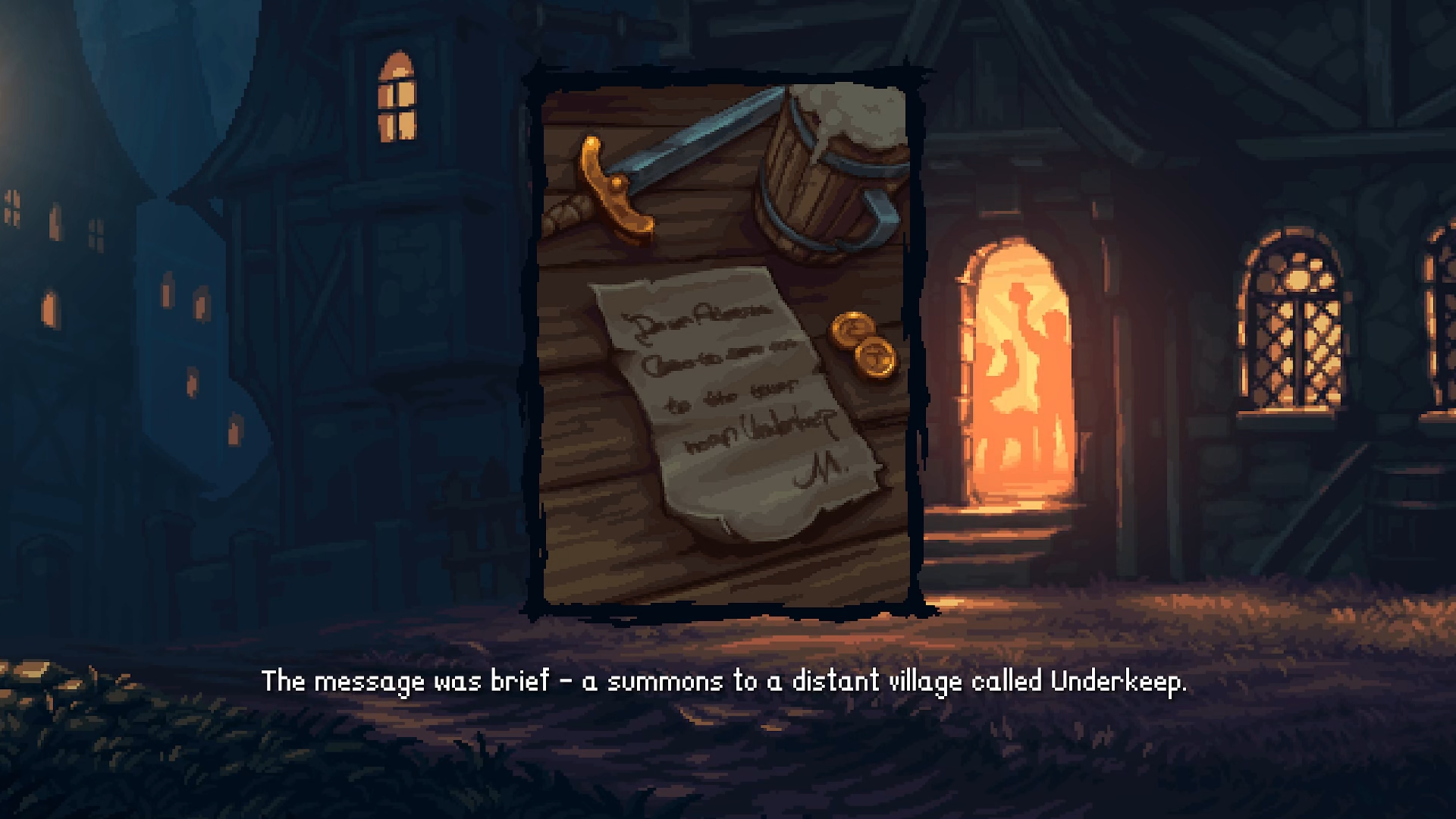
Drunk, broke, and possibly stupid. Of course the party accepts the invitation of a mysterious letter to go to some sinkhole named Underkeep.
I was surprised when I first caught a glimpse of Underkeep several years ago and even more surprised when I saw who was developing it: a first-person crawler by the same developers who had made Jets N Guns, a very popular side-scrolling shmup from back in the day. Underkeep won me over straight away with its beautiful teaser gameplay screenshots, and I'd been following its progress ever since. Upon further inspection, I became slightly less surprised when I realized that Underkeep was the spiritual successor to one of RiG’s earlier mobile games, Undercroft, which was also a dungeon crawler and had completely passed me by because I don’t play many mobile games. Either way, the days of following Underkeep are at an end, and the days of playing it are upon me, so now it’s time to see how it holds up.
Underkeep takes place in and around a gloomy village built in the shadow of an ancient, foreboding tower. Peasants seem to be drawn to such things like moths to a flame, probably for the tourist gold it brings in and low property tax. Naturally, it’s up to a group of heroes to save the day so the villagers can avoid the consequences of their lack of foresight.
There’s also something about a dwarven expedition that came trundling into the countryside a little while before the heroes did. They were trying to find an ancient dwarven forge because the old dwarves dug too deep, woke up an ancient evil—the usual stuff. This ultimately becomes the major subquest of the game.
Our Elks Are Different
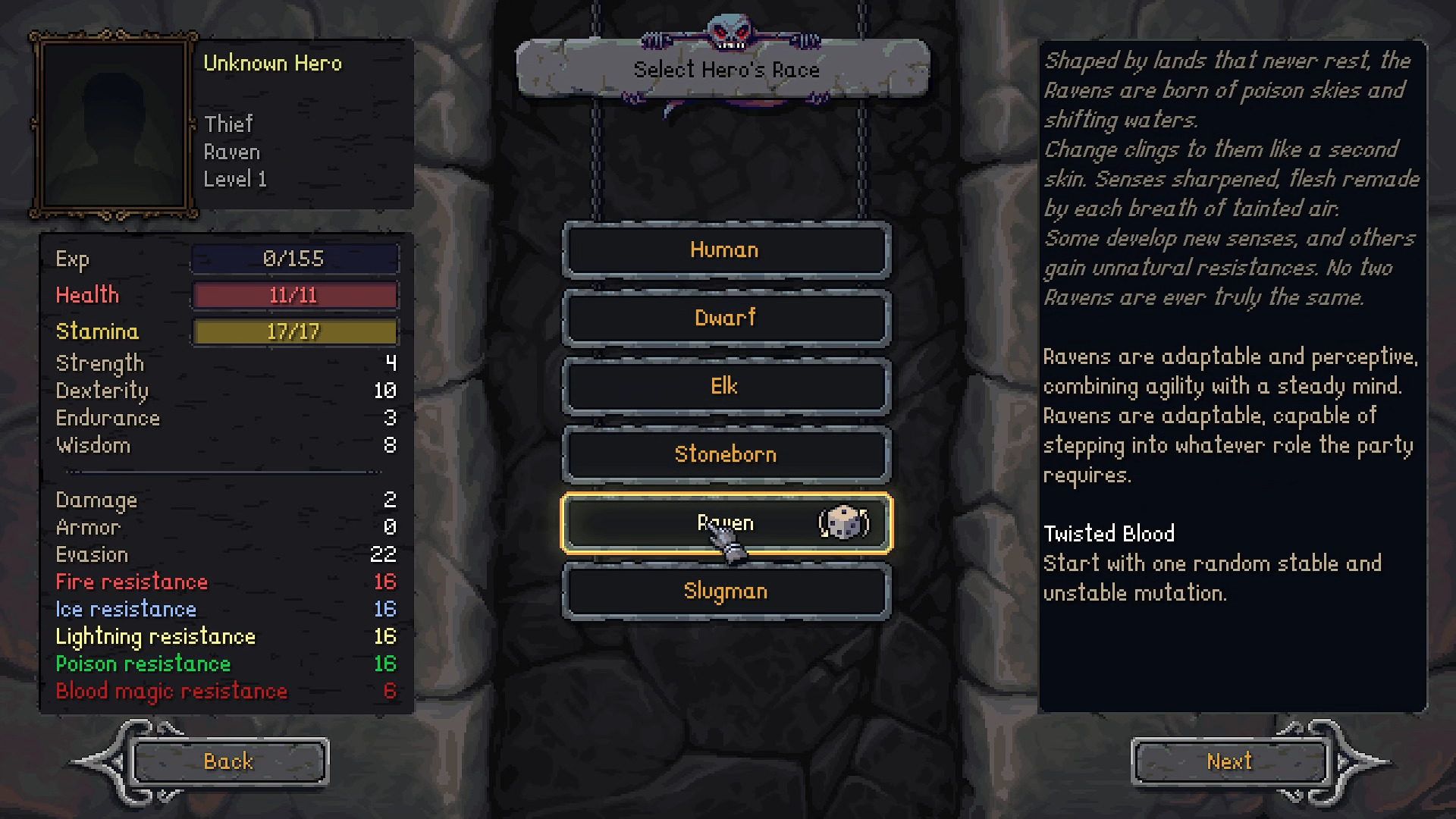
Get the party started.
Character creation is straightforward: make four heroes from a collection of races and classes and send them out to get beat up. RiG has taken the liberty of adding a few nonstandard classes to the mix, like the blood mage, who spends health instead of mana. Some nonstandard fantasy races include the elk, which is really just an elf with antlers glued to its head.
Stats can be rerolled, but the ranges for each stat are fairly limited, so rerolls are more about getting a specific stat that’s naturally low for certain races to a desirable level to meet gear requirements and then calling it quits. If I had known that most of the good stuff for paladins was based more around wisdom than strength, I’d have rolled my dwarf a bit more or just chosen a different race.
The other things that aren’t so standard are skills. Instead of having a sweeping set of priest or wizard spells along with a few special abilities, each class gets its own set of skills that make up whatever it is they do for the party. Each class draws from some form of replenishable point pool to activate skills. Wizards use mana; thieves, fighters, and rangers use stamina; and paladins use zeal, which increases with every successful strike on an enemy up to a limit of five zeal points; and so on. There’s enough variety to warrant an extra playthrough or two.
Sunk Costs
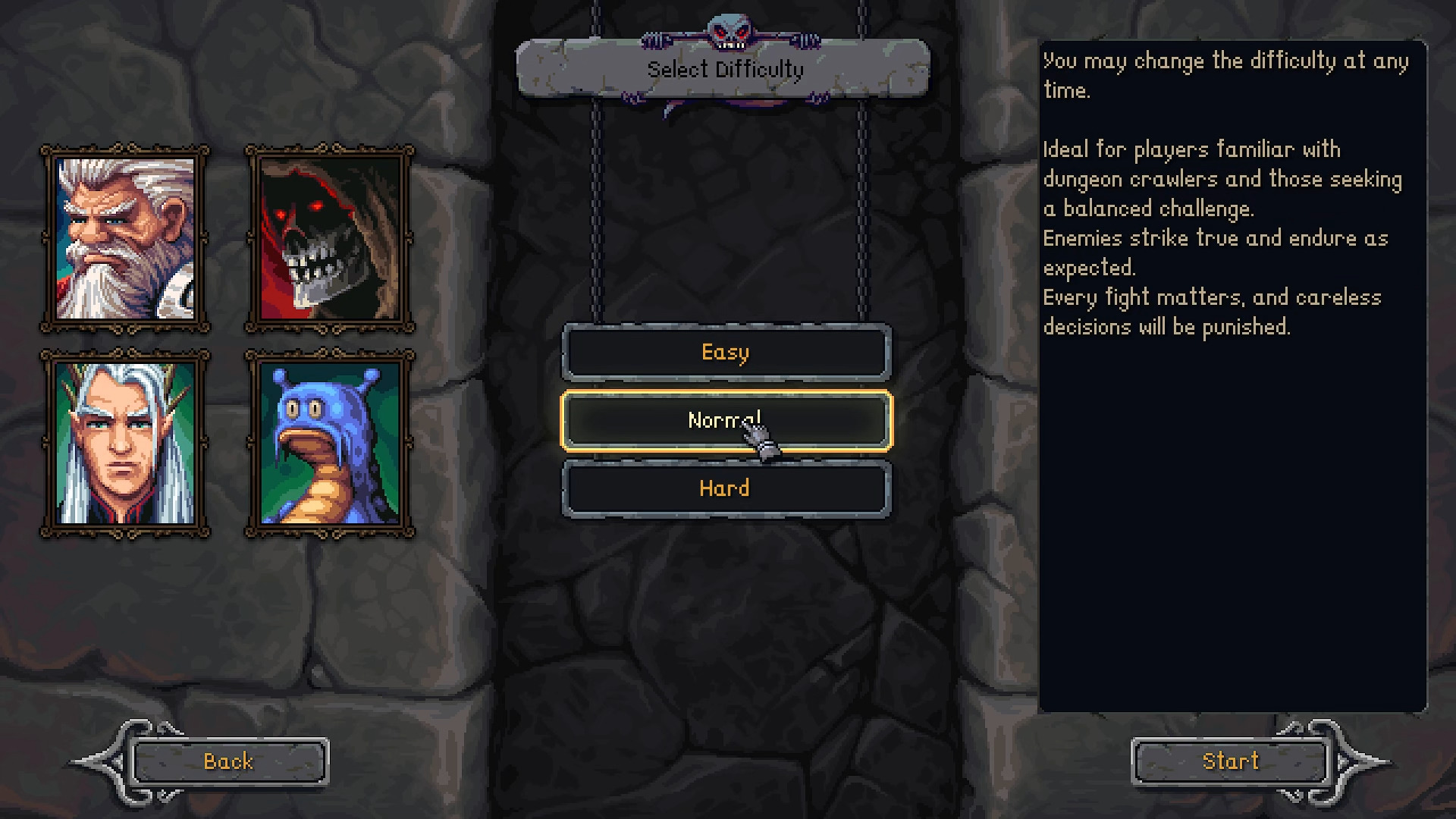
Three difficulties to choose from. I went with normal.
Skills are divided into active and passive skills, and each one can be increased up to five levels. Characters get one skill point per level, with some skills being starters and others unlocking later. I found this design to be pretty flawed since most higher-level skills trump earlier ones, making it feel like points invested earlier on are a waste.
The wizard spells are a prime example of this design flaw. Wizards get the usual gamut of elemental spells, the first ones targeting individual enemies and dealing less damage, while the latter ones hit entire groups for a lot more. Once you get these spells unlocked, there’s almost never a reason to use the earlier spell skills since mana replenishment is never an issue.
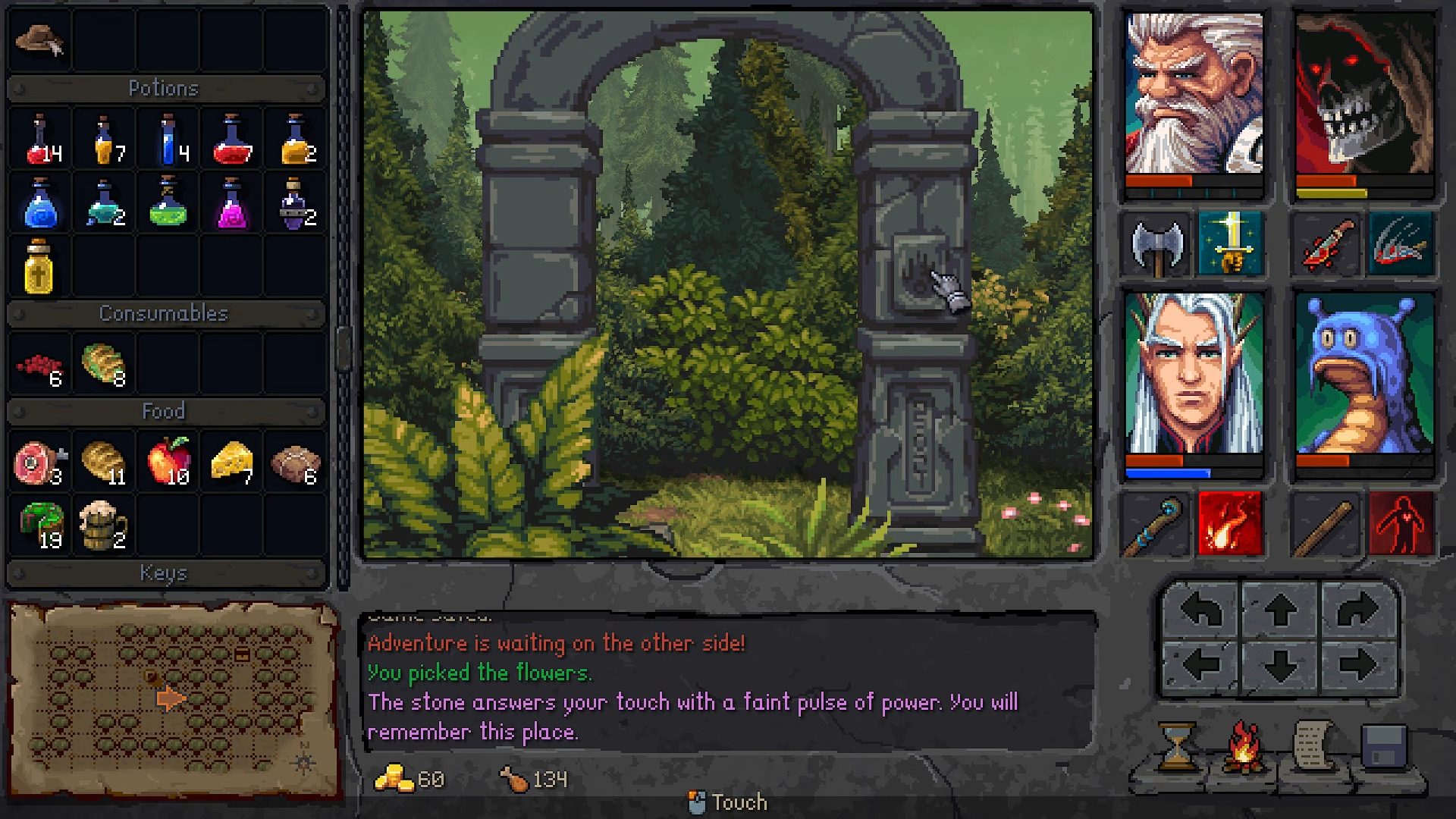
These gates allow for fast travel later on.
The descriptions of some skills are also a bit vague as to what increases at each level, and some investments don’t feel worth it. I was a bit miffed when I noticed that the paladin’s lay-on-hand ability doesn’t directly increase the amount of damage healed; it burns more of his zeal points to heal for the same terrible fixed amount that he was healing for at level 1. That’s not that great when my blood mage can heal in increments of five per point spent. My paladin’s precious skill points were better used on his protection spell and on dealing more damage. All combat skills have a cooldown time.
Combat
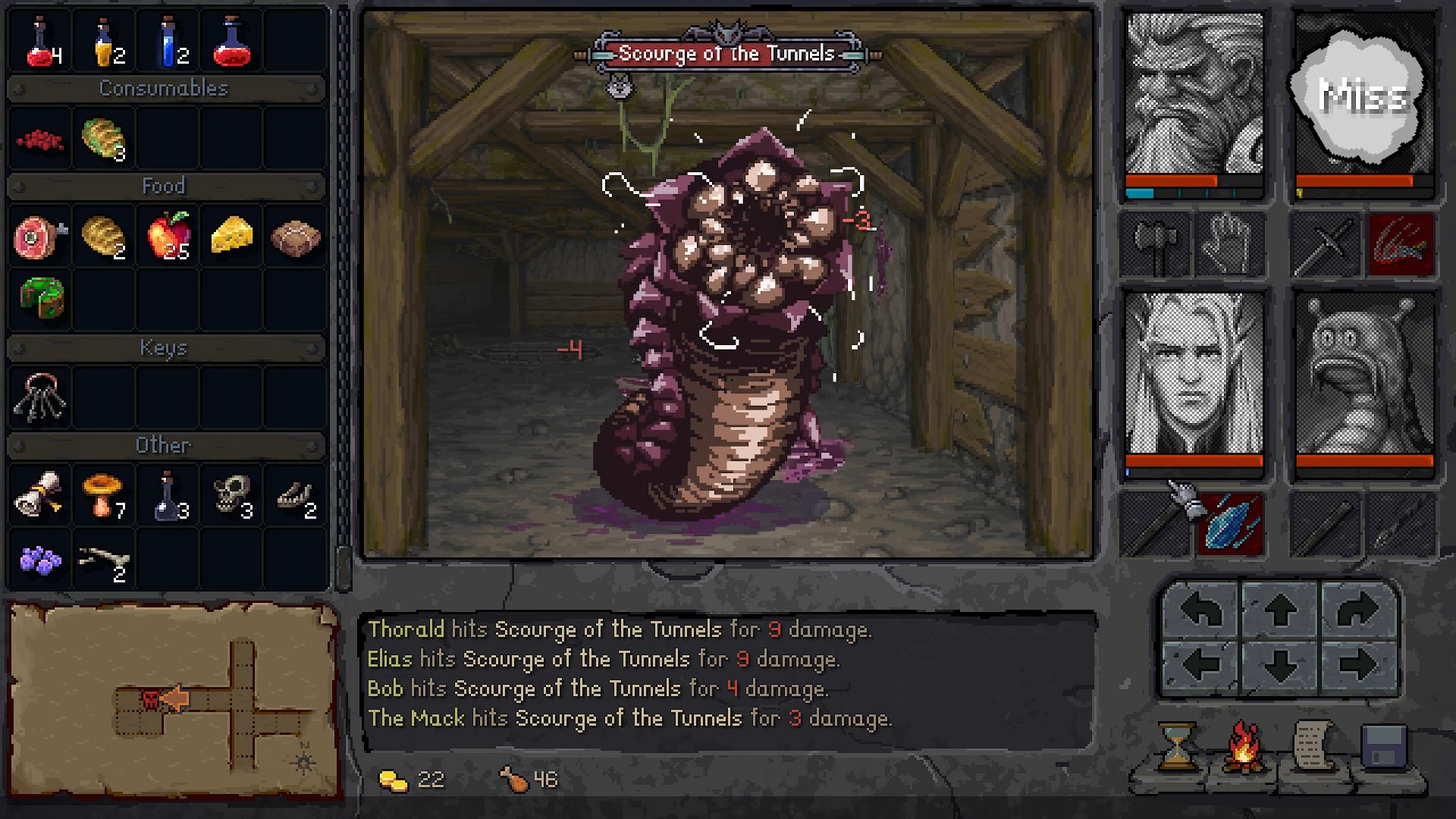
A typical combat scene.
Combat is turn-based in an IGOUGO system, and each combat round consists of either moving the party or attacking/using skills while enemies within view try to approach the party and cause bodily harm. Party members in the front row get hit; cowardly members in the back don’t, unless they’re flanked or the attack comes from behind. RiG got a lot of things right with combat; first and foremost, they remembered that crawler combat should be fast. Once the player grasps the flow of the game, time shouldn’t be wasted on dead air with overwhelming animations and spell effects. The other thing they got right was not freezing the player in place when enemies are near. So long as the party hasn’t taken an action, they’re free to advance or flee.
It’s not all perfect. After a while, every enemy begins to feel the same, as most of them have a limited range of effects they can cause. It usually comes down to slugging it out, making combat monotonous at times, but that’s more a typical symptom of dungeon crawlers themselves. There’s also the matter of potions and food. There are potions for everything from healing and mana to revival and resistances, and nearly all of them have recipes that can be used to mix up more. Potions can be consumed at any time, which includes when the party is about to wipe.
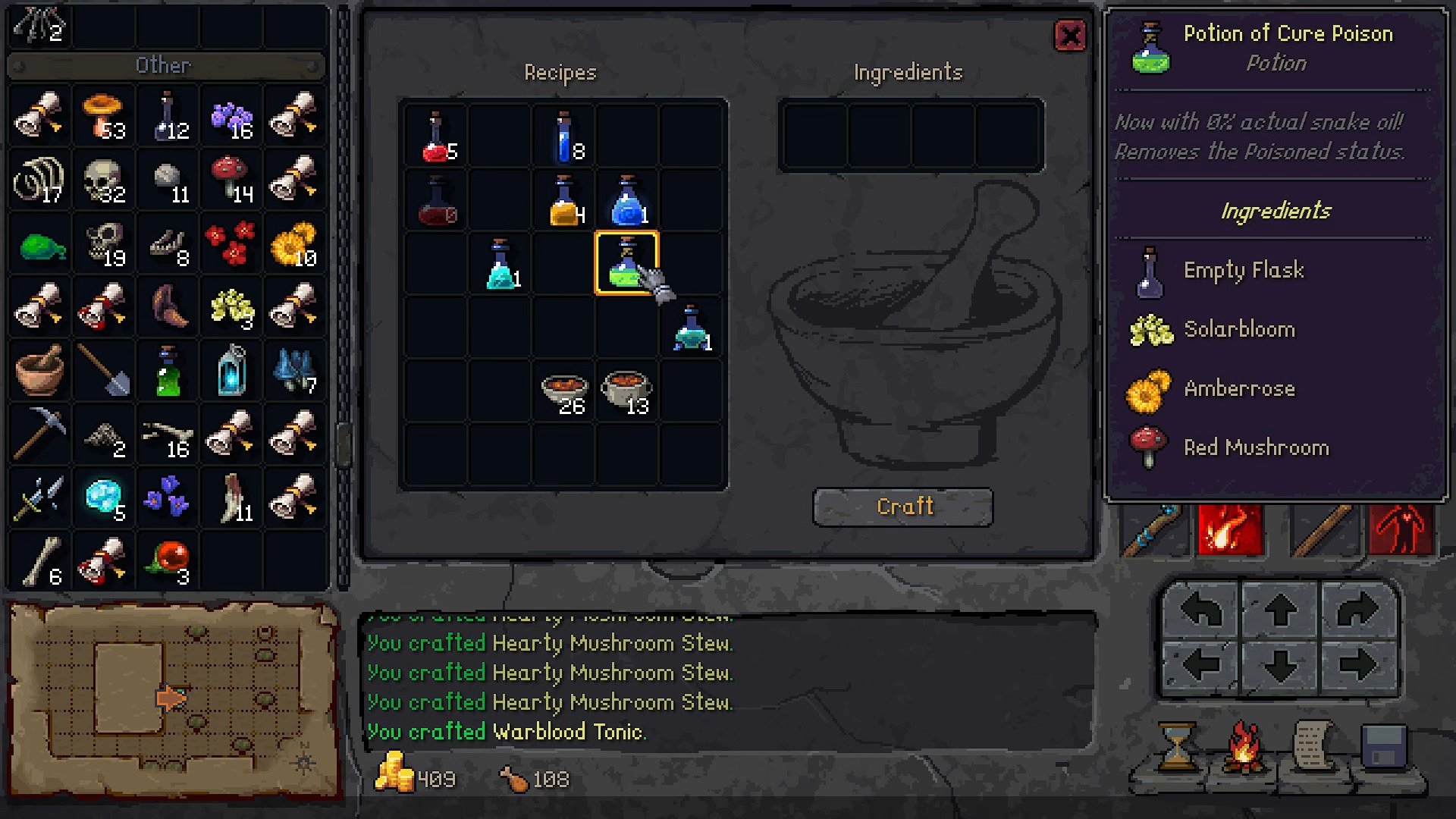
At last, all those stupid mushrooms I've been picking up are useful for something.
Aside from the endless potion quaffing, there’s also food, which is used whenever the party rests. Camp can be made any time there are no enemies nearby. Endless food can be purchased in town, and I had such a surplus of gold with nothing to spend it on that I was never in any danger of running out. The only way one could run out of potions is by burning them in fights that are well beyond the party’s level. Otherwise, it’s almost impossible to lose in this game.
As for death and difficulty, the earliest part of the game was the hardest. Enemies are smart enough to try and flank when possible, and only two enemies can occupy a single space at the same time, so I was always looking for an area to box myself in to avoid flanking. My biggest challenges in combat were a midgame encounter with a basilisk and the final battle itself. The one character who died the most (and always seemed to be targeted most often) was my thief; even with his capped evasion, he always seemed to get hit the hardest and most often, but it was always a matter of inconvenience.
The other thing I noticed about combat was frequent misses with melee, even with high dexterity. Once I switched my thief to a crossbow, his attacks became far more consistent and more damaging—it also invalidated most of the skills I had picked for him since they were all built around using daggers. Still, I had a lot of fun with the combat, and most of the issues can be forgiven because it was always quick.
Sight and Sound
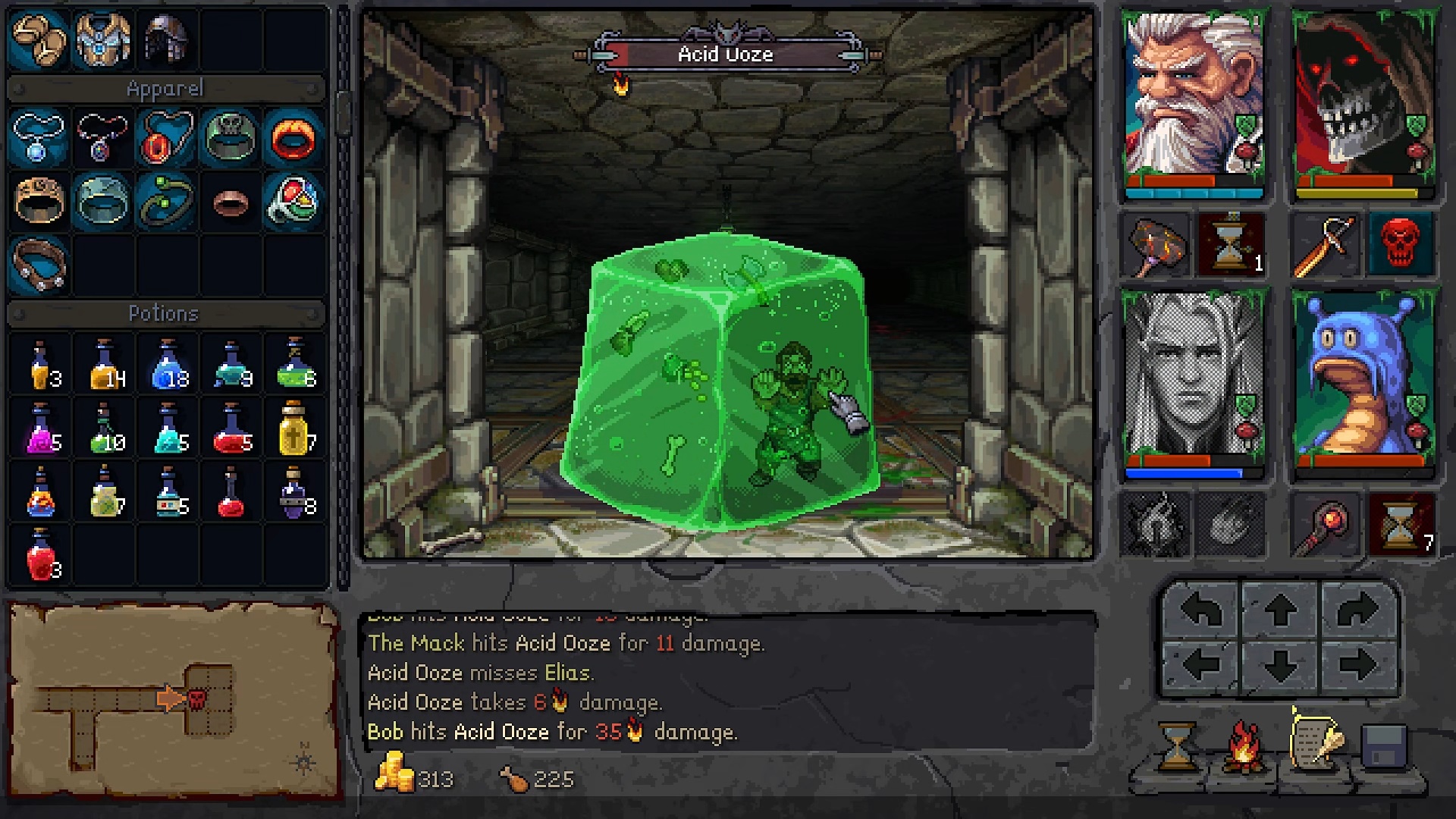
Enemy designs are no exception to the kind of visual quality this game has.
Roaming down the rainy streets of the village of Underkeep immersed me in the dismal situation these poor slobs were in. The foggy graveyard crawling with ghosts and diggable graves was a nice build up to the horrors hiding inside the church. One particularly (intentionally) annoying segment in another forest had my party up to their legs in wolves and mud, mud that created splatter effects on the view as they try to pull free in the midst of attacking wolves and nearby pit traps just waiting to swallow up the angry player who tapped forward one time too many trying to break free.
The sound consists of appropriate grunts, whacks, and everything else an adventurer needs for good aural feedback. The music is a mix of mood pieces and driving movements for combat, everything serviceable, but nothing too memorable.
Quests and Encounters
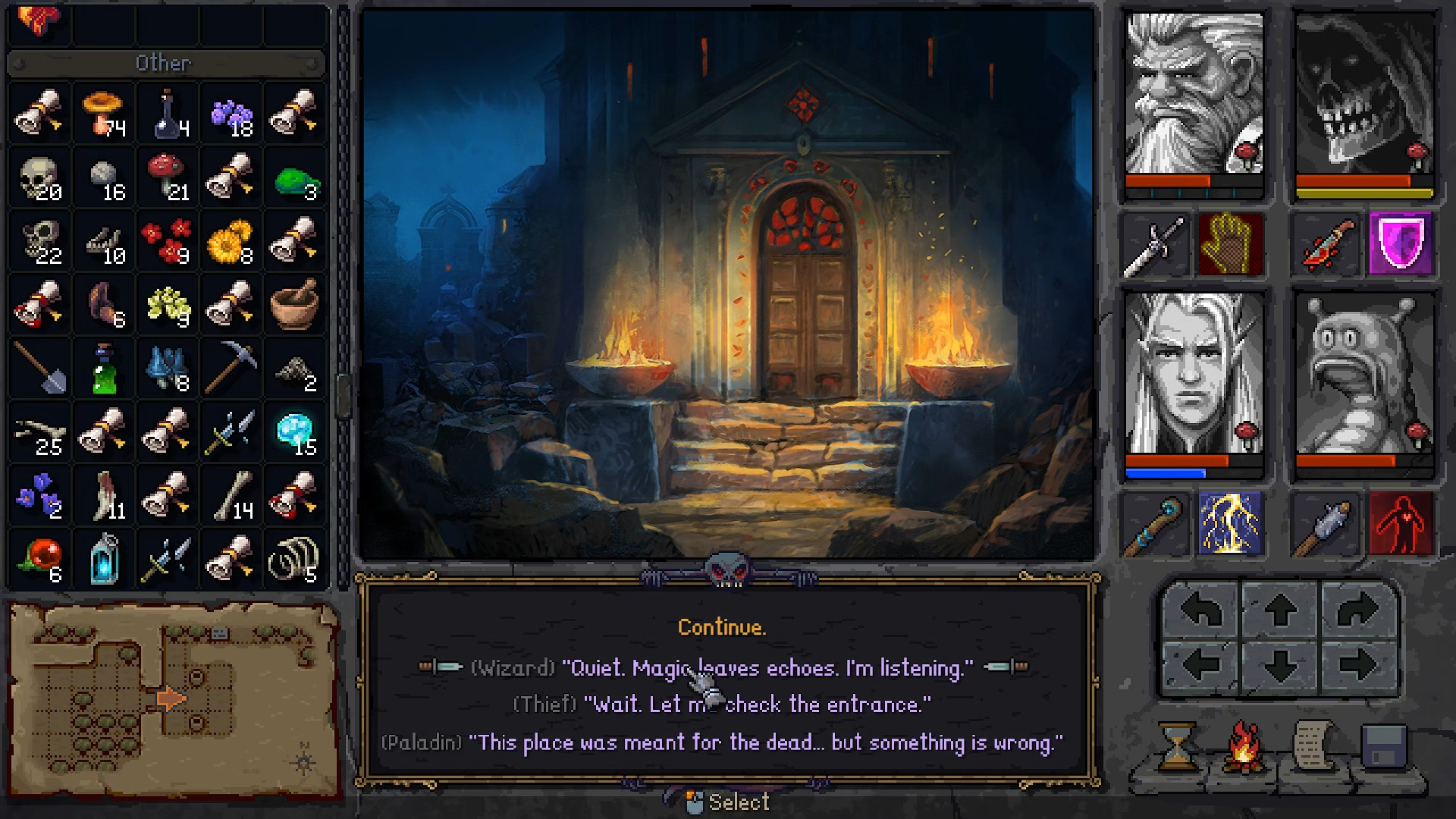
One of many opportunities for the party to show off their specific skills.
Experience gain is divided between killing whatever doesn’t kill you first and performing menial tasks for whoever happens to have something for you to do, which includes a load of people. A majority of the quests are picked up in town from the various merchants and the town's mayor. Quests are kept in the journal and range from the usual “kill foozle” business to some rather clever and involved problem-solving with a bit of choice and consequence thrown in.
Sometimes the party’s composition in terms of classes and races can influence the outcome of quests and social encounters. Usually, class- and race-specific checks will reveal additional hints, but they can also provide loot, and most provide additional experience. A lot of quests are also tied up in puzzles.
But I Hate Sokoban!
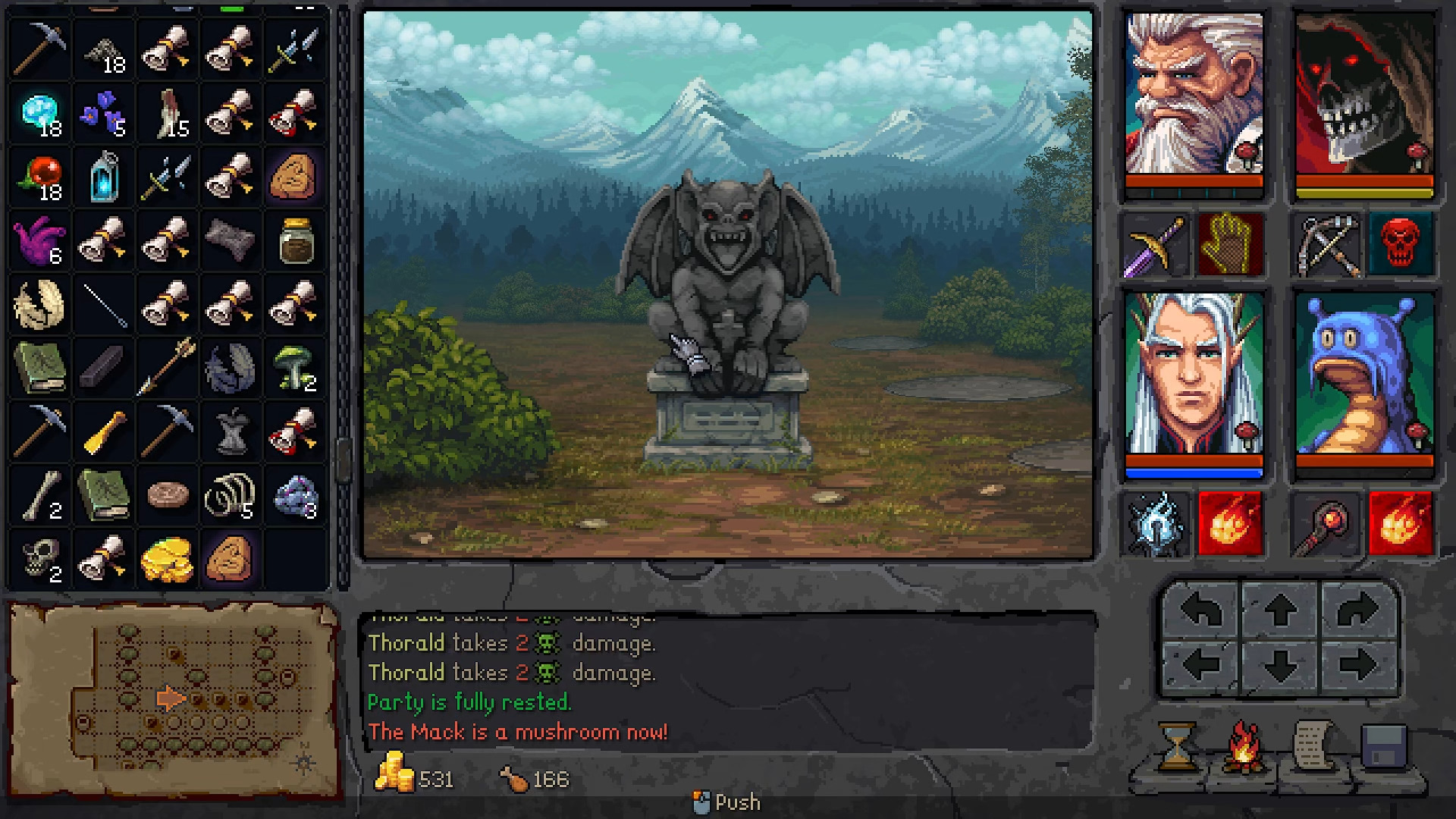
Yet another push puzzle.
If combat is the meat of dungeon crawling, then puzzles are the bread, and having played a large number of these games over the decades, I’ve come to realize that certain developers seem to favor certain types of puzzles; some love pressure plates, while others love teleporters. So what does Rake in Grass love? Apparently, they love Sokoban because every other blasted puzzle seemed to be about pushing statues into specific spots.
While I exaggerate only slightly, the game had more than its fair share of push puzzles, some optional and some mandatory. Underkeep also drew from the usual bag of tricks with riddles, pit traps, and hidden walls. None of it was too difficult. All the riddles are ridiculously easy to solve. Most solutions present themselves in an obvious fashion, and difficulty in progression came from situations where I had missed some vital plot coupon, which brings up some of Underkeep’s flaws.
Not Just a Coincidence, a Choice
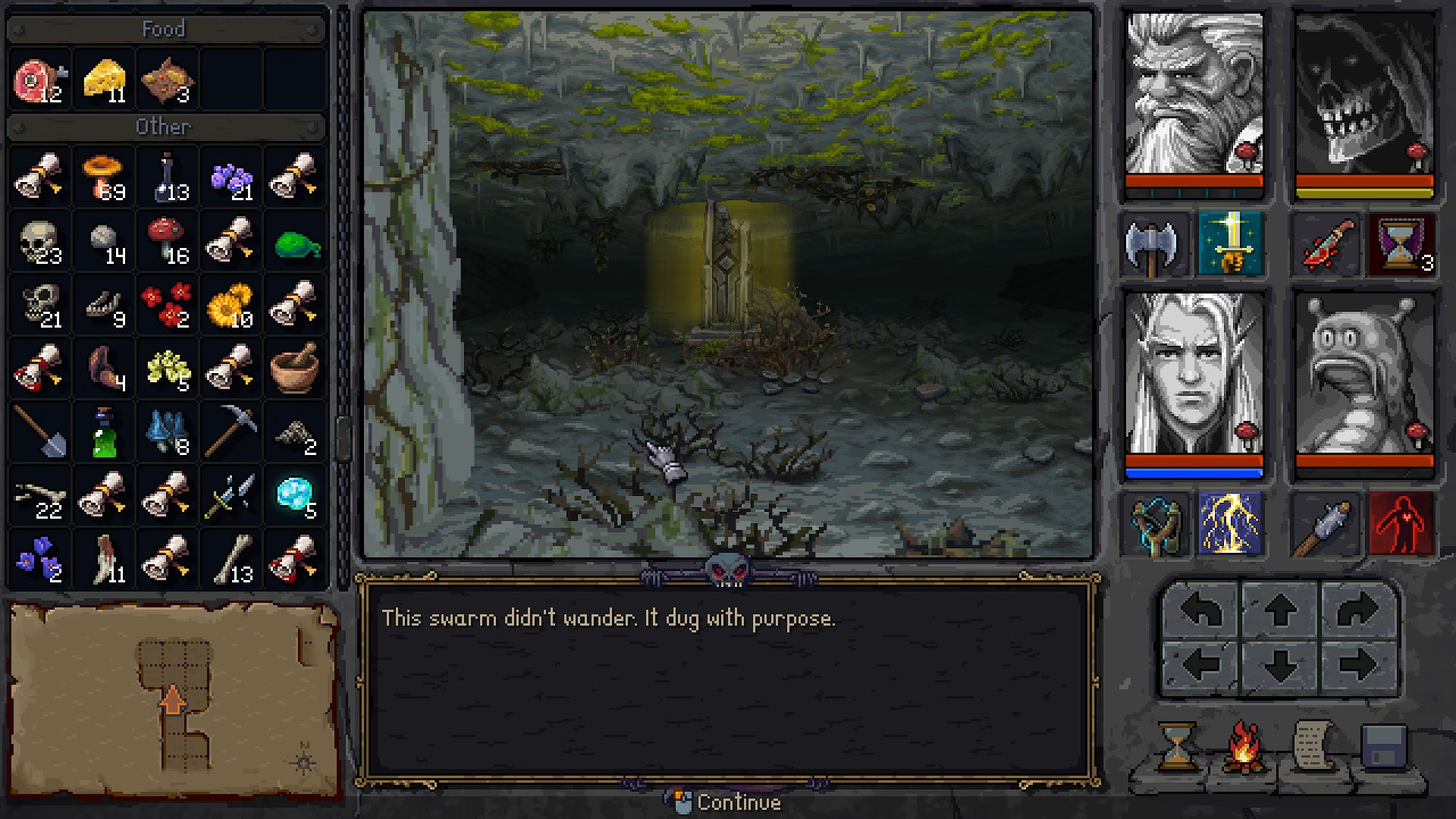
Not an isolated incident, a pattern.
It’s in the cases where solutions don’t present themselves that things become troublesome, because it’s often due to oversight and poor design rather than deviousness on the developer’s part. In the early part of the game, I got stuck for almost an hour, searching for a key in an area I’d already gone over multiple times, because objects have a tendency to blend in with their surroundings, even with the option to see items behind objects turned on. I had a similar problem later on when searching for a vital key to get into the dreaded tower. I finally had to look it up online, and I wasn’t the only one who struggled with this particular missing part.
Some of the text is obviously written or edited with AI; there are too many instances of “not just X, but Y” AI-isms, alongside other telltale signs of AI-written prose, for it to be a coincidence. It’s noticeable when it shows up, but it’s not egregious.
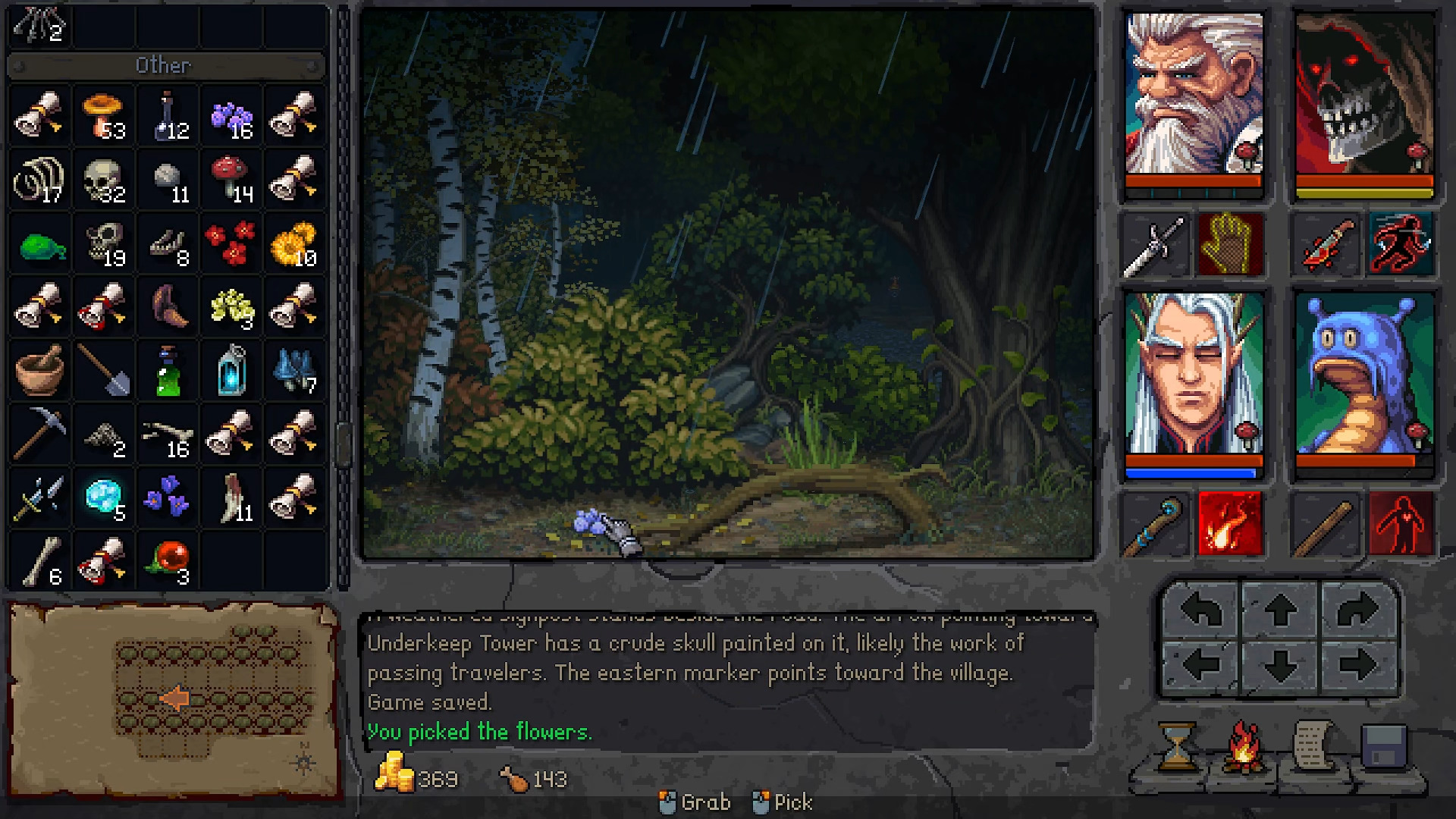
Get ready to stop and pick loads of flowers and countless other bits and bobs if you want ingredients. It gets a bit obsessive.
As previously mentioned, some skills just don’t add up to anything useful compared to others. The game itself is very easy, at least on normal difficulty, with inexhaustible food and a large number of potions. Though I can’t imagine hard making much difference with practically unlimited resting.