



The Sinking City 2, created by Ukrainian studio Frogwares, is a Lovecraftian survival-horror shooter set in the flooded city of Arkham.
This game is a strange beast. On the one hand, it is one of the more atmospheric survival-horror games I've played in recent years, with excellent environments, satisfying combat and some genuinely disturbing imagery. On the other, the more I think about its story, the more I wonder whether Lovecraft was actually the right foundation for it.
Arkham: City or Asylum?
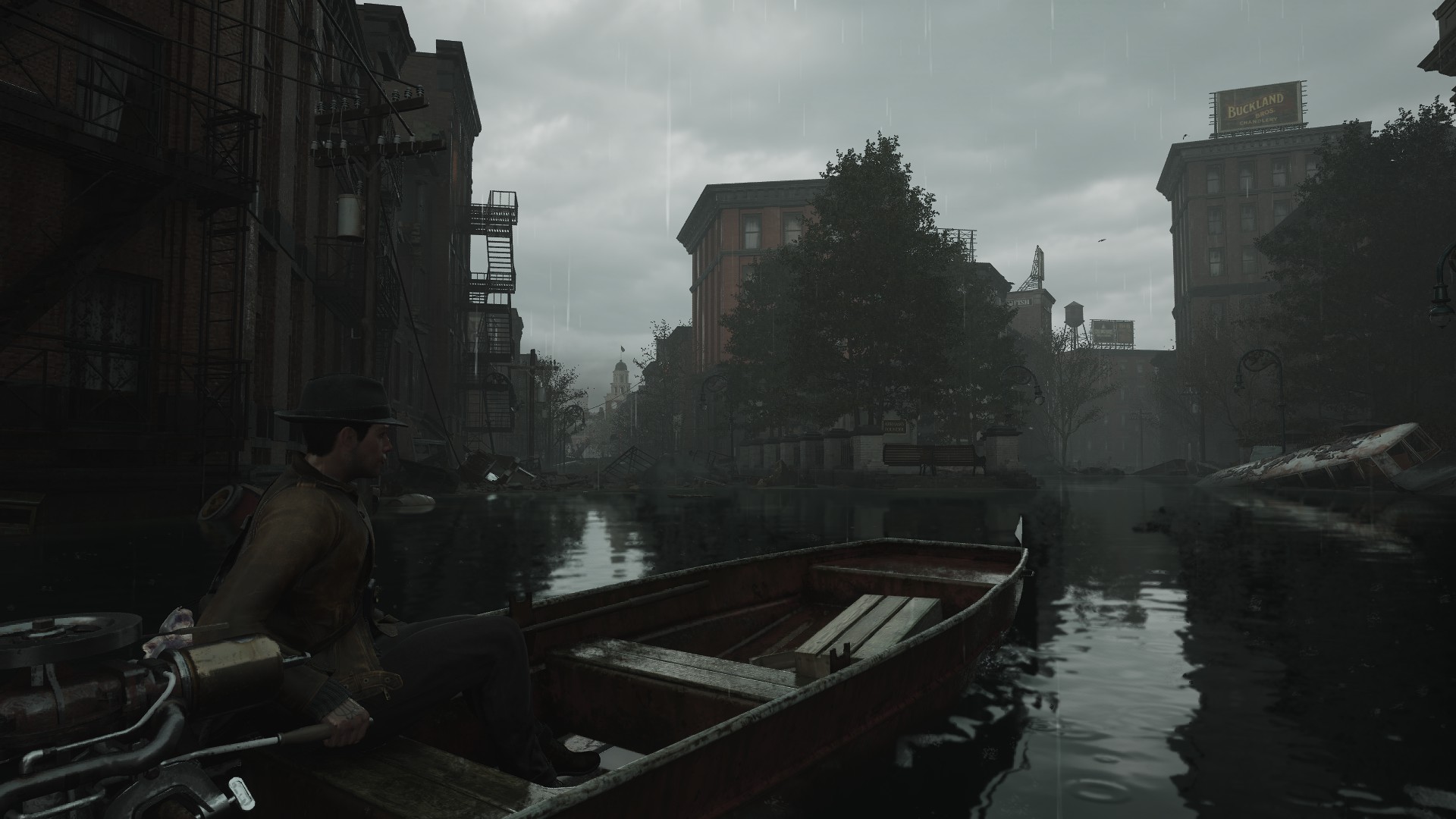
Calvin steering through flooded Arkham
Calvin Rafferty, a man well-versed in the supernatural, sets out to save the love of his life, Faye Bennett, from cosmic forces beyond his understanding.
You'd think that if you had played The Sinking City, the sequel would once again give you a large map to explore, with different routes to reach your current objective. However, the second game takes a vastly different approach, opting for a much more linear and atmospheric experience. If I am being honest? I am glad they did.
Debris and other obstacles block off entire streets, meaning you'll generally be following a set route through the city. Along the way, you'll encounter floodgates that prevent you from progressing, but there's always a dock nearby where you can leave your boat and search for a way to open them. Some are simple; others require you to venture through an entire area, such as the Church, before you can continue. I actually appreciate the decision to make the game more linear. From what I've heard from people who played the first Sinking City, one of the biggest complaints was its backtracking. Imagine leaving an area thinking you've found every clue you need, only to realize two blocks later that an important clue was still sitting somewhere behind you. You'd then have to make your way back to the boat, slowly travel across the water to the previous area and search through it again until you finally find what you missed. That kind of backtracking sounds less like investigation and more like busywork. That's not the kind of investigation I particularly enjoy. At some point, you're no longer solving a case or mystery; you're searching the same streets for something you didn't know you were supposed to find.
The second game retains some of the investigative roots. Clues aren't simply there to tell you where to go next; they provide additional context about the places you explore and what the people who lived there did before everything went to hell. The Investigation Space is back, but a lot less extensive. You have your clues, place them there and connect them. If you complete a chain, you get a rune which can then be used to unlock Talents. This system adds an additional reason to pick up clues and documents, aside from lore. The game tells you that exploration is worth it, and yet at the same time, it never felt like I was being forced to scour every corner of a location just to progress the main story.
Talents are straightforward. Basic, Intermediate, Advanced and Expert each have six skills associated with them. Expert is locked and can only be unlocked through Eldritch Rewards. They aren't massive skill trees that completely change how Calvin plays. Instead, they provide small but useful bonuses, such as making the first bullet you fire deal additional damage or reducing incoming damage when you have a large number of healing items. They complement the existing mechanics rather than completely redefining them.
Eldritch Rewards are tied to Eldritch Feats, which are challenges throughout the game that reward you with XP. That XP is then used for the Rewards. Most are pretty straightforward, with some Feats being awarded for story-related things, while others are simply for playing the game or doing something special. I actually enjoyed checking the Feats and discovering that I had completed something purely through luck or happenstance. There were a few moments where I looked at the list and thought, "No way!"
When in doubt, shoot it!
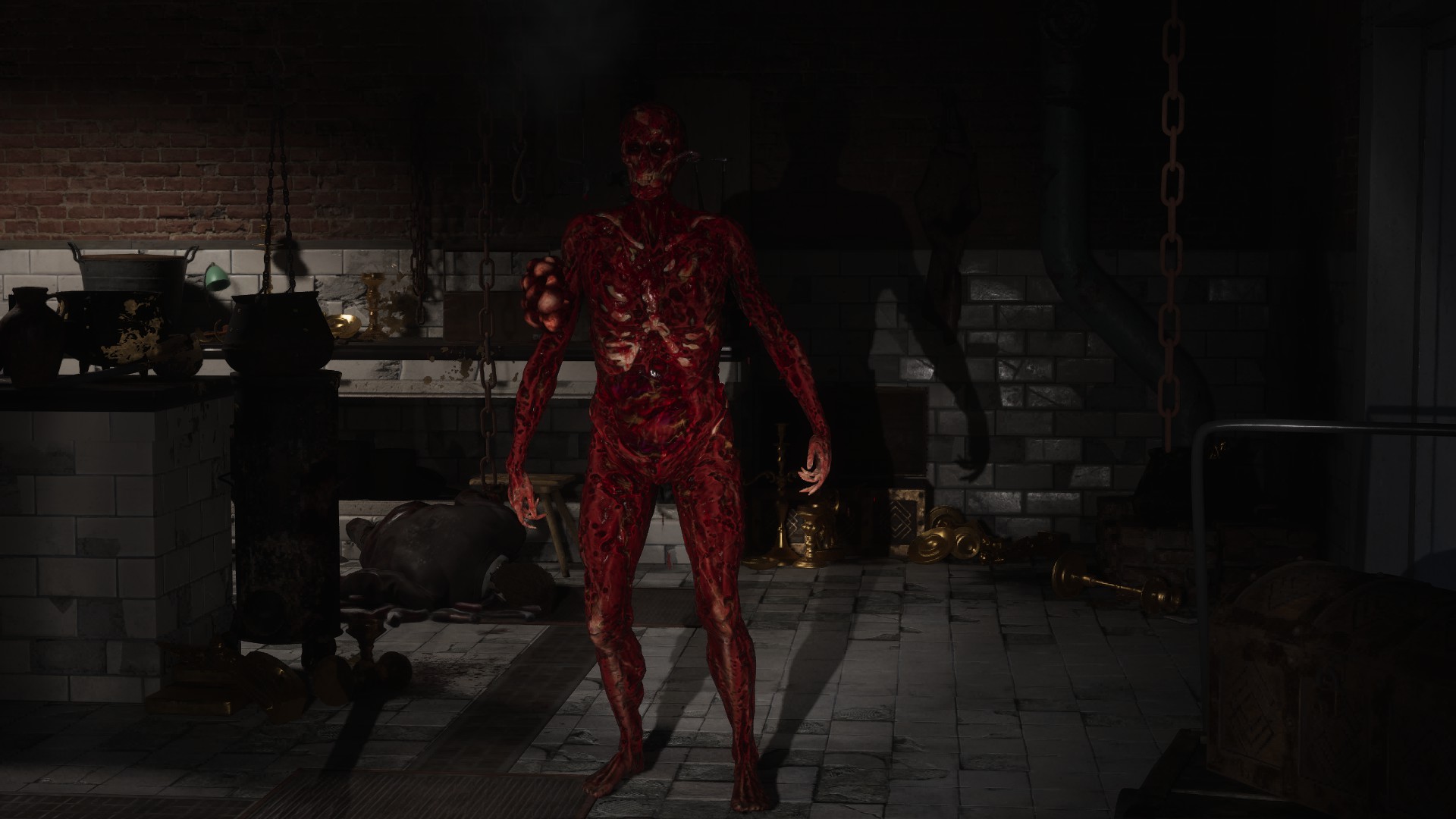
Explosions just blew his skin away
Before I really get into the combat and how it feels to play, I want to talk about one aspect I particularly liked. Enemies visibly deteriorate as you damage them. Reanimated Corpses, for example, will lose their skin and flesh when you shoot them in the head, exposing the skull underneath. The same applies to their limbs; shooting an arm repeatedly can leave the bone exposed. It's a small detail, but it makes your attacks feel much more physical than simply watching an enemy's health bar go down.
This becomes even more noticeable when dealing with Slithers. If you kill a Reanimated Corpse but fail to destroy the Slither controlling it, the corpse will eventually get back up and attack you again. What I particularly liked is that it retains the damage it had when you killed it. A corpse that you previously shot apart can come crawling back looking just as mutilated as before, which makes them feel almost indestructible and relentlessly determined to kill you.
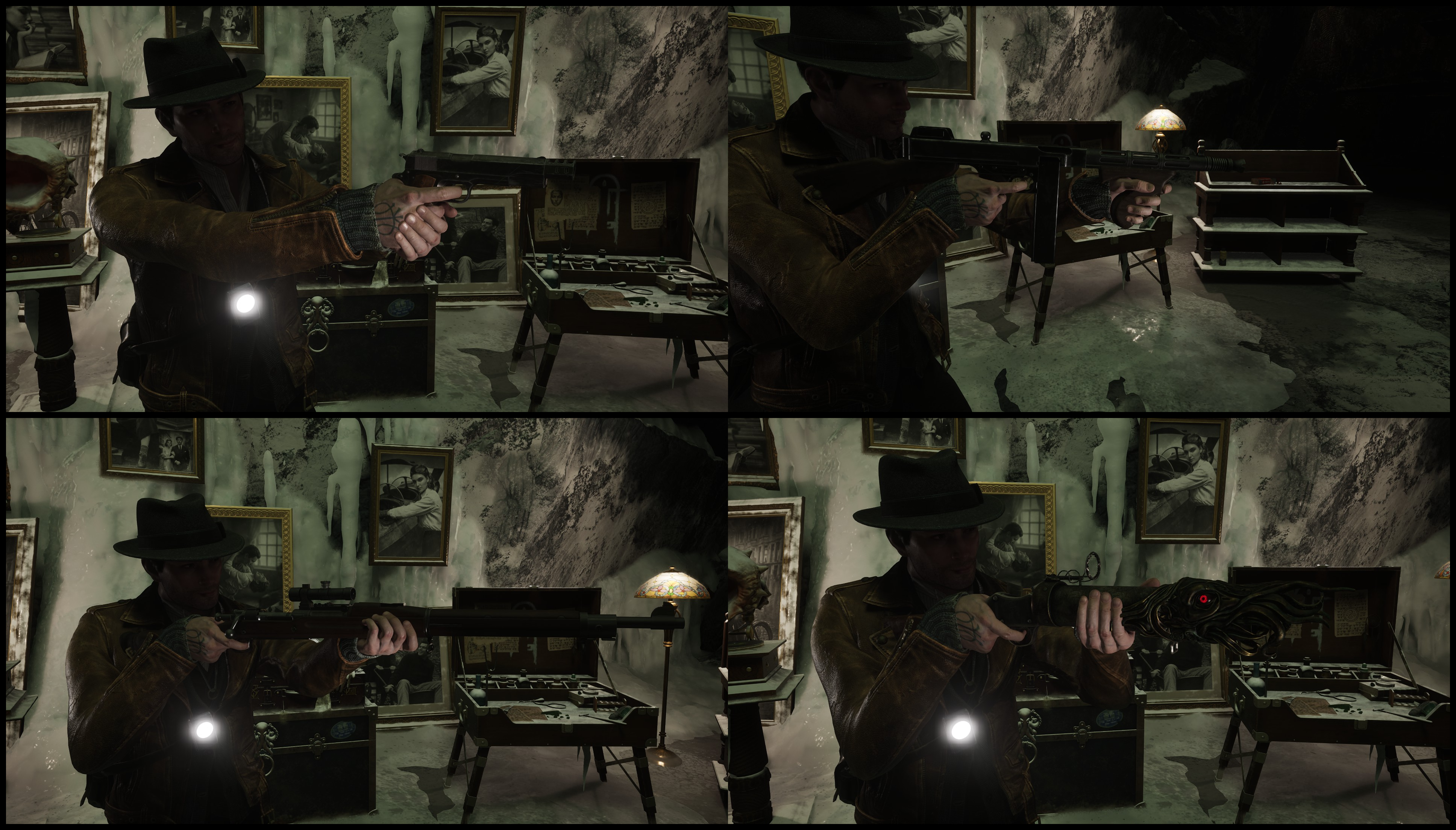
The four weapons I used most of the time, shotgun is missing due to not really being used
And then there is the part that allows you to turn these creatures into anatomical models: guns. Five of them, to be exact. Each weapon has its own strengths and weaknesses, although I quickly settled into a preference for one of them.
You start with the pistol, which initially feels rather weak, especially when ammunition is scarce. However, upgrades eventually make it considerably more useful. The Focus ability becomes almost instantaneous, and perfectly timed shots deal additional damage. This turned the pistol into my workhorse for most of the game. Even after acquiring the other weapons, I found myself relying on it far more often than anything else.
The shotgun, on the other hand, never really clicked with me. Even after getting the axe upgrade, I rarely found myself choosing it over the pistol. The Tommy Gun was much more fun to use, especially when dealing with several enemies at once, but ammunition was simply too scarce for me to rely on it. The rifle was probably my favourite weapon after the pistol. It has a scope attachment that enables a slow-motion mechanic when you aim down the sights for a prolonged time, granting you a brief window to line up a satisfying shot. The grenade launcher proved invaluable when surrounded by a group of enemies. Although its lack of a proper crosshair made aiming somewhat frustrating, landing a shot on a cluster of foes was incredibly satisfying and often provided the breathing room I needed.
Combat in The Sinking City 2 is well-executed, drawing heavy inspiration from the Resident Evil remakes. While those remakes have their detractors, their gameplay is undeniably superb, and The Sinking City 2 successfully captures that same spirit. Combat shines during encounters with multiple enemies: dodge attacks, create distance, wait for your focus to settle, and then land a precision shot. However, you must remain aware of your surroundings. Getting cornered or allowing an enemy to force close combat can quickly turn a manageable fight into a desperate scramble for survival.
I played the game on Sweet Dreams, its easiest difficulty, yet combat never felt trivial. Basic enemies still dealt enough damage to force retreats for health or resources, while larger foes absorbed a surprising amount of punishment. This dynamic shifted encounters from simple clear-outs into genuine strategic challenges that required active management. This meant that even on the easiest setting, I couldn't simply run into every encounter and mindlessly shoot everything until it stopped moving. Positioning still mattered, especially when dealing with multiple enemies at once.
I also appreciated the way the game separates its combat and investigation difficulties. I could keep the combat at the level I wanted while making the investigative side a little more forgiving. It doesn't fundamentally change the puzzles, but it makes important information easier to spot and connections easier to follow. It's a small feature, but one I wish more games would adopt.
The bosses were okay. I'm used to much more elaborate bosses from JRPGs, gacha games and Soulslikes, with huge health bars, multiple phases and elaborate mechanics, so these felt fairly modest by comparison.
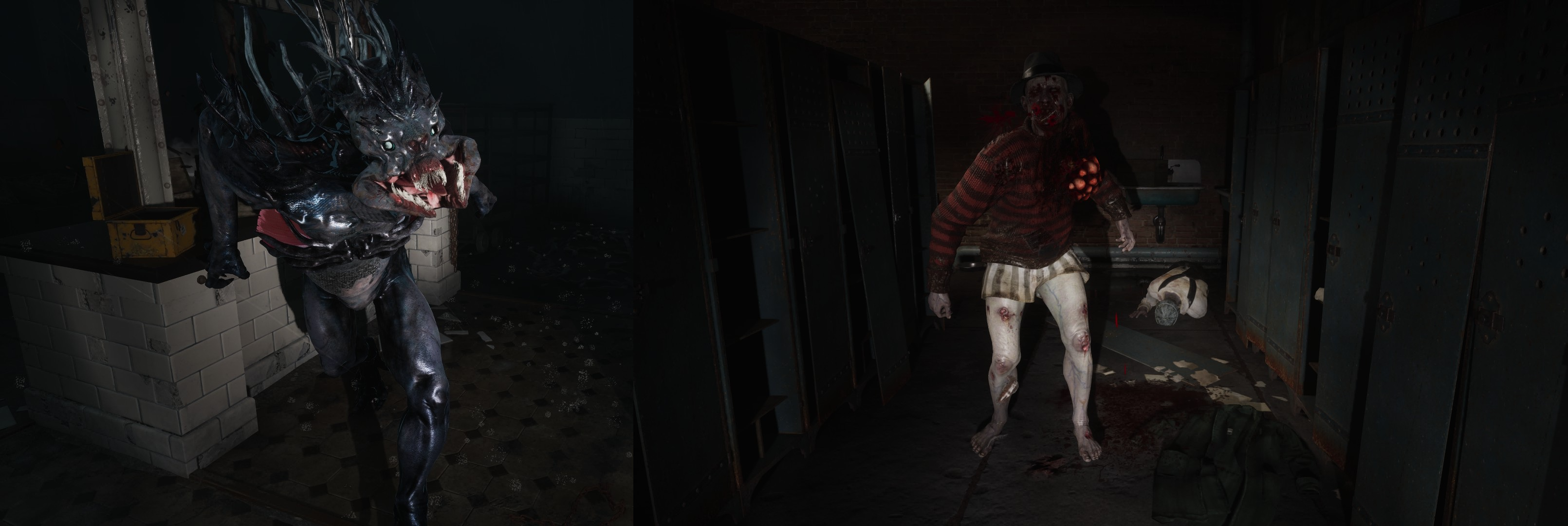
A Deep One and one of the basic Reanimated Ones
So, the weapons and gore are solid enough, but are there enough enemies to have fun?The Abominations are the basic enemies, while the Slither Worms are more indirectly involved. They don't attack you themselves, but instead infest corpses and can bring killed enemies back to life. The Stygian Harvesters are smaller hunters that attack you, retreat when pursued and wait until you stop chasing them before setting up another attack. The Lethian Revenants are another interesting enemy, opening their heads before retreating and attacking you from range. There are also the Deep One Raiders and Acheronian Juggernauts, which appear in the later parts of the game.
The problem is that there simply weren't as many different enemies as I had hoped. You spend a lot of the game fighting what are essentially generic zombie-like enemies, and personally, I don't think they fit particularly well into a Lovecraftian setting.
I actually think the game could have done something much more interesting with its basic enemies. For example, they could have used Crawling Ones instead. Rather than simply shooting a humanoid corpse until it dies, you'd be fighting a shifting mass of insects with no vital organs to target. Shooting a hole through its chest wouldn't accomplish much because there wouldn't be anything particularly vital there in the first place. Instead, you'd have to use area-of-effect weapons such as fire, explosives or chemicals to scatter the hive mind.
That would not only have been much more fitting for the setting, but also given the player an incentive on using the environment and maybe even introduce new weapons.
U-Haul? I-Haul!
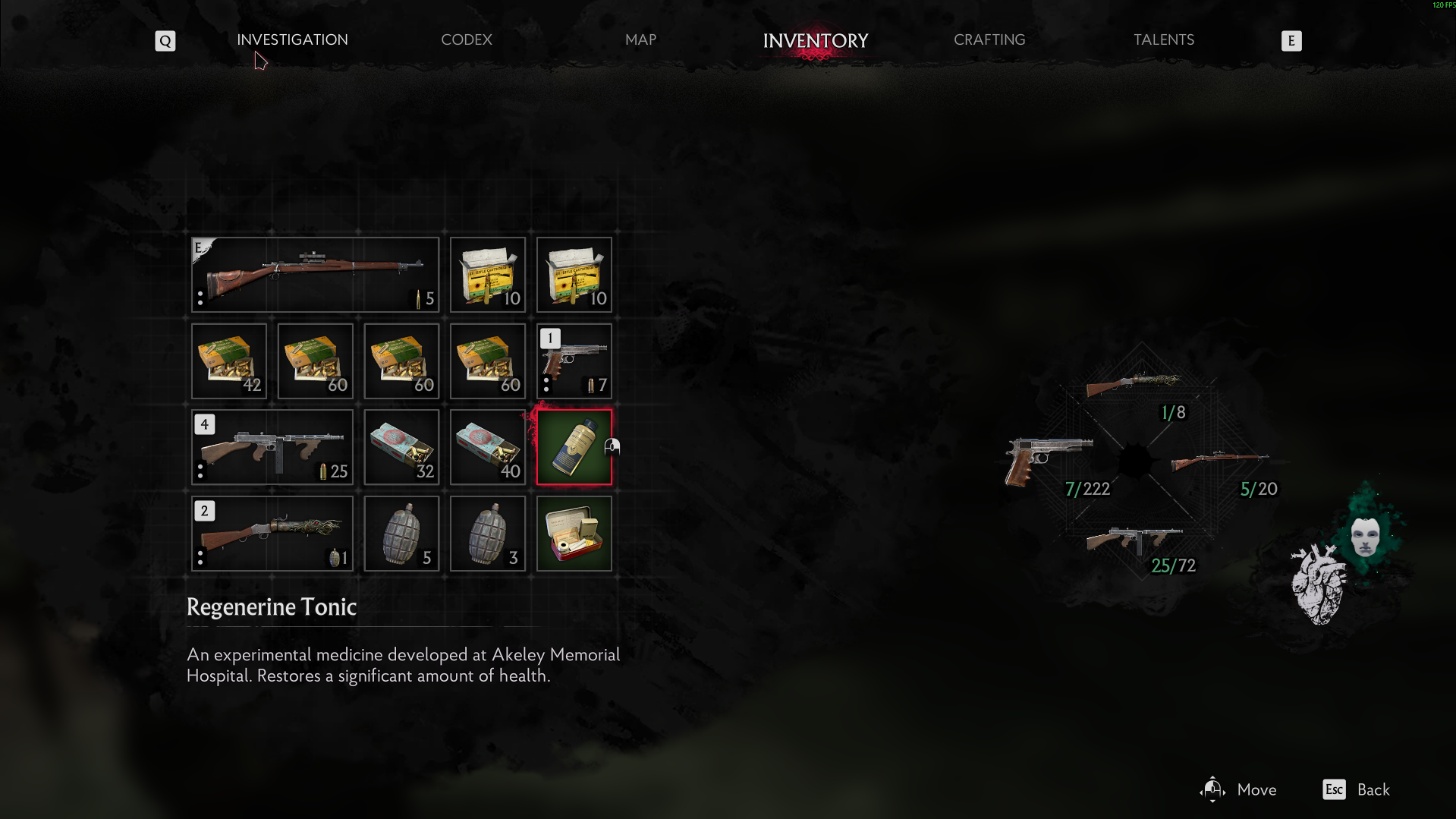
Inventory before the boss fight
Of course, there is one small problem with having five guns: where the hell are you supposed to put them?
I mean, sure, you can eventually have all of your weapons with you, but when you start playing, you don't automatically have all 20 inventory slots unlocked. You have to explore the environments and find upgrades to expand your inventory. Weapons also take up a considerable amount of space.
The worst part about the inventory, in my opinion, is that important story items also take up valuable inventory space. Unlike Resident Evil 2 Remake, where key items have their own separate section, The Sinking City 2 puts them right alongside your weapons, ammunition, healing items and crafting materials. They don't even necessarily take up just one slot. I encountered a bolt cutter that occupied two slots, while a fuel canister took up four. When your inventory is already struggling for space, having a story-critical item suddenly consume four slots feels ridiculous. These aren't things I'm carrying around because I decided I wanted to keep them; they're required for progression, yet they're competing for space with the resources I actually need to survive. Having to discard materials because I need room for a story item is particularly frustrating when those materials aren't infinite. Every container with supplies has a finite amount of items, and once you've collected them, that's it. They don't respawn.
Ammunition doesn't make things much easier either. Each type has a set stack limit, so once you go over that limit, the excess ammunition takes up another inventory slot. As you can see in the screenshot, my 222 pistol rounds occupied four slots by themselves.
Where the Horror lurks
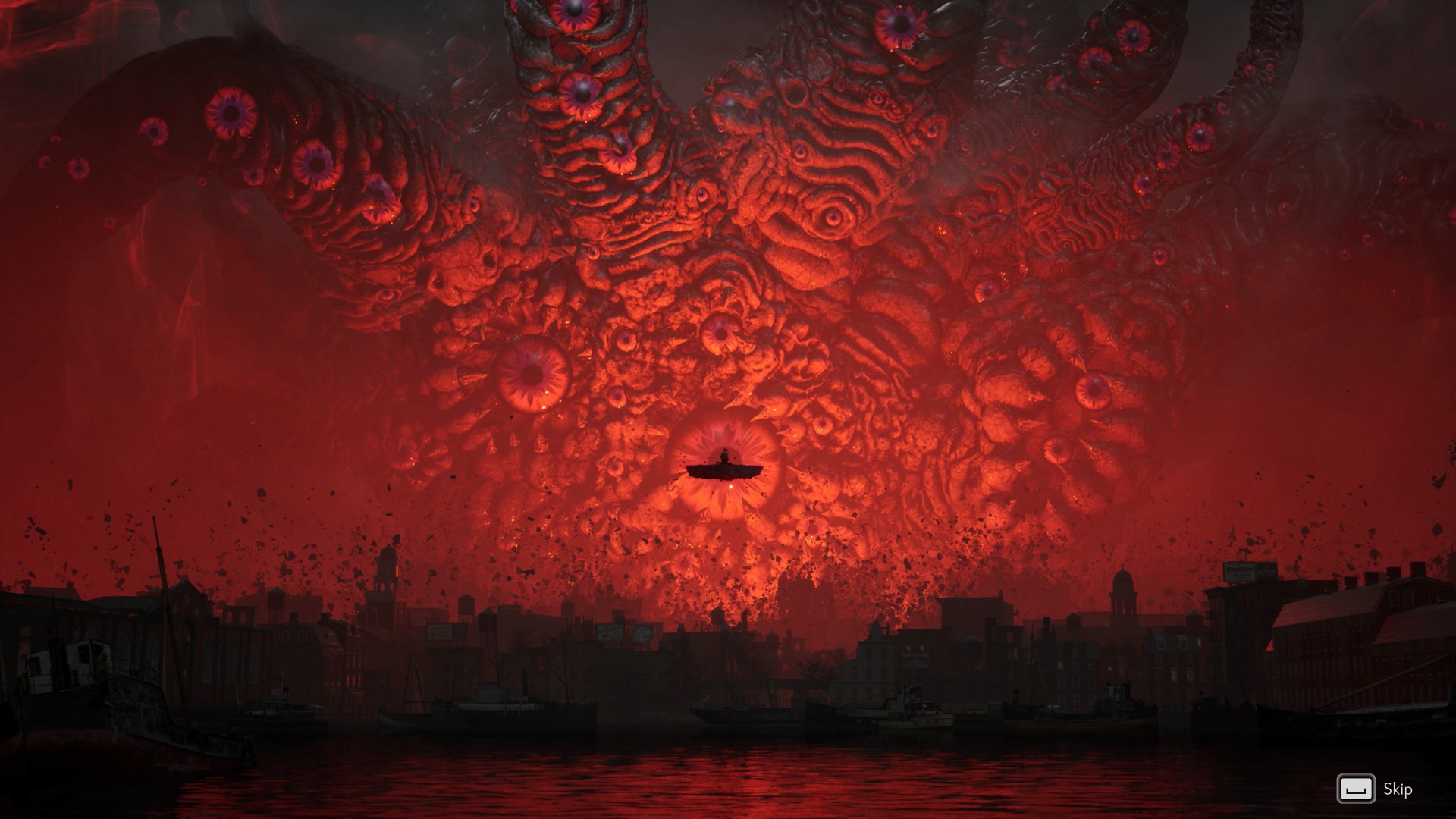
One thing The Sinking City 2 gets right is its atmosphere. Arkham is already a very depressing place to explore, but the game gradually takes things from gloomy and unsettling to outright nightmare fuel.
Arkham itself is probably one of the game's strongest aspects. The city feels like a place that has already suffered long before Calvin starts the journey. Buildings are partially collapsed, debris blocks streets, and boats and other remnants of the flood are scattered throughout the city. Even some of the smaller details tell stories of people who tried to survive but ultimately didn't make it.
And the more Calvin sees of Arkham, the less the city resembles a place that could still be inhabited by humans. One part that stood out to me the most was the Akeley Hospital. It reminded me a lot of Resident Evil 2 Remake, but it also had plenty of things that felt genuinely creepy and uncomfortable to be around. A strange, otherworldly being seemingly made of sludge, yet vaguely humanoid in shape, also hunts you throughout the hospital. It can't be killed, only temporarily incapacitated, and sometimes you'll encounter it at the worst possible moment, especially when there are Abominations roaming the halls as well.
There is a church too but it feels off. It doesn't feel like the christian churches and chapels you know and feel comfort in. The Hospital has a chapel too but there are stained glass windows that show a mockery of God, science men and preachers praying together to a being devoid of any Godliness.
The sound design does a lot to reinforce that feeling. When driving through some of the tighter alleys, you'll occasionally hear growling, coughing or something moving just out of sight. Nothing may actually attack you, but that almost makes it worse. It creates this constant feeling that you're never really alone.
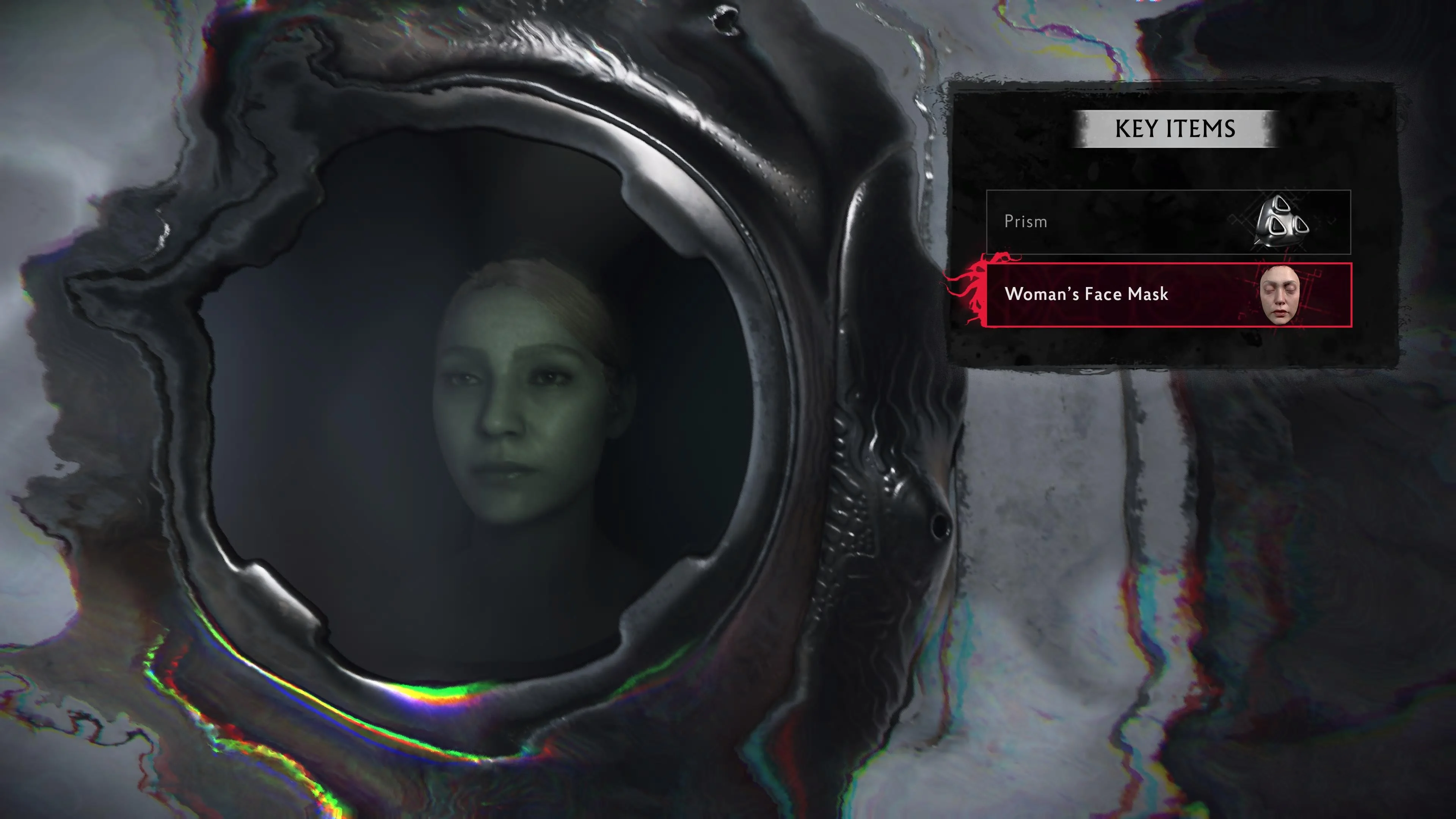
A security lock in the Akeley Hospital
The Sound of Silence
The environmental audio was great and did a lot to create unease. Things creak, you hear growling and screaming in the distance, and sometimes there's movement that you can't quite place. Even some of the doors sound particularly unsettling. Rather than simply sounding like a door closing, they occasionally sound like something is moving towards you, which made me hesitate more than once.Music, however, was pretty much nonexistent outside of certain cutscenes. What is there mostly consists of somber, romantic and melancholic pieces, which fit the game's more emotional moments but didn't leave much of an impression on me otherwise.
The weapons, on the other hand, sounded great. They had a satisfying punch and weight to them, which made shooting enemies feel appropriately impactful.
The voice acting was more of a mixed bag. Calvin's voice actor did a good job when he was sad and desperate to find Faye, but I found him less convincing whenever he had to express other emotions. Faye's actress was similar. Her normal dialogue was fine, and she handled the sad and romantic moments well enough, but some of her more desperate or shocked reactions felt unconvincing.
The Devil in the Details
The Investigation Space is simple enough. You have a menu containing all the clues you've found, and you can chain them together when you think they are related. If you connect all the correct clues, you are rewarded with a rune. It's nice to have all the clues available in one place instead of having to remember every detail yourself, but otherwise, it isn't really a gimmick worth talking about.
The puzzles, however, were great. They actually made you think, while the clues either pointed you in the right direction or occasionally tried to mislead you. Some were also presented in pretty creative ways, which made them more memorable.
As the World Caves In
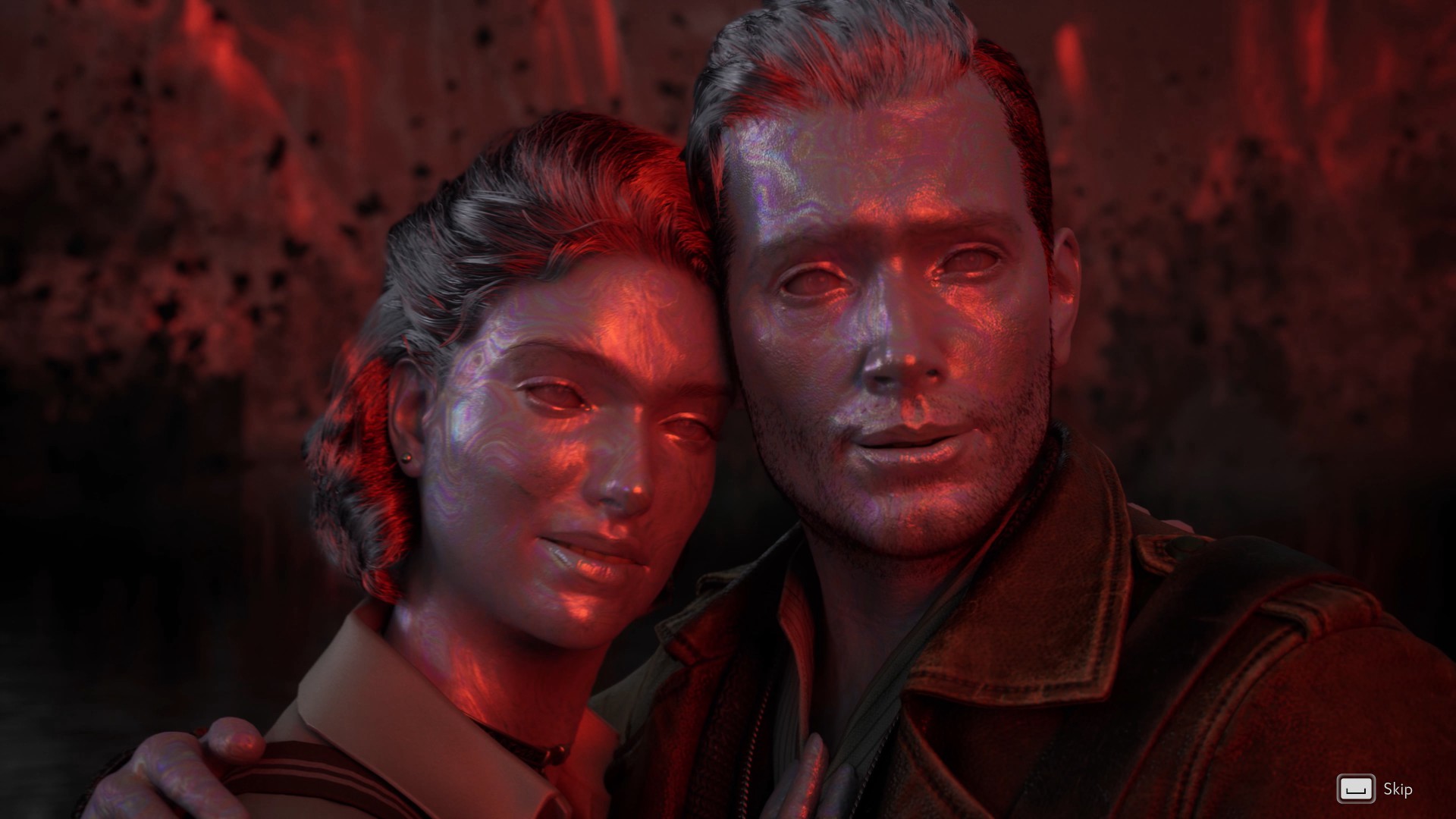
What I did appreciate, however, was that the game didn't go through the predictable "secretly evil girlfriend" twist. I kept expecting the game to reveal that Faye had ulterior motives or that Calvin was being manipulated, so I was actually relieved when it didn't go that route. They genuinely love each other, and the tragedy comes from that love rather than some cheap betrayal.
Unfortunately, the villains themselves are largely absent. Most of the enemies are faceless creatures that don't speak, while the biggest threat, Yog-Sothoth, has practically no personality at all. In fact, he says "Yes" twice, and that's about it. Theodore Lowe initially seems like he might become the main antagonist during the hospital section, but instead he turns out to be neutral, with a later revelation showing that what we saw of him was merely an illusion. While the mystery surrounding him was interesting, I couldn't help but feel that the game was missing an actual villain I could hate, fear or even understand.
The pacing was fine, though. The game never gave me the impression that Calvin had suddenly gone from one side of Arkham to the other without any time passing. The story also doesn't constantly interrupt the gameplay with exposition. Even Faye being repeatedly taken away didn't feel particularly artificial to me. The creature responsible is immensely powerful and can use portals, while Calvin simply isn't ready to confront it yet. It made sense that he couldn't just chase after her and solve everything immediately.
The ending was foreshadowed, but not enough that I could completely figure it out beforehand. Faye gradually recovers some of her memories of what happened, but it isn't until the end that we actually get to see and hear what has happenend. If we remove the whole Lovecraft angle for a moment, I actually found the ending rather sad. Calvin and Faye really did love each other, and that love is ultimately used by an entity to get what it wants. There is no betrayal between them, no revelation that their relationship was a lie. They simply loved each other, and that love is ultimately what makes them vulnerable.
Conclusion
The Sinking City 2 is a strange game to recommend because I enjoyed it considerably more as a survival-horror game than as a Lovecraftian mystery. The atmosphere is excellent, the environments are memorable, and the combat is genuinely fun. The investigation mechanics and puzzles also provide enough of the detective side of the original without bringing back the backtracking that made the first game frustrating for some players.
There are certainly things that hold it back. The limited enemy variety becomes noticeable over time, the inventory system can be frustrating for reasons that feel entirely unnecessary, and the story's reliance on Lovecraftian concepts doesn't always work for me. The lack of a proper antagonist also makes some of the story's bigger moments feel less impactful than they could have been.
But despite those problems, I had a good time with The Sinking City 2. Frogwares managed to create an atmospheric survival-horror game that understands what makes this genre fun, while still retaining enough of the investigative identity that made the original stand out. I just wish the Lovecraftian elements had been used with a little more confidence and creativity while leaning into the traditional Lovecraft elements.
If you're looking for another survival-horror game with Resident Evil-style combat, creepy environments and a tragic story at its center, The Sinking City 2 is easy to recommend. If you're coming specifically for a deep Lovecraftian detective experience, however, you might find it severely lacking.