



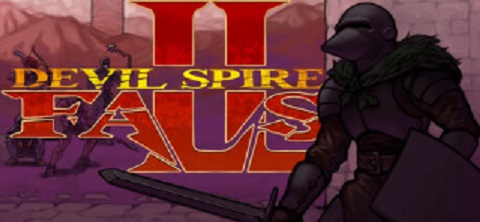
Devil Spire Falls
is the sequel to the aptly named Devil Spire. Developed by Ithiro Sumi, DSF is a procedurally generated open-world RPG inspired by games such as Daggerfall. Devil Spire Falls is meant for anyone looking for open-world sandbox RPGs and Early Access games that might get finished.
Devil Spire
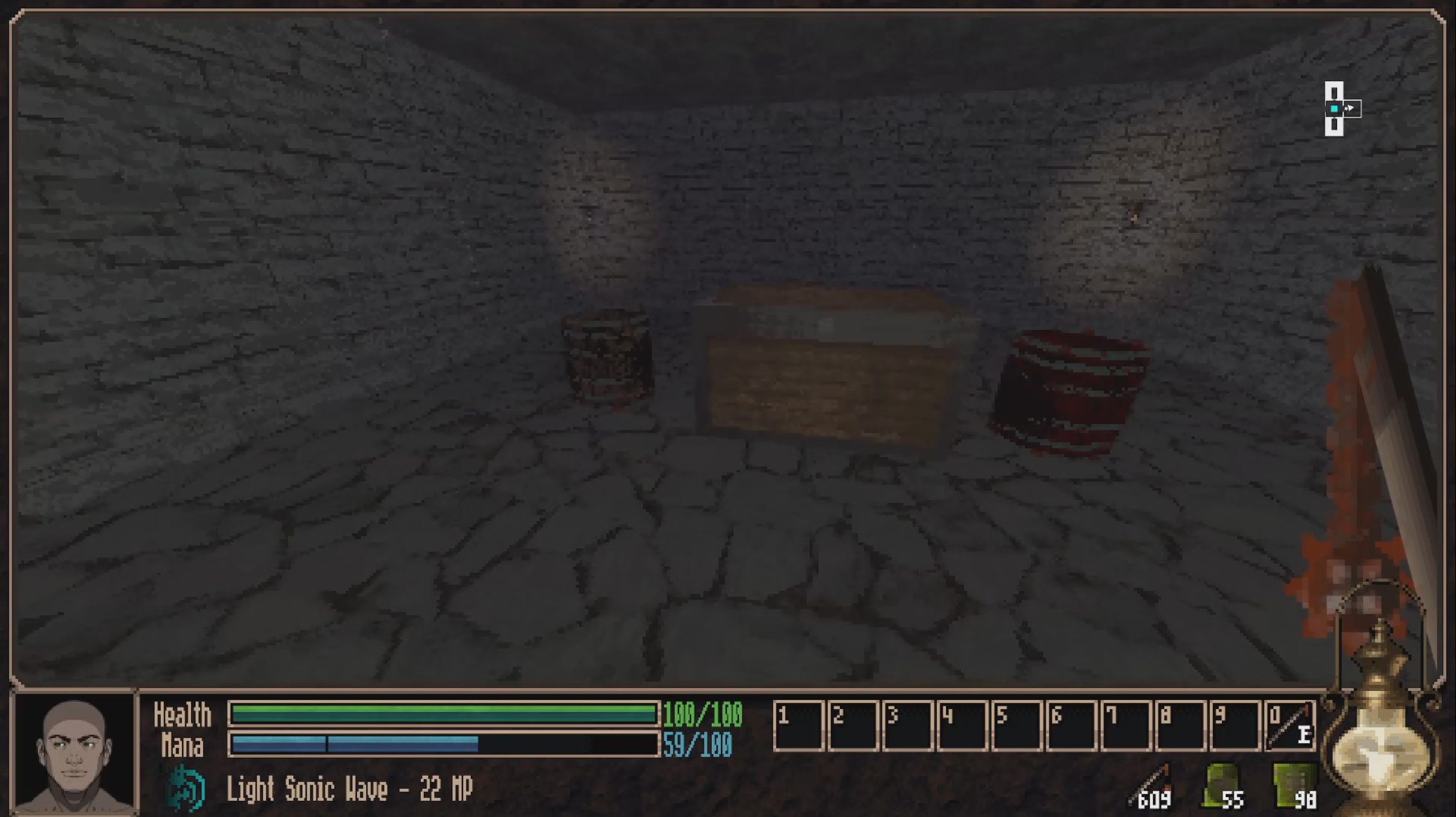
was a spiritual clone of FromSoftware’s first-person dungeon crawler King’s Field. KF made the player solve puzzles, slay monsters, and gain levels until he could get a powerful sword and slay the great evil. DS made several breaks from its Japanese PlayStation counterpart (the first King’s Field was never released in the states). These breaks included procedurally generated dungeons, character creation, and multiple play modes with different endings. The default mode of DS lets you scale the titular tower in order to conquer the evil by any means necessary. Magic, melee, and ranged combat padded out the player’s arsenal. The spire itself was sectioned off into different themes like ice caves, deserts, and technologically advanced steelworks, each with their own appropriate bosses. Devil Spire Falls has much greater ambitions than its predecessor. Instead of a dungeon crawler, Ithiro intends to make a world complete with cities, dungeons, and everything in between. For the moment, civilization is a bit sparse and there are only two dungeon types: a generic brickwork and the Devil Spire itself.
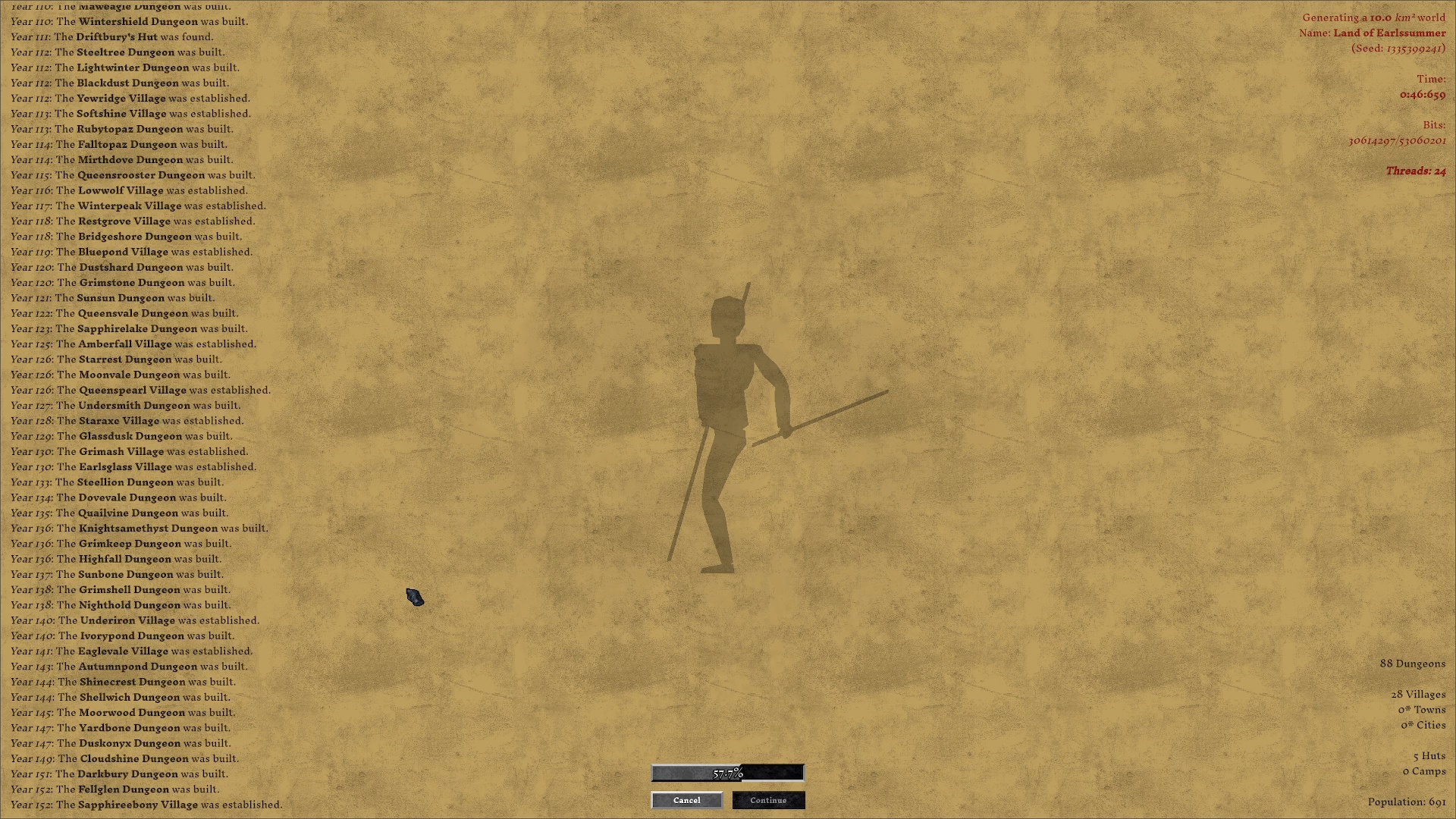
The world is made from scratch, and depending on the computer’s muscles and how big you want it, creation will take some time. The game recommends worlds at least 10 kilometers big. Smaller worlds generate faster, but have much worse balance, and because there’s not much content for the time being, larger worlds are a waste of space; they also risk crashing during the generation process. World smithing works a bit like Dwarf Fortress. A historical account is made as the world is born. The history consists of nothing but mountains, dungeons, and towns/villages because that's all there is. I only had one crash during generation, though the game had a big five-minute hang when I generated a massive world. You can create as many worlds as you like, but other than size there are no modifiers—yet.
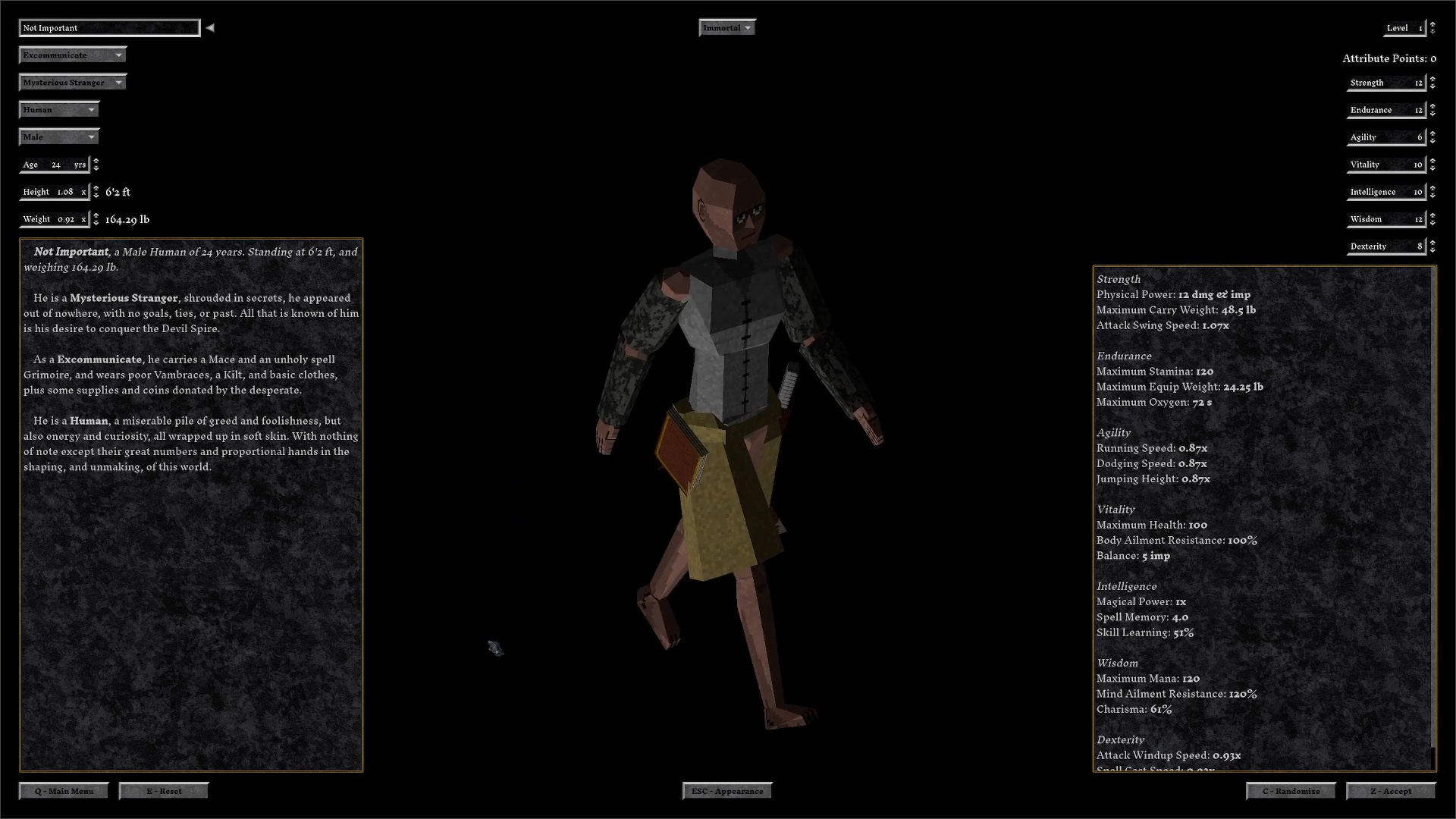
Character creation consists of seven different classes, three different races, and (eventually) multiple origins that will determine your primary goal. The only one available right now is the Mysterious Stranger, which gives you the main quest to conquer a Devil Spire. Eight stats define your character, affecting everything from weapon swing speed to influencing others. In addition to starting stats, you can adjust your age, height, and weight. Age affects hair color and supposedly puts an upper limit on how long you live. Being really tall lets you see more but also makes you bump your head into the ceiling, while being really short means that arrow traps will shoot over your head. Being fat means taking more damage when falling from heights but not getting knocked back so far when someone wallops you. These traits can’t be changed once the game starts, so make sure you’re happy with what you’ve got.
Humans, reptilians, and felines inhabit the world of Devil Spire Falls. Humans are your typical balanced choice with no strengths or weaknesses. Reptilians have natural armor and swim better than the other races, but they’re terrible climbers and take a hit to charisma because they’re ugly. Felines see better in the dark and get bonuses to climbing and fist fighting, but can’t wear shoes or full helmets.
There can only be one character per world, but you can remake your character whenever you feel like. The max level of a starting character can be up to the highest level you’ve achieved in that world, maxing at fifty. Adjusting your level also adjusts your gear, so a high-level character starts with nice armor instead of rags. A newer update gave the option to regenerate the world, meaning you no longer have to trash whatever world you’re playing anymore when new content comes out. Finally, there’s the option of making your character immortal. Immortal characters wake up somewhere nearby after dying, with a loss levels and stats.
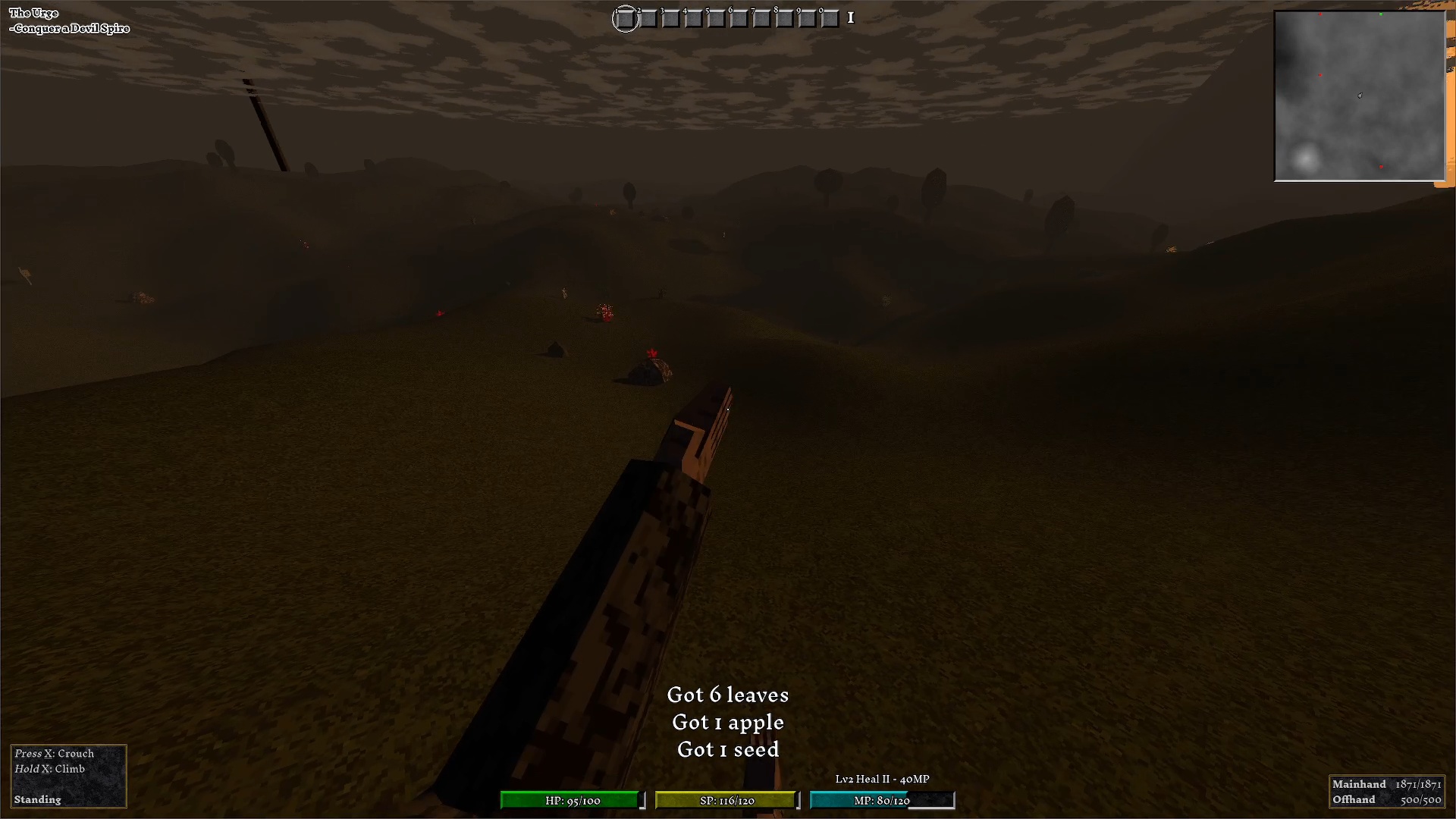
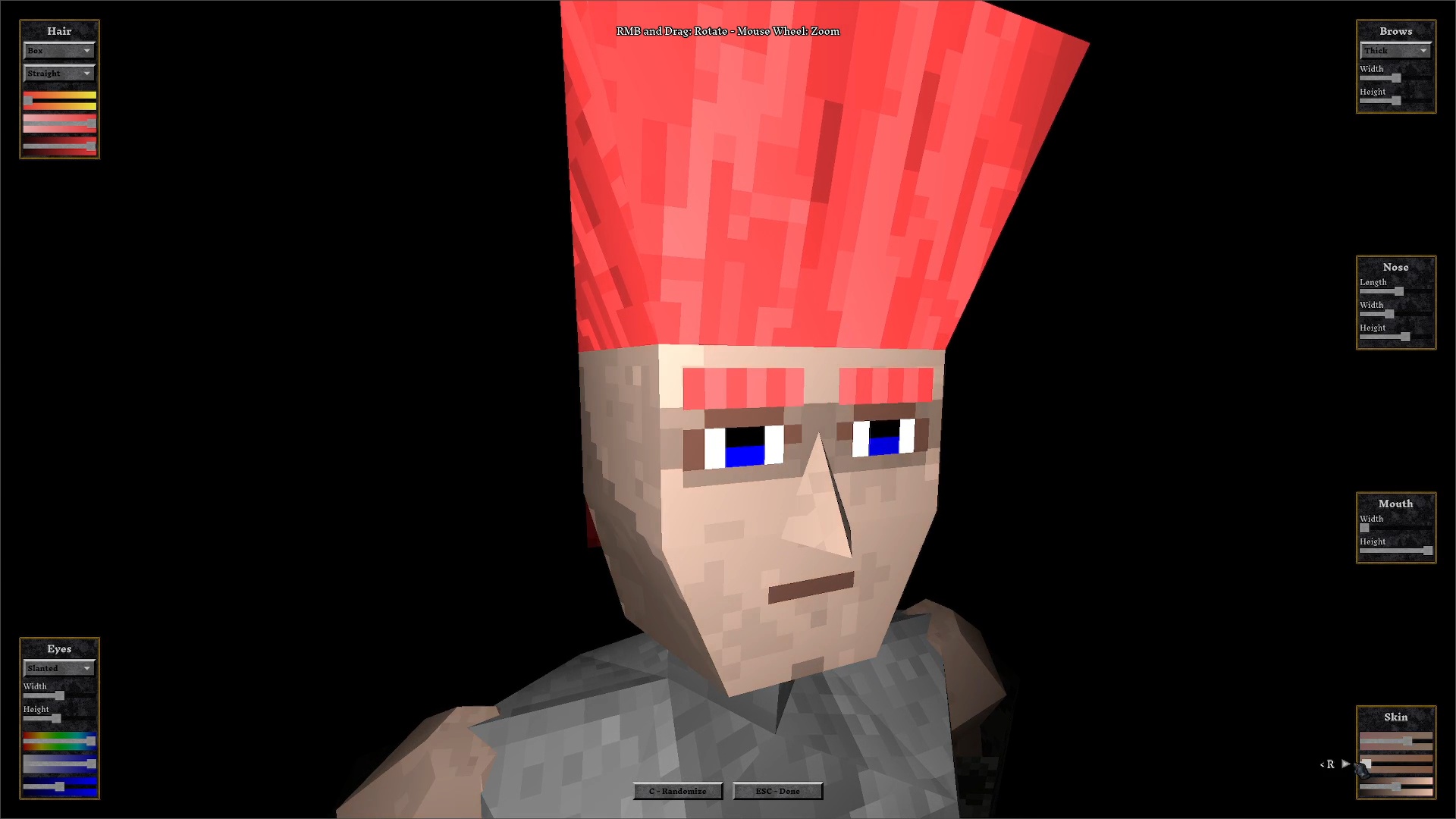
You’ve made your character, spent hours adjusting his boxy complexion, and now it’s time to explore. The starting location is determined by origin, and since there’s only one of those, it always dumps you in a forest (except one time where it dumped me in an ocean and I had to swim to the forest).
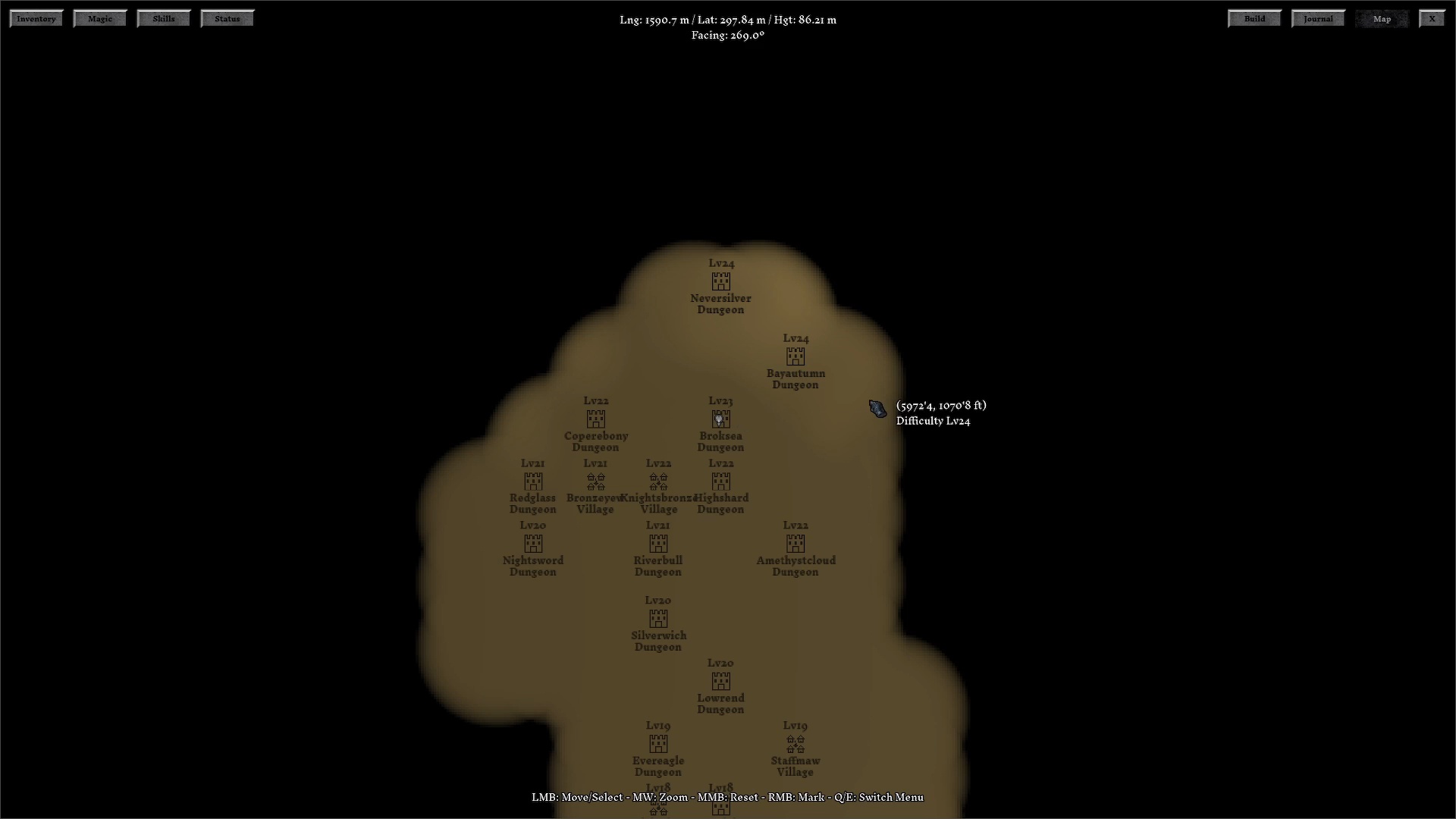
World distance determines difficulty. The farther you go from your origin point, the higher the level of everything you’ll encounter, from dungeons and villages to monsters and—that’s about it, and there are not too many monsters at this point. Bandits are the only things infesting the regular dungeons, and topside is slim pickings for monsters. During the day the only pests I encountered were manrooms and kobramani (I think I’m spelling that wrong). Manrooms are ugly mushroom men from the first game, and the kobra things are some kind of sea creature, so you won’t see them unless you go near the water. You can fast travel from the map, with the risk that you'll be interrupted by monsters along the way. Actually, every time I tried it I got attacked by invisible monsters so it ended up being useless.
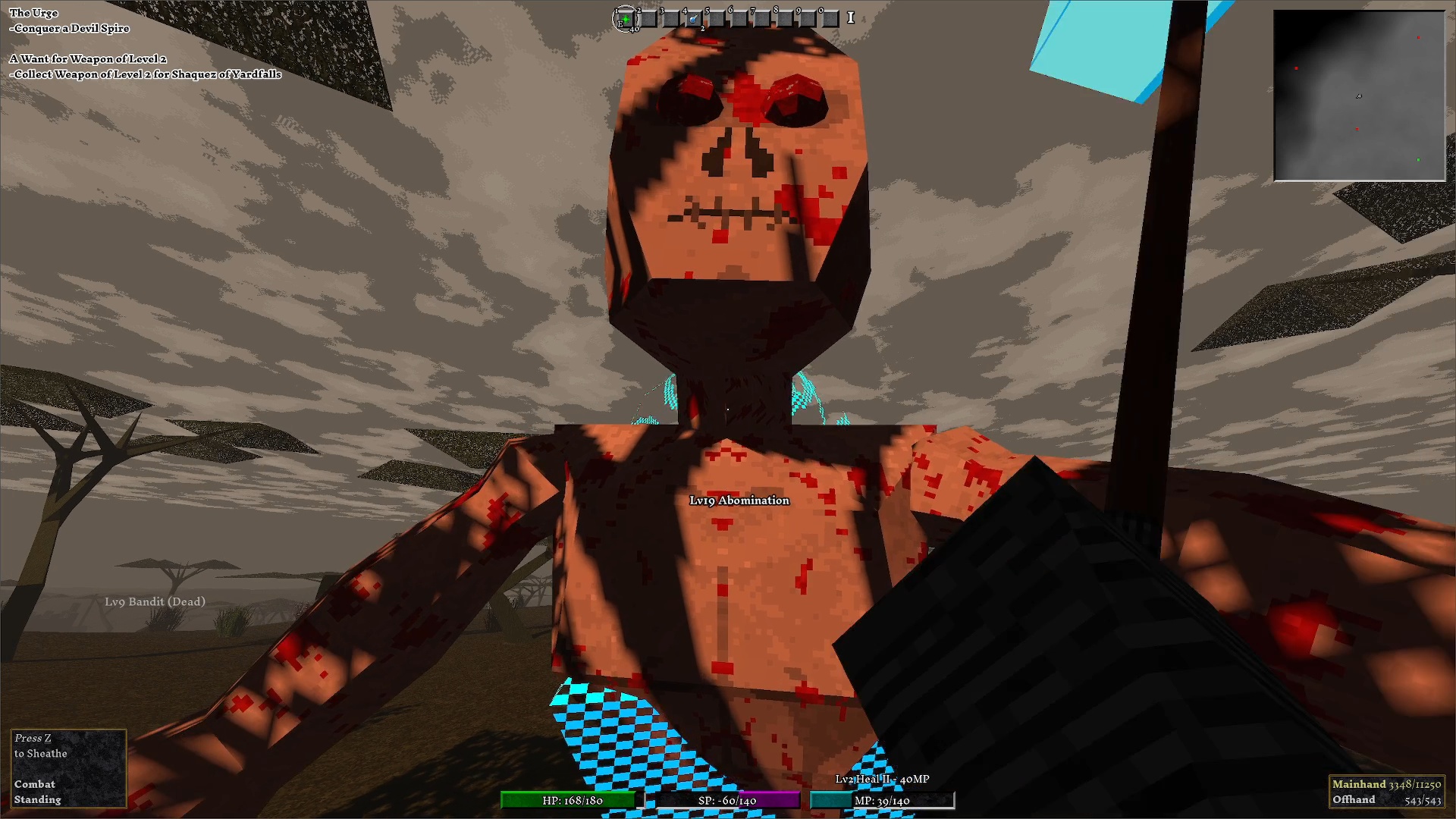
Horrible things come out at night, like fire-breathing headless mules driven by revenge against the living for some reason. Gigantic abominations also crawl about the landscape in the dark, giving you a major boss battle in the middle of your run and the chance to get some nice loot, if your character doesn't get killed.
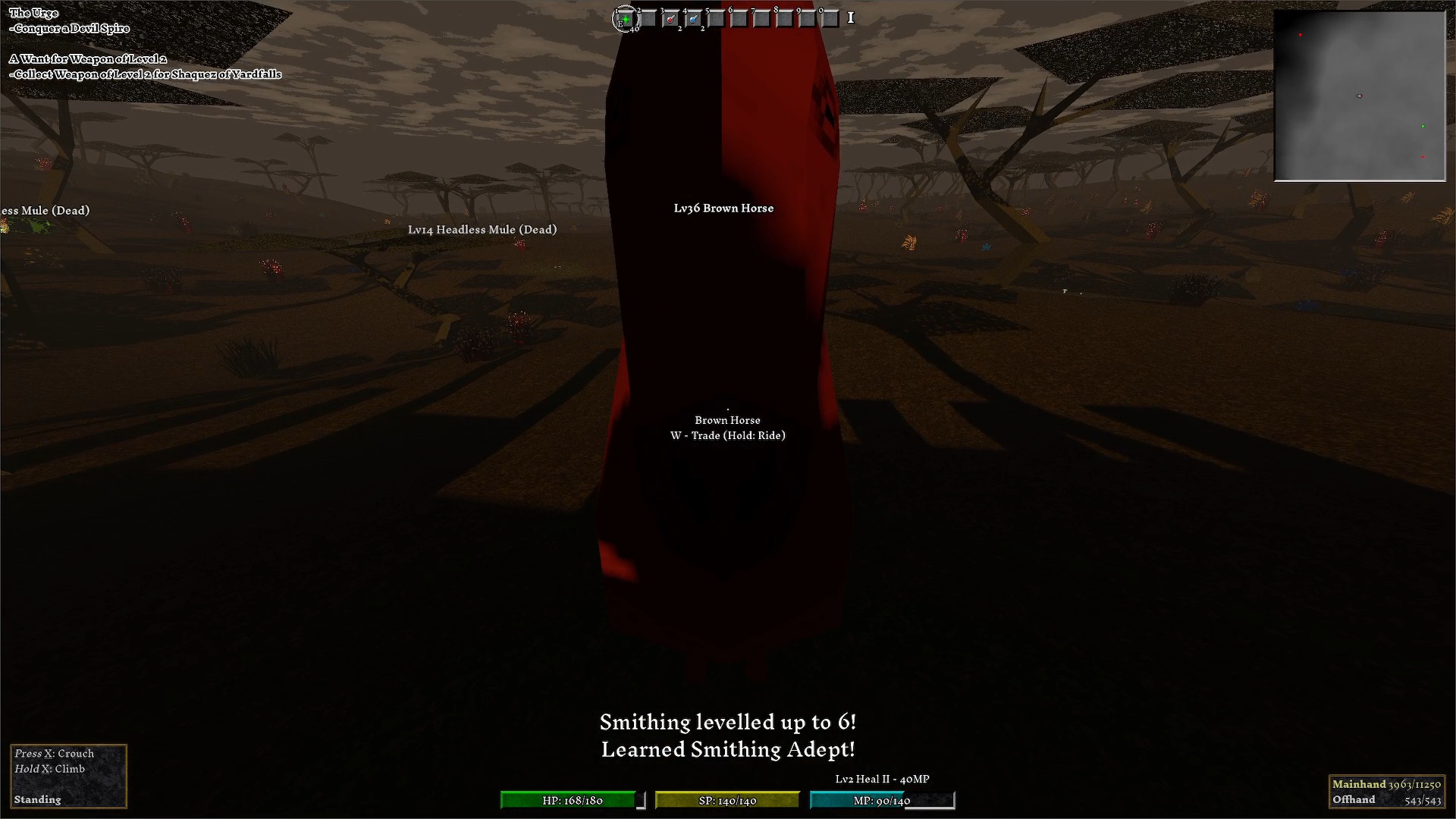
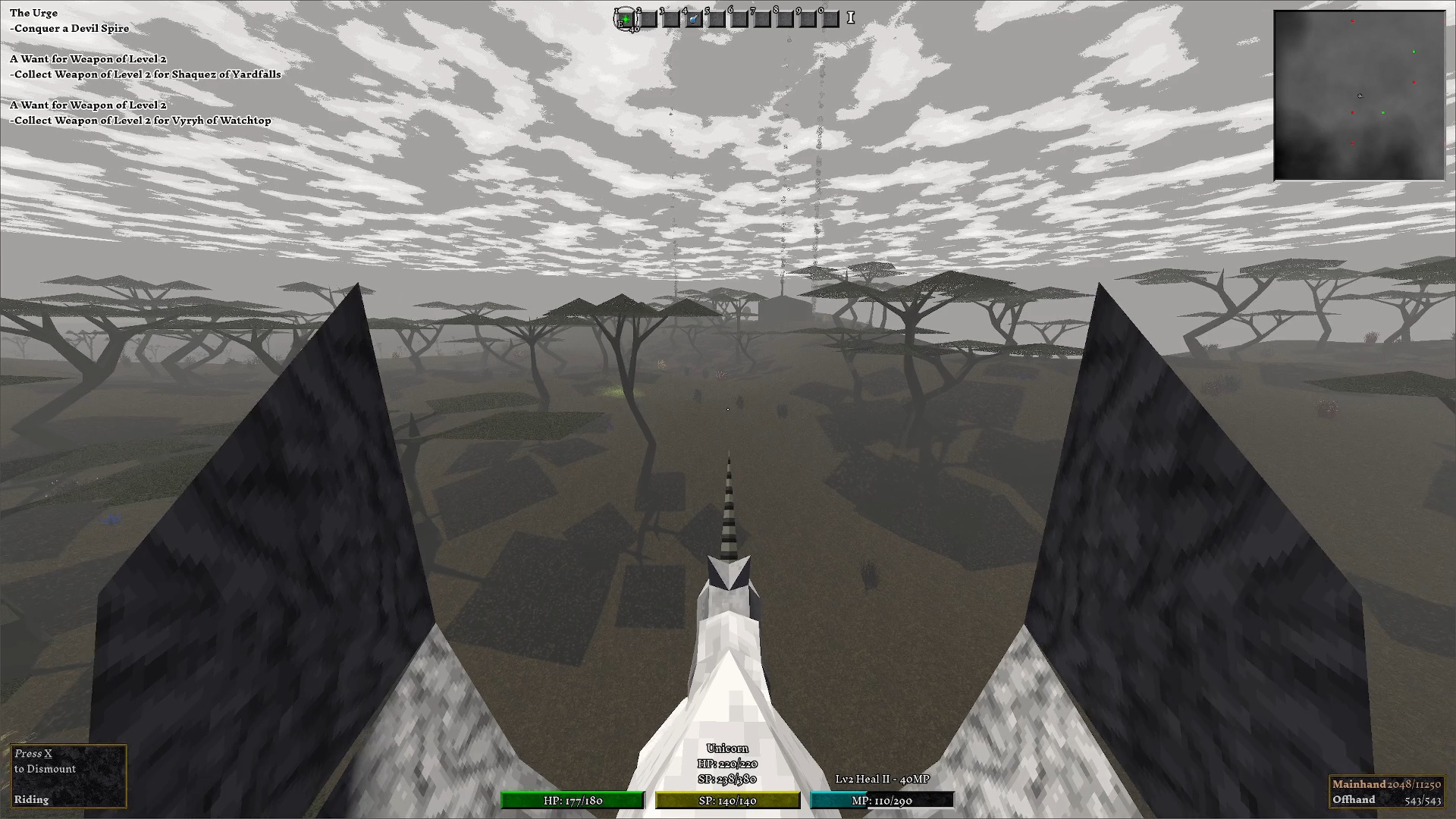
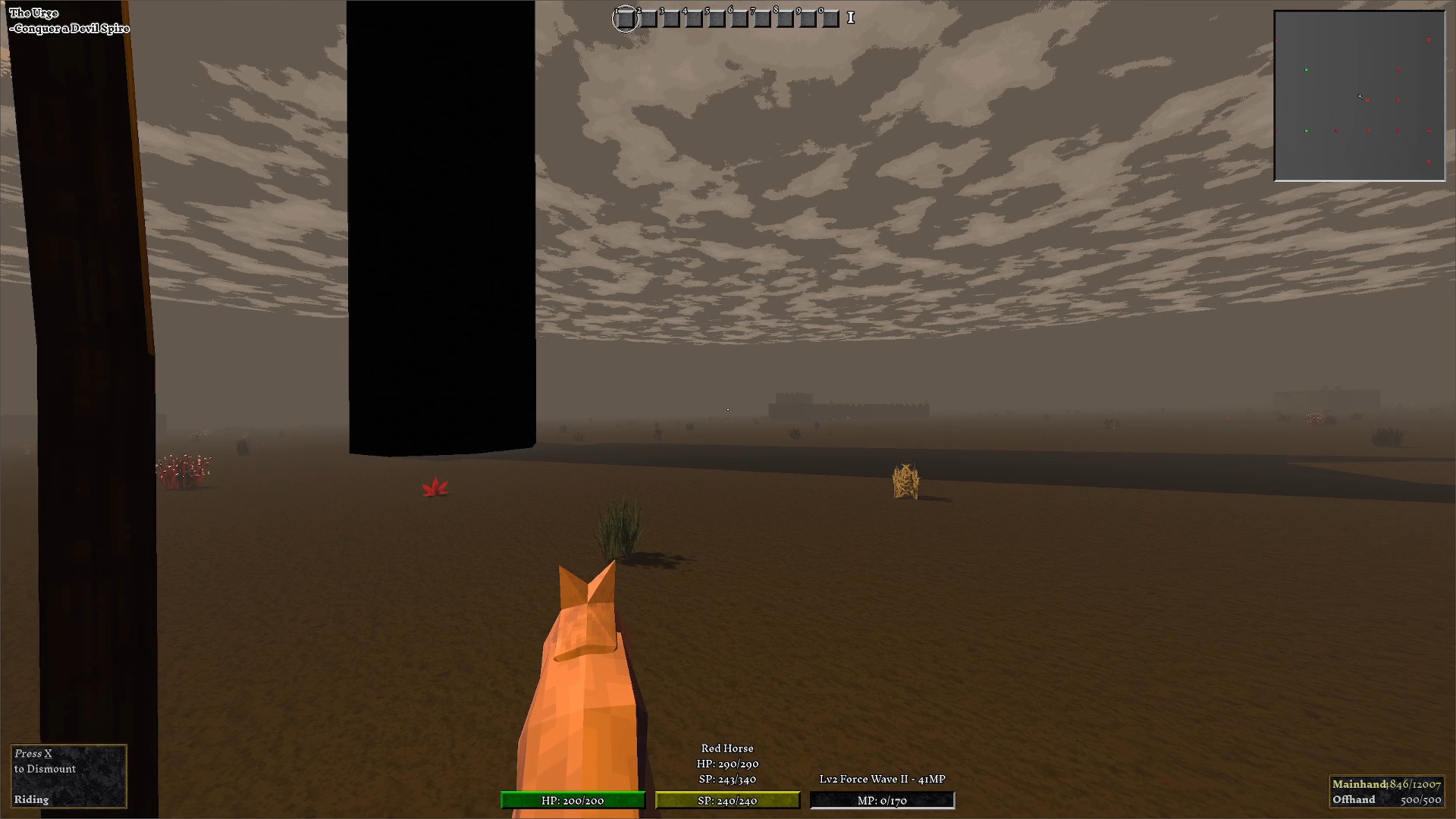
Not everything is out to murder you though. Wild horses can be tamed by feeding them, or by managing to stay on them long enough until they accept you. Horses not only let you get around faster, but they can carry a lot of junk. I managed to find and tame a unicorn by feeding it a small orchard’s worth of apples. Unicorns give all the benefits of a horse along with the ability to fly, and they’re pretty!
One newer addition to the game are roads, which lead to villages full of people waiting to die from fall damage or hostile fauna. The locals offer quests, basic goods, and a chance to train in skills. All NPCs belong to one or more factions, though factions themselves mean little right now, other than an increase in disposition. You can align yourself to certain groups by charming your way into the various leaders’ good graces. You gain promotions the same way, and once you’re a superior of a faction, you can recruit new members or promote people of lower rank.
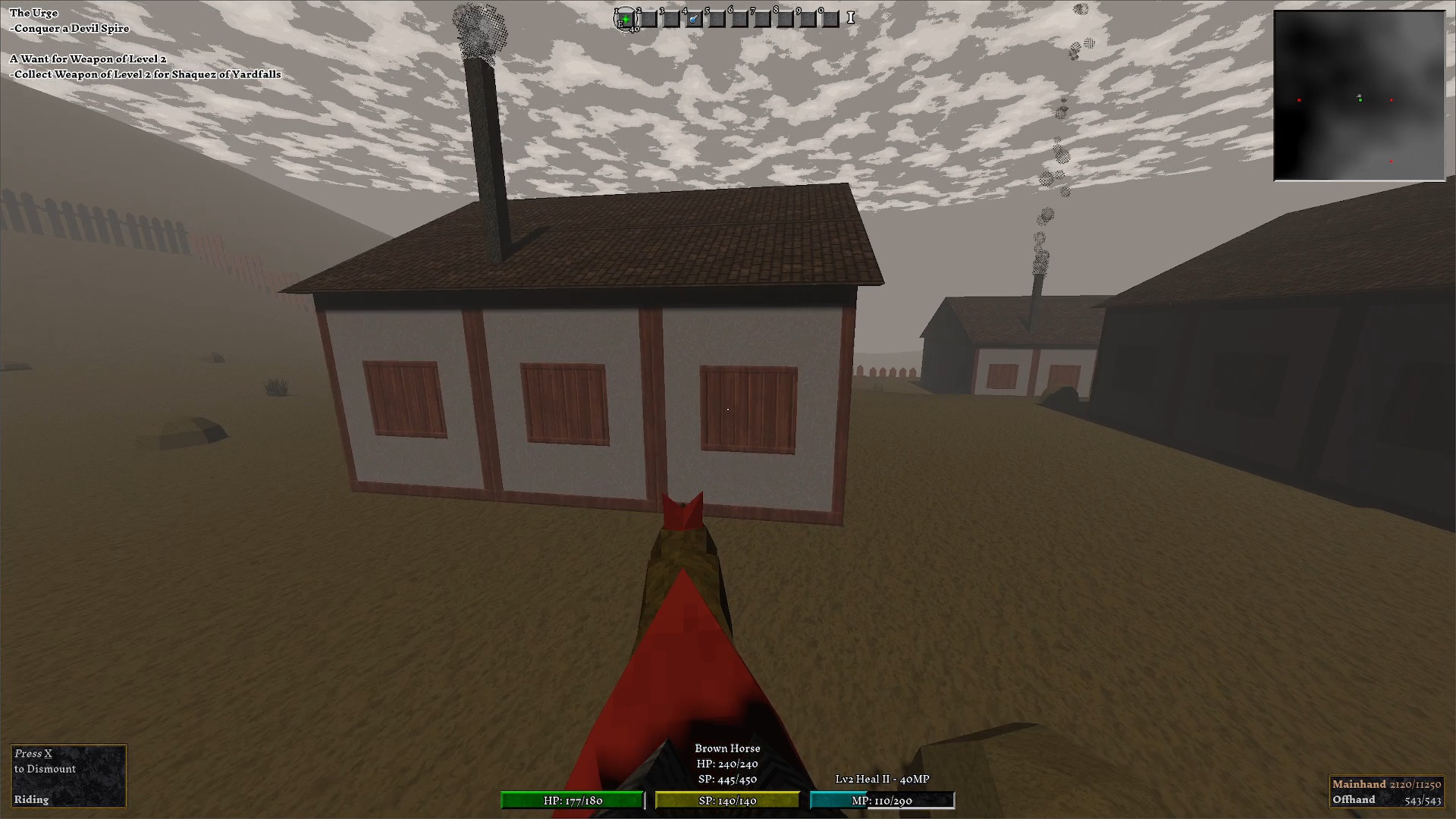
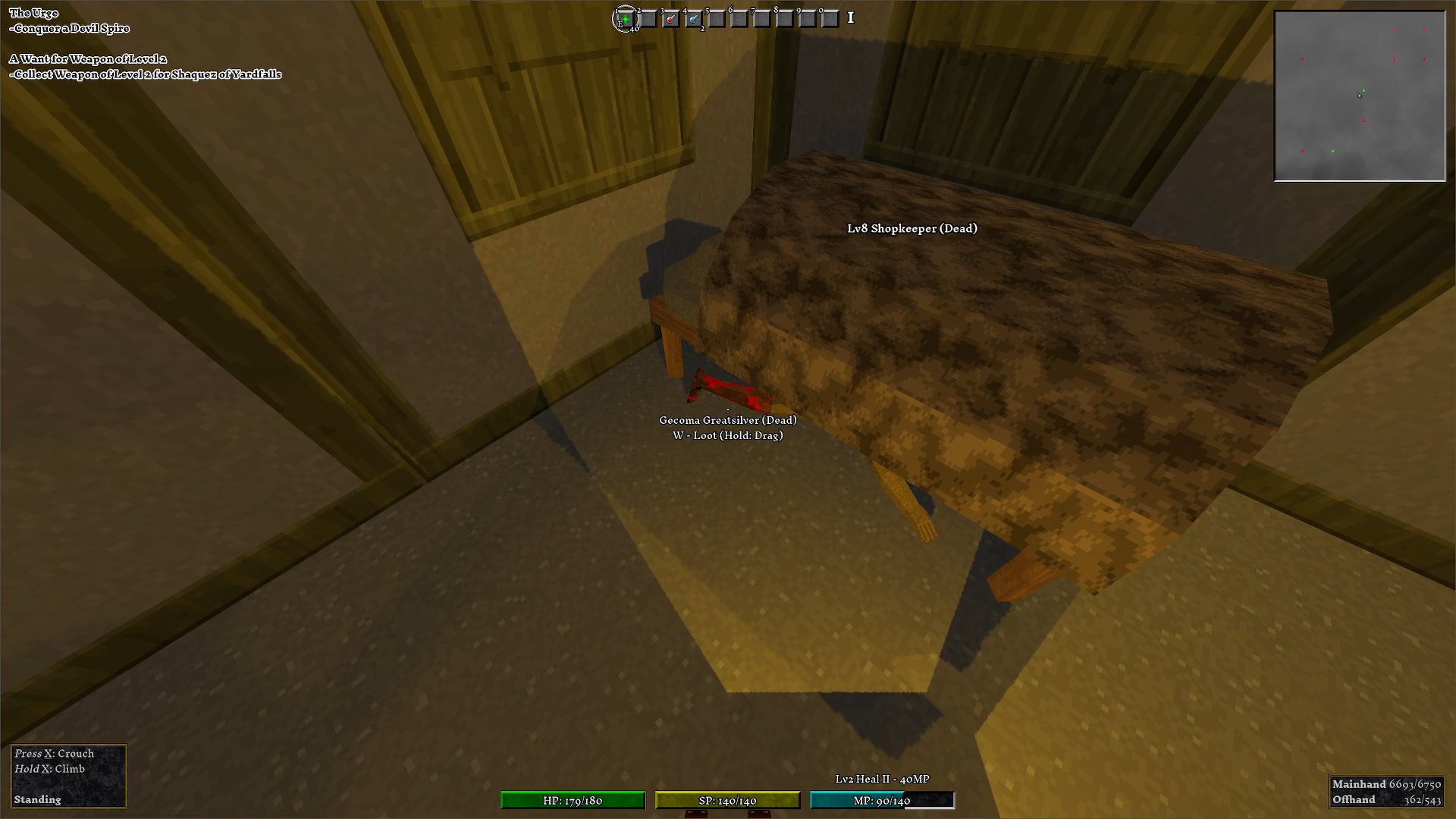
Towns are the newest addition and a little different from villages. A bit bigger and walled in by fences, sometimes they have a nice well in the center where you can draw water. In every town I visited, every citizen was also a shopkeeper, with a larger selection of things to barter than your average villager. Sometimes towns have formal stores with signs out front explaining what they sell and the goods inside, waiting for you to try and steal them.
DSF
contains thirty-five skills with ten levels of proficiency each. Exploring them all in detail would take far too much time, but they can be divided up into combat, armor, crafting, and miscellaneous stuff that doesn’t quite fit anything else. The game uses the “get better by doing” system similar to The Elder Scrolls series. The more you jump, the better your acrobatics; the more furniture you make (or smash apart), the better your building skill gets. Every skill level comes with a new perk, such as the level ten riding perk, which lets you ride monsters.
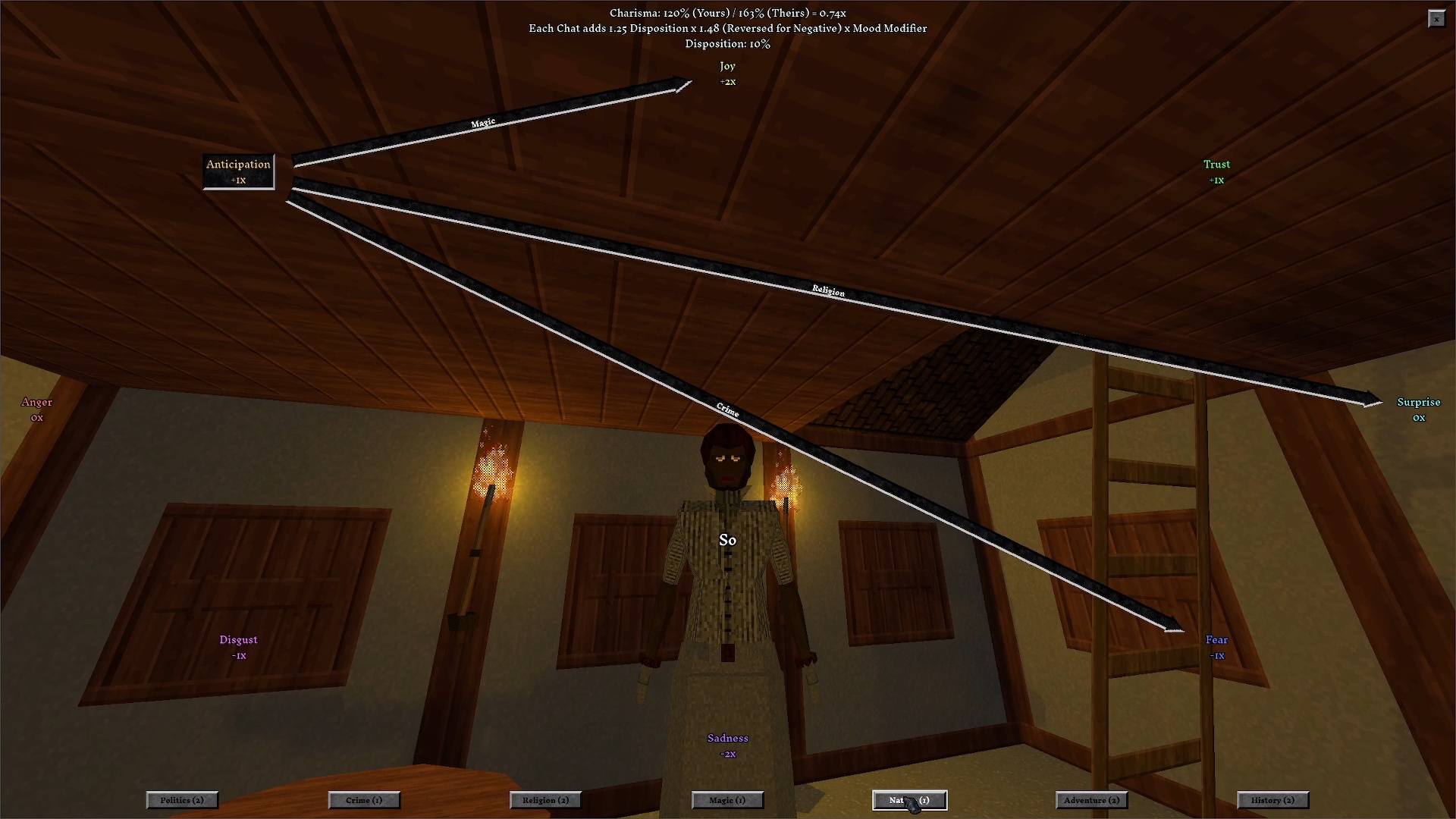
As previously mentioned, you can also buy training from NPCs, provided they like you enough. Bartering for skills costs disposition rather than money. Depending on how high your charisma is, it can cost less to get training. Why asking someone to train you makes them like you less, I have no idea. I guess people in this world really don’t like to be bothered. The same thing applies to asking questions; each question lowers disposition slightly, not that most people have anything useful to tell you at the moment.
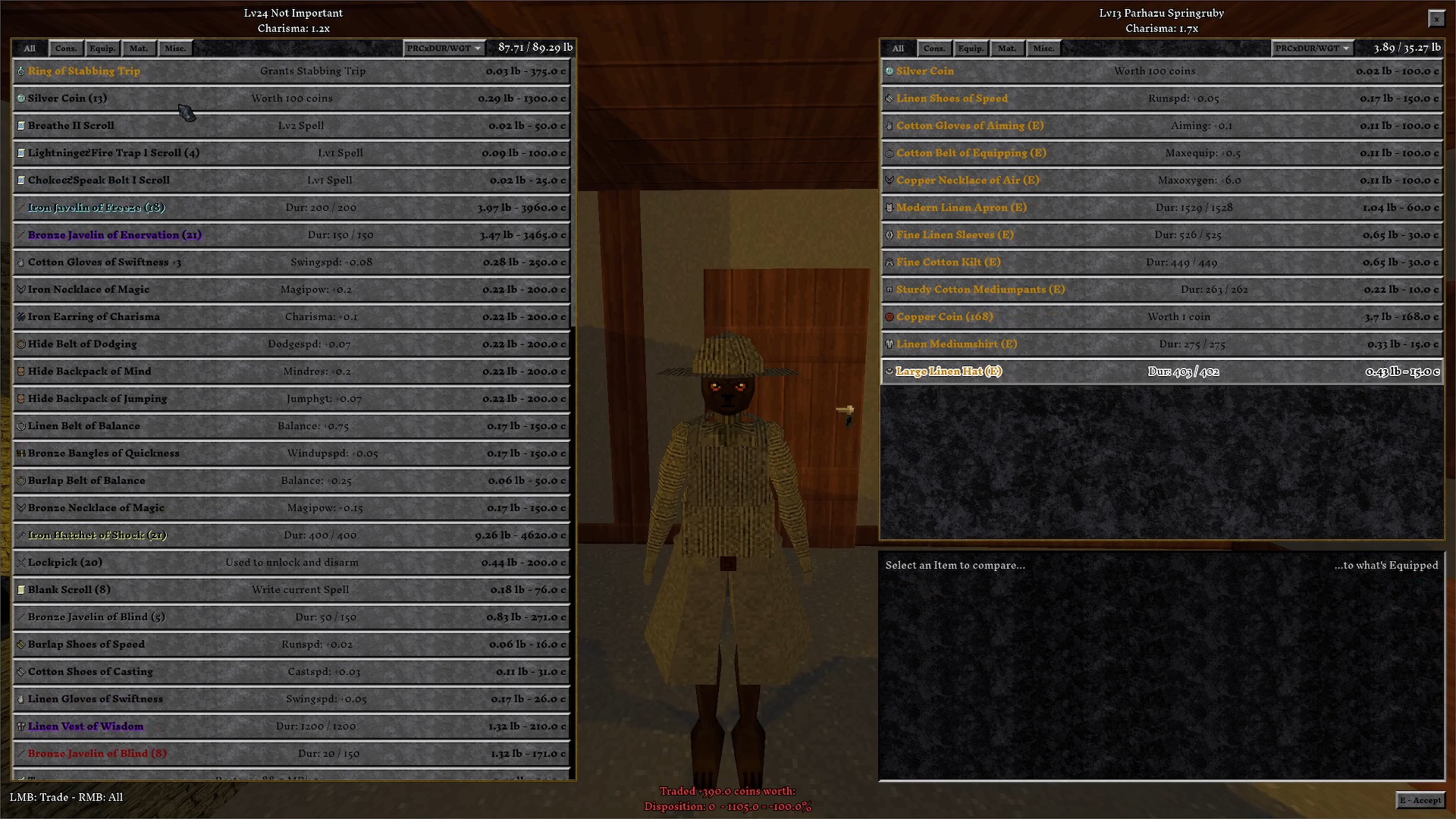
You can raise disposition by chatting, trading, and doing quests. Giving people expensive objects is the fastest way to get people to like you, and you’ll never be hurting for loot to trade once you get going. When you max out disposition with someone, you can recruit them, provided you have a high enough speech skill for the follower perk. Followers will leave if you displease them, but there’s another speech perk that makes them permanently loyal. I tended not to bring any help along because they get in the way more often than not. Gaining skills gets you experience; after a few levels of skills, you’ll gain an experience level. Each level gives you 2 attribute points to spend however you see fit. Where you spend them is important because the only way to increase things like mana and hit points outside of items is by raising the appropriate attribute. You don’t get better merely by leveling up, so you can be as strong as an ox and still get laid out in a single blow if you only have 100 hit points.
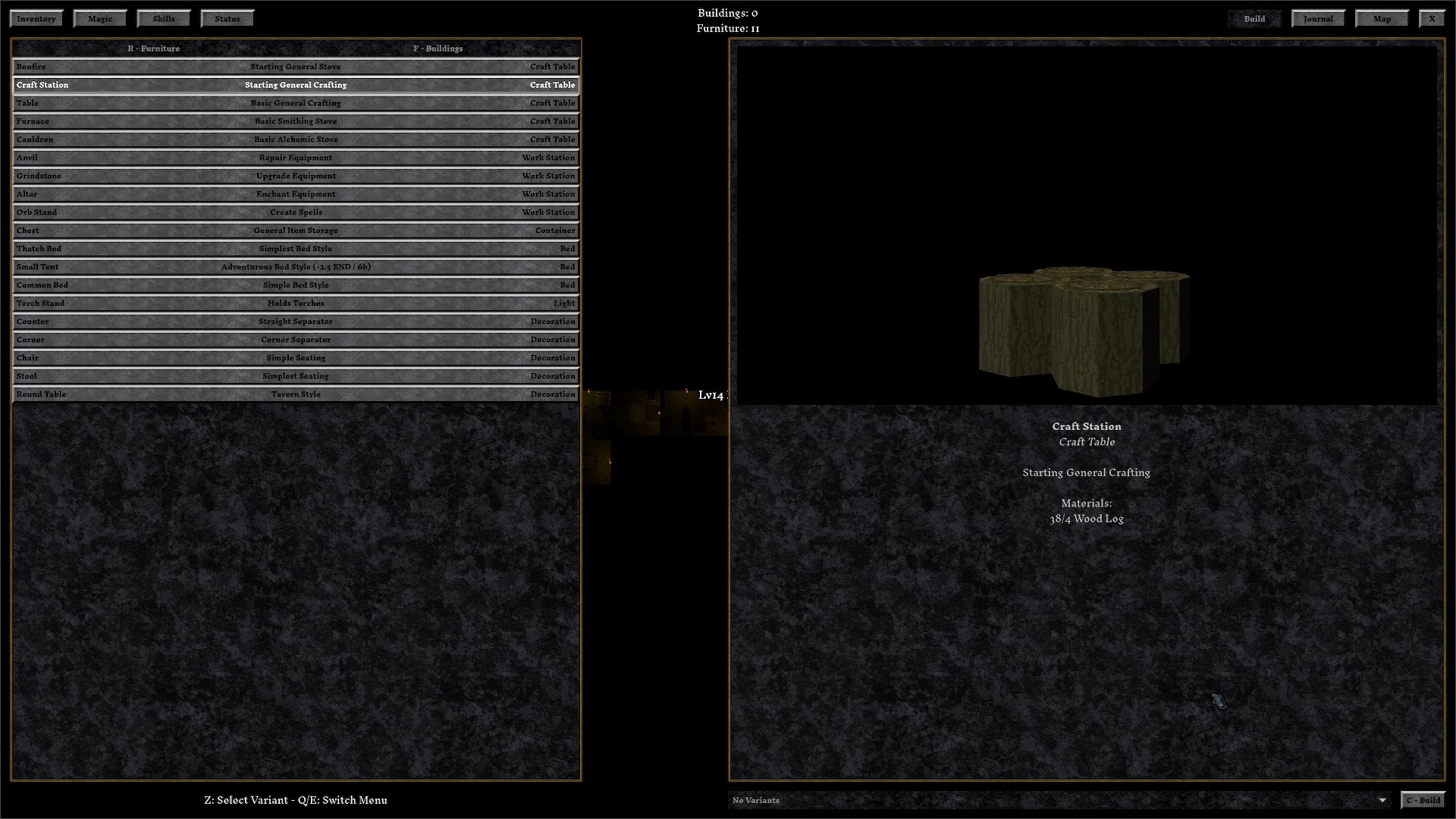
After a busy day of adventuring, there’s nothing better than relaxing in the comfort of your own home. Actually, building a house is a pain in the rear and not that useful. Villages and dungeons often have all of the amenities you could want, and nobody seems to care if you barge into his home in the middle of the night to use the anvil. But if you really want, you can make your own house.
A house requires building skill and lots of wood, stone, and grass. Getting said materials is similar to how it’s done in Minecraft, i.e., smashing trees and rocks with your weapon or bare fists until they shatter into pieces and collecting up the remains. Once you have enough stuff together, it’s a matter of finding a nice place to plop down your new home and then a fade to black in place of hard labor. Building anything passes time, and it takes three days to build a house. You can make it out of various different materials, and I assume the better the material, the more durable it is.
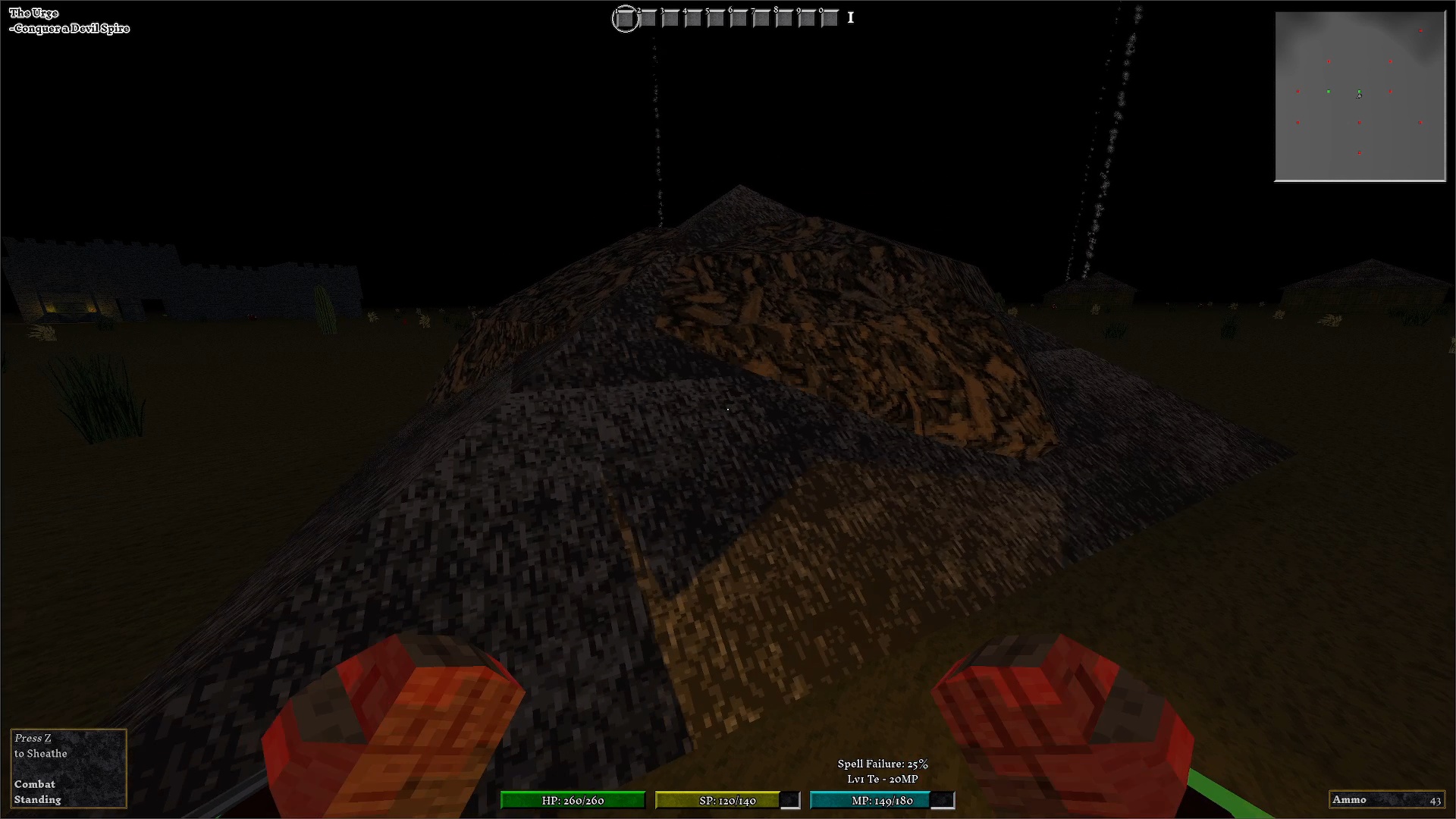
For those who want to go all the way with the homesteading, there’s also farming! Although finding the proper gardening tools can be difficult, and it's another matter of usefulness versus desire. You can do it if you really want to grow your own crops to process into things, but for now you can often find or buy enough of what you want without it. This is another one of those features that will probably be more valuable later, but for now it’s more of a curiosity.
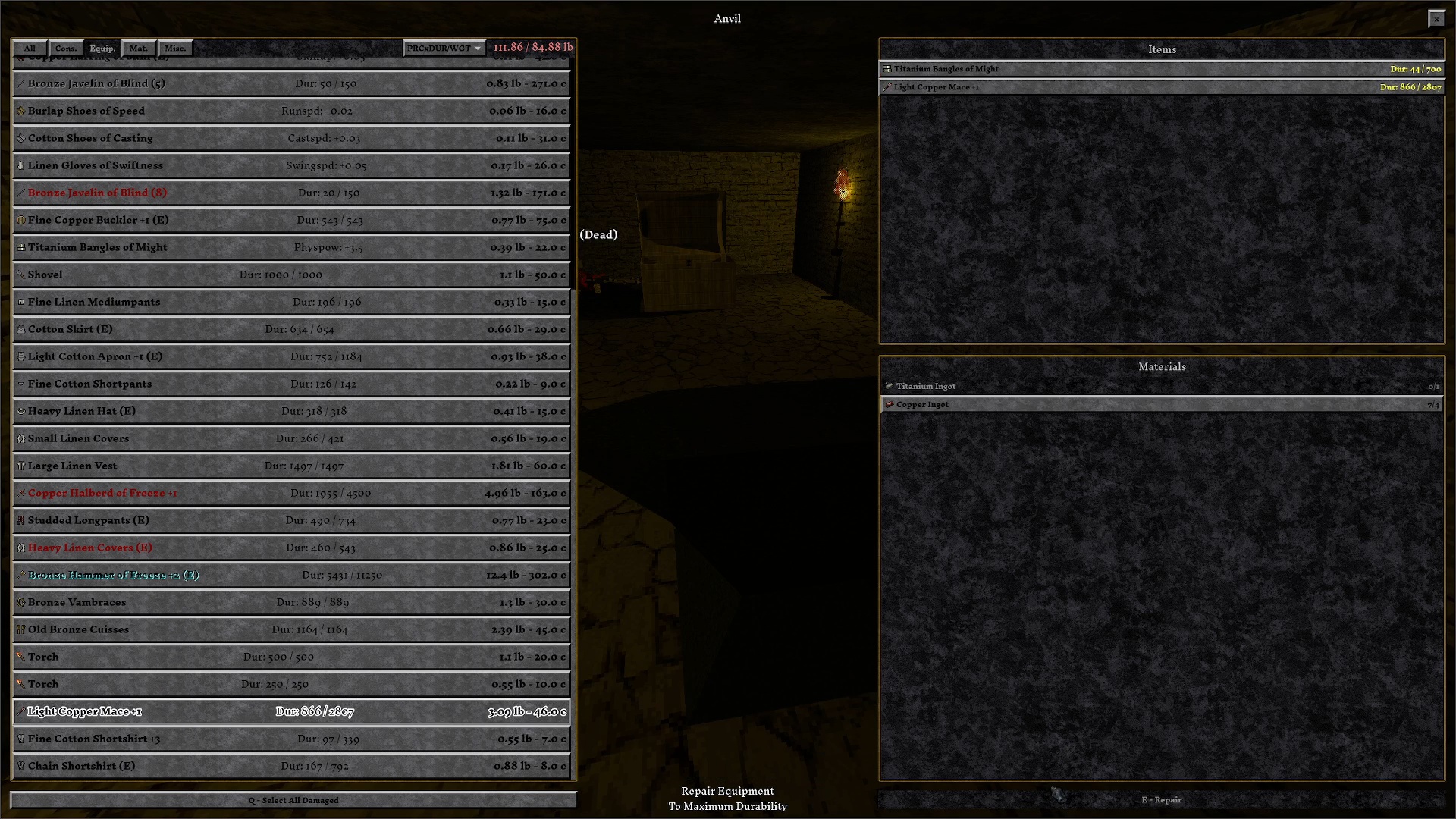
Equipment in DSF is divided into levels. Different categories of armor and weapons (depending on respective skill type) can be levels one to ten. You can also forgo weapons and armor altogether for unarmed and unarmored skills or even gain improvisational weaponry skills by beating on people with anything not normally classified as a weapon. Equipment can be crafted provided you have high enough skill, the materials, and the proper workstation. To date, I’ve yet to find the highest-level crafting materials in the wild, but I might not be looking hard enough. Beating on enemies and being beaten lowers the durability of your things, and eventually you will hear a heartbreaking shatter as your precious level 10 cuirass falls apart. Damaged and broken gear can be repaired the same way it gets made; if you have the raw material it’s made out of and the skill, you can fix it. With a high enough crafting skill, you can also conduct field repairs by combining your damaged item with another item of the same type and material (copper weapons to other copper weapons, crystal armor to other crystal armor). Higher-level material is pretty rare, and all crafting goods are heavy to lug around. So your precious crystal musket of fatigue might be bound for the junkpile.
Items and spells can be placed on hotkeys, and it's probably a good idea to do so. The game pauses when you open your inventory, but nobody wants to dig through a huge list of stuff in the middle of battle.
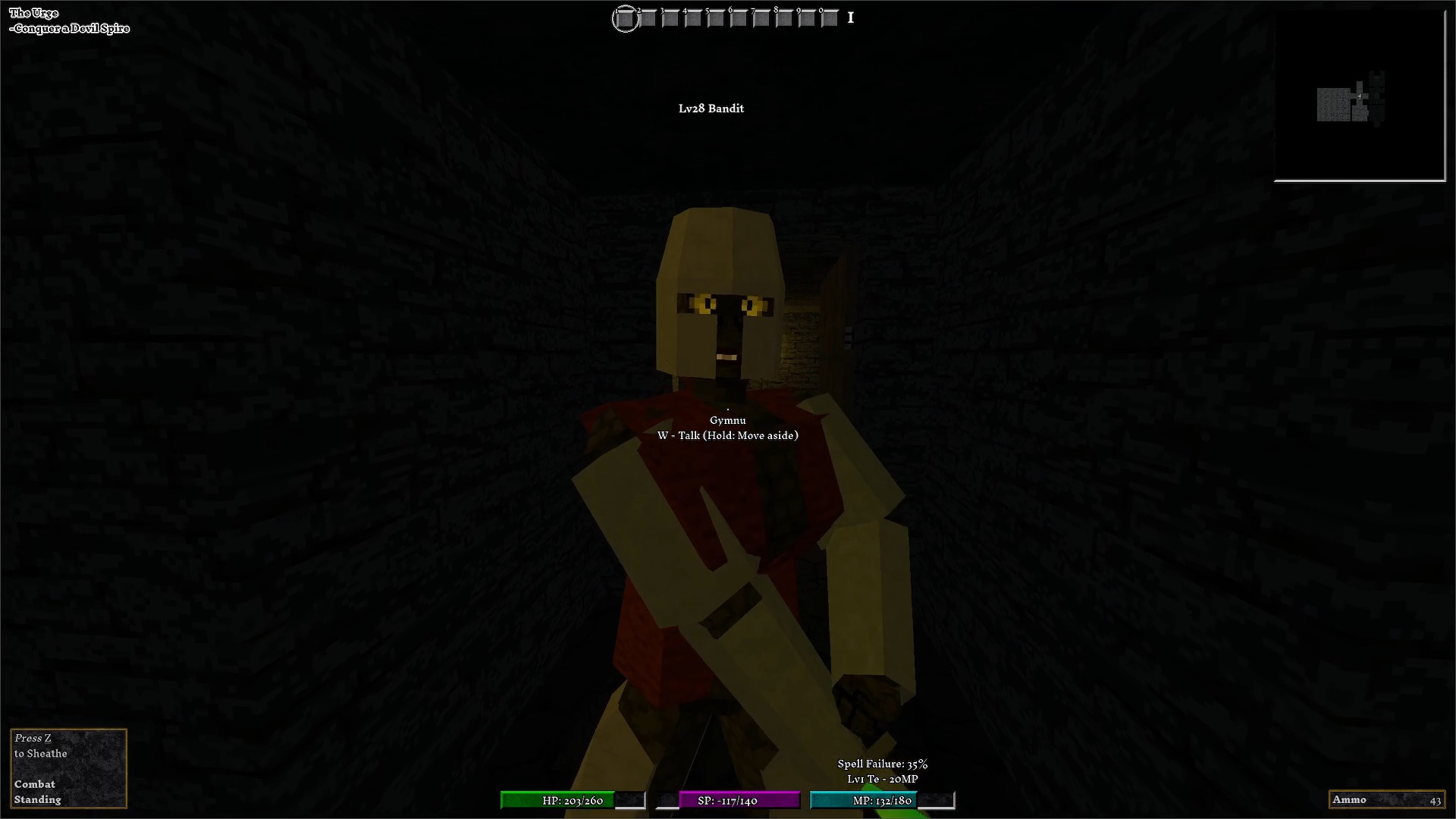
All weapons have a wind-up time. The bigger the weapon, the longer the wind-up. That includes enemy attacks as well. Strike your foe before they strike you, or try to dodge or block their attacks. The more dexterity you have, the faster you wind up. The stronger you are, the faster you swing. All attacks cost stamina, so after a few swings you’ll be exhausted, but this applies to your opponent as well. Dodging costs less stamina than blocking but has to be timed (higher levels of dodge skill give you a chance to auto-dodge). Getting hit comes with the risk of getting knocked down, leaving you wide open to attack. Certain skill perks can let you get back on your feet faster, and there’s always the chance of knocking your opponent down as well. You can also kick them backwards (a skill unto itself) to gain some breathing room. Most fights are over pretty fast because the enemy AI is fairly dumb and the player tends to hit like a truck. Harder difficulties even the odds, though, and enemies with magic can be a real threat.
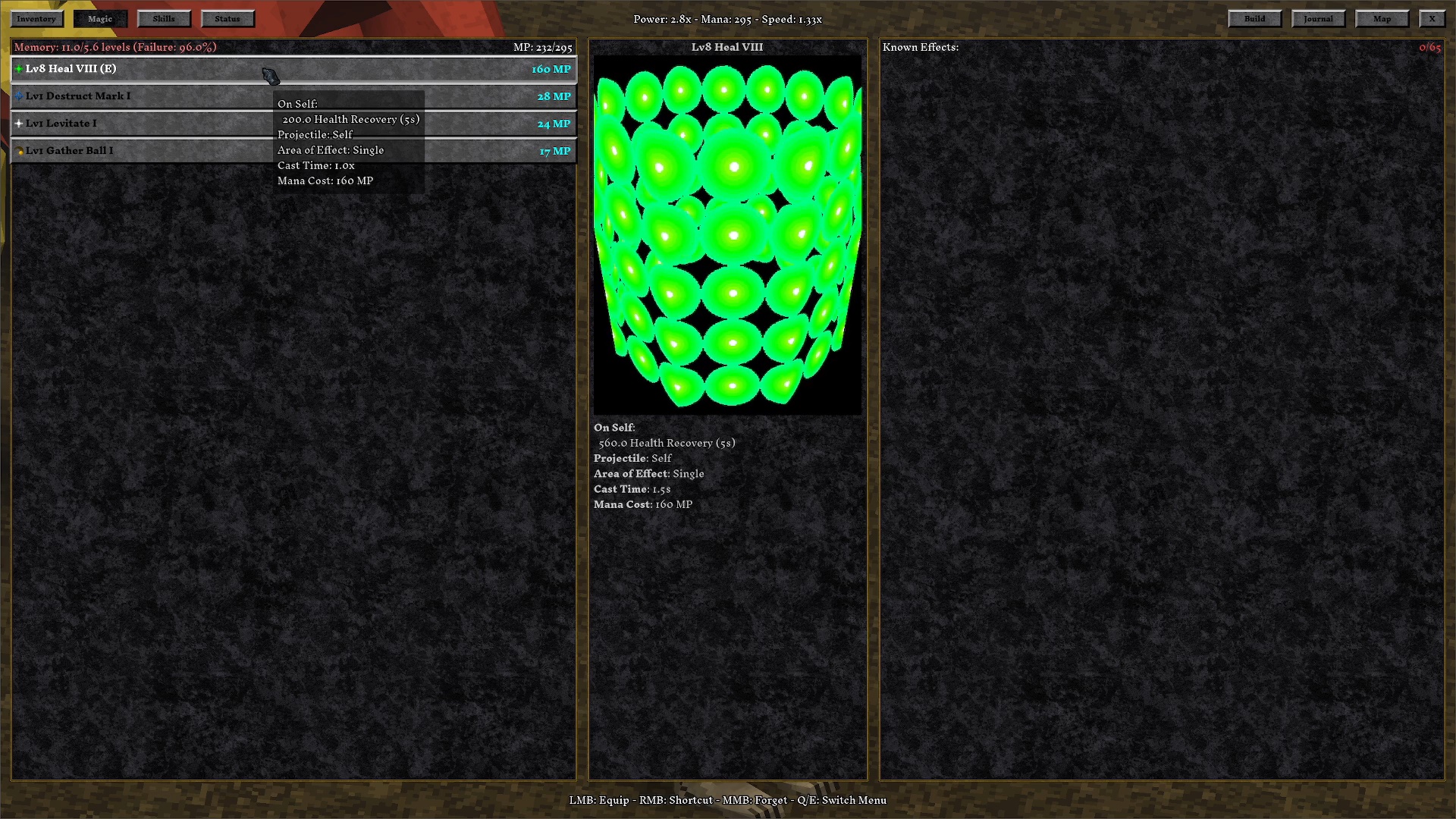
Magic in DSF is different from any other game I’ve seen. Instead of your bog-standard Vancian system or endless pages of spells that become obsolete as you gain new ones, each spell you know takes up a certain amount of spell memory. Spells all have levels, ranging from one to ten. The higher the rank, the more memory it takes up. When the number of spells you know starts to overwhelm your memory, your failure rate increases until it becomes impossible to cast any spells. High-ranking versions of spells aren’t necessarily a good thing. A high-ranking heal spell could heal five hundred points of health, but if you only have a max health of two hundred, it’s a waste, and it hogs up spell memory. The same thing applies to combat spells; overkill isn’t always a good thing, and depending on what you’re casting, your spells can hit you as easily as the enemy. I’ve managed to burn myself to death several times with my own fireballs.
Spells can be made up of many different effects due to the procedural nature of the game. You might find something that summons uncooked dough while increasing your strength, spells for teleporting to the east part of the world and restoring stamina, or spells for summoning monsters and making a pair of generic boots. Magic is cast from grimoires and spell scrolls. Scrolls let you cast any spell free of charge with no chance of failure, while grimoires let you memorize them for later. You learn the effect of any spell you cast, no matter the source, so individual spell effects can be written onto blank scrolls and grimoires later on.
Magic is also tied into the enchantment system. Any spell effect you know can also be placed onto an item, provided you have the proper gemstones, altar, and skill (enchanting). I made some very unbalanced regeneration equipment that pushed my health and stamina into the thousand range, and I also made some magical jumping gear that let me almost fly—minding the sudden stop at the end.
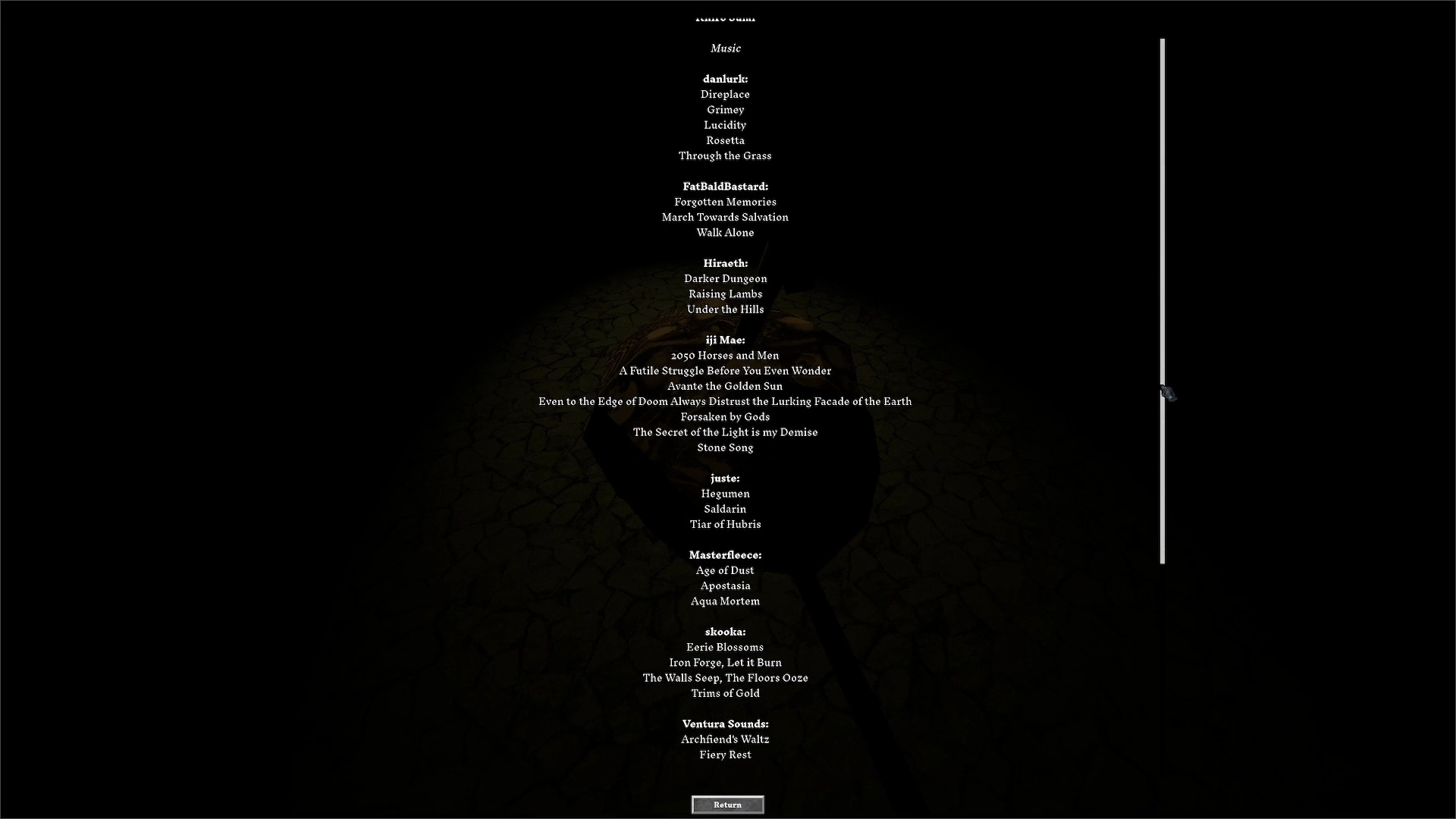
The soundtrack is an eclectic selection of free tunes from various artists. Some are downright weird, others are fitting, if generic to their setting. Outdoor music changes with the location, biome, and time of day. So far, I haven’t heard any bangers.
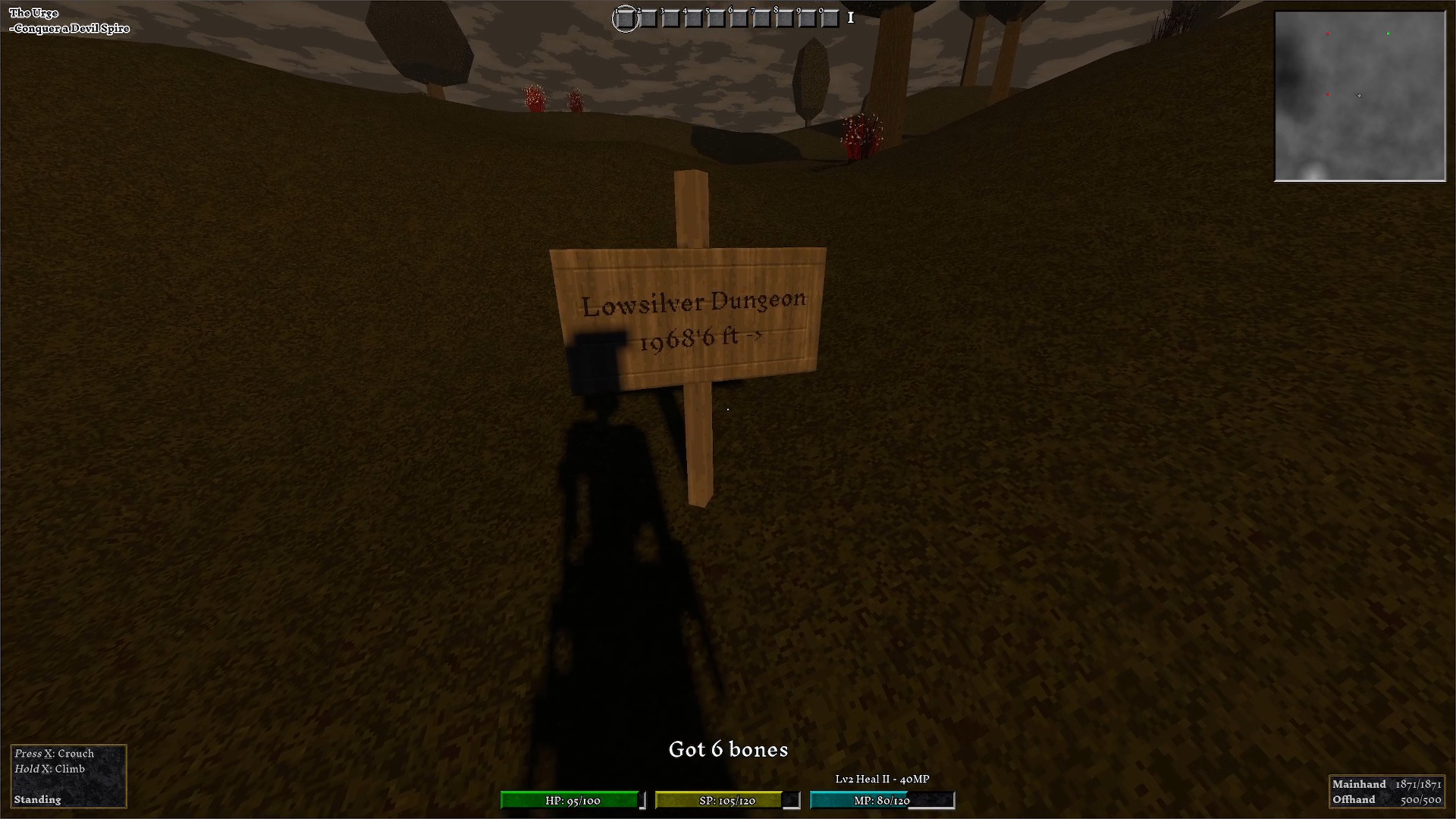
In a typical run I make a character and jump like a maniac up a few steep hills to power up my acrobatics quickly because being able to make long jumps and double jumps is great. I move inland, hitting up dungeons as I go and trading what I don’t need to NPCs for training. Dungeons are really small, sometimes only one or two rooms big, though I imagine later on they’ll get more complex. The Devil Spire is the only one that’s massive. The game is also pretty easy on normal, so I tend to play on hard, and there’s a helpful popup explaining how each difficulty level modifies the game. One thing I search for is cider since it’s one of the most common quests NPCs ask for, and it’s exploitable since the cider ends up in the NPC’s inventory once you complete it. You can trade for it back and repeat the quest over and over for easy experience and rewards. Occasionally they’ll ask for a weapon instead or for you to go assassinate someone, including themselves.
Once I’m far along enough not to die from something foolish, I steal a horse or two from a nomad camp. Horses play a valuable role in the game not just as transportation but as pack animals. Sometimes you’ll come across some wild ones, but they tend to be much lower level than the ones kept by nomads, and they don’t level up. There also doesn’t seem to be any real consequence for stealing horses, for now. At about level 40 I hit the spire, and unlike the dungeons in the rest of the game, this one could rub shoulders with the confusing layouts of the best Daggerfall dungeons. The spire has great loot inside, especially at the end, and once you’re done, you can do it again. A new spire always appears when the old one is destroyed, and they scale up in level with each one you take down.
Devil Spire Falls
obviously has a long way to go, but the game is already fun. Everything else hinges on Ithiro continuing to fill out the rest of the game, and for the moment content is coming at a regular pace. It’s already more balanced ,and the path to godhood can no longer be achieved in a few hours of exploitative play. The dev seems to be listening to the community, and players have a vote on what gets put in next. As of this review there's been one additional update to NPCs. This update adds new jobs like guards to protect stores, stopping to eat, and going home to sleep (and not dying when they do). The patch also adds a bit more penalty for crimes and tones down the exploitive problems in bartering (no more instant love for trading a few trinkets). I’d recommend Devil Spire Falls to anyone who’s willing to take the risk on something that isn’t finished yet because it has a lot of potential and the developer seems to know what he’s doing. The asking price is decent, and it’s competent right out of the gate. Like any EA title, it’s just a matter of waiting to see if it lives up to expectations.


 /
/ ): Games, D&D, SW/Game Dev & other nerdy stuff.