


Since it's made by Quantic Dream probably some abysmal movie game like the rest of them. The fact it's been announced with little to no real tangible information for years now and the leader writer has left to found his own studio makes the outlook pretty bleak on it ever actually releasing.
We have a Steam curator now. You should be following it. https://store.steampowered.com/curator/44994899-RPGHQ/
Master Chris Avellone Thread
-
Vergil
- Posts: 15670
- Joined: Sep 6, '23
-
Geolocation
I'm just stating the facts.
Question is are you going to gargle the truth or swallow?
Question is are you going to gargle the truth or swallow?
-
Oyster Sauce

- Site Moderator
- Posts: 11291
- Joined: Jun 2, '23
-
Geolocation
Adventurer's Guild


Dead
-
Roguey

- Turtle

- Posts: 3076
- Joined: Feb 4, '23
-
Geolocation
Adventurer's Guild

Confirming he's still involved with the Red Info and Wolf Eye projects, just likes to have a lot of irons in the fire.
-
Tadeusz

- Posts: 570
- Joined: Dec 28, '24
-
Geolocation
Adventurer's Guild


Well, The Life and Suffering of Sir Brante does this in one of the branches of the lotless path. It's about infiltrating the group of revolutionaries and manipulating them to advance the goals of the empire. It was very satisfying.rusty_shackleford wrote: ↑ June 26th, 2025, 22:38Need a game where you join the regime to fight against the anarchist terrorists
-
The_Mask
- Posts: 3401
- Joined: Feb 6, '23
- Location: The land of ice and snow
-
Geolocation
Just like Yves, I chase tales
rusty_shackleford wrote: ↑ October 28th, 2024, 07:36Mediocre or bad games can still have parts that are good.
-
Demonic Fate

- Posts: 694
- Joined: Feb 19, '25
-
Geolocation
Adventurer's Guild
I never finished the original Deus Ex and never will, because I got so ****** when it railroaded me into joining the terrorists despite me taking every possibly pro-UNATCO choice up to that point that I rage-uninstalled it and went back to Unreal Tournament or whatever.rusty_shackleford wrote: ↑ June 26th, 2025, 22:38Need a game where you join the regime to fight against the anarchist terrorists
-
gerey

- Turtle
- Posts: 3200
- Joined: Feb 2, '23
-
Geolocation
Adventurer's Guild


Wait, you're upset you didn't get to join the globohomo UN police agency?Demonic Fate wrote: ↑ October 2nd, 2025, 10:43despite me taking every possibly pro-UNATCO choice up to that point
Are you mentally ill?
-
Demonic Fate
- Posts: 694
- Joined: Feb 19, '25
-
Geolocation
Adventurer's Guild
Yes, because it was hyped by the game press and forums as "the most immersive RPG evar! It reacts to player actions! Complete freedom of choice!"gerey wrote: ↑ October 2nd, 2025, 10:51Wait, you're upset you didn't get to join the globohomo UN police agency?Demonic Fate wrote: ↑ October 2nd, 2025, 10:43despite me taking every possibly pro-UNATCO choice up to that point
"Huh, alright, I'll choose to be an ******* and side with the obviously bad guys then."
"BUT THOU MUST."
I can't fully speak for my teenage self long ago, but I think I'd have been perfectly fine if the "UNATCO path" had ended with a quick bullet to my head in a secret prison. In Bloodlines, a few years later, you can choose to be a sincere toadie for Lacroix and end up exploding with him.
Instead, I still remember the frustration when Deus Ex literally soft locked me in that room and wouldn't let me progress unless I willingly joined Paul.
-
Kolgrim

- Posts: 265
- Joined: Oct 1, '25
-
Geolocation
Adventurer's Guild

Ever play Freedom Fighters? You fight commies who have taken over America in it.rusty_shackleford wrote: ↑ June 26th, 2025, 22:38Need a game where you join the regime to fight against the anarchist terrorists
-
gerey
- Turtle
- Posts: 3200
- Joined: Feb 2, '23
-
Geolocation
Adventurer's Guild
AFAIK the plan was to allow the player to stick with UNATCO for much longer, but they had to cut that out of the game.Demonic Fate wrote: ↑ October 2nd, 2025, 11:54Yes, because it was hyped by the game press and forums as "the most immersive RPG evar! It reacts to player actions! Complete freedom of choice!"
Yeah, but the game also doesn't give you the choice of joining the Sabbat, and joining the Kuei-Jin is basically an afterthought.In Bloodlines, a few years later, you can choose to be a sincere toadie for Lacroix and end up exploding with him.
Ditto for Fallout 1, where the devs originally envisioned giving you the option of becoming a super mutant and helping the Master take over the Wasteland, but as with so many other cRPGs, these kind of ambitious features tend to get cut.
It's difficult to justify locking such a substantial quantity of content behind choices (even though that should be the point of cRPGs) when you account for the fact that most players only ever play a game once, and usually don't even finish it.
The kind of nonlinearity you, me, and everyone else here wishes for can only really come about if that's what the devs are the most committed about.
-
Demonic Fate
- Posts: 694
- Joined: Feb 19, '25
-
Geolocation
Adventurer's Guild
I think the difference is that the non-joinable factions are never presented as potential options in early dialogue/quest choices. The first half of Deus Ex is a nonstop sequence of "do you want to be humane to the terrorists and acknowledge they might have a point, or do you stay loyal and iron-fisted?", so I naturally expected those choices to matter.gerey wrote: ↑ October 2nd, 2025, 12:37AFAIK the plan was to allow the player to stick with UNATCO for much longer, but they had to cut that out of the game.Demonic Fate wrote: ↑ October 2nd, 2025, 11:54Yes, because it was hyped by the game press and forums as "the most immersive RPG evar! It reacts to player actions! Complete freedom of choice!"
Yeah, but the game also doesn't give you the choice of joining the Sabbat, and joining the Kuei-Jin is basically an afterthought.In Bloodlines, a few years later, you can choose to be a sincere toadie for Lacroix and end up exploding with him.
Ditto for Fallout 1, where the devs originally envisioned giving you the option of becoming a super mutant and helping the Master take over the Wasteland, but as with so many other cRPGs, these kind of ambitious features tend to get cut.
It's difficult to justify locking such a substantial quantity of content behind choices (even though that should be the point of cRPGs) when you account for the fact that most players only ever play a game once, and usually don't even finish it.
The kind of nonlinearity you, me, and everyone else here wishes for can only really come about if that's what the devs are the most committed about.
In Bloodlines you can express your feelings about the Camarilla and Anarchs many time before you get to choose your side - but the Sabbat are never discussed or seen as anything other than monsters. Fallout 1 does technically have a bad ending where you reveal the location of Vault 13 to the Unity and join them, by the way, though kind of like the Kuei-Jin ending it's minimal.
-
Irenaeus

- Posts: 10784
- Joined: Sep 29, '23
-
Geolocation
**** joining the Sabbath, kill them all.
PS: I don't think MCA worked on either Deus Ex or VTMB btw
PS: I don't think MCA worked on either Deus Ex or VTMB btw
Last edited by Irenaeus on October 2nd, 2025, 15:01, edited 1 time in total.
Iren's Play-by-post: General Discussion
Upcoming: Karatasian Kings - A CK2 Random World LP
Winner of RPGHQ4 - The Search For Vengeance
Upcoming: Karatasian Kings - A CK2 Random World LP
Winner of RPGHQ4 - The Search For Vengeance
-
J1M

- Turtle
- Posts: 5068
- Joined: Feb 15, '23
-
Geolocation
Adventurer's Guild


Manderley has ORDERED you to go undercover and infiltrate the NSF and you will fulfill that directive, agent.Demonic Fate wrote: ↑ October 2nd, 2025, 11:54Yes, because it was hyped by the game press and forums as "the most immersive RPG evar! It reacts to player actions! Complete freedom of choice!"gerey wrote: ↑ October 2nd, 2025, 10:51Wait, you're upset you didn't get to join the globohomo UN police agency?Demonic Fate wrote: ↑ October 2nd, 2025, 10:43despite me taking every possibly pro-UNATCO choice up to that point
"Huh, alright, I'll choose to be an ******* and side with the obviously bad guys then."
"BUT THOU MUST."
I can't fully speak for my teenage self long ago, but I think I'd have been perfectly fine if the "UNATCO path" had ended with a quick bullet to my head in a secret prison. In Bloodlines, a few years later, you can choose to be a sincere toadie for Lacroix and end up exploding with him.
Instead, I still remember the frustration when Deus Ex literally soft locked me in that room and wouldn't let me progress unless I willingly joined Paul.
-
J1M
- Turtle
- Posts: 5068
- Joined: Feb 15, '23
-
Geolocation
Adventurer's Guild
Fun game, I like the choices you have between objectives.Kolgrim wrote: ↑ October 2nd, 2025, 12:06Ever play Freedom Fighters? You fight commies who have taken over America in it.rusty_shackleford wrote: ↑ June 26th, 2025, 22:38Need a game where you join the regime to fight against the anarchist terrorists
-
Roguey
- Turtle
- Posts: 3076
- Joined: Feb 4, '23
-
Geolocation
Adventurer's Guild
You can go on a full NSF slaughterfest but eventually the evidence is overwhelming that remaing loyal to Bob Page's toadies is not in your interest at all. Best they can offer is the Illuminati path.Demonic Fate wrote: ↑ October 2nd, 2025, 13:15I think the difference is that the non-joinable factions are never presented as potential options in early dialogue/quest choices. The first half of Deus Ex is a nonstop sequence of "do you want to be humane to the terrorists and acknowledge they might have a point, or do you stay loyal and iron-fisted?", so I naturally expected those choices to matter.
This is something they addressed with Invisible War, you can side with all of the factions, even the one that's normally your enemy. Just wasn't possible to script a viable UNATCO path in the original, they had enough on their plate.
-
Rand

- Posts: 6631
- Joined: Sep 4, '23
- Location: On my last legs
-
Geolocation
Adventurer's Guild
So you have no idea what pieces of **** were behind UNATCO...Demonic Fate wrote: ↑ October 2nd, 2025, 10:43I never finished the original Deus Ex and never will, because I got so ****** when it railroaded me into joining the terrorists despite me taking every possibly pro-UNATCO choice up to that point that I rage-uninstalled it and went back to Unreal Tournament or whatever.
You may as well not bother replying to my posts if it's to argue anything except concrete facts or your personal opinion. I still probably won't see it.
Reject your retarded-wing political programming and learn to think.
If you can.
Reject your retarded-wing political programming and learn to think.
If you can.
-
The_Mask
- Posts: 3401
- Joined: Feb 6, '23
- Location: The land of ice and snow
-
Geolocation
MCA wrote:Loving Expedition 33, thank you @SandfallGames. Great voice acting, characters, companions, and a beautiful (and shattered) world.
Also, kudos for them not including a mini-map, it actually started me making old school maps of dungeons again. I actually feel like I’m exploring.
That Sirene boss fight? Beautiful and nerve-wracking. And the dungeon that’s built around her is breathtaking. Awesome.
If it can’t get any better, you get to play a character voiced by Charlie Cox. Ace.
Just like Yves, I chase tales
rusty_shackleford wrote: ↑ October 28th, 2024, 07:36Mediocre or bad games can still have parts that are good.
-
The_Mask
- Posts: 3401
- Joined: Feb 6, '23
- Location: The land of ice and snow
-
Geolocation
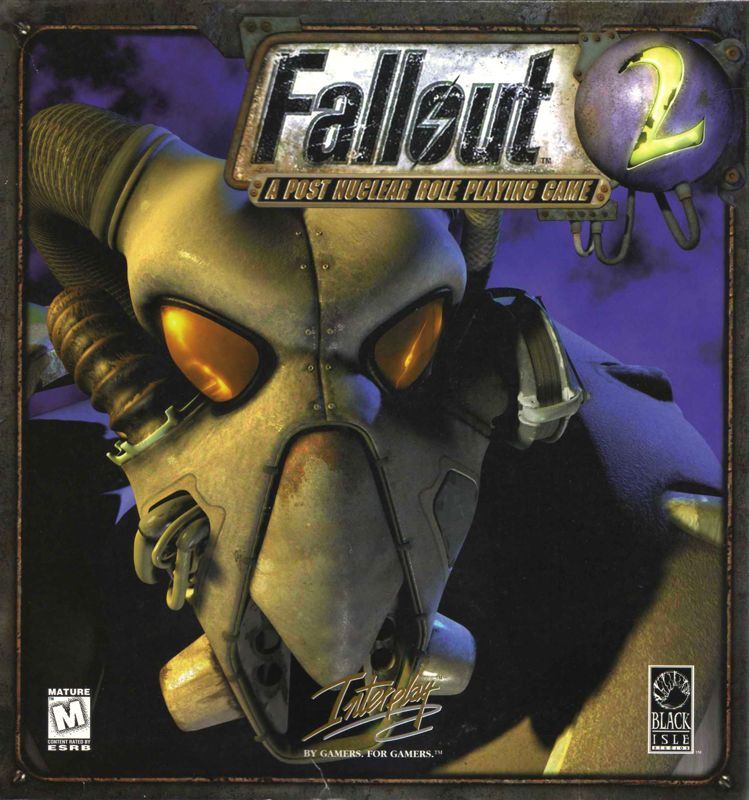
MCA wrote:Happy anniversary to Fallout 2.
Below, the game cover I soooo wished they’d chosen.

Just like Yves, I chase tales
rusty_shackleford wrote: ↑ October 28th, 2024, 07:36Mediocre or bad games can still have parts that are good.
-
rusty_shackleford

- Site Admin
- Posts: 45450
- Joined: Feb 2, '23
- Gender: Watermelon
-
Geolocation
Adventurer's Guild
The_Mask wrote: ↑ October 29th, 2025, 22:03
MCA wrote:Happy anniversary to Fallout 2.
Below, the game cover I soooo wished they’d chosen.
The one they picked looks cooler
Thank you for your attention to this matter!
Steam friend code: 40552640 https://steamcommunity.com/friends/add | email: [email protected]
Having trouble running an old Windows game?
Rusty's Stuff Collection
Steam friend code: 40552640 https://steamcommunity.com/friends/add | email: [email protected]
Having trouble running an old Windows game?
Rusty's Stuff Collection
-
Rand
- Posts: 6631
- Joined: Sep 4, '23
- Location: On my last legs
-
Geolocation
Adventurer's Guild
The one Avellone wanted doesn't even make sense.
There is no dismounted power armor helmet item in the game.
There is no dismounted power armor helmet item in the game.
You may as well not bother replying to my posts if it's to argue anything except concrete facts or your personal opinion. I still probably won't see it.
Reject your retarded-wing political programming and learn to think.
If you can.
Reject your retarded-wing political programming and learn to think.
If you can.
-
roldet

- Posts: 133
- Joined: Oct 5, '25
-
Geolocation
Social media was a mistake. It makes people like Todd Howard and Gabe Newell look sophisticated compared to Tim Cain, Josh Sawyer, and Chris Avellone, who come off like clowns because they do spout stupid stuff on it.
-
The_Mask
- Posts: 3401
- Joined: Feb 6, '23
- Location: The land of ice and snow
-
Geolocation
Just like Yves, I chase tales
rusty_shackleford wrote: ↑ October 28th, 2024, 07:36Mediocre or bad games can still have parts that are good.
-
The_Mask
- Posts: 3401
- Joined: Feb 6, '23
- Location: The land of ice and snow
-
Geolocation
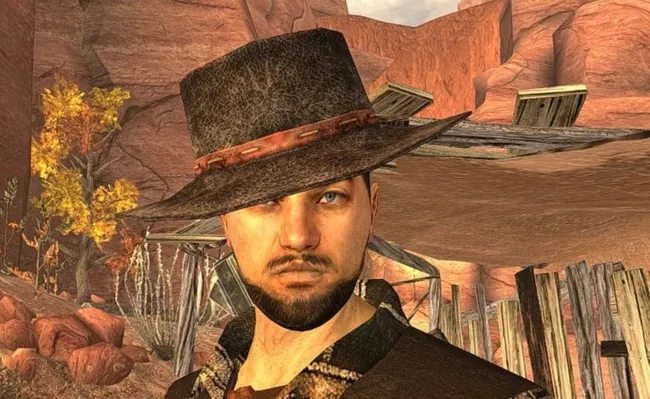
MCA wrote:So many dialogue responses
https://www.pcgamer.com/games/rpg/sorry ... -own-thingPC GAMER wrote:Sorry, Fallout fans, but Obsidian isn't really interested in making New Vegas 2: After years of working on other people's games, the studio is finding 'joy' in doing its own thing
Sorry, Fallout fans, but Obsidian isn't really interested in making New Vegas 2: After years of working on other people's games, the studio is finding 'joy' in doing its own thing
By Andy Chalk published 2 hours ago
Obsidian released three games in 2025, and all of them were original Obsidian IP.
2025 was a very big year for Obsidian, which released not just one but two major RPGs, Avowed and The Outer Worlds 2, plus the backyard survival adventure Grounded 2 in early access. An awful lot of fans are eager for something else, though, and it's no secret what that is: Alpha Protocol 2.
And, I suppose, some of you might also have your fingers crossed for Fallout: New Vegas 2.
You probably shouldn't hold your breath waiting for it to happen, though. In an interview with The Game Business, Obsidian vice president of operations Marcus Morgan and vice president of development Justin Britch said they know lots of people want followups to the studio's greatest hits, but the developers who work there are more interested in doing other things.
The hangup is that after years of making games based on other people's properties—KOTOR 2, Neverwinter Nights 2, Dungeon Siege 3, South Park: The Stick of Truth—Obsidian is apparently having a pretty good time doing its own thing.
"I know everyone on the internet, on every game we ever announce, will constantly reference back to, when’s the next New Vegas? When’s the next whatever?" Morgan said.
"But this year, in addition to it being a celebration of shipping three games, all three of the games are IP that we've created, that are Obsidian IP. Our history prior to Microsoft surrounded working on others’ IP. And this is the joy that we get of, 'How do we start to define our own do we build our own IP?' And we’ve got to the part where we have sequels to all of them. All of them are IP we've created."
Microsoft acquired Obsidian in 2018, after the studio had already started doing its own thing in Pillars of Eternity and Tyranny. But both Pillars of Eternity games were dependent on crowdfunding, while Tyranny was backed by Paradox, at least in part because of the success of the first Pillars game. The Microsoft acquisition changed all that: The big upside of corporate overlords is that they bring corporate cash to the table. As The Notorious B.I.G. once observed, that sort of sudden, massive infusion of funding can lead to unexpected downsides, but Morgan repeated a sentiment he and Britch expressed earlier this year: That Obsidian will continue to do its own thing, at its own scale.
"The journey around The Outer Worlds 2 and Avowed put [our approach] to the test quite a bit," Morgan said. "There was a little bit of self-doubt or self-questioning of, 'Should we be chasing after these aspects, this component of triple-A?' And as we went through that journey, the lesson we learned and what we took away was, stay true to our roots and keep building the games we make, as opposed to chasing after whoever else. We are always inspired by and we love all of the RPGs that exist, but we also have our style of RPG.
"When I look at Larian’s RPGs, and then I look at Bethesda’s RPGs, or CD Projekt's RPGs, they are compared, but they’re all very different. I want a different experience when I go play Baldur’s Gate than I do when I go play Cyberpunk. We've worked on Neverwinter Nights, we've worked on Fallout, so it can’t help but be somewhat like, 'Are we just trying to be like that?' Our goal with The Outer Worlds and Avowed is to more clearly define, what is it to be Obsidian as a standalone [studio] as opposed to it always being a chase after what already exists."
There's no doubt that The Outer Worlds is in many ways more that a little similar to Bethesda's take on Fallout, which includes New Vegas, and that's one of the reasons it never did much for me: It felt imitative, but also less, somehow, than the games it imitates.
At the same time, nothing succeeds like success, and Obsidian's certainly found that, and I can't find it in myself to complain too much about its cautious approach to RPG development when that success enables genuinely innovative games like Pentiment, which is objectively the best thing it's done since at least Pillars 2.
Besides, there's always hope: Obsidian might be enjoying its deserved moment in the sun, but CEO Feargus Urquhart said just a few years ago that he wants one more crack at Fallout before he rides off into the sunset—and that he'd be "surprised" if a new Fallout isn't on the list of possible projects once Avowed and The Outer Worlds 2 are out.
Just like Yves, I chase tales
rusty_shackleford wrote: ↑ October 28th, 2024, 07:36Mediocre or bad games can still have parts that are good.
-
The_Mask
- Posts: 3401
- Joined: Feb 6, '23
- Location: The land of ice and snow
-
Geolocation
The post was made in reference to Expedition 33 winning the most awards at The Golden Joystick Awards with 7 awards including Ultimate GOTY.
MCA wrote:Grats to @expedition33 for their wins at the @GoldenJoysticks awards, well-deserved. I enjoyed the title very much, and the team did a great job. Kudos to @SandfallGames, looking forward to what comes next!
For the developer dressed as a mime, I wonder how many turns it took the audience to wear him down to get the new outfit unlocks.
Just like Yves, I chase tales
rusty_shackleford wrote: ↑ October 28th, 2024, 07:36Mediocre or bad games can still have parts that are good.
-
The_Mask
- Posts: 3401
- Joined: Feb 6, '23
- Location: The land of ice and snow
-
Geolocation
First time in over 100 years since NMA has been relevant. lol
“Players are selfish”: Fallout 2’s Chris Avellone describes his game design philosophy
Avellone recaps his journey from learning on a TRS-80 to today.
Alan Bradley – Dec 2, 2025 10:04 AM
Chris Avellone wants you to have a good time.
People often ask creatives—especially those in careers some dream of entering—”how did you get started?” Video game designers are no exception, and Avellone says that one of the most important keys to his success was one he learned early in his origin story.
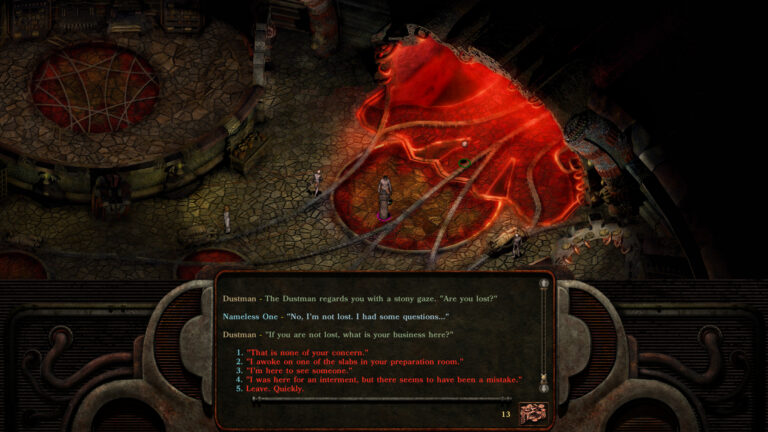
“Players are selfish,” Avellone said, reflecting on his time designing the seminal computer roleplaying game Planescape: Torment. “The more you can make the experience all about them, the better. So Torment became that. Almost every single thing in the game is about you, the player.”
The true mark of a successful game is when players really enjoy themselves, and serving that essential egotism is one of the fundamental laws of game design.
It’s a lesson he learned long before he became an internationally renowned game designer, before Fallout 2 and Planescape: Torment were twinkles in the eyes of Avellone and his co-workers at Interplay. Avellone’s first introduction to building fictional worlds came not from the digital realm but from the analog world of pen and paper roleplaying games.
Table-top takeaways
Avellone discovered Dungeons and Dragons at the tender young age of nine, and it was a formative influence on his creative life and imagination.
“Getting exposed to the idea of Dungeons and Dragons early was a wake-up call,” he told me. “‘Oh, wow, it’s like make believe with rules!’—like putting challenges on your imagination where not everything was guaranteed to succeed, and that made it more fun. However, what I noticed is that I wasn’t usually altering the systems drastically; it was more using them as a foundation for the content.”
As is so often the case with RPG developer origin stories, it began with Dungeons & Dragons. Credit: Scott Swigart (CC BY 2.0)
At first, Avellone wasn’t interested in engineering the games and stories himself. He wanted a more passive role, but life had different ideas.
“I never started out with a desire to be the game master,” Avellone remembered. “I wanted to be one of the players, but once it became clear that nobody else in my friend circle really wanted to be a game master—to be fair, it was a lot of work—I bit the bullet and tried my hand at it. Over time, I discovered I really enjoyed helping tell an interactive story with the players.”
That revelation, that he preferred being the one crafting the world and guiding the experience, led to some early experiments away from the table as well.
“I never pursued programming for a career, which is probably to the benefit of the world and engineering everywhere,” he joked. But he did start tinkering very young, inspired by the fantasy text adventure games he played as a kid. “I wanted to construct adventure games in the vein of the Scott Adams games… so I attempted to learn basic coding on the TRS-80 in order to do so. The results were a steaming, buggy mess, but [the experience] did give insights into how games operate under the hood.”
It was a different era, however, bereft of many of the resources that aspiring young game developers have at their fingertips today.
“It being the early ’80s, there wasn’t much access to Internet forums and online training courses like today,” Avellone said. “It was mostly book learning from various programming manuals available on order or from the library. These programming attempts were always solo endeavors at fantasy-style sword and sorcery adventures, and I definitely would have benefited from a community or at least one other person of skill who I could ask questions.”
Despite all of his remarkable successes in the space, Avellone didn’t originally dream of creating video games.
“Designing computer games was something I sort of fell into,” he told me. “The idea of a game designer was an almost unheard of career at the time and wasn’t even on my radar. I wanted to write pen and paper modules, adventure and character books, and comic books. As it turned out, though, that can be a miserable way to try and make a living, so when an opportunity came to work in the computer game industry, I took it with the expectation that I’d still use my off time to pursue comics, [pen and paper] writing, etc. But like with game mastering, I found computer game design and narrative design to be fun in itself, and it ended up being the bulk of my career. I did get the opportunity to write modules and comic books later on, but writing for games became my focus, as it was akin to being a virtual game master.”
Like many of the engineers and developers of that era, toiling in their garages and quietly building the future of computing, young Chris Avellone used other creators’ work as a foundation.
“One technique I tried was dissecting existing game engines,” he recalls, “more like an adventure game framework, and then finding ways to alter the content layer to create the game. But the attempts rarely compiled without a stream of errors.”
The shine moment
Every failure was an opportunity to learn, however, and like his experiences telling collaborative stories with his friends in Dungeons and Dragons, they taught him a number of lessons that would serve him later in his career. In our interview, he returned again and again to the player-first mentality that drives his design ethos.
First and foremost, a designer needs to “understand your players and understand why they are there,” Avellone said. “What is their power fantasy?”
Beyond that, every player, whether in a video game or a tabletop roleplaying adventure, should have an opportunity to stand in the spotlight.
“That shine moment is important because it gives everyone the chance to be a hero and to make a difference,” he explained. “The best adventures are the ones where you can point to how each player was instrumental in its success because of how they designed or role-played their character.”
And players should be able to get to that moment in the way they want, not the one most convenient to you, the game master or designer.
“Not everyone plays the way you do,” Avellone said, “and your job as game master is not to dictate how they choose to play or force them into a certain game mode. If a player is a min-maxer who doesn’t care much for the story, that shouldn’t be a problem. If the player is a heavy role-player, they should have some meat for their interactions. This applies strongly to digital game design. If players want to skip dialogue and story points, that’s how they choose to play the game, and they shouldn’t be crushingly penalized for their play style. It’s not your story, it should be a shared experience between the developer and player.”
A core part of his design philosophy, this was a takeaway from pen-and-paper games that Avellone has deployed throughout his career in video games.
“The first application was Planescape: Torment,” Avellone remembered.
Working on Planescape: Torment
It was 1995. Interplay had recently acquired the Planescape license from Wizards of the Coast, formerly TSR, the company behind Dungeons and Dragons. Interplay was looking for ideas for a video game adaptation and brought in Avellone for an interview. At the time, he was writing for Hero Games, a tabletop RPG publisher. Avellone was hired onto the project as a junior director after he sold the idea of a game where death was only the beginning.
That idea—the springboard that launched a successful, decades-spanning career—originated in Avellone’s frustration with save scumming, the process of repeatedly reloading save games to achieve the best result.
“Save scumming in RPGs up to that point felt like a waste of everyone’s time,” Avellone said. “If you died, you either reloaded or you quit. If they quit, you might lose them permanently. So I felt if you removed the middleman and just automatically respawned the character in interesting places and ways, that could keep the experience seamless and keep the flow of the adventure going. This didn’t quite work, because players were so used to save scumming and would still feel they had failed in some way. I was fighting typical gaming conventions and gaming habits at that point.”
That idea of death being just another narrative element rather than a fail state is emblematic of another pillar of Avellone’s design philosophy, also drawn from pen-and-paper games: Regardless of what happens, the story must go on.
“Let the dice fall where they may,” Avellone explained. “It will result in more interesting gaming stories. This was a hard one for me initially, because I would get so locked into a certain character, NPC, or letting a PC survive, that I would fight random chance to keep my story or their arc intact. This was a mistake and a huge missed opportunity. If the players have no fear of death or annoying adversaries who never seem to die because you are fudging the dice rolls to prevent them from being killed, then it undermines much of the drama, and it undermines their eventual success.”
Avellone is known for many classics, but among hardcore RPG fans, Planescape: Torment stands particularly tall. Credit: Beamdog
After Planescape: Torment, which received nearly universal critical acclaim, Avellone continued to evolve best practices for giving players what they wanted. He eventually landed on the idea that player input could be useful even before development begins.
“I would often do pre-game interviews with different players,” he recounted, “to get a sense of where they hoped their character arc would go, how they wanted to play.”
Lessons from Fallout Van Buren
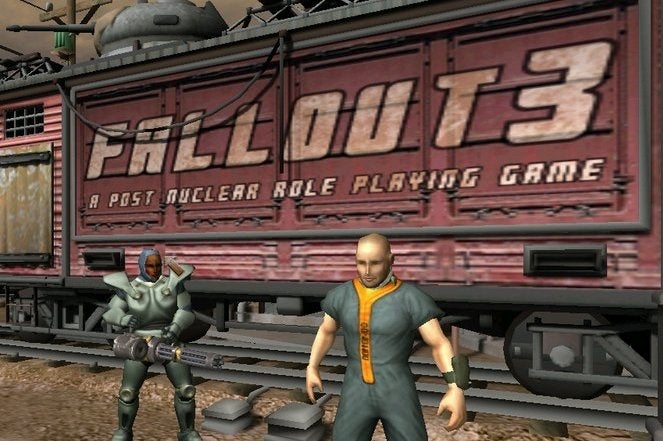
Avellone expanded that process dramatically for Fallout Van Buren, Interplay’s vision for Fallout 3. He and the team built a Fallout tabletop roleplaying game to playtest some of the systems that would be implemented in the (ultimately canceled) video game.
“For the Fallout pen-and-paper we were doing for Fallout Van Buren, for example, doing those examinations proved helpful because there were so many different character builds—including ghouls and super mutants, as well as new archetypes like Science Boy—that you wanted to make sure you were creating an experience where everyone had the chance to shine.”
Though Van Buren never saw the light of day, Avellone has said that some of the elements from that design found their way into the wildly popular Fallout: New Vegas, a project for which Avellone served as senior designer (as well as project director for much of the DLC).
Another lesson he learned at the table is that you should never honor a player’s accomplishment with a reward if you plan to immediately snatch it away.
“Don’t give, then take away,” Avellone warns. “One of the worst mistakes I made was after an excruciatingly long treasure hunt for one of the biggest hordes in the world, I took away all the unique items the characters had struggled to win at the start of the very next adventure. While I knew they would get the items back, the players didn’t, and that almost caused a mutiny.”
A screenshot from Fallout Van Buren. Credit: No Mutants Allowed
I asked Avellone if his earliest experience playing with other people’s code or sitting around rolling dice with his friends had a throughline to his work today. It was clear in his answer, and throughout our interview, that the little boy who fell in love with architecting worlds of fantasy and adventure in his imagination is still very much alive in the seasoned developer building digital worlds for players today. The core idea persists: It’s all about the players, about their connection to your story and your world.
“It still has a strong impact on my game design today,” he told me. “It’s still important to me to see the range of archetypes and builds a player can make. How to make that feel important in a unique way, and how to structure plots and interactions so you try and keep the character goals so they cater to the player’s selfishness. Instead of some outward, forced goal you place on the player… find a way to make the internal player motivation match the goals in-game, and that makes for a stronger experience.”
Avellone carries that philosophy forward into his current project. He recently signed on to help develop the inaugural project at Republic Games, the studio founded by video game writer Adam Williams, formerly of Quantic Dream. The studio is developing a dystopian fantasy game that revolves around a scrappy rebellion fighting to overthrow brutal, tyrannical oppression.
“Some discussions at Republic Games have fallen back on old RPG designs in the past,” he teased, “As some older designs seemed relevant examples for how to solve a potential arc and direction in the game… but I’ll share that story after the game comes out.”

Just like Yves, I chase tales
rusty_shackleford wrote: ↑ October 28th, 2024, 07:36Mediocre or bad games can still have parts that are good.
-
rusty_shackleford
- Site Admin
- Posts: 45450
- Joined: Feb 2, '23
- Gender: Watermelon
-
Geolocation
Adventurer's Guild
is he aware that he made an entire DLC about this?The_Mask wrote: ↑ December 4th, 2025, 22:34“Don’t give, then take away,” Avellone warns. “One of the worst mistakes I made was after an excruciatingly long treasure hunt for one of the biggest hordes in the world, I took away all the unique items the characters had struggled to win at the start of the very next adventure. While I knew they would get the items back, the players didn’t, and that almost caused a mutiny.”
Thank you for your attention to this matter!
Steam friend code: 40552640 https://steamcommunity.com/friends/add | email: [email protected]
Having trouble running an old Windows game?
Rusty's Stuff Collection
Steam friend code: 40552640 https://steamcommunity.com/friends/add | email: [email protected]
Having trouble running an old Windows game?
Rusty's Stuff Collection
-
maidenhaver mk3

- Posts: 97
- Joined: Nov 30, '25
-
Geolocation
Why can't you punk a gamer and take his items away? I like contained adventures.
-
The_Mask
- Posts: 3401
- Joined: Feb 6, '23
- Location: The land of ice and snow
-
Geolocation
MCA wrote:My editor

Just like Yves, I chase tales
rusty_shackleford wrote: ↑ October 28th, 2024, 07:36Mediocre or bad games can still have parts that are good.
-
Vergil
- Posts: 15670
- Joined: Sep 6, '23
-
Geolocation
So does he do anything video game related anymore or just post on twitter?
I'm just stating the facts.
Question is are you going to gargle the truth or swallow?
Question is are you going to gargle the truth or swallow?
-
Tweed

- Turtle
- Posts: 6837
- Joined: Feb 2, '23
-
Geolocation
Adventurer's Guild