




is a top-down, action role-playing game developed by Graverobber Foundation. The player assumes the role of Gerhard the Brave, whose father, King Wilhelm, went missing in a nearby land overtaken by a mysterious magical barrier. It’s a short, retro RPG with simplistic story, gameplay, and aesthetics, designed for those longing for the style of games from the 1980s.
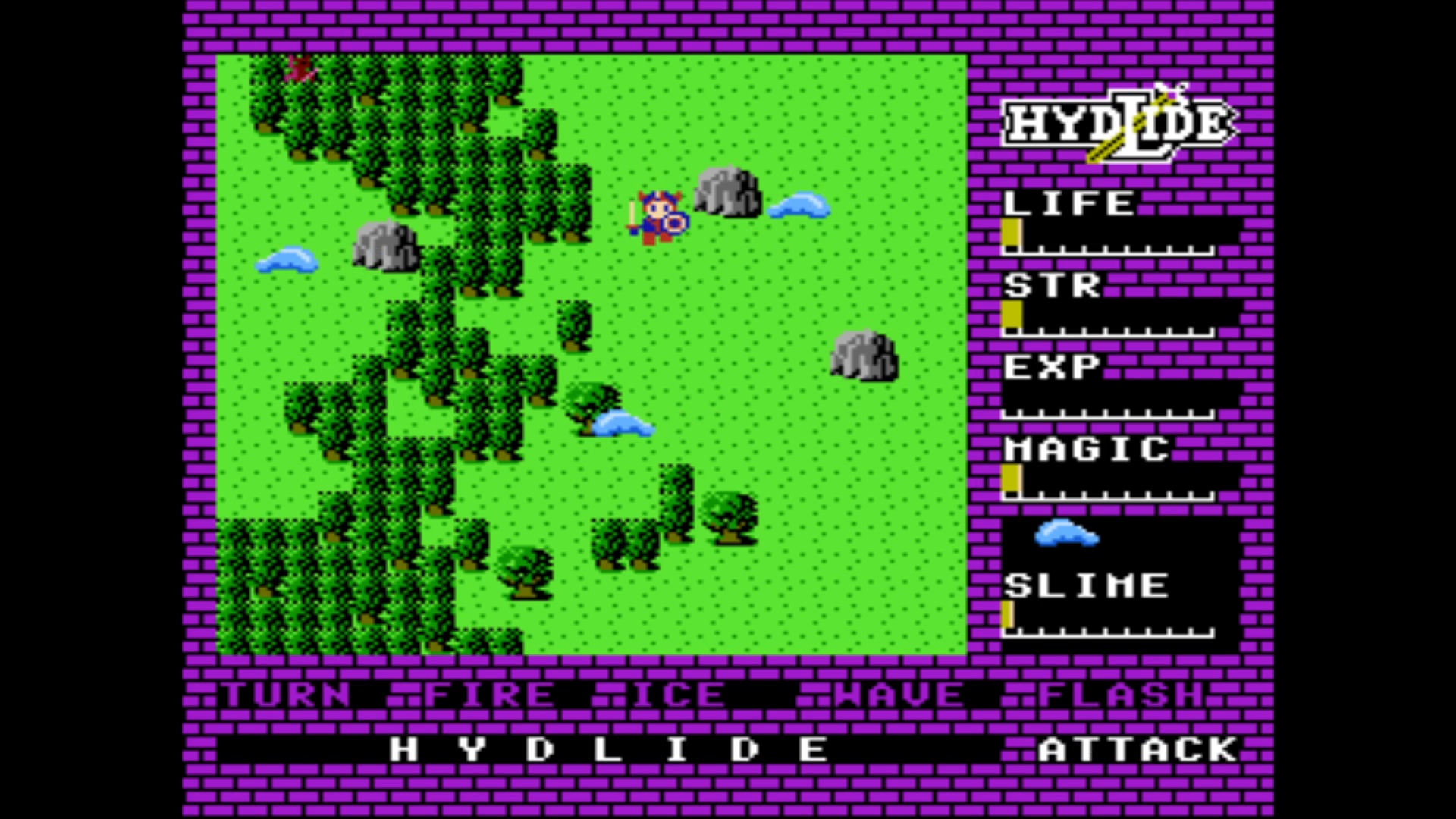
Hydlide
was originally developed by T&E Soft in 1984 for the PC-88. From there, it received several ports to different systems, including the NES—the version most people in the West know. Hydlide featured open-world exploration at a time when nearly every RPG was a closed dungeon ecosystem. The game also featured attack and defense modes for protecting the player outside of combat and passive health regeneration instead of having to rest at an inn. Hydlide received several sequels, and the third game was remastered and released on the Sega Genesis as Super Hydlide in 1989.
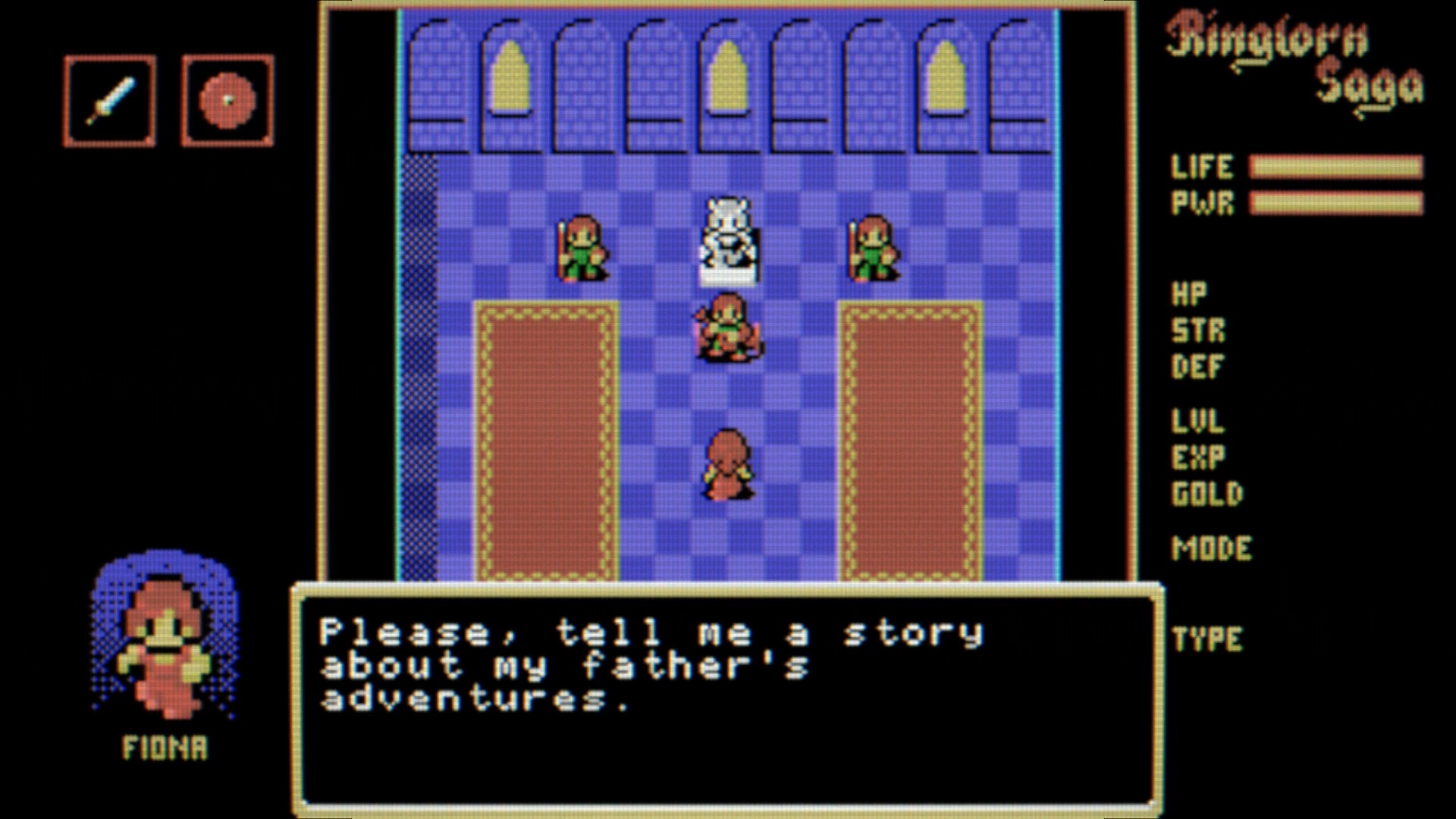
The game begins with Fiona, Gerhard’s daughter, asking to hear the story of her father, which serves as exposition about King Wilhelm, the barrier, and how the captured lands belonged to an old friend of the family. The good king went off to the barrier and told his sons to wait a month for his return and to assume the worst if he didn’t. A month passed, and, sure enough, no Wilhelm. Gerhard takes it upon himself to look for his father and heads to the barrier, barely making it across the threshold before being clobbered by a sorcerer. He regains consciousness in the home of Adele, a young maiden who has nursed him back to health.
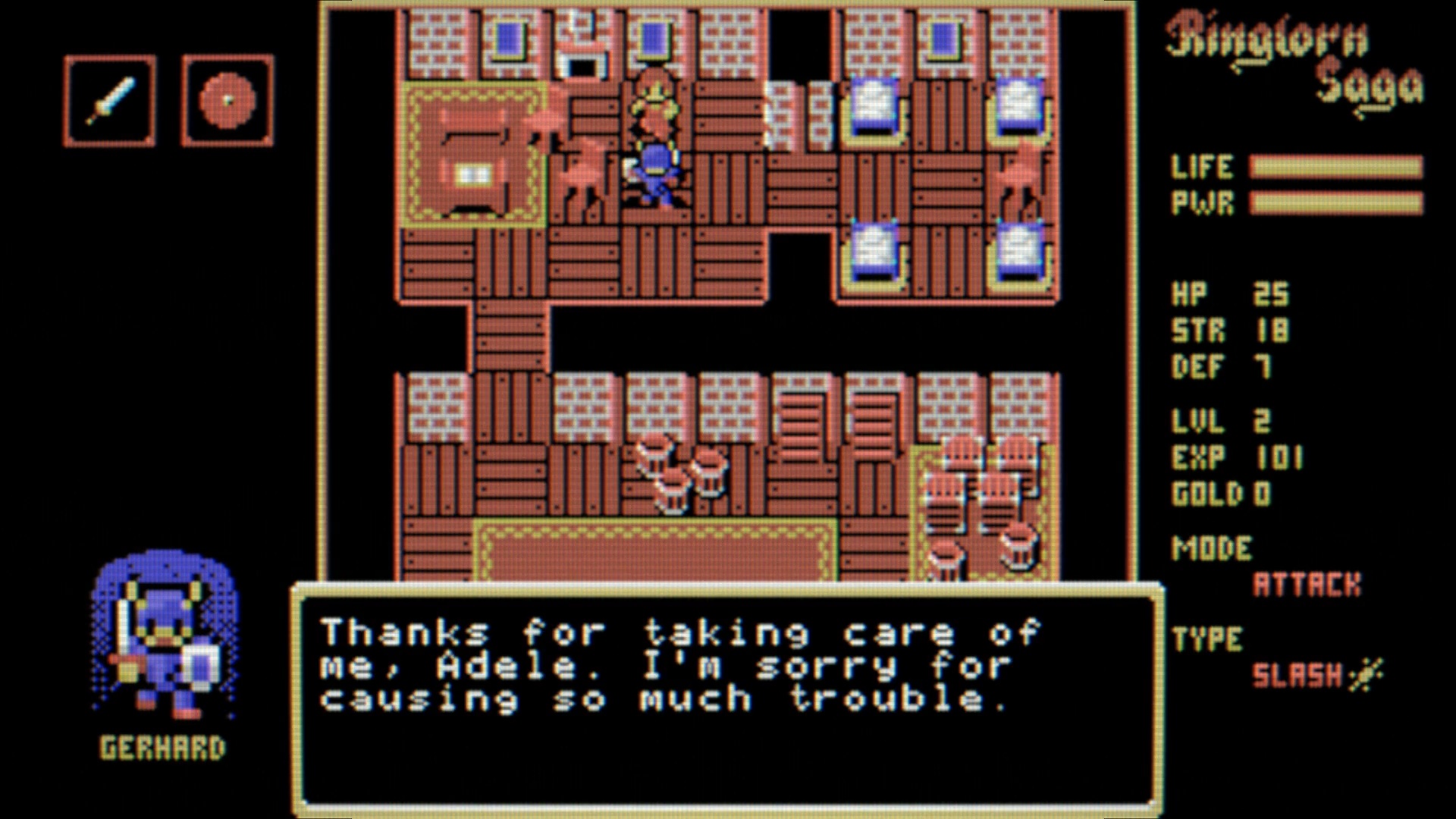
Ringlorn Saga
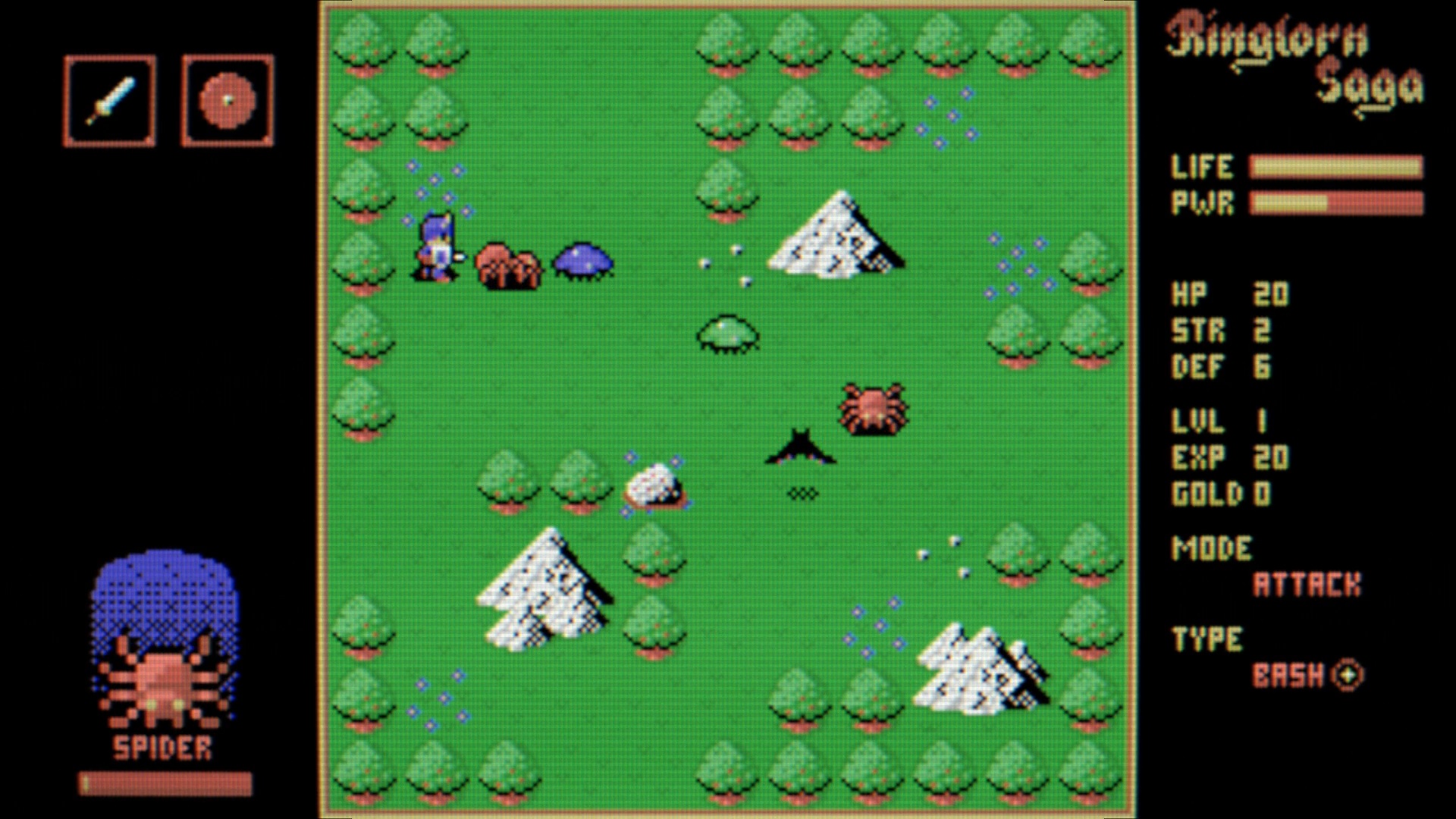
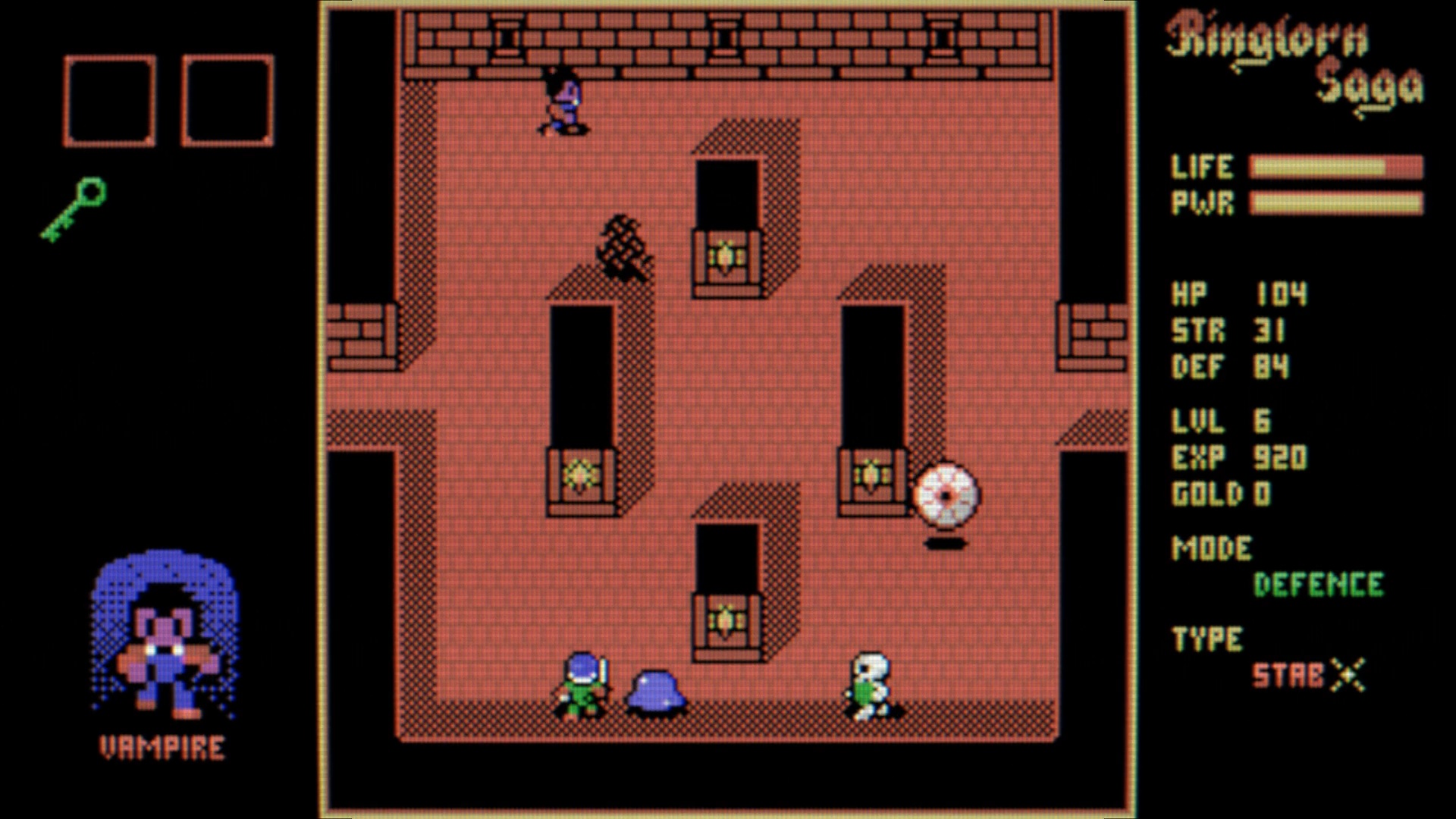
uses bump combat, a mechanic in which you collide with an enemy to decrease its health while preventing it from doing the same to you. All monsters follow a basic “move and turn” pattern, and each time you strike, your power meter decreases; hitting an enemy repeatedly will do almost no damage.
The best tactic is a “stick and move” fighting style: When you approach a critter and attack, it will start following you. Hit the enemy then move away; rinse and repeat. For stronger enemies, this means not getting boxed in while leading them on a merry chase across the battlefield. The faster a monster is, the more dangerous it becomes to hit it more than once per move. Gerhard starts out weak, with basic equipment, and, like all good wimpy heroes, must venture out to kill things and survive to become stronger. Character stats are straightforward and don’t require much explanation: Strength determines how hard you hit, and defense gives you an idea of how much punishment you can take.
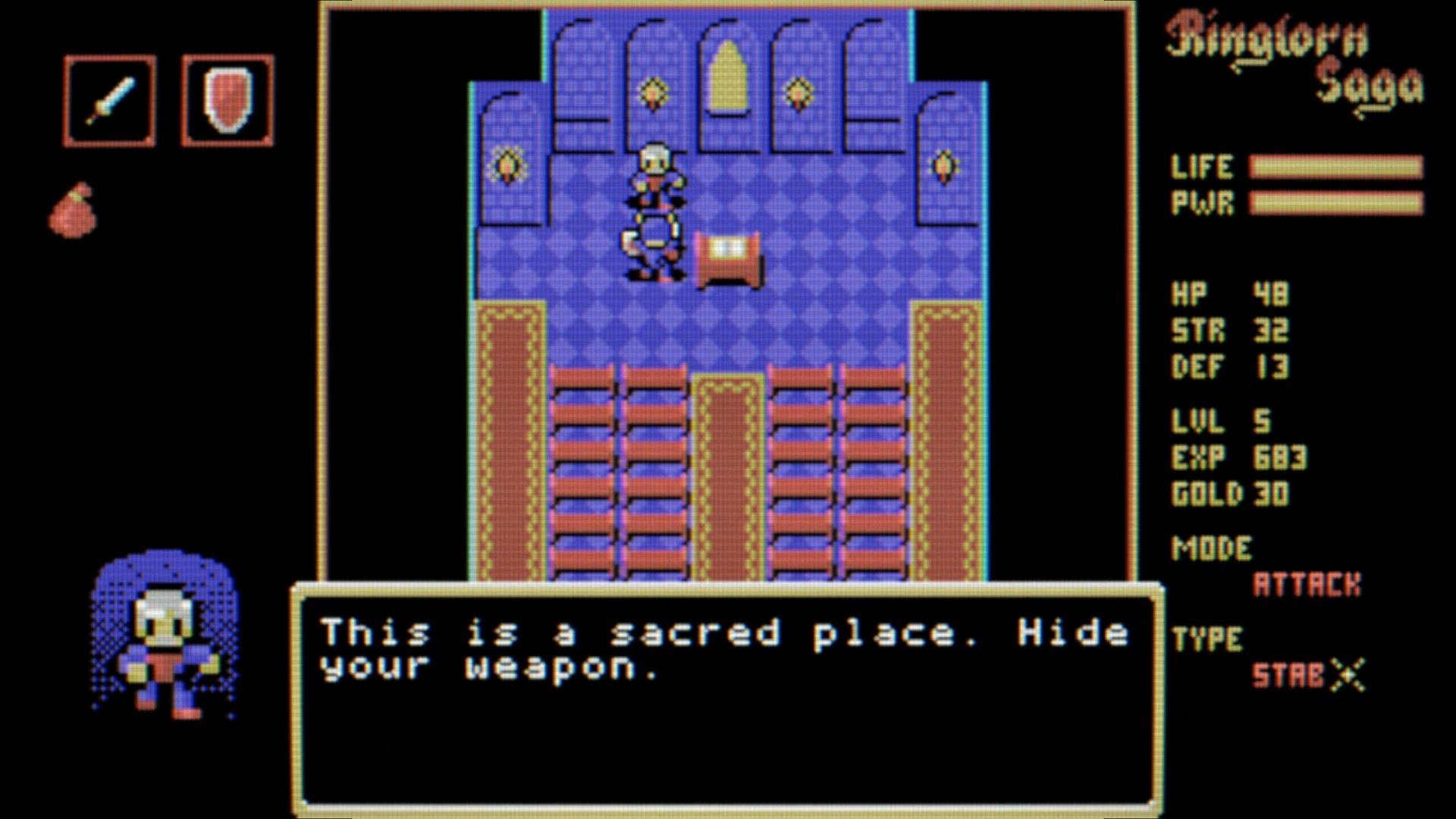
Like the original Hydlide, you can switch between defense and attack. While defending, your defense rate goes up and enemies have a harder time killing you. However, you do almost no damage. While attacking, you land harder blows, but you take more damage in return. The best policy is to stay in defense mode while traveling and only switch to attack when you know you can kill something. Gerhard can do three types of damage: slash, stab, and bash. Most monsters are vulnerable to one or more types, so you’ll need to adapt. One caveat to this are the undead, like vampires and ghosts, which are invulnerable to your attacks without a cross item. Once you have that, they take damage like any other monster, which makes the cross a gear check for progression.
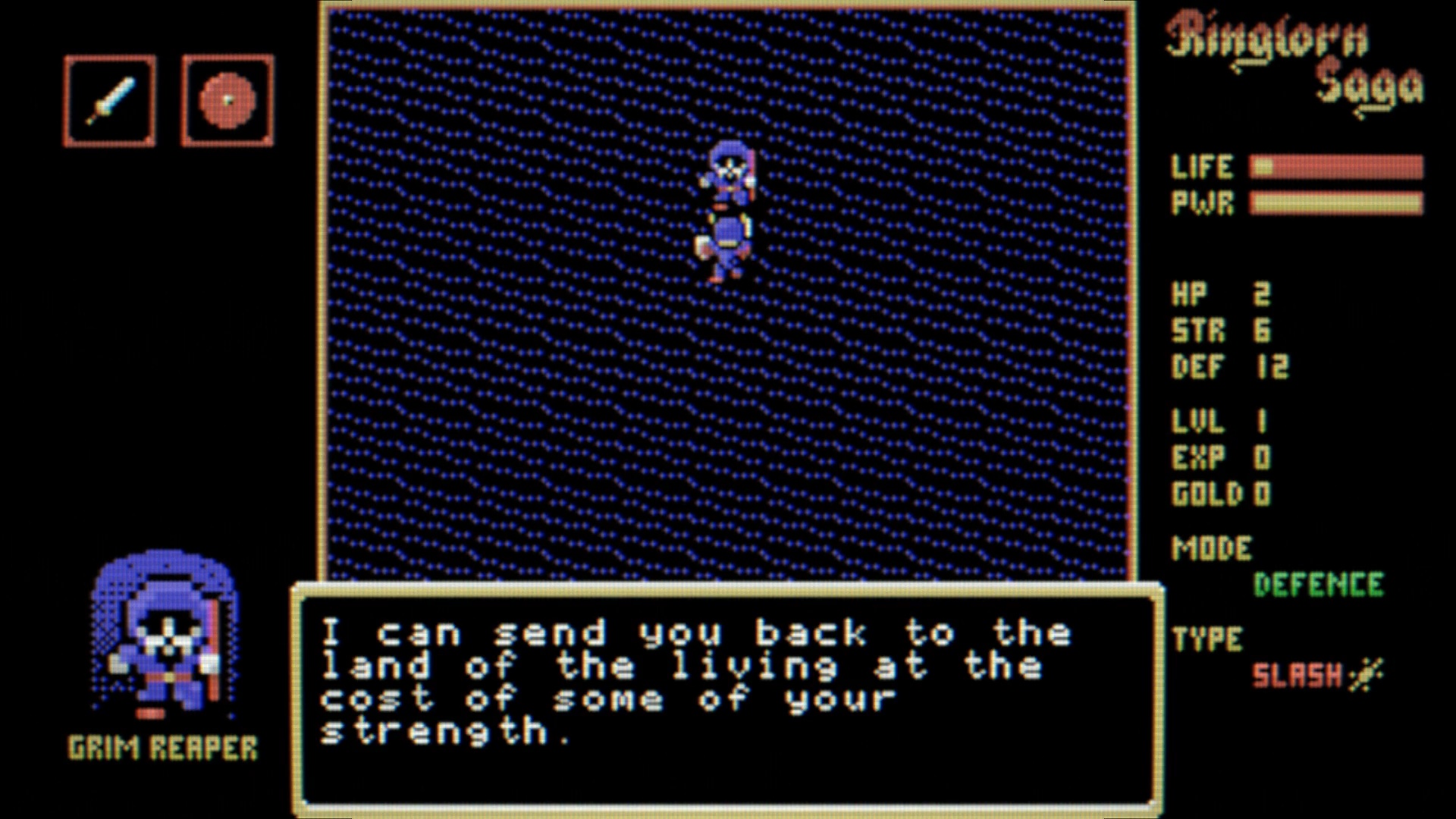
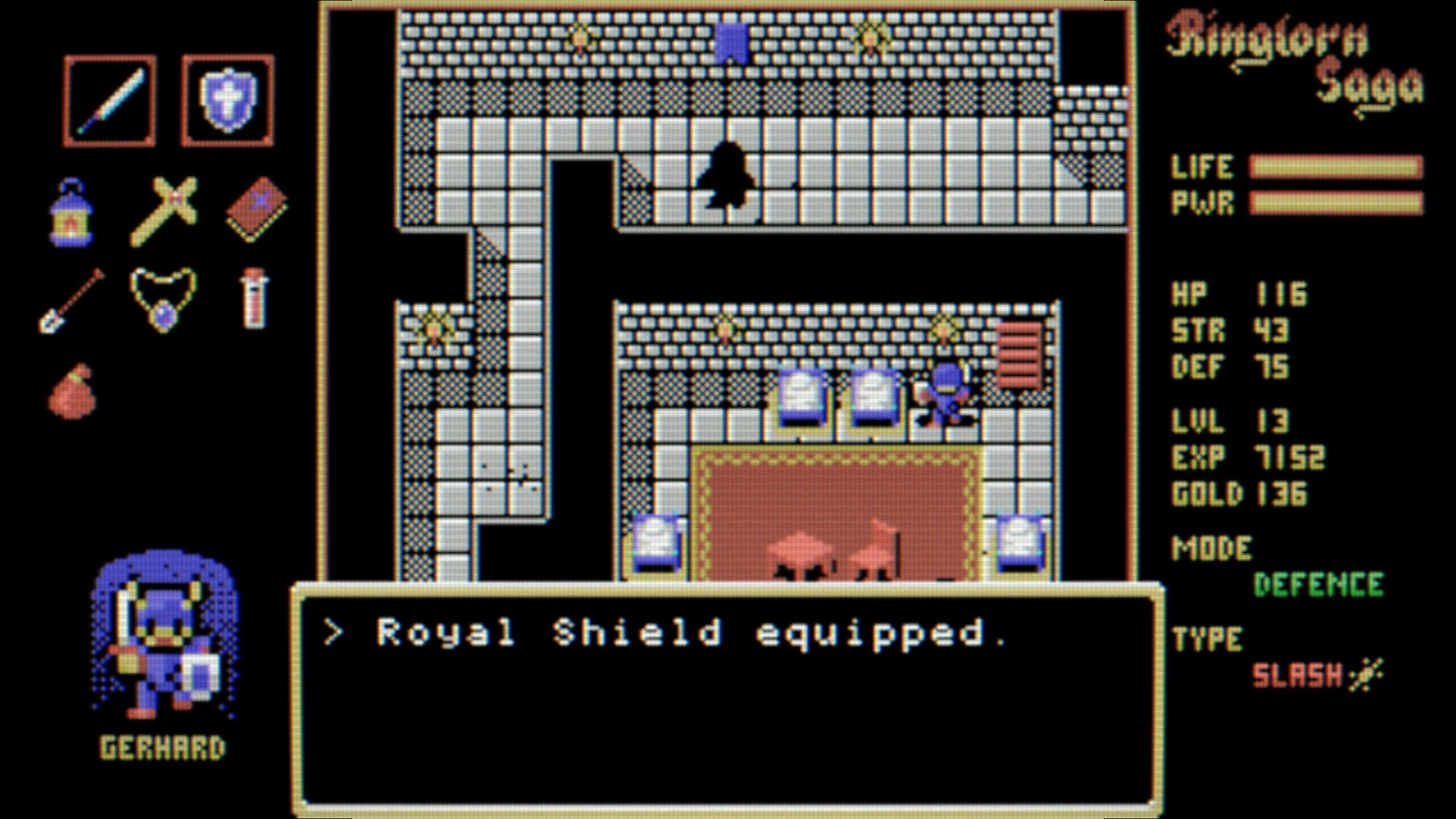
Killing monsters nets you experience only; enemies in Ringlorn Saga aren’t unionized, so they don’t get a paycheck. All the gold you find is just that: found. Cash is tucked away in chests, buried across the world and sometimes earned by selling old items to the local merchant in the starting village. Cash comes into play when learning magic, and there was a ring for sale in the village for an outrageous sum of gold that I never could afford. It seems like finding all the gold in the game is a mini challenge. As you level, stronger enemies will appear on the playing field as a crude form of level scaling. The game begins with slimes and spiders, but they are later replaced with tougher beasts like ghosts and sorcerers.
era-appropriate chip tunes intermingle with synth, bordering on industrial instrumental. As someone who has played most of Graverobber’s other games, I found the music is similar to previous GR titles in style: melancholic and moody. All of the game’s music is decent but not quite memorable.
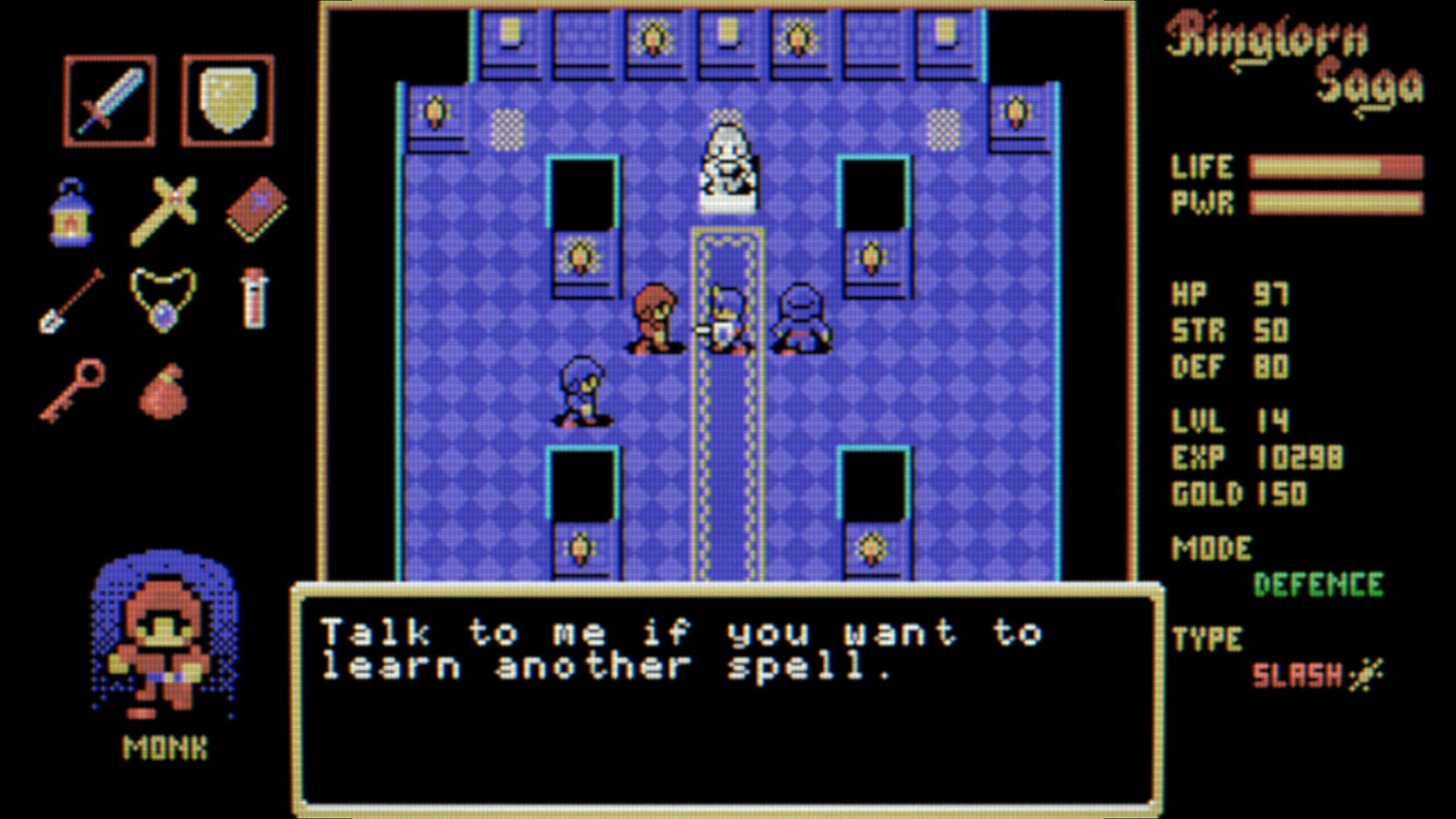
Gerhard can learn the secrets of magic during his adventure. A local temple will send him on a quest to visit the statues of the gods dotted across the world. A donation of one gold coin to each statue and a final visit back to the temple to the Statue of Morrigan, the Goddess of Witchcraft, will unlock the mystical arts. The priest at the temple taught me several spells and then sent me to another guy to learn more, until even he couldn’t teach me anything else. When I returned to the original guy, he told me I wasn’t strong enough to learn more despite reaching level 15 and being close to finishing the game. So, if there was one last spell for me to pick up, I never received it. Spells offer a variety of tactics, such as: temporarily stunning all monsters, shielding yourself as long as you stay on the current screen, or speeding up health regeneration. Unfortunately, some monsters can do the same magic, too. In combat, it pays to take out spell-casting enemies quickly.
Ringlorn Saga’s
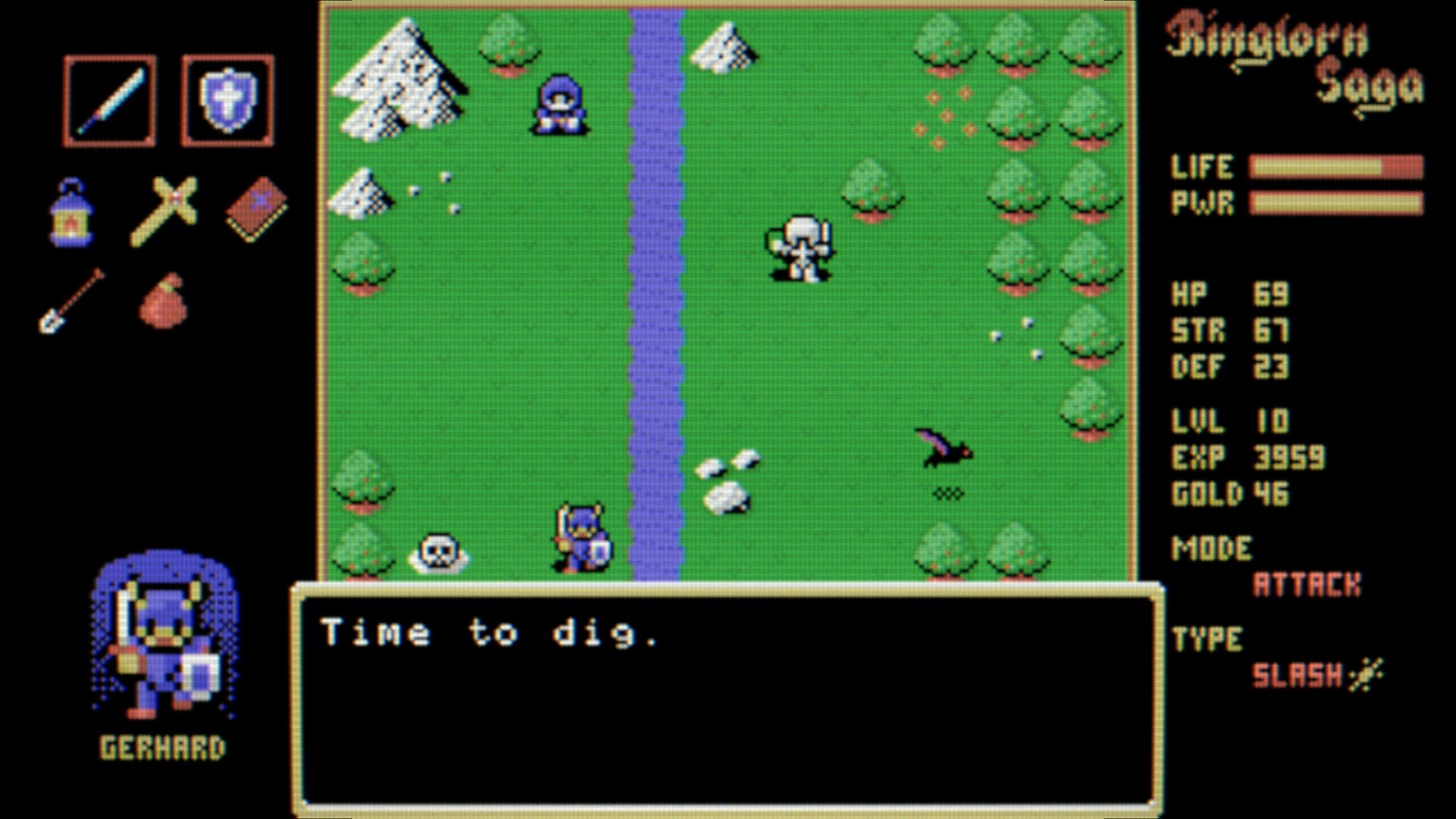
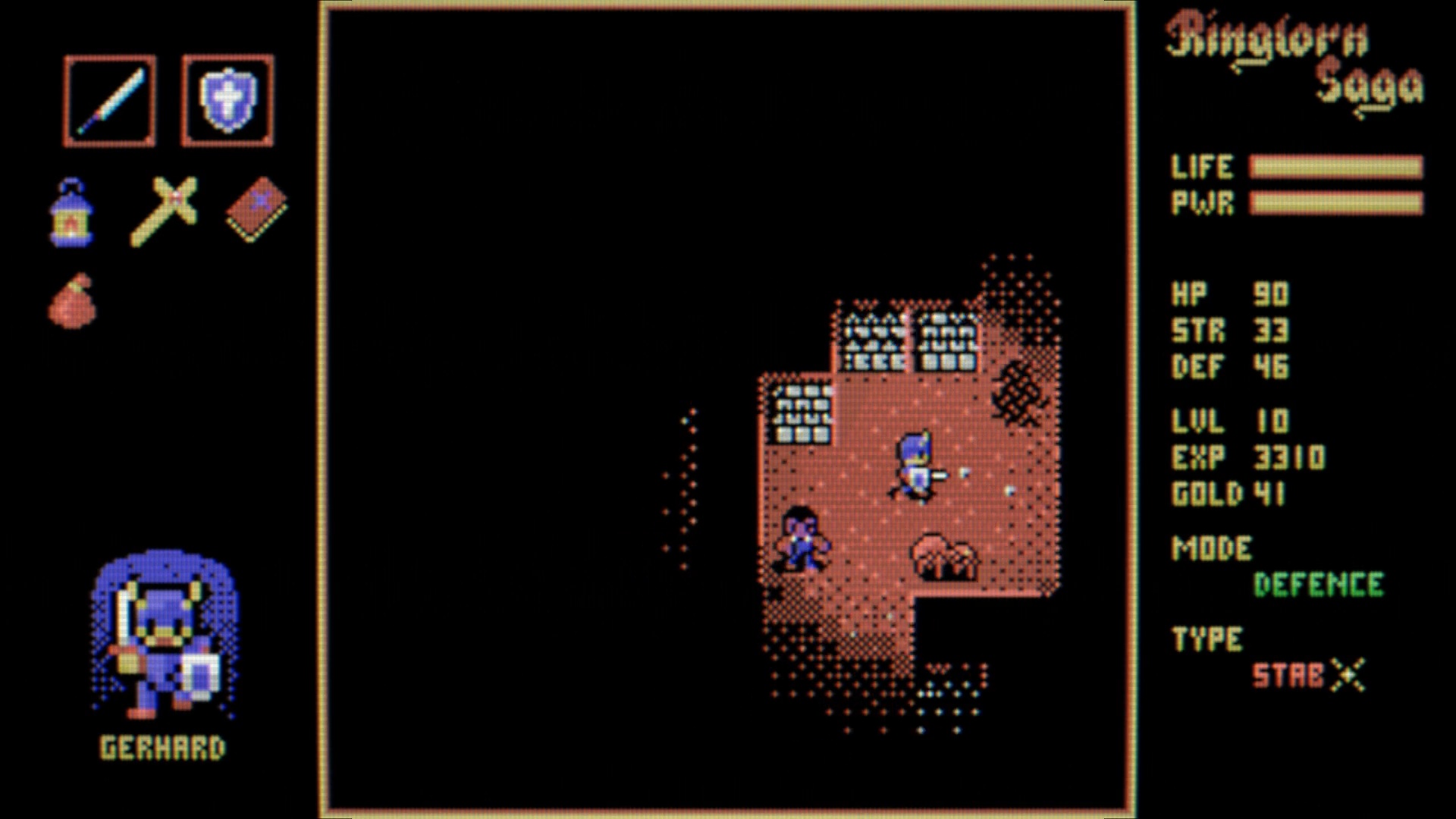
world is small. You don't really get lost as much as you get blocked. You often see places you want to go, but mountains wall off certain locales that can only be reached through underground passages. Caves are dark and nasty places, and you’ll need a lantern to see; some caves have items tucked inside as well. Certain areas are locked with keys held by bosses that you eventually encounter.
Boss battles in Ringlorn Saga are the same: You have a conversation with a bad guy, the screen fades, and then some monsters appear. Bosses perform magic and summon extra monsters during the fight. Otherwise, they're like any other monster that can be defeated with the same tactics. Once dispatched, they drop a plot coupon that Gerhard will pick up, after which he passes out, waking back up at Adele’s house, reinforcing the Florence Nightingale Effect.
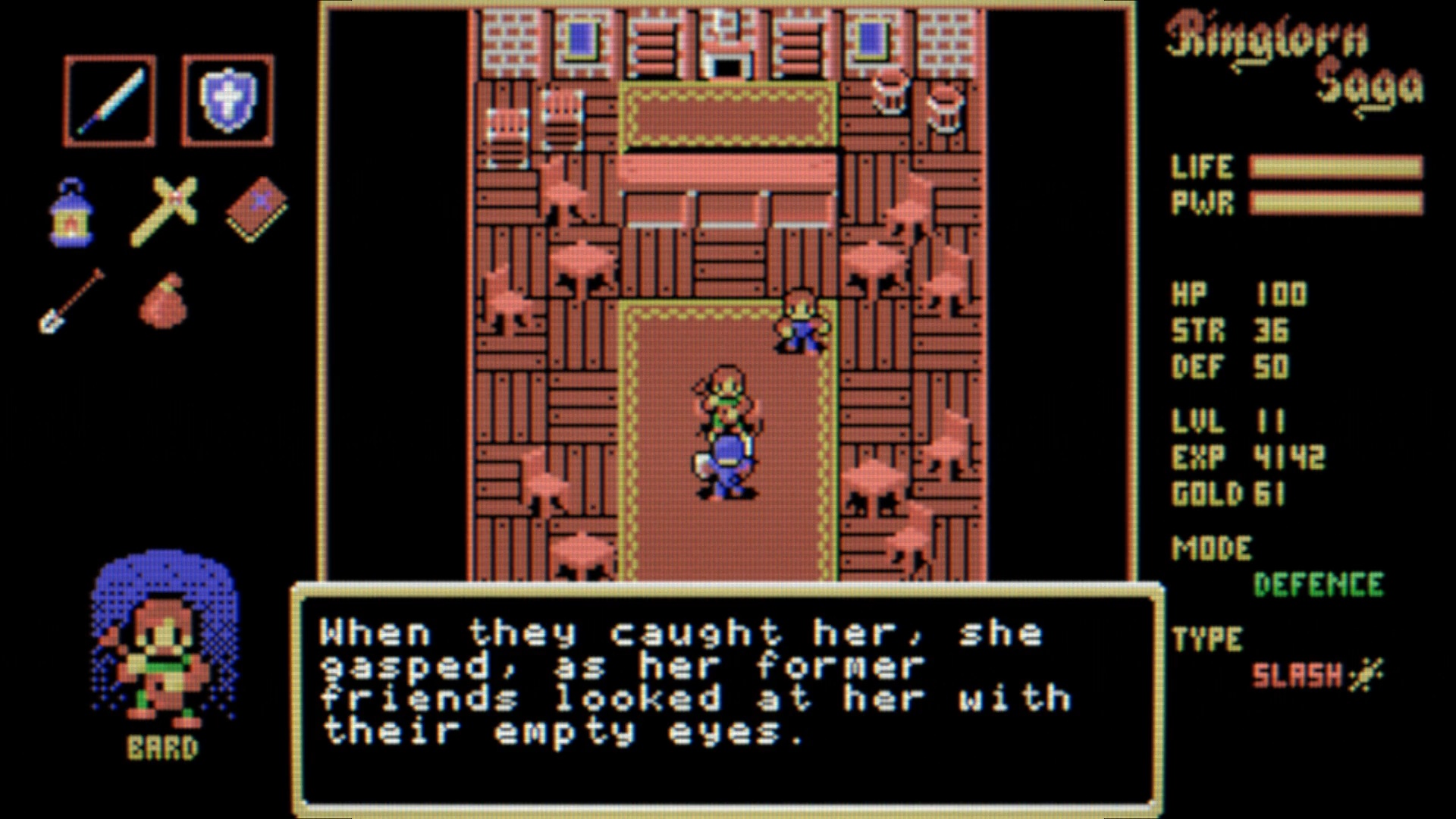
, overall, is short and sweet. Some content is optional, like getting that ring I mentioned. A few side quests may also be optional and strictly to earn experience. The basic loop comes down to finding a key to a dungeon, clearing it, and killing the boss for the next key until you reach the last dungeon. Bosses always provided some helpful insights on where to go next before they die, so you shouldn’t get too lost, and if you do, there’s always the town bard.
When you reach the final boss and get all the exposition, you stab him until he dies. Towards the end of the game, most monsters couldn't put a dent in me. The final boss still proved to be a challenge, and I relied on healing magic to keep me alive during the last battle.
In addition to the main game, there’s one extra play mode: Temple of Rebirth. In this mode, you start out as a lowly slime in a normal dungeon. The twist? You transform into whatever enemy you kill. You need to work your way up the monster food chain while navigating the dungeon until you reach the final boss.
I enjoyed the game quite a bit, clocking three hours from start to finish, including Temple of Rebirth. At the time of this writing, Ringlorn Saga is $8 on Steam, which is asking a lot for a game with only three hours worth of gameplay and no replay value. Even if I were to track down every scrap of gold to buy that ring I missed and hunt for any other potential secrets, that effort might add an hour extra, at most.
Ringlorn Saga is fun, and a great deal better than the game it takes cues from. It does the retro shtick well, but eight bucks for three hours is way too much. Get this on sale.


