We have a Steam curator now. You should be following it. https://store.steampowered.com/curator/44994899-RPGHQ/
Chat client updated, if you have issues using chat press CTRL + SHIFT + R to force a hard refresh.

Last visit was: less than a minute ago

It is currently June 3rd, 2026, 22:06

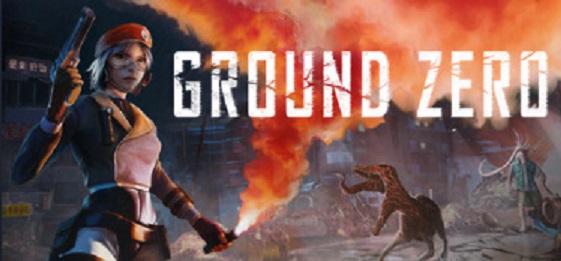
Ground Zero Review

Game Reviews - posted by Tweed on May 11th, 2026, 14:01

Image
Game key provided by developer.

Ground Zero is a retro clone designed by Malformation Games in the style of old Resident Evil games by Capcom. Anyone who’s been wanting a classic, fixed-camera survival horror game with ammo and health management will be interested in this.

Residual Evil

While the name of Resident Evil lives on, things just haven’t been the same since the release of the fourth game oh-so-long ago. The franchise has undergone even more drastic changes since then that make the over-the-shoulder camera innovation from RE4 look quaint. No, the days of low-res corridors, slow door-opening cinematics, and corny dialog are never coming back to mainstream, and in their absence a cottage industry has risen up to make money off of your childhood memories. Malformation Games is one of several developers looking to deliver the survival horror goods with their new title, Ground Zero.

Playing on normal for game and puzzle difficulty. You can also choose between new or classic tank controls. I went with tank because I'm an oldhead.

The Story

In 2030, an asteroid impacts Daejeon, South Korea, spreading radiation and biological contamination across the country. The Transcontinental Union Military (which is totally not a replacement for the UN) decides to send in two specialists—Jang Seo-Yeon from South Korea and Evan Fielding from Canada—with no additional support of any kind, to find out what’s going on and solve the problem. After the opening cinematic, you get treated to the first of several branching paths.

The choices are yours and yours alone.

I decided to go with the beach and enjoyed a leisurely stroll along the shore, fighting mutant dogs. From the shore I went through a beached ship. The dialog indicated that the beach path was quicker, but more difficult—a subjective matter.

Gameplay

For those not in the know, the gist of the typical survival horror game works like this: nearly every room is displayed from a handful of fixed camera angles that change depending on where you're standing. Monsters often lurk in said rooms, usually out of sight to make life challenging. Attacking most enemies is as simple as point and shoot. Ammunition and healing are almost always at a premium. Saves are limited to special rooms and, depending on the game, require a special item (i.e., ink ribbons) to save, adding to the resource management.

Ground Zero has its own take on this. Ammo tends to be scarce at first, but to make up for it, you can perform timed, critical shots by holding and releasing the proper button at the right moment; this kills weaker enemies with one round. I get the feeling that the Malformation devs didn't like running out of bullets. This worked out pretty swell for me most of the time since it let me avoid knife fighting or having to bolt past enemies to conserve bullets. It’s obvious the devs intended players to use it, because before I started investing heavily into picking off monsters that way, I was always getting dangerously low on ammo. So, if your sense of timing is off, you might be in for a bad time. Also, sometimes enemies that hit the floor aren't always dead. A quick tap in close range will finish them off with an execution maneuver, complete with a small cinematic.

Boom! Headshot! The wind up time is a bit longer than shown here, but Seo will draw her gun and then it's a matter of timing. Better get used to seeing this because you play as Seo for most of the game.

GZ also introduces dodging and parrying to the mix. Tapping the dodge button lets your character dash out of the way of oncoming attacks at the cost of stamina; once it runs low, the heavy breathing starts and the dashing stops. It's a much nicer alternative to awkwardly running past monster strikes or circling around oncoming projectiles. Characters can block oncoming attacks by holding down the appropriate block button. Parrying requires a timed block coordinated with the enemy’s attack, but the window is fairly generous on normal difficulty. One of the few times I died was in the process of learning how to time my blocks. I also made the unpleasant discovery that not all attacks can be blocked. A successful parry opens up the enemy to a melee riposte, a great way to save on ammo if you don’t mind standing there parrying an enemy until it dies. Counterattacking an enemy to death is also a good way to get a perfect genome DNA sample.

Tell me your secrets, writhing mass of flesh.

Everything you kill can be scanned for DNA; the better the sample, the more points you get. You can spend these points later at automated shops conveniently located around the wasteland that sell everything your survivalist heart could desire: guns, ammo, supplies, etc. You can also sell anything you don’t need for additional points. The caveat is that riddling monsters full of holes leaves you with degraded samples. Getting a perfect sample requires taking it out in hand-to-hand combat; pity, then, that the survival knife is a truly terrible weapon. Still, it's a nice way of rewarding skillful play and on harder modes every extra point will count. I found myself taking down as many enemies as I could with counterattacks to squeeze as many points as I could from enemies.

A shop, airlifted courtesy of Canada, really.

Knife aside, the game offers quite a few fun weapons for killing the biological terrors you’ll encounter, far more than your typical RE game. Some are only found depending on the paths you take in the game; at one point I had my choice of going through a hospital, which would have had more medical supplies, or a police station, which promised me more weapons. I was in no danger of running out of healing junk, so I hit the PD and walked away with several shiny new guns and armloads of extra ammo.

There are also weapon attachments, like the scope.

Of particular note are hand grenades. I can’t say I’m a fan of them. The nature of the fixed camera means I was never sure of where they’re going half the time. I also didn’t want to hit myself with them, and it takes time I never had enough of to line up the toss. Flashbangs don’t last long enough to be useful, though I did manage to take out a few groups of zombies with some regular grenades. Otherwise, grenades ended up being sold at the shops for more weapons and ammo.

Ground Zero follows the tradition of the save room, complete with a save item. Once the save station is on you can save as much as you want, and the save item is almost always nearby, which almost invalidates the purpose of having a save item in the first place. The entire point of having ink ribbons in RE was to put pressure on the player to decide when to save since there was an upper limit on how many times he could do so, but this made more sense in a hub environment. GZ also autosaves at key points in the game, but the hardest unlockable difficulty removes this feature. Save rooms also contain safes that are all but identical to RE's item boxes that let you store all your extra junk, except they require you to solve a math problem first. On normal puzzle difficulty, none of the puzzles were hard, but, if you have trouble, there are two ways to open safes; a safe-cracking explosive will blast it at the cost of losing whatever bonus items are inside, and a cypher can reveal part of the solution. Since I never had any trouble on normal, safe-crackers and cyphers ended up being vendor trash. Safes are linked through a pocket dimension, so what goes into one is available in all.

Now don't rush me!

From about the time I finished the police department, ammo conservation was a complete nonissue. Once one weapon got low, I could switch off to another and keep going. My timed-crit skills were impeccable, and I had enough ammo between all of my weapons that I could clear every room of monsters. I also had more than enough genome points to buy out every store of its ammo. In short, I think normal difficulty was easy in disguise.

We're Going To Pump You Up

The inventory screen; take note of the syringe and the stats.

In lieu of Resident Evil’s colored herbs, Ground Zero uses a set of colored serums and an injection system. Green is for health, red for stamina, and blue for antibody (poison cure). The syringe holds up to three doses of a serum, but they all get used up in one shot. Serums can be mixed together to extend their effects, but the real strength lies in putting three of the same kind together for a permanent upgrade to your stats. Three health serums give a permanent boost to health and damage resistance, three antibodies make it harder to get infected, and so on. The game makes this system clear when it first introduces the serums and the main idea here is that you’ll want to hoard your precious healing items while avoiding damage at all cost to inject yourself at the last minute. However, I noticed that I'd capped most of my stats by a bit over the halfway mark and I could take quite a beating before I needed to heal myself again. I ended the game with a safe full of extra serums, but I'm sure on a harder difficulty this would become a life-or-death situation. The syringe doesn't take up any inventory space and is another example of the developers obviously disliking an element of classic RE, namely, how healing items hog your pockets. GZ still has traditional medical kits and the serums themselves take up item slots, but it's very nice to be able to have a full heal on standby without needing to lug around extra junk. It's also important to note that inventory space can be expanded, provided you can find the upgrades.

In certain chapters you'll play as Evan. He's not too much different, save for his blowtorch and ability to swim through water.

If It Was Good Enough For My Daddy…

Ground Zero doesn’t bother trying to separate itself from its roots. In fact, it seems to try to check every single box it can before the game is over. I had my choice of the hospital or a police department, and RE did both of those. Later on, a segment of the game takes place on a moving train while being attacked by what’s probably the tail of a giant, mutant scorpion (like in Resident Evil Zero), and there’s one area where I got jumped by reanimated raptors and had to square off against a T-Rex, so they managed to get Dino Crisis into the mix. GZ is derivative in a big way, but you’re not playing this because it’s a shiny new take on the genre; you want it because you long for the classic survival horror that Capcom left behind.

Trying to throw an incendiary grenade at a T-Rex bearing down on me.

It’s Good Enough For Me!

I found GZ’s story engaging, and there are at least two different endings. The branching paths mean you’ll get some replay out of the main mission. Unlike most traditional RE games, GZ plays in a chapter-by-chapter, mini-hub progression rather than one or two large hubs that last the entire game. I’m rather grateful that Malformation didn’t try to mimic the typical Capcom campiness of the era. Seo is a likable character; Evan is alright, though he does try to take the role of “cowboy” too much in lieu of an American counterpart. There's one more character who shows up later who’s a bit obnoxious by design, and while you can kill her, I’m pretty sure that leads to the bad ending, and she’s fairly low-key. There’s no political grandstanding or woke nonsense that I can see. Once you’re done with the game, then comes the unlockable goodies: clothes, cheats, and new visual modes. Also, you get a new mini-game called Apocalypse Crisis, a time attack gauntlet through various maps that lets you rack up more genome points; pity, then, that I ended the game with a huge stack of them.

One thing missing from GZ is the need to search every nook and cranny for items. Almost everything is out in the open, and once passed by, it will show up on your map, so, even if you didn't actually see that box of ammo when you went through the locker room, which makes it hard to miss extra loot. I did find one or two things tucked in a background prop, but that felt like more of a secret for those who want to scour every room.

Climbable surfaces and narrow passages are conveniently marked with yellow tape. There's no escape from it.

Irritations

There are still things that could be better. Malformation already released a patch to deal with performance issues. The shotgun decides it doesn’t want to do damage anymore even if you have a perfect point-blank shot on the target. I personally found grenades to be a waste of time. Upgrading my knife made it even worse. The map only lets you look at your current level, and this is more annoying than you’d think because there’s a lot of Z-level backtracking in some areas. There was absolutely no reason whatsoever for a vehicle section, namely piloting a motorboat through a flooded city. The vehicle controls left a lot to be desired: pressing right usually made me go left, pressing left usually made me go left, but I could never really be sure when the game would change it up and I'd have to let go and gently tap the stick a few times hoping to get a new bead on which way the mystical spirit of the boat wanted to lead me. To make it all more challenging there are angry tentacles waiting in the water to thrash the boat if you get too close and toxic clouds to race through. Don't get through them in time? You die.

No! Why did they do it?!

I’m Scarier Than Anything in This Forest

Remember what I said about subjective difficulty? I died exactly five times, ran out of ammo once, and never injected myself with anything less than three doses of a serum, so I was always upgrading my stats until I maxed them. I was only ever infected one time, which required a mad dash back to the save room to use a biohazard kit I’d found along the way instead of one of my precious antibody doses. None of the puzzles are particularly difficult either. My guess is that easy is game journo mode, normal is easy, and hard might be what would have passed for normal back in the 90s. I ended my game with a huge surplus of ammo, weapons, and supplies. Additional difficulty modes are unlocked upon completion of the game, so somewhere in there I’m sure I can find a happy place that makes me hate life. Anyone familiar with this style of game might want to start on hard instead. In addition to unlockables, there are also collectibles for those who want to go all-in: 12 zodiac coins are hidden somewhere in ruined South Korea. I managed to find 5 of them. No idea if you get anything nice for the trouble.

Ehh. Whatever!

Final Verdict

Ground Zero is an excellent successor to the classic Resident Evil style, offers a few nice quality-of-life changes of its own to the formula, and is well worth your time and money.
8 Comments

Mirage 7 Review

Game Reviews - posted by Finarfin on April 21st, 2026, 13:24

Image
The game key for this review was provided by the publisher.
If the review has made you interested in the game, check it out here: MIRAGE 7

Mirage 7 is a dark fairytale third-person adventure game blending fantasy and sci-fi elements, developed by Italian studio Drakkar Studios. Nadira, a young girl, journeys through a desert with her pet lizard, Jiji, in search of a lost oasis, hoping to find a way to save her sister.

Gameplay

Nadira's adventure proceeds through the traditional point-and-click adventure formula: she must find items and use them in combination with each other and the environment to solve puzzles. Her pet lizard companion offers assistance through the "Lizard Eyes" ability, which reveals hidden items in a short range. The ability turns the screen dark blue and items are highlighted in a bright orange. You can use Lizard Eyes whenever you want by pressing left bumper on a controller or the middle mouse button.
Items can be combined through the inventory screen. For example, refilling the canteen, one of Nadira's most important items, is simple: just select waterleaves (the plants used to restore its healing charges) in your inventory and combine them with the canteen.
Combat is quite simplistic: Nadira has a dagger to do a basic attack with a click of the left mouse button. She can also dodge with shift, or attack with her slingshot using both mouse buttons, which is also needed to solve puzzles.

The puzzles are on the easy side but still quite nicely presented. For example, you come across two lit braziers with a nearby plaque that describes soldiers who were outnumbered and under attack; they used the darkness to their advantage to save themselves. Dousing the braziers plunges the area into darkness and solves the puzzle.


Sound and Visuals

The voice acting is generally adequate, though a handful of bit characters with minimal screen time sound amateurish, slurred, or mumbled. On the plus side, Nadira's voice actress is pleasant to listen to, and the mysterious vizier she meets along the way has quite the enigmatic voice.
The soundtrack is good, with a distinct Arabic theme, prominently featuring the oud, a traditional Middle Eastern lute which enhances the game's sense of place.

The graphics are good, with detailed, stylized character models. The environments are high-quality, bringing the desert to life through visible heat effects and footprints left in the sand where Nadira and Jiji have been.

Difficulties

The game offers standard difficulty options, with no unique variations. I played the game in Normal Mode, and the enemies were engaging enough that I needed to heal myself multiple times. However, if you are just looking for a fun puzzle adventure, I suggest Story Mode, while you might prefer Challenge Mode to push yourself. The main thing that changes with difficulty is HP. I did a comparison, and Story Mode has enemies dying very quickly, while Challenge Mode turns them into bullet sponges. Nadira, on the other hand, will die after fewer hits in Challenge, compared to Normal and Easy, where she can take a lot more damage before she dies. Puzzles stay the same regardless of difficulty.


Conclusion

Mirage 7 is a short yet fun puzzle adventure that mixes fantasy and sci-fi elements quite nicely. The straightforward gameplay was simple and enjoyable. Combat feels somewhat clunky without a lock-on feature, but that was the only negative I felt was worth complaining about. Overall, I recommend it.
1 Comments

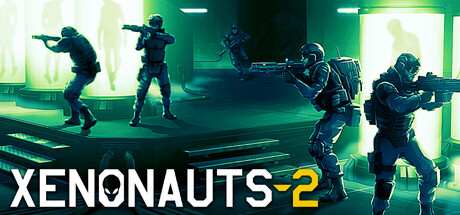
Xenonauts 2 Review

Game Reviews - posted by Eyestabber on April 10th, 2026, 21:58

Image
The vegan X-COM
Disclaimer: Please keep in mind the hyphen on "X-COM". The new games by Firaxis spell the name without it, while the classic games have a hyphen in between "X" and "COM". This is important for references to be understandable. No monitors were harmed in making this review.

In 1994, MicroProse released UFO: Enemy Unknown (X-COM: UFO Defense), a game that took the nascent gaming world by storm and essentially defined the genre now known as “squad tactics.” While many modern games—such as Battle Brothers, Wartales, and Silent Storm—draw inspiration from X-COM, the franchise also spawned a direct line of remakes, reboots, and spiritual successors. The most famous of these is XCOM: Enemy Unknown (Firaxis, 2012), while other contenders include Phoenix Point (Snapshot Games, 2019), the UFO: After series (2003-2007), and Goldhawk’s Xenonauts (2014). I played the original Xenonauts back in the day and found the base game to be a bit underwhelming. The vanilla experience felt short of greatness and mods played a crucial role in elevating Xenonauts beyond mediocrity. Naturally my expectations for Xenonauts 2 were moderate. Before examining how it stacks up against other successors, it’s worth outlining the philosophy and design decisions behind each of these games’ lineages.

The Firaxis Games (henceforth referred to as “XCOM 1” and "XCOM 2") revamped the original formula in several important ways. Gone is the time units system. In its place, Firaxis introduced the controversial “two actions” system, forever “blessing” the world with soldiers running past their enemies and the almighty “overwatch” button. The flat stat progression is replaced by a class system and individual roaming enemies are replaced by the pod system, whose legacy remains divisive to this day. Many X-COM purists accuse Firaxis of being unfaithful to what made the original game great. On the other hand, Firaxis doesn’t fun police the players. Blaster launchers, psionics and flying snipers make a glorious comeback, giving the games their own brand of exploding, space magic fun.

The “after” series (UFO: Aftermath, UFO: Aftershock and UFO: Afterlight) nowadays is more of a niche curiosity. Being real time with simultaneous actions, it didn't really influence other successors. Phoenix Point (Snapshot Games, 2019) did find a niche audience and attempted basically the same thing as Xenonauts, but its experimental philosophy with free aim, diplomacy and evolving aliens stands in stark contrast with the latter’s staunch, balance-driven conservatism. Indeed, Xenonauts 2's take on X-COM boils down to deepening the mechanics, treading similar ground while making sure that whenever power fantasy and FUN clashes with challenge and “balance”, the Balance Gods get their due.

Geoscape


The strategic layer of Xenonauts 2 happens in the Geoscape, which will immediately be familiar to veterans of previous games. The game rejects the modern trend of single base campaigns, opting instead to force the player into at least building a second base to cover whatever continents were left out of the detection range. The air game not only makes a comeback, it is THE most sophisticated interception system in any X-COM successor to date. Air battles can be auto resolved or played manually. The combination of weapons, interceptors and enemies allow for plenty of variance in Earth’s struggle for air superiority against its would-be conquerors. It is quite satisfying to defeat a stronger enemy squad through clever flanking and superior dogfighting. It’s also worth mentioning that new aircraft don’t just bring more speed and armor; they also bring new tricks that can be used in battle to outmaneuver enemy ships.


The best interceptor has a dedicated "surprise motherfucker" button!

New to the sequel is the “operations” system, which introduces a new resource for the player to manage. Operation Points (OP) represent the clandestine war between Xenonauts and Aliens for influence over various human groups, like scientists, manufacturers and intelligence agencies. Once these assets are secured, the player receives bonuses like faster research, reduced panic or just more OP. Conversely, the visitors will try to infiltrate these groups, raising panic and making life harder for the player. Once all relevant groups in a continent are secured, a larger continent bonus is applied, similar to securing all regions in a continent in XCOM 1. Aside from applying a stacking passive bonus, OP can be used for requisitioning immediate benefits in the form of materials or cold hard cash. The decision making regarding OPs boils down to balancing short term benefits with expanding your network for long-term returns.


Infiltrated groups can be reset with a good old fashioned whacking.

The economic aspect of Xenonauts 2 is also one of its stronger suits. Players are tasked with managing money, materials and operations points in order to stay ahead of the curve. The goal of a campaign can be summarized as “don’t fall behind” and to that end the game presents you with an overwhelming number of considerations. Do you build another lab or go for another plane? Do you burn your OP for cash or do you save for a new supporter? How many soldiers on reserve are enough? Can you afford a permanent upgrade or do you need the resources for something more pressing? Is it time to increase radar coverage and can you defend your new assets? In every other X-COM successor you reach a point where the economy becomes a non-issue, usually around the midgame, but in Xenonauts 2 scarcity will haunt you for the entire campaign.

Speaking of scarcity, Xenonauts 2 brought its own middle-of-the-road approach to the classic strategy of becoming the world's premier arms dealer. It's shocking for me to think there are people so invested in fun policing single player games that they proclaim manufacturing plasma weapons and selling them for a hefty profit was an "exploit" in the original game, instead of a logical conclusion to the premises of the game itself. Firaxis "solved" this by making upgrades squad wide by default, so individual rifles are simply not represented in their games. In this game the profit margin of equipment lowers with each piece sold. Hence, arms dealing is profitable, but not an endless well of infinite money. Idle engineers will also generate money for you, but the opportunity cost of doing so makes hiring engineers for idling them a poor usage of your limited resources.

Another innovation on the strategy layer is the delegation system, or “why is nobody else doing something about these aliens?” Squad tactics is a repetitive genre by design and every campaign inevitably reaches the point of fatigue. You actually can have too much of a good thing and even if the tactical layer is good (and we’ll get to that in a bit), players can only remain invested in so many missions. The in-game justification for the system is that world governments are very interested in recovering downed UFOs, so they pay you for the privilege. You can say no and recover yourself, but that costs you OP. This can be disabled when starting a new game, but I found that the 2 missions per UFO system is helpful in avoiding turning the campaign into a slog. I find it superior to, say, an auto resolve system.

Tactical layer

The missions themselves play out very similarly to the classic games, with a system of time units (TUs) governing the action economy. All attacks cost a percentage of total TUs, so the stat won’t provide you with more attacks per turn, but it will allow your soldier to move considerably more before attacking. This prevents TUs from becoming the ultimate stat, as with AP based systems like Jagged Alliance 3 and Fallout Tactics, where the AP stat trumps all others. Action refunds and attack reset mechanics, which are commonplace in XCOM 2, are also absent, meaning character progression is more linear and less likely to offend the Gods of Balance.

Weapons in the game are tiered by tech and split into a few static types: shotgun, rifle, machinegun, sniper and pistol. Each weapon type has its strengths and weaknesses, with rifles being the jack-of-all-trades weapon. Apart from giving distinct roles to different weapons, the game also makes usage of a suppression mechanic, very similar to Jagged Alliance, with flashbangs being a key tool in the player’s arsenal to avoid reaction fire. Cover destruction is also an important mechanic, with demolition charges and grenades competing for your precious TUs and inventory space. At first glance the multitude of weapon types gives the impression that there are more tools available to the player, but experience firing the different weapons says X-COM's rifle/heavy plasma are like a swiss army knife, while Xenonauts 2 weapons are the individual blades, meaning you need a shotgun for close quarters and a sniper for long instead of having one weapon that could do both with different fire modes.

There's sufficient mission variety to keep the player engaged. The classic UFO recovery, terror and abduction missions make a comeback, alongside the new data recovery mission, VIP rescue/capture and several key plot related missions. Interestingly enough, despite the community's hostility towards the Firaxis games, Xenonauts 2 takes a cue from XCOM 2 and introduces timed missions. I'm aware mission timers are controversial, with mods that extend them being extremely popular in the Steam Workshop for XCOM 2. However, I do believe throwing a wrench on overwatch camping and introducing urgency to certain missions is a good call and I don't blame Goldhawk for making it. Regarding the plot, the campaign is structured around five acts, each ending after a certain time (visible on the Geoscape) or the completion of an important plot related mission. There are no voice overs, everything is told via mediocre quality text centered around a Redditor science guy and a cute base-mom. The writing is mostly there to remind you this is a mechanics-first type of game and storyfags should look elsewhere.

Great atmosphere, good graphics, mediocre sound effects

Another strong aspect of Xenonauts 2 is its atmosphere. The creepy music and semi-realistic art style are very reminiscent of the classic X-COM games and provide veteran players with a sizeable dose of nostalgia. The feeling of dread every time you end a turn is back, and the presence of armed civilians helps establish that “something bad is lurking over there” quite nicely. A lot of indie games will put you off solely based on their questionable art direction, but Xenonauts 2 looks quite enticing—like an interactive season of G.I. Joe, not too far removed from what’s presented in the iconic 1994 introduction cinematic of X-COM.

The sound effects, on the other hand, are… there. It may be a conscious choice to avoid exaggerated death cries and over-the-top “pew pew” audio, but the result is ultimately forgettable. Don’t expect punchy, instantly recognizable sounds like the AK-47 from Counter-Strike 1.6, which is burned into the memory of a generation of LAN house kids. Aliens getting shot sound like a mildly annoyed pet snake, and firefights sound more like kids playing with BB guns than desperate battles for mankind’s survival. While X-COM uses sound to transmit the “otherworldliness” of the alien threat, and XCOM leans into a larger-than-life cinematic tone, Xenonauts 2 just sounds like not much is happening. Instead of a sensory voyage to a sci-fi battlefield, the sound design feels like an inoffensive elevator ride in an office building. It’s clearly the weakest aspect of the game, and the first place modders will want to start.

Another big missed mark is the final mission. Without spoiling anything, I’ll say the visuals are just a repeat of the same environments we’ve seen before. Given the stakes and the location where it supposedly takes place, I expected unique visuals to help tell the conclusion of the story, but if I were to show screenshots of the final mission and tell you it’s an alien base or ship, you would be none the wiser. The overall tragedy of the game repeats itself here: the developers seemed more concerned with ensuring nobody would say it was too easy—or worse, figure out a cheese strategy to trivialize the combat encounter. Instead of treating the closing chapter as a canvas for beautiful art, they saw it as yet another spreadsheet to be filled and balanced.

Technology, balance and standardization

So far I covered mostly the positive aspects of Xenonauts 2, so it’s time to dive into the game’s biggest flaw: its unhealthy obsession with fixing the “unbalanced” elements of both X-COM and XCOM. What do veteran players remember most fondly from X-COM? Mind controlling aliens and making them shoot each other? Blowing up entire rooms with blaster launchers? Flying snipers raining death from above? Well, REJOICE, brothers and sisters, for these heinous offenses against the Gods of Balance are completely gone from Xenonauts 2. I’m under the impression that every time the developers added something fun and cool to the tech tree, their chief concern was, “will this BREAK MY PRECIOUS GAME!?”

Sure, you can have jetpacks, but no hovering in mid-air and no shooting while flying! Sure, you can destroy objects in-game, but UFO walls are made out of Contrivium™ and you can’t make your own doors. You have to go through the dev-approved killzone, that’s the rules buster. Invisibility? Hell no! But you can have this armor that makes it harder for enemies to hit you. The game even tells you that you should equip said armor on your snipers because GOD FORBID you don’t play EXACTLY the way the developers intended. There’s a power armor that allows your guys to walk through walls, but don’t even think about going full Kool-Aid man on the aliens! That's unbalanced fun and we don't do that here.


“Commander, I just ran through three walls to get here, but now you ask me to ruin another man’s garden? NEGATIVE!”

In every single strategy game you start out with a very small set of tools and unlock more as you play the game, be it from technology, perks, plot or another source the game sees fit. Xenonauts 2, however, displays a stubborn refusal to provide players with actually new toys to mess around with. With perks being absent and transformative technologies being extremely limited, the player is left for the most part just improving stats and equipping better stat sticks. The ballistic rifle you have on day 1 and the fusion rifle from endgame perform exactly the same. As a rule, new technologies don’t change the way you approach the challenges presented by the game, they just make you better at doing the same thing.


Except for jetpacks. Jetpacks are cool.

The way the tech tree works also contributes to the feeling that the game is overly concerned with you not breaking it. Earlier I mentioned the goal of the campaign is to not fall behind, but it should also be pointed out you can’t possibly get ahead in this game. Since you need to find new UFOs, alien species and whatnot, it’s actually impossible to acquire new weapons ahead of schedule. So if we look at the act division of the campaign, it’s possible to tell in abstract what weapon technology the player will have at each stage, because he can’t possibly research better stuff. Yes, it is true that X-COM did roughly the same thing, but I can’t shake the feeling that the leash is much tighter in Xenonauts 2.

To the game's credit, enemies are visually distinct and look interesting enough. Unfortunately, they don't introduce new challenges that must be worked around with new tools. New enemies are just bigger stat sticks that are dealt with the same as the old, which interacts poorly with the inherently repetitive nature of the genre. Lizard, robot and frog face enemies are all fought in the same manner, albeit featuring different health bars and weaponry. The Reaper (aka Chryssalid) is the only enemy that stands out as being a big wall of stats in melee range as opposed to being ranged. Sadly, enemy design is an aspect in which XCOM 2 does a far better job than what we see here.

RNGesus doesn’t love you

Another glaring issue of the game is the unchecked randomization of pretty much everything. In more recent years we had games like King Arthur: Knight’s Tale (NeocoreGames, 2022) experimenting with systems that heavily rein in RNG and ensure player decision making is front and center of combat resolution instead of dice rolling and coin flipping. Xenonauts 2, however, is not one such game. In fact this is probably the most “lolrandom” X-COM successor/clone out there. The accuracy formula is heavily biased in favor of a miss, so much so that a single plastic chair between you and the alien might as well be a WW1 trench. As you play Xenonauts 2 you will get in the habit of walking soldiers towards the nearest obstacle before shooting, as this action removes that obstacle as a potential point of failure for your shot. And once we're past the hit or miss check, damage rolls go from 50 to 150% of the weapon's base damage, so when you consider that machineguns can attack up to 10 times in a single action, rifles can burst for 3 and every shotgun shot consists of 3 "mini shots", the end result is that there is zero consistency in what comes out of an attack action. Your soldier might obliterate an alien, miss everything, hit for pitiful damage, suppress him (or not) and anything and everything in between. And because of the excessively wide damage spread it is very difficult to notice the actual effect of the small percentage increases provided by autopsies and "advanced" weaponry.

The RNG issue is compounded once you learn the skill ceiling for your soldiers is really, really low. While it is true that experienced soldiers in Xenonauts 2 can carry considerably more gear, sprint for longer distances and defend themselves better against psionics, the actual attacking part is severely hamstrung. It's quite frustrating to see Colonels with dozens of missions under their belt still struggling to hit a mildly obstructed shot. Worse still, grenade throwing can still fail spectacularly, making you question, "if these guys are the best Earth has to offer, how bad can life under the Eternals be?" While a 100+ accuracy soldier in X-COM gives Vassili Zaitsev a run for his money, a 100 accuracy Xenonaut can hit aimed shots against exposed targets and that's about it. Anything more complicated than that and you should start praying to RNGesus. Rifle burst fire, for instance, is a complete joke and the penalties for using it are so severe, Colonels will consistently miss a full burst in point blank range of a 7-foot tall lizard man. I've had similar experiences with a few conversion mods for Jagged Alliance 2 that nerf accuracy across the board for some unfathomable reason. Because professional soldiers not hitting the broad side of a barn is "realistic", somehow. And stat based specializations? They are quickly gone as all soldiers become equally adept at everything, minor deviations notwithstanding.

Is it High Quality?

I say in conclusion that while the game is competently made and quite fun, it’s unfortunate that this is yet another case of modern game development having an obsession with controlling the “meta”, being allergic to strategies arising organically in the community and players DARING to break their precious baby. Perhaps in another 30 years Xenonauts 3 will be more willing to compromise balance in favor of letting players have more fun, but in 2026 the question potential buyers should be asking is, “what did I enjoy the most about X-COM?” If your enjoyment comes mostly from solving tactical puzzles and dealing with a robust management layer then by all means: buy this game right now. This is a worthy addition to your library of squad tactics games and very high quality in the sense that it is well made, looks good and functions as designed. But if the power fantasy aspect of the originals is what really kept bringing you back then this game will feel like that time when the new guy supported your team with a rocket launcher. Xenonauts 2 is to X-COM what soymeat burgers are to a juicy steak.
24 Comments

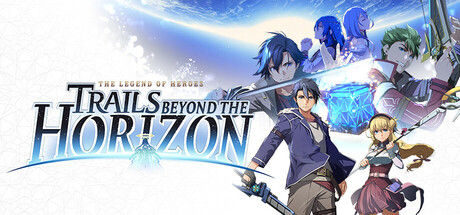
Trails Beyond the Horizon Review

Game Reviews - posted by Val the Moofia Boss on February 19th, 2026, 08:40

Image

Note: for related woke content in this game, see this post.


After 101 hours of play, I have finished Trails Beyond the Horizon on nightmare difficulty.

I overall enjoyed the game and will buy the next one on day 1, but there were severe issues with the story that frustrated and disappointed me.

This game is a direct continuation of the last one, so you should at the very least have played the first two Calvard games before playing this one: Trails Through Daybreak 1 (my review here) and Trails Through Daybreak 2 (review here).

This game is split into three routes, featuring two protagonists from earlier games in the series: Rean Schwarzer from the five Trails of Cold Steel games, and Kevin from Trails in the Sky the 3rd. Plot points are also built on Trails of Cold Steel IV and Trails into Reverie, which were a soft ending for the first 9 games in the franchise. So you are incentivized to play this game after having played all other Trails games, though it is not strictly required.

Despite my misgivings with the story, there is still a lot to like about this game, so I will start with that stuff first before diving into the story issues.


Gameplay


The gameplay experience is near identical to the prior game. The only change this time is the addition of ZOC (if this is an abbreviation for something, it is not given). When a character is in boost state, you can consume an additional bar of boost to enter ZOC, meaning that you get an additional turn in a row. This allows you to use an S-craft on the first turn of ZOC and then immediately get another turn after that to do something else, negating the huge delay penalty that typically comes with using an S-craft.


Bosses can now also use ZOC on their turn too, but they will get three turns in a row. When using ZOC, the boss cannot be interrupted by popping your S-crafts. So now you really need to carefully consider your defenses and use of turn manipulation in preparation for a boss using his ZOC.

The game's difficulty curve falls off after the midgame, and does not remain challenging all the way through to the end like Trails into Daybreak 2. I bursted down the final two fights of the game very quickly, which is anticlimactic compared to the second game's final two fights where I had to be on the edge of my seat and really carefully consider what I was going to do since I was one mistake away from a wipe.


Part of this is because in this game, you can equip two Holo Cores (Altera and Pater Mater) which have extremely powerful brave orders. Your inventory is shared amongst all of the parties, and you can just keep shifting these two Holo Cores around from party to party before every boss fight. There are no segments in this game like in Trails into Reverie where you have to arm two or three different parties to survive independently for a while without being able to swap out their gear in between.

The game has the same absence of encounter design as the prior two games. Burst down the adds at the beginning, keep shields and evasion up so you don't die to the boss' burst, etc. Every fight is pretty rote execution. There are no novel boss encounters like in Daybreak 2 where Jorda could capture your party members, and the balance of the enemies fall off in the midgame. There is nothing challenging like Daybreak's 2 final battle where the boss could summon very tanky, very threatening adds.

This game does have a few "corrupted" bosses, which have massive HP inflation. But it does not make them more challenging to fight, it just makes them annoying — by taking a lot longer to kill — in the earlygame when you don't have great equipment yet. Throughout the Van chapters, you will fight a recurring boss who will keep spamming a brave order. It is mildly annoying having to expend boost gauge trying to counter, but again this does not make for very engaging gameplay.

This game does have an overreliance on having untargetable enemy bosses. They are usually non-fighter characters who stand outside of the battlefield, and when it is their turn they will use some sort of buff ability on their fellow bosses in the arena, or a debuff on you, or cast a brave order that you have to overwrite. I actually like it mechanically, but narratively there is suddenly a lot of normies (particularly women) getting involved in confrontations with extremely powerful people that they have no business being in. This overlaps with a story complaint I have about characters making really bad decisions that should not work out for them. It is a little annoying you can't beat these morons.


Prior uses of this mechanic was for violent adversaries who took on a support role for their comrades, like the Red Constellation merc Gareth sniping you from up on a bridge in Trails of Cold Steel IV, or CID agent Kilika attacking you from on top of a pillar in Trails Through Daybreak 2. This game does use it well for a weak, cowardly villain who will stand from afar and let his mech do the work.

Horizon does not add new Holo Cores to change up your builds or playstyles. (Altera and Pater Mater were technically in the prior game, but were backloaded towards the very end).

The Marchen Garten returns, now called the Grim Garten. It is a roguelite dungeon in which you can mix and match your favorite characters from a roster of 24 party members and run through different floors. Every other floor has an entertaining encounter with Ouroboros villains. It is quite fun.

There are some nitpicks I had with the Orbment system that have become more pronounced after 300+ hours of Calvard games. The system is exacerbated by the addition of ZOC and the need for more boost gauge. Namely, the best way to build characters is to achieve the same handful of shard skills in each quartz line: Burst Gain II, Auto Impassion Guard, Ark Feather, and Heavenly Fortune II. This game gives you just enough named quartz with high enough sepith values so that you can deviate from this a bit for your two or three most favorite characters, but for most of the cast their grids will look very similar and have the same shard skills.


Visuals


The game generally looks great and very appealing.


As posted earlier to break up the gameplay section, the combat animations are very beautiful. Easily among the best (if not THE best) ability animations I have seen in a Japanese turn based RPG, and among the very best in turn based RPGs period. I think perhaps only Mihoyo's animations for Honkai Star Rail (review here) look better, but unfortunately those are married to combat design and gameplay loop that disincentivizes you from actually playing the combats. Whereas Trails' combat system is actually engaging to play through.

Character designs are generally great. Their modelling, texturing, and lighting are also generally very good too. There are also several neat looking monster designs, though most of them are reused from prior games.

The UI still looks great. The new Grim Garten menus and animations are also pretty neat too.


The fantasy environments in the Grim Garten are beautiful. Though some of them are redressed tilesets from the prior game.


However, outside of the Grim Garten, the game world in these Calvard games leaves a lot to be desired. Most of Calvard's cities are rather unattractive modern urban cities with grey blocky buildings. This game introduces one brand new town, Anchorville. Yup, it's another grey blocky Calvardian city alright. You do actually get to revisit a couple of the slightly nicer looking towns from Trails Through Daybreak 1, Basel and Longlai, but overall you are spending most of your time in the same grey blocky places you have already spent 100 to 200 hours in across the prior two games.


Soundtrack

As expected for a Nihon Falcom game, there is a large soundtrack with an overall high hitrate of tracks for its size. The normal battle themes are unusual in being this somewhat fun, jazzy tune. There is some adrenaline pumping rock for the dramatic showdowns. There is also some nice relaxing music when strolling around towns.


However, I do have a couple complaints. The first is that this is the third Calvard game, so there are now something like 250 to 300 total tracks in this arc so far. A lot of the Edith themes and cutscene themes are starting to blend together or become interchangeable in sound and feel. A lot of those tracks feel like rehashes of each other, and I am afraid that this will only continue to get worse the longer this arc goes on. The prior arcs — namely the Trails of Cold Steel arc set in Erebonia — did a great job having a lot of memorable, distinct event themes across its pentalogy.

My second complaint has to do with the inappropriate use of certain tracks. There are a couple of dramatic boss fights that are supposed to be the climax of a story, but are then killed by the use of very silly sounding music that would have been better used for a sidequest boss. I am thinking of the inappropriately titled "The Height of Majesty" and "Different Path, Same Feelings" (wow, this one sucks), both by Mitsuo Singa (a contractor composer who is popularly disliked amongst the Western Trails fandom). I am not fond of the Singa hatedom, but Falcom, please pull this guy off of making combat tracks, especially the important ones. He is good at doing event themes.

The excellent final dungeon music is very dramatic, but conveys a feeling ("run to save the love of your life!") that is not quite substantiated by what is actually happening in the story. I attribute this more to a failure of the writing to rationally convey why we are supposed to be there (nobody is in any real danger), rather than Jindo's competency. The music works... if you have read the script and know what's going to happen in advance.


Localization, PC port, and voice acting

Durante's/PH3's PC port is exceptional as usual. You get all of the usual stuff like instant resume, turbo mode, scaling to any resolution, whatever draw distance settings you want, etc. I had no issues.

The Japanese voice actors are good. I am not too fond of Ulrika as a character, but her voice actress,
Ikumi Hasegawa, was very good. President Gramheart's voice actor, Rikiya Koyama, also gets to shine.

I only checked out the English dub for a couple scenes and was overall unimpressed. Elaine sounds too old. Rean sounds a little out of it, and so forth. However, DC Douglas as Rufus was great as usual.

The English localization continues to be increasingly laden with swearing and dated zoomer slang. For Ulrika (who is a streamer), it is somewhat excusable, for everyone else it is annoying.


Monetization

For this game, Falcom put Rean's iconic Ashen Chevalier outfit from Trails of Cold Steel III behind a DLC paywall. At launch, you could only get it by buying the $80 deluxe edition, but it seems that was a limited time price and has increased to $100. This will be very frustrating for Rean fans who weren't there for launch. Though I have warmed up to Rean's new outfit in this game.


Story

The game's main story has a really interesting premise ("We are going to discover the secret of the world"), but then the story is often really dull to experience on a moment to moment basis.


Like Trails into Reverie, the game has you rotate between three different protagonists and their parties doing stuff in different locations. Van is investigating more Oct-Genesis shenagains. Rean receives an unexpected invitation from the adversarial Republic of Calvard. Kevin is tasked with investigating and possibly executing a person of interest.

However, this is a 100 hour game where most of it is 7 Van chapters, which are a long boring slog in which nothing exciting or very memorable happens. The characters in Van's party (Quatre, Risette, Feri, Judith, etc) are still overall pretty disinteresting.

The Rean and Kevin chapters are shorter and much more packed with entertainment and much more endearing characters. The three Rean chapters, and Kevin chapter 2 in particularly are pretty fun. The Kevin story however goes downhill in an awful 3rd chapter, and his storyline winds up overall being disappointing and pointless. It's about being a holy hitman out to kill someone, but you don't get to kill the mark.


After 300 hours of 3 Calvard games, none of the questions or character arcs set up in the first game have been resolved. We still don't know what Mare is, what Grendel is, Vagrants Zion, the Oct-Genesis, The Black God One Blade school, SiN, why only the Epstein bloodline is special, etc. And this game opens even more plotlines and questions that need to be resolved.

Unlike Trails of Cold Steel 3, which introduced half a dozen new towns and massively expanded the cast of Erebonian characters, Horizon does not massively expand or flesh out Calvard. There is only one new town, and hardly any new characters. Calvard remains the least fleshed out and most unappealing Trails country, which is not an ideal setting to have three 100+ hour long games set in. You need to be injecting novelty to keep things fresh, so that the player discovers new towns or casts and feels wonder and becomes excited to discover new things. At least we finally got ONE named Calvardian general with Harring. We still don't know of any native born Calvardian martial arts schools or masters like Victor/Aurelia/Matteus/etc.


There are a lot of humorous scenes. It seems that present day Falcom cares more about nailing character fluff, rather than executing a serious plot well like they used to.


The writing often gets bad. Not just plot writing, but the actual dialogue, and I don't just mean localization stuff. The actual narrative messaging and character behavior/rationale is insane.

The game makes you do the rounds of the districts of Edith FIVE TIMES, which you had already done 10 or 15 times in the first two Kuro games. Most of the NPC storylines have long since resolved, and there are only a small handful of interesting developments.


There is bad character writing. A lot of the characters are heavily flanderized. Van is reduced to a joke about being a candy and car nut a lot. Judith is routinely made out to be incompetent and stammers "Grammy!?!?" whenever Dominque shows up. Shizuna turns into a bloodthirsty wide eyed kid whenever a fighter shows up. Crow is becoming a sex freak who hits on 1 or 2 women in every chapter and wants to take Rean to nightclubs. Related to that last one: a lot of other characters get character assassinated, like Kevin and Rufus going to a strip club when they had been steadfast men in all of the prior games.


It is also frustrating to see Erebonians and Calvardians being buddy buddy with each other when there should be at least some bad blood or consternation or suspicion. There is an egregious scene in Rean chapter 2 where Rean inexplicably encounters the pilot of a Calvardian airship from Trails of Cold Steel II. Rean sent the airship hurtling down to the earth to an explosion during the annexation of Crossbell. Said pilot bears no grudges towards Rean and is enthusiastic about meeting him.


Characters alternate between praying to the goddess Aidios and then defying her commands, even when they have strong material reasons not to do so.

After finishing this game, it has become even more clear how poorly planned this arc was. For example, why retcon Barkhorn (now called Bergard) back from the dead and add a 70 year old experienced former Dominion to the party if he is not going to lend his knowledge of insider information about the Church, Ouroboros, Sept-Terions, etc? All he does is unhelpfully stand around and inner monologue "Ah, as I had suspected" without sharing his suspicions with the rest of the party. His voice actor, Akio Otsuka, was unavailable for the prior game, so Falcom decided not to have him appear in it rather than recast him. But when he finally reappears in this one, he was a pointless character.

Another example of how clumsily this arc was written: a major retcon happens in the last 5 hours of this game, when it is suddenly namedropped that the Bracer Guild has an S-ranked Bracer and "Guildmaster" named Evans. He is made out to be this uber strong martialist who was the mentor to Cassius Bright, has been apparently doing all of this heroing across the continent, etc. We never once heard about him over the prior 1,500 hours of Trails games.

For the past 12 games, it was established that there were only four S-ranked Bracers ever, and of those only Cassius and Arios were being talked about. The implication was that those other two S-ranked Bracers lived before the games began and were gone/retired/irrelevant. Given how much Cassius and his sword instructor Yun Ka-Fai are talked about, Cassius having another major mentor who has never been talked about is incredible. The Bracer guild had never been implied to have a top executive either. Whenever Cassius or Arios or Zin received orders, it came from "HQ in Leman", as if the Guild was run by some sort of committee of backers like the Epstein foundation, donors, etc.


Guildmaster Evans existing as we are led to believe in this game causes the plots of several prior Trails games to collapse. Falcom had 20 years to plan out the Calvard arc. Important figures in the wider world like Yun Ka-Fai or Professor Hamilton were seeded 10 and 8 games before they finally appeared. There is no reason why the same could not have been done for Evans.

Flashback CG from Trails Through Daybreak 1 depicting the leaders of the operation to destroy the Demon Cult lodges: (then) A-Rank Bracer Arios MacClaine, S-Rank Bracer Cassius Bright, police detective Guy Bannings, and (then) A-Rank Bracer Zin Vaythek.

That was two examples. For a quick rundown over other writing issues:

  • After 300 hours, most of the new characters introduced in this arc have gone nowhere with their stories.
  • Ouroboros has spent three games lounging around in Calvard doing nothing.
  • The Anti-Immigration League that was introduced many games ago with the promise that they would be given screentime and a sympathetic POV like with Erebonia's Imperial Liberation Front is swept aside.
  • A lot of apocalypse legends and prophecies from the Church, the Ikaruga Clan, the Krugha clan, etc, suddenly come up at the end of this game as if we were supposed to have heard about this before and be nodding our heads along.
  • Shards - the particles that the newly introduced XIPHA orbments use - can apparently do anything with no consistency.
  • Etc

Falcom had two decades to plan out the Calvard arc before they finally got around to making it, only for the arc to feel like it is spinning its wheels. It's feeling like they aren't as dedicated to this anymore.

False advertising. Again! As with Trails into Reverie, the series' big bad, the Grandmaster is on the cover of the game, and was also teased in prerelease marketing materials. This was also marketed as the 20th anniversary game and that it would be really special. For the first time in this 13 game, $700+, 1,500+ hour long series, a Trails protagonist actually meets the GM. But she only has 2 minutes of screentime and doesn't do anything. None of the obvious exciting/dramatic/intriguing situations you would imagine from such a protagonist-series villain encounter occurs. She just teleports in, says hi, and teleports out. The scene is forgettable.


Why is she recruiting and arming all of these psychos and mass murderers to wipe out cities and cause world wars and apocalypses? Is she the goddess Aidios? Is she Altina from the future? Is she an alien? Nobody knows. Find out in game #14 coming next year for $60! (+ another $20 for Estelle's outfit from Trails in the Sky, and another $20 if you didn't buy on launch week). I cannot believe Kondo had the gall to pull this stunt twice.


On a related note, Nina also falls victim to this, being advertised on the cover next to the GM — the big bad — as if she is going to be Zemuria's messiah or something, but only has 3 minutes of screentime and does nothing.


Summary

An overall very good game. The visuals are good, music is good, voice acting is good, battles are exciting and entertaining enough, and the game runs excellently. A lot of likeable characters. Plot is good at times. The Rean and Kevin routes are overall fun. The main weakness is that Calvard is not very exciting, and the Van route (which dwarfs the other two in length) is boring and is often a slog.

Recommended if you enjoy the Trails series holistically.


20 Comments

Honkai Star Rail review

Game Reviews - posted by Val the Moofia Boss on December 11th, 2025, 01:05

Image

Overview

I have spent over a hundred hours on HSR and have completely caught up on the main story (patch 3.7 at the time of this writing) I have experienced over two years of content updates and have seen all gameplay.

This review turned out unusually long, but I wanted to cover all major points of consideration up so people know what they are getting into.


Honkai Star Rail (HSR) is a space fantasy turn-based JRPG made by the Shanghai developer Mihoyo, the devs of the multi-billion dollar game Genshin Impact. In this game you follow a central party, the passengers of the Astral Express, as each arc takes them to a whacky new world (not necessarily a planet). HSR is a gacha game; gameplay is free, but most of the roster of playable characters must be rolled for using the limited premium currency. The game is overall good, the highlight being the appealing character designs and stunning animations during battle and the regularly added event minigames. However, there are many quirks that add up to create dissatisfaction.

This game is a global, simultaneous cross platform release. A common issue with JRPGs and Asian gacha games is that the Western release is significantly delayed compared to the domestic release. It sucks to see those guys over there being in the cool new expansion land talking about a story that seems so much more exciting than what you are going through now, playing with cooler characters, etc, while you are 8+ months behind. You do not have to worry about that here. Also, because the game has a crossplatform save, you can play the game on your phone while on lunchbreak and then come home to your computer and resume on a much bigger screen, which is very nice.

HSR has solid performance. This is something that shouldn't have to be considered noteworthy today, but sadly it is. Over the course of my now hundreds of hours spent playing, I have only had I think one crash, and only had two mildly annoying bugs (character models not displaying during one dialogue conversation cutscene in Jing Yuan's office, and a visual effect in the Vortex of Genesis which vanished after a while). I have otherwise had no issues with the game performance, either on PC or on my phone.


Visuals/Aesthetics

The highlight of the game, the turn based battle animation cutscenes, are absolutely spectacular, especially for more recent characters. HSR is tied with the latest Trails games as having the best looking animations/ability cutscenes in a turn-based game. Sadly, they are devalued for reasons I will get into later (in short, characters only have two buttons and party size is 4, so you are watching the same 8 cutscenes play over and over for countless hours).


The gifs below do a great disservice to the animations since they are at a reduced framerate and do not have the sound effects and voice acting which heightens the experience.
â–ş Gifs of animations


Some of the out of combat idle animations are neat too.


The character designs are generally very appealing. With a roster of 79 playable characters so far, you will probably find several that you will really want. (Actually trying to fit your favorite characters into a good party is another question). There are however a couple caveats. So far, the characters just use the same half dozen stock bodytypes: tall man, medium height man, teenage boy, tall woman, medium height woman, short woman, and loli. The physiques are exclusively slim. Also, all but one character has a clean shaven smooth babyface. So you wind up with a cast where everybody is a young beautiful twenty-something, unlike the wider variety you see in traditional box purchase JRPGs like Final Fantasy or in other gacha games like Granblue Fantasy (GBF). You will not find any big broad shouldered men, bearded men, middle aged men or grandpas, etc. Fortunately, HSR's stock models are not the exact same ones used for Genshin, so HSR's cast looks overall a little older. In Genshin assembling a party of men who look older than 20 is impossible.


The one major failure in character design is the Main Character (you). It is lackluster and unchanging, despite having received three classes — a marked departure from every other character.


Also, despite this ostensibly being a game set in space, you will not find any actual alien looking playable characters. There are a couple inhuman looking non-playable characters in HSR right now like the robot Professor Screwllum or the huge space werewolf Hoolay. Screwllum has been leaked a couple times to become playable, but his kit wound up being given to another beautiful young 20 year old man, so it seems that Mihoyo isn't going to try something like that any time soon. There are playable characters that are ostensibly of other "races", but they are just humans with fox ears and foxtails, or they have a dragon tail and some horns glued onto their forehead.


He'll finally be released one day. Maybe. Hopefully before the heat-death of the universe.


Another point in HSR's favor is that unlike Genshin Impact and Wuthering Waves, HSR's characters do not use a small handful of weapon types like swords, spears, bows, etc which can be equipped by different characters. Instead, every character has their own unique weapon. Some people use a tablet to control laser drones, some people use ink brushes, some people conjure magick in the shape of chess pieces, etc. This avoids the samey-ness that plagues Genshin's and GBF's rosters and leads to overall more unique HSR character designs.

Environmental art is inconsistent. The city areas generally look pretty nice in wide shots. When you get up close to stuff like stalls, they can be sparse in details (like stuff on shelves). Probably made with phone performance in mind and they don't want to bother with toggling models on/off for different platforms. The dungeon environments are usually not quite as good looking as the city districts, but still look acceptable aside from a few underground areas on the first planet.

â–ş Lots of environment screenshots
The professional Japanese voice acting is very good. The English dub I found to be mediocre, as expected of an anime game dub.


Now for the more underwhelming parts of the aesthetics.

The mob models are generally pretty novel. I love the robo dinosaur chef. However, there is a limited number of them. This becomes quickly apparent as soon as you begin doing daily character farming or do your weekly endgame runs. You will be seeing the same clunky blue Belobog mech, the same zombie leafmen on Xianzhou, the same Penacony robodogs holding a beer, and the same Amphoreus stonemen or solar dogs, etc. Even the same handful of bosses if you do the weekly endgame activities. Even if you hold off on doing dailies and just go through the story dungeons, you are going to be fighting hundreds of the exact same handful of mobs for that planet over and over. Annualized JRPG releases like 1990s Final Fantasy or Trails had far more mob variety in single games than this game has had over the course of 2+ years. I don't see why Mihoyo with a far greater budget missed that mark. And then of course, there are the two MMOs, World of Warcraft and Final Fantasy XIV, which release dozens of bosses per year via dungeons and raids. Boss variety is one of the few things those games still have an advantage in.


A collage of various common enemies.


For such a high budget, high production value game with such incredible battle animations and visual design, the battle UI and the menus are comparatively underwhelming. They are by no means bad, but I wish the devs had gone the extra mile that Persona 5 did or that Arknights Endfield is doing. Fortunately, Mihoyo has wound up doing that for their next game, Zenless Zone Zero (ZZZ).

Outside of combat, the animations are underwhelming. All characters of the same stock bodytype use the same shared idle pose and run animation (compare to Overwatch, GBF Relink, or ZZZ where every character has unique animations for almost everything).

There is some neat music in here, but the soundtrack has a low hitrate. Same problem as Genshin where the soundtrack is quite large (so far 200+ ingame tracks for HSR over a period of two years), but only a handful of them are memorable and worth adding to a favorites playlist. Again, for a game of its caliber, I don't see why they could not recruit or contract better composers. The Nihon Falcom Trails games have a budget a fraction the size of HSR's, but their OSTs continue to have a very high hitrate. My main issue is that most tracks here lack a melody to grasp onto and remember. I particularly dislike the stereotypical Western pop songs that play during the final boss fights of Belobog and Penacony, and the cheesy Penacony love song. They just made me want to mute the game rather than elevating the experience. Another oddity is that despite the battles looking fabulous, there is hardly any really memorable battle music.


My favorite tracks (with youtube links):
â–ş Show Spoiler


Story

The setting is overall novel and interesting. The first arc takes place in the last surviving city on a frozen world. It has an underground half and some mechas. The second arc takes place inside the huge pocket dimensions of a really cool worldship with a combination of traditional Chinese architecture and some sci fi aesthetics. The worldship fleet is populated by an alliance of three races who used spacefolding technology to take their home continents and oceans with them as the worldships pursue and hunt down denizens of Abundance. The third arc takes place in a grandiose 1920s Las Vegas dream world and has dungeon levels with impossible geometry. The fourth planet is a fantastical ancient Greece where you fight stonemen and weird corrupted enemies. HSR has its own space magic system (Paths) that does not feel like The Force. There are lots of swordsmen, but instead of wielding laser swords or chainswords they just wield regular swords and amplify their attacks with the Paths. Instead of a galactic Federation, there is a megacorp that is taking over everything but is trying to build a wall around the galaxy to protect it from greater threats. It does not feel like stuff you have seen a thousand times before in Star Trek, Star Wars, Stargate, BSG, Mass Effect, EVE Online, etc.

The story has severe issues, mainly due to a bad combination of the scene writing/story pacing, and the visual presentation of the cutscenes.


HSR is an ultra story heavy game bordering on being a 3D visual novel like the Trails series. But unlike the Trails series, which has competent enough in-engine cutscenes, almost all of HSR's in-engine cutscenes are barely acceptable and quite boring to look at. It's usually just characters standing around in a circle doing really canned animations with very inexpressive faces, and the cinematography is usually not interesting. There is also an astonishing amount of fade to blacks and reading white text describing what a character did, because the devs just won't bother to animate what is going on. Again, it boggles my mind how Nihon Falcom is able to achieve far more with a fraction of HSR's budget. It is also baffling given that Genshin Impact has had a few decently animated and shot in-engine cutscenes.


Then you have the writing/pacing of the scenes and the dialogues. The overwhelming majority of HSR's script is filler. On the macro level, you have a lot of redundant conversations where characters stand around in a circle and recite information we already know. Same exact problem as in Genshin Impact, just without Paimon's high pitched voice. For the actual scenes dialogue, much of it is fluff. For the first three arcs of the game, characters spend much of a scene beating around the bush, talking in riddles, philosophizing, etc, rather than actually talking about their next step or tangible actions to take. There is an amusing stretch where a character is talking to himself for 2 hours, which quickly becomes dull. Perhaps the devs intended him to come off as introspective or nove. So little actually happens in your average cutscene that you can just press the skip button to read a one sentence summary of it and you will probably have not missed much. I wish I had, because I have sat through almost all cutscenes just in case I would have missed something impactful. I did not. So it feels like most of the story is just pretentious or people spewing empty words. And because of the sheer amount of filler in which nothing happens, it just kills the tension and the pacing as you can go many hours in between something happening.


This micro level writing does wind up getting a little better when during the first few patches in the Amphoreus arc (though it does not last), as characters spend more of the scene time plotting their next move, but you are still left with a lot of redundant scenes that could be condensed into one, and you are still left with boring cinematography/visual presentation of the in-engine cutscenes. The 2D visual novel CGs wind up being more evocative.


Story scenes are probably the biggest sin of the game. They are usually unenjoyable on a moment to moment basis. When I come home from work and boot up the game, I feel eager to do the battle content, but then when it comes time to slog through the story, I keep finding myself alt+tabbing out and browsing online forums instead. It's the same problem that often plagues FF14's main story (particularly the later expansions). It is not able to grab and hold my attention like the first discs of a Playstation Final Fantasy game or a great visual novel, or a good book.

This game has a similar issue that the English localization of Final Fantasy XIV has, which is that a lot of the protagonist's serious, in universe appropriate dialogue choices are replaced with dated memey lines or slang or references.

As for the actual story itself, it is very long but only a small handful of times has elicited any emotion from me. I thought a few of the characters (March 7th, Sampo, Tail, and Hyacine) turned out to be very funny.


There are several cool looking prerendered cutscenes, but because the moment to moment experience of the story is so shaky, these grandiose setpieces usually do not feel "earned" or well stitched together with the rest of the story.


It is jarring how you might be adventuring with characters in the story, be it in cutscenes or following them in the overworld, but because you don't own them you will enter a battle and those characters will suddenly vanish. You can also put other characters you acquired via the gacha into your party while doing the story, and the story will not acknowledge their presence (unlike say Suikoden or Trails). It is also disappointing how characters in your party do not react or respond to each other like how Trails characters might thank another character by name for healing them, or how in GBF characters related to each other would banter.


Gameplay

Despite the plethora of characters, HSR can be frustrating and disappointing when it comes to party building. In HSR, characters usually only have two buttons to push besides a basic attack. A skill, and an ultimate. Characters also sometimes have a talent/passive ability that usually goes off without you doing anything (ie, Blade doing a revenge attack after having built up 5 stacks of attacking or being hit). There are a only a small handful of characters that have more buttons to push. For instance, Castorice gets different basic attacks and skills when her dragon is out, or Phainon while he is transformed. There is almost zero meaningful character customization. You can't make characters learn additional abilities or spells (lightning, heal, etc) like in Final Fantasy, Trails, etc, which allow you to overcome any limitations or deficiencies of their character kit and run with a party of any characters you like.

So pretty much the two buttons and the passive is what you get. Furthermore, while you can beat the main story (which is 90% of the game's combat content) with almost any comp so long as it has at least one healer, the mobs are damage spongey and may require at least three or four hits from a well built team to kill. Some mobs have to be killed twice because they get a one time resurrect. Due to the game's level scaling, you are never able to outlevel the mobs. So it feels disappointing that you may have a party of legendary super skilled swordsmen with spectacular techniques, but they feel kinda weak against regular mobs.

Another design quirk is that a character's skill requires spending the party's shard skill points, which can only be built up by having a character use a basic attack.


Did you want a party of cool men? Well sorry, this party is terrible. It's gonna be SP starved, your DPS characters are going to be alternating between doing basic attacks and using their skills, no one's abilities really synergizes with each other, etc.


So instead of building a four man party consisting of three of your favorite warriors (let's face it, most of the cool characters are DPS) + a healer, you are instead incentivized to instead build a "hypercarry" party, consisting of one one DPS who always uses his skill, and two buffers and a healer who alternate between using basic attacks or skills to buff/heal as needed. The buffs usually last for at least two turns, so you have one DPS who is consuming skill points to spam his attack skill every turn, and then the buffers mainly use basic attacks to generate skill points for him and occasionally use a skill to keep the buff on him refreshed. You can't really have multiple DPS in a party because then you will be SP starved and using wimpy basic attacks. Most buffers and healers in this game are cute girls, with only a couple cool-ish men as healers. So that one cool swordsman you like will hit hard, but you will be stuck with three other characters you might not like that much.

Also, because of how narrow the characters' toolkits are, characters only really synergize with a small handful of other characters. You can't just pick any random two buffers and healers that you might like. You often only get a pick of one or two choices. For example, the DPS characters Castorice and Blade deal more damage based off of max HP and HP loss. So that means they don't benefit from buffers who boost attack stat, they straight up don't function when paired with shield healers, and there are only a handful of other characters that can trigger HP loss for them or give them more HP. So if you want to play Blade, you can't really just throw him into a team of other cool men. Instead, you have to surround him with a daycare of hyperactive colorful girls like Hyacine and Tribbie since they are the only characters that synergize with him.

And you really, really want your characters to synergize well. There are up to five mobs displayed simultaneously during battle, and there can be multiple waves of them during one battle. There are countless battles; whether it be going through a story dungeon and encountering dozens of trash fights, or doing your daily character material farming or weekly endgame runs, which can absorb countless hours of your life. You want optimized teams so that you can save time. And the endgame has a turn limit, so it's not enough to just survive. You need to maintain high enough DPS. So when you want to get an HSR character, you are actually really incentivized to get their whole "team" that supports that character, and you will have very little leeway for substitutions. It also seems to be the default that characters who are related to each other in the story often do not synergize well in gameplay. It is very hard to assemble a synergized party of characters who are canonically friends. The new gamemode introduced in patch 3.7, Currency Wars, offers new abilities and buffs for fielding canonical teams of characters together (ie Stellaron Hunters or Astral Express characters), which is nice but is so far exclusive to that one gamemode rather than the rest of the game.

Also curiously absent is Genshin's elemental reaction system, where when the abilities of two characters collided, it generated a third effect that could be something like granting shields or causing a healing AoE to appear. This helped give characters more use outside of just the two buttons they had.

HSR's gacha system features some peculiarities. When you acquire a character, you cannot actually use them right away unless you are a brand new player. The game has the same world level scaling as in Genshin. In other words, the longer your account has been playing, the higher level the mobs are and their stats. But when you pull a character, they start out at level 1 with none of their talent tree filled out. So that character if they were added to your party would fall over dead in battle and be dead weight. So you actually have to do a week or two of using your daily energy to farm materials to upgrade the character before they are ready to be used. Sometimes you can pre-farm the materials before a character becomes available to pull, in which case you will fully develop a character on his release day and will garner no further satisfaction from developing him unless you pay money to pull his eidolons (more on that below). But if the character is brand new and they require materials farmed from the new patch content, you are out of luck. In other words, there is a delayed gratification from pulling a character that you might have spent money on. I cannot think of any JRPG that functions like this, as characters usually either come at the average level of your party or can be very quickly and easily levelled up to play with you.


A character's talent tree, called Traces.


Another issue with this format is that if you pull a character who is from a later story arc or planet you have not reached yet, they require materials from said planet. This was actually a major issue in Genshin if you pulled a character from the Inazuma islands which you can't visit until you beat the reach the third story arc. HSR alleviates this by allowing you to open up a menu and do any mat farm fights regardless of whether you have actually reached that location in the story, but then you are getting an out of order introduction to antagonists, which will undermine the story when you finally reach that boss fight since you were already doing it regularly to farm materials.


You can open up this menu and click to begin farming mats from a location on a planet that you might not have even visited yet in the story.


Once you have finished material farming and have filled out the character's talent tree, there is no way to further upgrade or progress your favorite character. In other gachas like GBF or Fate/Grand Order (FGO), you can use highly limited items to empower your most favorite characters. Can't do that here. Not without paying. You will have to spend your precious gacha currency (Stellar Jades) to pull for duplicates or for that character's signature light cone. In either case you just give the character a mostly invisible passive that you will not notice during battle. It just feels bad to max out a character within a couple weeks of pulling them and never be able to make them better, and it feels bad to pay for invisible traits.

Speaking of farming materials, the process is a chore. The game has an auto-battle feature, where if you toggle it on the game will just automatically play your party for you and win fights without input. The AI will almost always play the party optimally. As mentioned, there are a humongous amount of trash fights in this game. As spectacular as HSR's battle animations are, you can only watch the same cutscenes so many times. So you really want to just keep it and the fast forward mode turned on. This effectively means that you are not really playing most combats and instead just moving the character forward and alt+tabbing out to browse the internet while the game battles in the background. This does a huge disservice to the game experience and the game's best feature, the battle animations. Auto-battle is only made unavailable for a handful of story battles.

The presence of auto-battle however at least makes doing your dailies tolerable, whereas in Genshin I had to manually walk to each daily quest location and manually fight, which was just a tremendous waste of time for chores that added up day after day.

The game experience would be much better if there was nowhere near as much trash (or if they didn't have as many waves), there was no daily farming, and auto-battle did not exist. In other words, if the game was just a regular JRPG with more chapters patched in.

Characters don't receive a lot of individual attention. You may have spent money pulling a gacha character, but outside of their limited screen-time in the story you will pretty much only see them in the turn-based battles. Party members do not accompany you in the world and occasionally talk like in JRPGs, and unlike Genshin there is no real reason to switch to and play as your other party members for extended periods of time. In Genshin you had to traverse the world to reach daily locations or just to explore the map. HSR is pretty much just hallways so there is very little go back and explore, and you do not need to do any travel to reach dailies since they are accessible from a menu. So spending money on characters does not feel like it has that much value since they are only ever relevant in combat if they are in your four man party. The weekly endgame resets have you use two parties, but that's just for about 5 or 10 minutes. For a game with a humongous roster of 75+ characters that adds two new characters every 6 weeks, it does feel like the 4 party member limit is restrictive and misses the potential of the genre. Other games with huge rosters like Suikoden or later Trails let you have 6 to 8 characters in your party, and other gachas like Octocpath Chronicles of the Continent (now getting a rerelease as a box purchase singleplayer game with the gacha removed) has 8 party members.

In-battle elemental interactions left me cold. Like Genshin, HSR characters are of a certain element (ie fire), and mobs have elemental weaknesses (ie wind). However, attacking mobs with the correct elemental has no noticeable visual impact. It's just an invisible 1.1x damage multiplier happening in the background. And again, HSR has no elemental reaction system, so the elements just aren't visualized at all. Final Fantasy X also had a very similar mechanic of matching up characters with mobs according to their weakness (swap in Auron to shatter armor that other characters' sword swings bounce off of, swap in Tidus who can hit fast wolves that dodge other characters' attack, swap in Wakka so he can throw his blitzball and hurt a flying enemy that is too high up for melee characters to reach, etc), but again HSR has no such satisfying visualization.

Coming into this game as a new player can be overwhelming. As a new player, you open up the menu and see a dazzling wall of buttons that leads to more menus, and a lot of alerts each competing for your attention. There are 10 different menus that you need to find in order to be claiming your daily login patch jades/pulls, your achievement jades, your daily quest jades, your battle pass jades, characters who are missing a light cone or relics that need to be equipped, new content unlocks, new events, etc. After a couple weeks you begin to memorize where everything is and get used to it, but as a new player it was incredibly overwhelming and mildly off-putting.


This isn't even all of the buttons/menus yet. More unlocked and appeared on this screen after this.


One of the achievement screens. And yes, you have to click on every single button.


Another achievement screen.


Daily login screen when a new patch drops.


Another daily login screen.


The notices on the overall main menu direct you to a THIRD daily login screen that directs you to the official Mihoyo forum. Logging in there once per day gives you tidbit of ingame currencies too!


It's those facebook game daily missions from 2010!


Battlepass rewards menu


Another progress menu.


Events

There is a content patch every 6 weeks. Not only does the patch include a few hours of story, new characters, new music, a new area, sometimes a new boss fight, etc, but it also includes a couple new side events which have entertaining storylines (usually much tighter than the long and boring main story) and new novel minigames. So you get a diversified experience and chances are there is something in the patch that will appeal to you. Also, unlike other gacha games, most HSR events are permanently added and do not become unavailable, so you are not punished for joining late or being away from the game for a time. Other gachas like GBF, FGO, Genshin, etc, are notorious for major plot stuff and character introductions happening in limited timed events that you have to trudge through youtube to find if you want to keep up with the story.

In particular, I have enjoyed the Seal Slammers event, the Chimera pet raising event, and the bartender event. I also liked the Aurum Alley market street area that was added and the idea of revitalizing it, but the event storyline for it was pretty boring.


I enjoyed mixing my own drinks and some of the amusing stories with the guests.


Endgame

HSR has four endgame modes (soon to be 5) where their bosses, mechanics, and rewards reset every few weeks.

Simulated Universe (SU) is the first endgame mode that you unlock. It just requires beating the intro arc on the space station. You do roguelite runs, hopping through portals to rooms reused from across the game, picking the best out of the random modifier cards or items offered to you, occasionally doing a minigame or visiting a store to purchase or reroll your stuff, and then fighting a boss at the end. There are jades offered for finishing a Divergent Universe run (the latest version of SU) once per week. It is neat, though I rolled for Phainon and use his technique to delete the mobs on the field so that I don't have to alt+tab out during trash battles. This mode is pretty easy and anyone can beat it, no whaling for powerful characters or eidolons necessary.


Experiencing Simulated Universe early in HSR can feel frustrating, not because of the gameplay but because each time you step through a portal to a new room, your roguelite experience will suddenly be interrupted by a card popping up with fluff lore. Early in HSR you are already overwhelmed by pop ups and just want to unlock stuff as quickly as possible. Once I got more established/comfortable in HSR, I began reading the fluff and found it to be interesting.


The next three endgame modes are very similar: Memory of Chaos (MoC), Pure Fiction (PF), and Apocalyptic Shadow (AS). You alternate between two parties of four characters each (so you need to progress at least 8 characters total) as they either fight waves of enemies or a boss. They differ slightly, with MoC being about trying to vanquish a set number of waves within a turn limit. In Pure Fiction you try to kill as many enemies as possible within the time limit. In Apocalyptic Shadow, you try to beat a reused story boss that has been given new mechanics within the time limit, or at least try to deal as much damage to his HP as possible for higher score. In all three modes, the higher your score is, the more rewards you get, though ultimately it just amounts to a few pulls.

If you are like me and have only rolled for characters without their eidolons or signature light cones, then you can beat the first 2 or 3 stages of these endgames before running out of gas. Fortunately you are not missing much in stellar jades if you don't finish. The 3rd and 4th tiers have tighter requirements. You will need to have acquired characters that can take advantage of this reset's bonus effects, or meta units, and/or a vertically invested team with eidolons and light cones to power through it, which can only be acquired by spending real money.


Memory of Chaos


Pure Fiction


Apocalyptic Shadow


New mechanic that didn't happen in the story where you have to pick a character to 1v1 against Hoolay for a time. Fortunately Blade can leech with his attacks.


A fifth endgame mode has recently been added called Anomaly Arbitration, which requires completion of PF, MoC, and AS on their 4th difficulties to unlock. It also require three parties to fight three different bosses. Killing them will debuff a superboss at the end, which you can then fight using any combination of the 12 developed characters you used for the first three bosses. So you will need to be pretty decently invested into HSR to do this game mode. It is technically possible to complete this mode only using one team of four characters, skipping the three sub-bosses and heading straight to the big boss, but this will require an enormously powerful team. I had one the most powerful, most current team in the game of Castorice S1, Hyacine E1S1, Blade S1, and Evernight, but because I was not that vertically invested into them I couldn't beat it with the sub-bosses up.


The entry requirements are steep for a new player.


Menu showing the sub-bosses and the final boss.


Menu where you assign up to 12 characters, up to 4 per team. I had 9 fully developed characters and was able to assign them to teams 1 and 2 and clear the first 2 bosses, but I did not have enough fully developed characters to form a full third team where everyone synergized with each other, so I did not clear the third boss.


The final boss is significantly juiced up if you don't clear all three gate bosses.


For Apocalyptic Shadow and Anomaly Arbitration bosses, there is a neat visual effect where the boss model is located inside another dimension. You can't see their bodyparts outside of it.


I could not get the boss below 50% HP in his first phase before I ran out of time.


A sixth endgame mode has been added in this latest patch 3.7, called Currency Wars (CW). In a match of this mode, you start off with some money and three random characters. Each time you win a match, you get some gold, which you can use to buy from a random selection of characters in a store. In a match, you can acquire characters you do not own in the normal game, though they will not be as developed as if you had owned and fully maxed them out.

In this mode only, you can have a party of up to 10 characters. Only the four characters in the frontline will display at all times, but the characters positioned in the backline will appear when it is their turn. Also, backline characters cannot be controlled, and will automatically use their abilities as if you had enabled autobattle.

Besides a large party, the biggest draw of Currency Wars is that it opens up more character synergies by tagging characters with multiple groups called "bonds". A common complaint from HSR fans is that canon groups of characters in the story cannot be viably used together in gameplay because they do not synergize well together. In CW, most of the characters now get buffed for being used with other characters in their faction. For example, if you use Kafka and Blade from the Stellaron Hunters together, then whenever Kafka attacks, she will cause Blade to attack as well. Additionally, characters are also tagged as being a part of at least one gameplay mechanic bond, like Follow-Up Attack characters or Debuff characters or HP Drain characters and get buffed for being used together, opening up more synergies.

Lastly, CW allows you to obtain equipment which can be socketed onto characters during the match, giving them different effects and making them more powerful. You can also gain emblem equipment, which when slotted onto a character, will tag them as being a part of a bond and benefitting from or triggering it.

With bonds and equipment, on the lower to mid difficulties, you can make any team you want or make any character you like into the star of the show.

A team featuring all six of the main party of the game, the Astral Express crew, who in normal HSR gameplay do not synergize with each other and cannot be played together in most content. But here they get massive buffs together. Welt and Dan Heng have also been given equipment which makes them enormously powerful. There are also additional characters who share some gameplay mechanic bonds like Break Mechanic, Energy, Skill Points, etc, and thus activate new synergies with each other.


Characters in this mode have additional abilities that they do not have in the normal game, such as Jiaoqiu being able to heal, or Yanqing and Firefly being able to use ultimates that they only used in their boss fights.


In this game mode, when Welt uses his ultimate, it rewinds time and adds +20 action value to the turn limit. Welt is a lifesaver in Currency Wars, allowing you to win battles that you would ordinarily not have DPSed down in time on the higher difficulties.


Every so often, you will get to pick from different blessings.


Some of the bonds have cool abilities or VFX. If you have multiple Xianzhou characters together, then you will get the huge Lightning Lord summon whose turn is advanced every time Xianzhou characters act.


Cost

HSR has the same monetization model as its predecessor Genshin Impact. The game is free to play, but all except a small handful of characters are locked behind a "limited banner". A limited banner is a 3 week window to spend the game's premium currency Stellar Jades to acquire the 5 star character on the banner. After the banner ends, the 5 star character then becomes unavailable to acquire until their banner returns, which could be up to two years. It is artificial scarcity similar to the Disney vault or the GW2 cash shop and its rotating items. It's designed to make you feel anxious about missing out on a character that you like. You are thus incentivized to roll for them now while they are available, rather than go up to two years without having that character.


The featured character on a limited banner.


The limited banners also feature three 4 star characters which have a significantly higher pull chance, but they are usually not as desired by players as the 5 star, since they are not as important story wise, perhaps don't look quite as good character design and animation wise, and might be a little less powerful. The 4 star branding probably plays into this perception of lower desirability. You are guaranteed to get a 4 star item with every 10 pull, not necessarily a 4 star character. In general people don't really track the 4 star characters they acquire.

Calculating the real cost of acquiring a 5 star character is difficult because there are several layers of obfuscation. You have to spend 160 stellar jades to "pull" or roll once, with a slim chance of getting the character on the limited banner. At around 70 pulls, a "soft pity" mechanic kicks in where your chances of pulling the banner character begins increasing. Then on the 90th pull, if you haven't pulled the banner character yet, you are guaranteed to have a 50/50 chance of getting either the banner character, or one of 7 random characters from a standard character banner. If you lost the 50/50, then your next hard pity 90th pull is guaranteed to be the limited banner character.


If you don't get the limited banner character then it will be one of these people, and the next time you pull a 5 star it will be the featured 5 star character on the limited banner.


You can obtain tens of thousands of jades from going through HSR's main story, events, opening up treasure chests, claiming jades from achievements, etc. You also get 60 jades per day from just logging in and doing 10 minutes of dailies that you can alt+tab out from. You can also spend money to get jades. The most cost effective way is to buy the $5 monthly subscription which gives you 3,000 jades (19 pulls) for logging in over 30 days, or 90 jades per day. If you install the game on the Samsung Galaxy App store and use the monthly $4 off coupon to get the sub for $1, then that is 19 pulls for $1. And of course, if you are logging in then you are also gonna do those easy dailies too, so you're making 150 jades per day, just shy of 1 per pull day. So you are accumulating 30 pulls per month just from logging in and doing dailies.

If you are doing everything (new story, new events, weekly endgame resets, etc) you are getting about 100 pulls per month (not counting the sub), which is enough to pull one 5 star character per month (again 50/50 chance so it might not be the one you wanted). Remember that this is a game with turn limits and you are incentivized not to just pull for your one favorite character, but also for his support units. Mihoyo adds two new characters every 6 weeks, so if you started today you will only be able to acquire half of the characters added going forward and you will never catch up. You will want to follow the HSR leaks subreddit so you know what new characters and reruns are coming up so you can save your jades and wait for your favorites to appear.


If you run out of jades but there is a limited 5 star character on banner you really, really want, and you won't be able to accrue enough jades in time via the dailies and the monthly sub, then you are going to have to pay to buy the shard packs. The shards can be converted in a 1:1 ratio for jades. Your first time purchase of each shard pack gives you double the shards, or about $1 for 2 pulls. You may also be able to use Samsung Galaxy App store discounts to further increase the amount of jades you get per buck spent, but from what I have seen over the past three months, there are only two discounts per month, one which is $4 or $3 you use for the sub, and then another which might take $5 or $10 off for a purchase over $10, which you might be able to use once per year for a $15 or $30 pack and that's it. The first time double shard bonus is refreshed each year during the anniversary in April. Without the first time double shard bonus, it is an abysmal $1 per pull which you should almost certainly not buy unless you really, really like HSR, are financially secure, and don't have any other hobbies.

If you only buy packs with the double shard bonus, then it could cost up to $90 to get the five star character you want in the worst case scenario that you lose the 50/50 and have to hit hard pity twice. Or if you want to simplify it, $45 to get a five star since you hit hard pity at 90 pulls and are guaranteed to get a 5 star, but not necessarily the one you wanted. You could instead buy a recently released high production value box game or two with that money.


The shard packs.


That is JUST the cost to acquire a 5 star character. The game can be even more expensive than that. First, the main way to improve characters is to spend money to pull for duplicates or for their signature light cone. Pulling a dupe unlocks a passive for your character called an Eidolon, and characters have 6 eidolons. So you need to pull a character 7 times to unlock all of their functionality. However, the effects of the eidolons are usually not very noticeable and just amount to almost invisible bumps in the back end math. For people who care about the endgame that makes up a small portion of HSR, the first two eidolons are sometimes referred to as a "bait eidolon" because it's "good". Also, characters have Light Cones, which are also invisible stat sticks, but again some of them are "good" (if you are really, really into endgame and have a lot of money). There are a few really noticeable light cones, like Dan Heng Permansor Terrae's signature LC giving him healing capability. If you are interested in vertical investment, then it is generally recommended that you look at the eidolons and signature LCs of your favorite character so that you can continue to clear the endgame with him.


An example of a character's eidolon that you would get from pulling him again.


An example of a character's signature light cone that you would get from pulling on a light cone banner. This light cone in particular is very good.


Additionally, there is a monthly battle pass. If you buy the paid $10 tier (can be reduced by monthly Samsung Galaxy App store discounts), you can pick a 4 star Light Cone. These are relatively "good". And then for each cumulative $40 you have spent on the battle pass, you can pick a 5 star light cone, which are also "good". Lastly, there is a $20 battle pass tier which just gives you two unique profile icons that you can never get again after that month expires. Only worth it if you particularly want that icon.


That is pretty much it for monetization. There is a skin shop, but over the course of two years, only two character skins have been added. Seems like Mihoyo would rather have their artists model and texture new characters that can make hundreds of millions of dollars in a single banner and might even spend more money to pull dupes and light cones for, rather than model an approximately $20 one time purchase skin where only people who already own that character might be interested in it.

In comparison to other gacha games, HSR's costs are overall better than most as far as value goes. You have hard pity at 90 pulls, whereas in many other popular gachas like GBF or FGO the pity is 300 pulls. Even if you lose the 50/50 it's still better. 50 cents or less per pull (if bought with the sub, first time double shard bonus, and/or samsung discount) is considerably cheaper than $3 per pull.


Summation


Borderline very good. If the aesthetic and animations and the setting, and the promise of a conveyor belt of characters and patches and events rolling out every six weeks really appeal to you, then I would recommend it. If you want a tighter, better executed and presented story, then play singleplayer JRPGs or read VNs or play Granblue Fantasy. If you want a deeper or more satisfying party building RPG experience, then maybe check out Octopath Travellers of the Continent or a singleplayer JRPG like Trails. Beware the enormous time commitment to get through this game's story and get caught up, but fortunately there aren't limited time events you will miss out on. I would recommend that you only buy the monthly sub for $1 and the battle pass for $5 with Samsung Galaxy App store discounts. Everything else is bad value for the money spent unless it is an emergency. Be content with your stipend of jades and conserve for the characters you really really want. Don't try to get everyone.

57 Comments

Who is online

In total there are 159 users online :: 28 registered, 14 hidden and 117 guests
Most users ever online was 35337 on July 16th, 2025, 00:28

Statistics

Total posts 376421 • Total topics 5523 • Total members 9699 • Our newest member qbson

Tag cloud

Displaying the top 20 tags.